D.R. Welch – författare
Visar alla böcker från författaren D.R. Welch. Handla med fri frakt och snabb leverans.
5 produkter
5 produkter
E-bok
PDF, Engelska, 20062 110 kr
Läs direkt efter köp
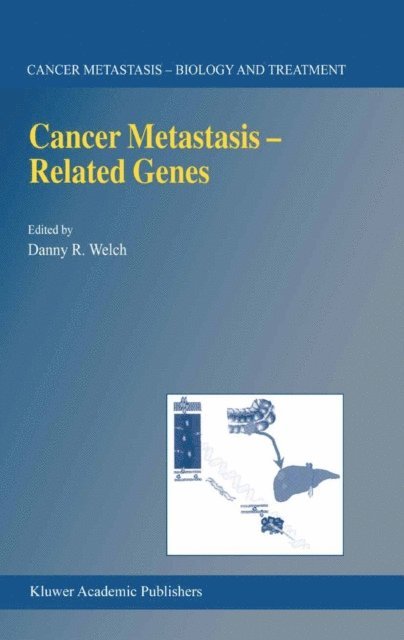
Being diagnosed with cancer is devastating. But when the cancer cells have to spread to form secondary colonies, the prognosis for the patient is worse. If meaningful improvements in survival are to occur, then control of metastasis will be a foundation. Relatively little is known about the control of the metastatic process at the molecular level. This volume begins to explore our current knowledge regarding the underlying molecular and biochemical mechanisms controlling the metastatic phenotype. While all of the authors attempted to put their findings into a context for translation to the clinical situation, the state-of-the-art does not fully allow this. Nonetheless, we write these summaries of our work as an early effort toward that end. I am grateful to all of the authors who have contributed generously of their time and energies to make this volume a reality. To metastasize, neoplastic cells dissociate from the primary tumor, enter a circulatory compartment (typically lymphatics or blood vasculature), survive transport, arrest, exit the circulation and finally proliferate at a discontinuous site in response to local growth factors. Unless cells accomplish every step of the metastatic cascade, metastases cannot develop. The process is highly inefficient, i. e. ,
Del 29 - Laboratory Techniques in Biochemistry and Molecular Biology
Cancer Metastasis: Experimental Approaches
Inbunden, Engelska, 2000
2 483 kr
Skickas inom 10-15 vardagar
The book describes most of the methods that are currently used in metastasis research. Both in vivo and in vitro protocols are illustrated, so that the metastatic process can be either analysed as a whole, or single events addressed separately. Each method is described in the frame of the metastatic process, therefore its significance and its limitations in the context of metastasis are always taken into account. Whenever possible, several alternative procedures are reported per each experimental issue, so that the researcher can choose the one that better suits her/his needs and possibilities.During the past 30 years a big effort has been made to elucidate the molecular mechanisms of cancer metastatis, the leading cause of death for cancer patients. A considerable number of assays have been set up, that can be used to address specific questions concerning the single metastatic steps, or can be applied to develop and test drugs specifically interfering with selected events during the metastatic spread. This book contains an exhaustive description of most of the methods and their rationale, that are currently used in metastatic research, both to analyse metastasis in its entirety (in vivo models), or to dissect the single steps of the metastatic process (in vitro assays).
Inbunden, Engelska, 2002
1 681 kr
Skickas inom 10-15 vardagar
This volume provides a summary of the current knowledge about the underlying molecular and biochemical mechanisms controlling the metastatic phenotype. The contents of the volume could be of use to members of the cancer research community and clinicians interested in developing and implementing novel forms of treatment for cancer.
Häftad, Engelska, 2013
1 681 kr
Skickas inom 10-15 vardagar
To metastasize, neoplastic cells dissociate from the primary tumor, enter a circulatory compartment (typically lymphatics or blood vasculature), survive transport, arrest, exit the circulation and finally proliferate at a discontinuous site in response to local growth factors.
Del 29 - Laboratory Techniques in Biochemistry and Molecular Biology
Cancer Metastasis: Experimental Approaches
Häftad, Engelska, 2000
984 kr
Tillfälligt slut
The book describes most of the methods that are currently used in metastasis research. Both in vivo and in vitro protocols are illustrated, so that the metastatic process can be either analysed as a whole, or single events addressed separately. Each method is described in the frame of the metastatic process, therefore its significance and its limitations in the context of metastasis are always taken into account. Whenever possible, several alternative procedures are reported per each experimental issue, so that the researcher can choose the one that better suits her/his needs and possibilities.During the past 30 years a big effort has been made to elucidate the molecular mechanisms of cancer metastatis, the leading cause of death for cancer patients. A considerable number of assays have been set up, that can be used to address specific questions concerning the single metastatic steps, or can be applied to develop and test drugs specifically interfering with selected events during the metastatic spread. This book contains an exhaustive description of most of the methods and their rationale, that are currently used in metastatic research, both to analyse metastasis in its entirety (in vivo models), or to dissect the single steps of the metastatic process (in vitro assays).