Drew A. Hyland - Böcker
Visar alla böcker från författaren Drew A. Hyland. Handla med fri frakt och snabb leverans.
8 produkter
8 produkter
256 kr
Skickas inom 7-10 vardagar
Martin Heidegger's sustained reflection on Greek thought has been increasingly recognized as a decisive feature of his own philosophical development. At the same time, this important philosophical meeting has generated considerable controversy and disagreement concerning the radical originality of Heidegger's view of the Greeks and their place in his groundbreaking thinking. In Heidegger and the Greeks, an international group of distinguished philosophers sheds light on the issues raised by Heidegger's encounter and engagement with the Greeks. The careful and nuanced essays brought together here shed light on how core philosophical concepts such as phenomenology, existentialism, hermeneutics, and ethics are understood today. For readers at all levels, this volume is an invitation to continue the important dialogue with Greek thinking that was started and stimulated by Heidegger.Contributors are Claudia Baracchi, Walter A. Brogan, Günter Figal, Gregory Fried, Francisco J. Gonzalez, Drew A. Hyland, John Panteleimon Manoussakis, William J. Richardson, John Sallis, Dennis J. Schmidt, and Peter Warnek.
230 kr
Skickas inom 7-10 vardagar
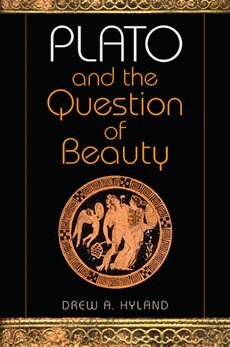
Drew A. Hyland, one of Continental philosophy's keenest interpreters of Plato, takes up the question of beauty in three Platonic dialogues, the Hippias Major, Symposium, and Phaedrus. What Plato meant by beauty is not easily characterized, and Hyland's close readings show that Plato ultimately gives up on the possibility of a definition. Plato's failure, however, tells us something important about beauty—that it cannot be reduced to logos. Exploring questions surrounding love, memory, and ideal form, Hyland draws out the connections between beauty, the possibility of philosophy, and philosophical living. This new reading of Plato provides a serious investigation into the meaning of beauty and places it at the very heart of philosophy.
1 057 kr
Tillfälligt slut
This book explains how to read Plato, emphasizing the philosophic importance of the dramatic aspects of the dialogues, and showing that Plato is an ironic thinker and that his irony is deeply rooted in his philosophy.
382 kr
Tillfälligt slut
This book explains how to read Plato, emphasizing the philosophic importance of the dramatic aspects of the dialogues, and showing that Plato is an ironic thinker and that his irony is deeply rooted in his philosophy.
382 kr
Tillfälligt slut
Explores interpretations of Plato by Heidegger, Derrida, Irigaray, Cavarero, and Gadamer.Given the conception of philosophy held by continental thinkers, and in particular their greater sensitivity to the kinship of philosophy and literature, Drew A. Hyland argues that they should be much more attentive to the literary dimension of Plato's thinking than they have been. He believes they would find in the dialogues not the various forms of "Platonism" that they wish to reject, but instead a thinking much more congenial and challenging to their own predilections.By carefully examining the works of Heidegger, Derrida, Irigaray, and Cavarero, Hyland points to the tendency of continental thinkers to view Plato's dialogues through the lens of Platonism, thus finding Platonic metaphysics, Platonic ethics, and Platonic epistemology, while overlooking the literary dimension of the dialogues, and failing to recognize the extent to which the form undercuts anything like the Platonism they find. The striking exception, Hyland claims, is Hans-Georg Gadamer who also demonstrates the compatibility of the Platonic dialogues with the directions of continental thinking.
349 kr
Tillfälligt slut
Dr. Drew A. Hyland traces the origins of philosophy from its earliest roots in Babylonian and Homeric-Hesiodic mythology to its flowering in the Pre-Socratic imagination. Using selections from the Epic of Gilgamesh, Hesiod, Homer, Pythagoras, Zeno, Plato, and Socrates, to name but a few, Dr. Hyland argues against what he calls the "historical approach" to the origin of philosophy. In Hyland's view the differentiation of the human self from notions of God and nature may rightly be called the origin of philosophy. The book's skilled intermingling of original source material, with commentaries by Kant, Hegel, and Heidegger, among others, and the author's own thought-provoking introduction, provides an invaluable study of this fascinating period in human intellectual development.
168 kr
Skickas inom 5-8 vardagar
309 kr
Skickas inom 5-8 vardagar