Dror Wahrman – författare
Visar alla böcker från författaren . Handla med fri frakt och snabb leverans.
11 produkter
11 produkter
Häftad, Engelska, 2007
238 kr
Skickas inom 5-8 vardagar
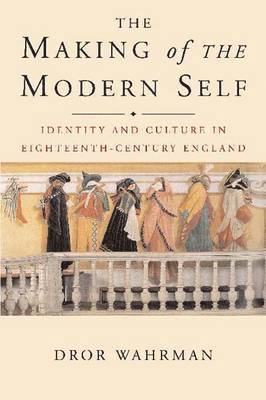
Toward the end of the eighteenth century, a radical change occurred in notions of self and personal identity. This was a sudden transformation, says Dror Wahrman, and nothing short of a revolution in the understanding of selfhood and of identity categories including race, gender, and class. In this pathbreaking book, he offers a fundamentally new interpretation of this critical turning point in Western history.Wahrman demonstrates this transformation with a fascinating variety of cultural evidence from eighteenth-century England, from theater to beekeeping, fashion to philosophy, art to travel and translations of the classics. He discusses notions of self in the earlier 1700s—what he terms the ancien regime of identity—that seem bizarre, even incomprehensible, to present-day readers. He then examines how this peculiar world came to an abrupt end, and the far-reaching consequences of that change. This unrecognized cultural revolution, the author argues, set the scene for the array of new departures that signaled the onset of Western modernity.
Inbunden, Engelska, 2012
504 kr
Skickas inom 5-8 vardagar
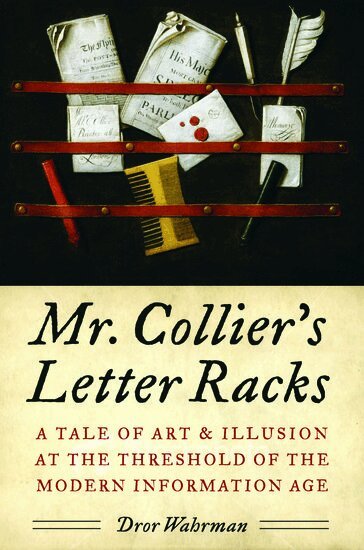
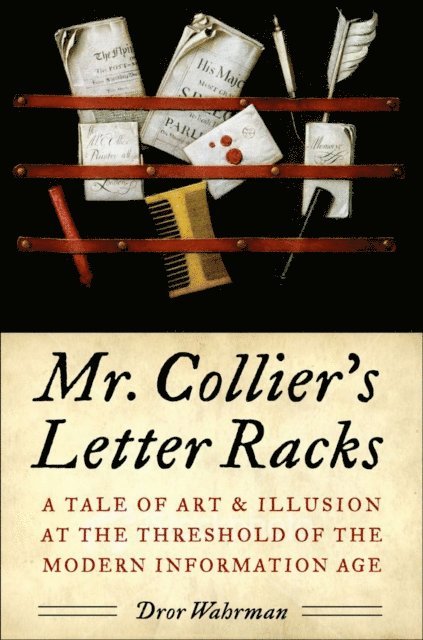
For 300 years, a unique and complex artistic puzzle has been hidden, the solution of which reveals an extraordinary critique of what can be described as the first modern media revolution. The mind behind this puzzle was a Dutch/British still-life painter named Edward Collier. Working around 1700, Collier has been neglected, even forgotten, precisely because his secret messages have never been noticed, let alone understood. Until now. In this book, Dror Wahrman recovers the tale of an extraordinary illusionist artist who engaged in a wholly original way with a major transformation of his generation: an unprecedented explosion in cheap print - newspapers, pamphlets, informational publications, artistic prints - that was produced for immediate release and far-flung circulation faster and in larger quantities that ever before. Edward Collier developed a secret language within his still-life paintings - replete with minutely coded messages, witty games, intricate allusions, and private jokes - in order to draw attention to the potential and the pitfalls of this new information age, uncannily prefiguring the modern perspectives of the media-savvy 21st century. This heretofore obscure artist embedded in his paintings an ingenious commentary on the media revolution of his period, on the birth of modern politics, and on art itself.
E-bok
PDF, Engelska, 2012404 kr
Läs direkt efter köp
Three hundred years ago, an unprecedented explosion in inexpensive, disposable print--newspapers, pamphlets, informational publications, artistic prints--ushered in a media revolution that forever changed our relationship to information. One unusually perceptive man, an obscure Dutch/British still life painter named Edward Collier, understood the full significance of these momentous changes and embedded in his work secret warnings about the inescapable slippages between author and print, meaning and text, viewer and canvas, perception and reality. Working around 1700, Collier has been neglected, even forgotten, precisely because his secret messages have never been noticed, let alone understood. Until now. In Mr. Collier''s Letter Racks, Dror Wahrman recovers the tale of an extraordinary illusionist artist who engaged in a wholly original way with a major transformation of his generation. Wahrman shows how Collier developed a hidden language within his illusionist paintings--replete with minutely coded messages, witty games, intricate allusions, and private jokes--to draw attention to the potential and the pitfalls of this new information age. A remarkably shrewd and prescient commentator on the changes unfolding around him, not least the advent of a new kind of politics following the Glorious Revolution, Collier performed a post-modernist critique of modernity long before the modern age. His trompe l''oeil paintings are filled with seemingly disconnected, enigmatic objects--letters, seals, texts of speeches, magnifying glasses, title pages--and with teasingly significant details that require the viewer to lean in and peer closely. Wahrman does just that, taking on the role of detective/cultural historian to unravel the layers of deceptions contained within Collier''s extraordinary paintings. Written with passionate enthusiasm and including more than 70 color illustrations, Mr. Collier''s Letter Racks is a spell-binding feat of cultural history, illuminating not only the work of an eccentric genius but the media revolution of his period, the birth of modern politics, and the nature of art itself.
E-bok
Engelska, 2012404 kr
Läs direkt efter köp
Three hundred years ago, an unprecedented explosion in inexpensive, disposable print--newspapers, pamphlets, informational publications, artistic prints--ushered in a media revolution that forever changed our relationship to information. One unusually perceptive man, an obscure Dutch/British still life painter named Edward Collier, understood the full significance of these momentous changes and embedded in his work secret warnings about the inescapable slippages between author and print, meaning and text, viewer and canvas, perception and reality. Working around 1700, Collier has been neglected, even forgotten, precisely because his secret messages have never been noticed, let alone understood. Until now. In Mr. Collier''s Letter Racks, Dror Wahrman recovers the tale of an extraordinary illusionist artist who engaged in a wholly original way with a major transformation of his generation. Wahrman shows how Collier developed a hidden language within his illusionist paintings--replete with minutely coded messages, witty games, intricate allusions, and private jokes--to draw attention to the potential and the pitfalls of this new information age. A remarkably shrewd and prescient commentator on the changes unfolding around him, not least the advent of a new kind of politics following the Glorious Revolution, Collier performed a post-modernist critique of modernity long before the modern age. His trompe l''oeil paintings are filled with seemingly disconnected, enigmatic objects--letters, seals, texts of speeches, magnifying glasses, title pages--and with teasingly significant details that require the viewer to lean in and peer closely. Wahrman does just that, taking on the role of detective/cultural historian to unravel the layers of deceptions contained within Collier''s extraordinary paintings. Written with passionate enthusiasm and including more than 70 color illustrations, Mr. Collier''s Letter Racks is a spell-binding feat of cultural history, illuminating not only the work of an eccentric genius but the media revolution of his period, the birth of modern politics, and the nature of art itself.
E-bok
Engelska, 2015661 kr
Läs direkt efter köp
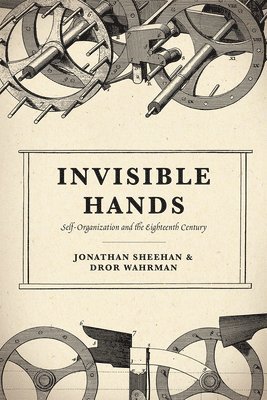
A synthesis of eighteenth-century intellectual and cultural developments that offers an original explanation of how Enlightenment thought grappled with the problem of divine agency. Why is the world orderly, and how does this order come to be? Human beings inhabit a multitude of apparently ordered systems—natural, social, political, economic, cognitive, and others—whose origins and purposes are often obscure. In the eighteenth century, older certainties about such orders, rooted in either divine providence or the mechanical operations of nature, began to fall away. In their place arose a new appreciation for the complexity of things, a new recognition of the world’s disorder and randomness, new doubts about simple relations of cause and effect—but with them also a new ability to imagine the world’s orders, whether natural or manmade, as self-organizing. If large systems are left to their own devices, eighteenth-century Europeans increasingly came to believe, order will emerge on its own without any need for external design or direction. In Invisible Hands, Jonathan Sheehan and Dror Wahrman trace the many appearances of the language of self-organization in the eighteenth-century West. Across an array of domains, including religion, society, philosophy, science, politics, economy, and law, they show how and why this way of thinking came into the public view, then grew in prominence and arrived at the threshold of the nineteenth century in versatile, multifarious, and often surprising forms. Offering a new synthesis of intellectual and cultural developments, Invisible Hands is a landmark contribution to the history of the Enlightenment and eighteenth-century culture.
Inbunden, Engelska, 2015
419 kr
Skickas inom 5-8 vardagar
Why is the world orderly, and how does order occur? Humans inhabit many systems - natural, social, political, economic, cognitive, and others - with seemingly obscure origins. In the eighteenth century, older certainties, rooted in divine providence or mechanistic explanations, began to fall away. In their place arose a new appreciation for complexity and randomness along with an ability to see the world's orders - whether natural or manmade - as self-organizing. If large systems were left to their own devices, eighteenth-century Europeans came to believe, order would emerge on its own without any need for external design or direction. In Invisible Hands, Jonathan Sheehan and Dror Wahrman trace the versatile language of self-organization in the eighteenth-century West. Across an array of domains, including religion, philosophy, science, politics, economy, and law, they show how and why this way of thinking entered the public view and then spread in diverse and often surprising forms. Offering a new synthesis of intellectual and cultural developments, Invisible Hands is a landmark contribution to the history of the Enlightenment.
Häftad, Engelska, 2022
307 kr
Skickas inom 5-8 vardagar
A synthesis of eighteenth-century intellectual and cultural developments that offers an original explanation of how Enlightenment thought grappled with the problem of divine agency.Why is the world orderly, and how does this order come to be? Human beings inhabit a multitude of apparently ordered systems—natural, social, political, economic, cognitive, and others—whose origins and purposes are often obscure. In the eighteenth century, older certainties about such orders, rooted in either divine providence or the mechanical operations of nature, began to fall away. In their place arose a new appreciation for the complexity of things, a new recognition of the world’s disorder and randomness, new doubts about simple relations of cause and effect—but with them also a new ability to imagine the world’s orders, whether natural or manmade, as self-organizing. If large systems are left to their own devices, eighteenth-century Europeans increasingly came to believe, order will emerge on its own without any need for external design or direction.In Invisible Hands, Jonathan Sheehan and Dror Wahrman trace the many appearances of the language of self-organization in the eighteenth-century West. Across an array of domains, including religion, society, philosophy, science, politics, economy, and law, they show how and why this way of thinking came into the public view, then grew in prominence and arrived at the threshold of the nineteenth century in versatile, multifarious, and often surprising forms. Offering a new synthesis of intellectual and cultural developments, Invisible Hands is a landmark contribution to the history of the Enlightenment and eighteenth-century culture.
Inbunden, Engelska, 2023
365 kr
Skickas inom 5-8 vardagar
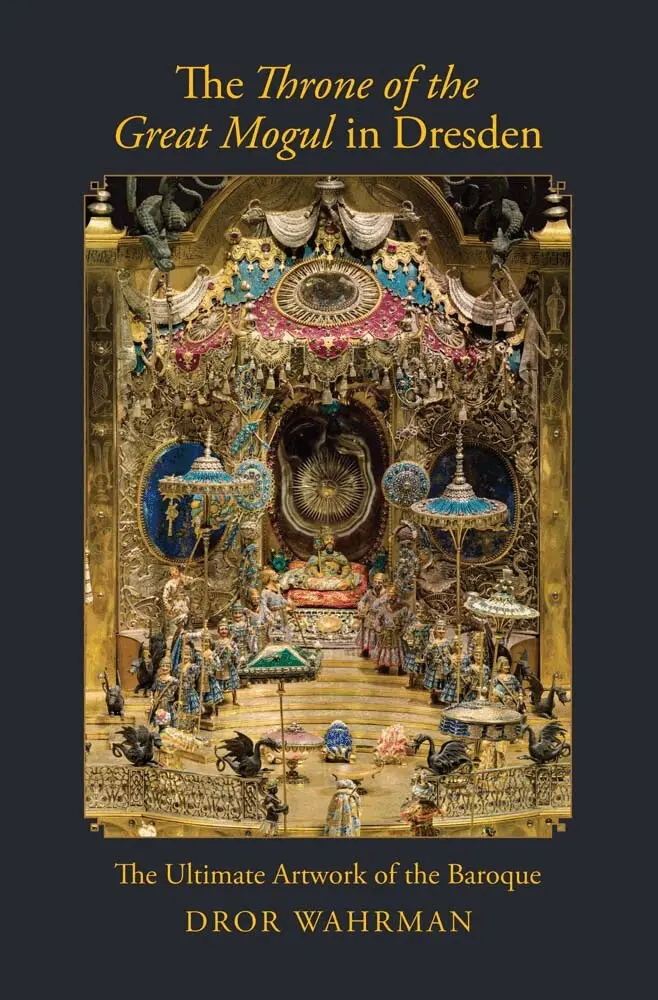
A masterful deciphering of an extraordinary art object, illuminating some of the biggest questions of the eighteenth centuryThe Throne of the Great Mogul (1701–8) is a unique work of European decorative art: an intricate miniature of the court of the Mughal emperor Aurangzeb depicted during the emperor’s birthday celebrations. It was created by the jeweler Johann Melchior Dinglinger in Dresden and purchased by the Saxon prince Augustus the Strong for an enormous sum. Constructed like a theatrical set made of gold, silver, thousands of gemstones, and amazing enamel work, it consists of 164 pieces that together tell a detailed story.Why did Dinglinger invest so much time and effort in making this piece? Why did Augustus, in the midst of a political and financial crisis, purchase it? And why did the jeweler secrete in it messages wholly unrelated to the prince or to the Great Mogul? In answering these questions, Dror Wahrman, while shifting scales from microhistory to global history, opens a window onto major historical themes of the period: the nature of European absolutism, the princely politics of the Holy Roman Empire, the changing meaning of art in the West, the surprising emergence of a cross-continental lexicon of rulership shared across the Eastern Hemisphere, and the enactment in jewels and gold of quirky contemporary theories about the global history of religion.
Häftad, Engelska, 2002
282 kr
Skickas inom 5-8 vardagar
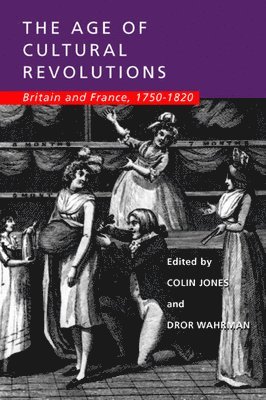
In this vanguard collection, a stellar group of internationally known scholars explores a key period in the making of the modern West. Although the long-standing notion of 'dual revolutions,' economic in Britain and political in France, has been vigorously challenged in recent years, these authors find that 'revolutionary' is an apt description of the important cultural transformations that took place in both France and Britain at the onset of modernity. The essays, by social and cultural historians as well as by literary scholars, range over many critical themes within this cross-cultural revolution: class, politics, and the nature of social change; gender and identity; race and imperialism; and the reach of the cultural imaginary. Combining primary research with theoretical reflection, each chapter makes a fresh and compelling contribution to the rethinking of these crucial years in world history."The Age of Cultural Revolutions", a superb distillation of the interdisciplinary perspectives of culturally sensitive experts, is revolutionary in itself and will be a valuable model for scholars and students interested in eighteenth- and nineteenth-century Britain and France, European cultural history, and historical method.
Inbunden, Engelska, 1995
1 462 kr
Skickas inom 7-10 vardagar
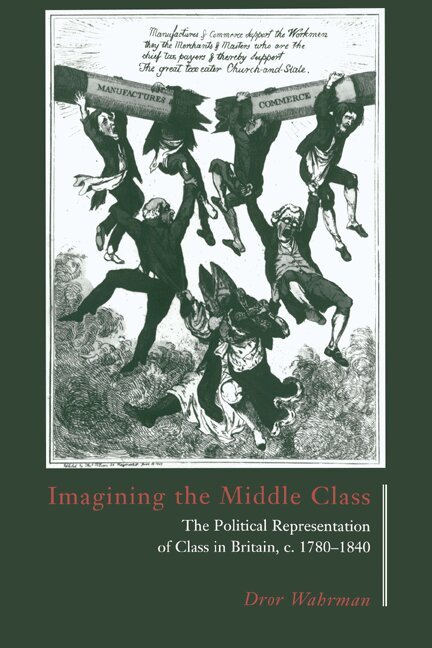
Why and how did the British people come to see themselves as living in a society centred around a middle class? The answer provided by Professor Wahrman challenges most prevalent historical narratives: the key to understanding changes in conceptualisations of society, the author argues, lies not in underlying transformations of social structure - in this case industrialisation, which supposedly created and empowered the middle class - but rather in changing political configurations. Firmly grounded in a close reading of an extensive array of sources, and supported by comparative perspectives on France and America, the book offers a nuanced model for the interplay between social reality, politics, and the languages of class.
Häftad, Engelska, 1995
686 kr
Skickas inom 7-10 vardagar
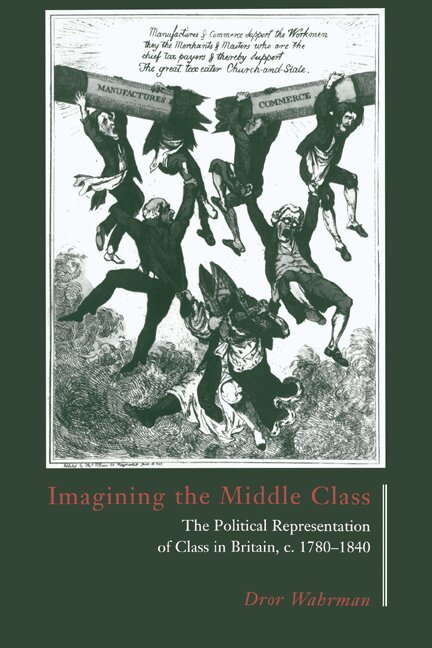
Why and how did the British people come to see themselves as living in a society centred around a middle class? The answer provided by Professor Wahrman challenges most prevalent historical narratives: the key to understanding changes in conceptualisations of society, the author argues, lies not in underlying transformations of social structure - in this case industrialisation, which supposedly created and empowered the middle class - but rather in changing political configurations. Firmly grounded in a close reading of an extensive array of sources, and supported by comparative perspectives on France and America, the book offers a nuanced model for the interplay between social reality, politics, and the languages of class.