E. Saskia Kunnen - Böcker
Visar alla böcker från författaren E. Saskia Kunnen. Handla med fri frakt och snabb leverans.
4 produkter
4 produkter
723 kr
Skickas inom 7-10 vardagar
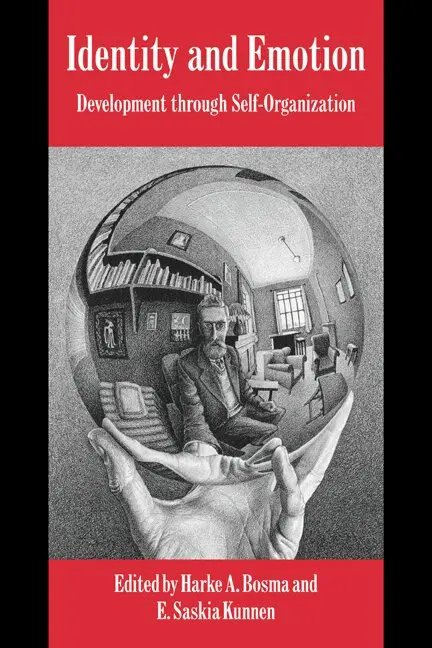
Recent ideas concerning the development of self and identity have stressed the importance of moving away from an approach which is mainly concerned with outcomes, to one which focuses instead on processes of development and, more specifically, on a relational perspective on these processes. Identity and Emotion, first published in 2001, focuses on the individual development of identity and the processes involved. By working from emotions and a dynamic systems perspective the book offers an exciting approach to human identity and its development across the lifespan. The contributors to the book are specialists in this new approach, and offer challenging ideas on the development of identity as a self-organizing process. The book offers a wealth of ideas and insights, but also concentrates on the ways these insights can be translated into research.
1 453 kr
Skickas inom 7-10 vardagar
Recent ideas concerning the development of self and identity have stressed the importance of moving away from an approach which is mainly concerned with outcomes, to one which focuses instead on processes of development and, more specifically, on a relational perspective on these processes. Identity and Emotion, first published in 2001, focuses on the individual development of identity and the processes involved. By working from emotions and a dynamic systems perspective the book offers an exciting approach to human identity and its development across the lifespan. The contributors to the book are specialists in this new approach, and offer challenging ideas on the development of identity as a self-organizing process. The book offers a wealth of ideas and insights, but also concentrates on the ways these insights can be translated into research.
Psychosocial Development in Adolescence
Insights from the Dynamic Systems Approach
Inbunden, Engelska, 2019
2 029 kr
Skickas inom 10-15 vardagar
Over recent years, it has become clear that group-based approaches cannot directly be used to understand individual adolescent development. For that reason, interest in dynamic systems theory, or DST, has increased rapidly. Psychosocial Development in Adolescence: Insights from the Dynamic Systems Approach covers state-of-the-art insights into adolescent development that have resulted from adopting a dynamic systems approach.The first chapter of the book provides a basic introduction into dynamic systems principles and explains their consequences for the study of psychosocial development in adolescence. Subsequently, different experts discuss why and how we should apply a dynamic systems approach to the study of the adolescent transition period and psychological interventions. Various examples of the application of a dynamic systems approach are showcased, ranging from basic to more advanced techniques, as well as the insights they have generated. These applications cover a variety of fundamental topics in adolescent development, ranging from the development of identity, morality, sexuality, and peer networks, to more applied topics such as psychological interventions, educational dropout, and talent development.This book will be invaluable to both beginner and expert-level students and researchers interested in a dynamic systems approach and in the insights that it has yielded for adolescent development.
Psychosocial Development in Adolescence
Insights from the Dynamic Systems Approach
Häftad, Engelska, 2019
639 kr
Skickas inom 10-15 vardagar
Over recent years, it has become clear that group-based approaches cannot directly be used to understand individual adolescent development. For that reason, interest in dynamic systems theory, or DST, has increased rapidly. Psychosocial Development in Adolescence: Insights from the Dynamic Systems Approach covers state-of-the-art insights into adolescent development that have resulted from adopting a dynamic systems approach.The first chapter of the book provides a basic introduction into dynamic systems principles and explains their consequences for the study of psychosocial development in adolescence. Subsequently, different experts discuss why and how we should apply a dynamic systems approach to the study of the adolescent transition period and psychological interventions. Various examples of the application of a dynamic systems approach are showcased, ranging from basic to more advanced techniques, as well as the insights they have generated. These applications cover a variety of fundamental topics in adolescent development, ranging from the development of identity, morality, sexuality, and peer networks, to more applied topics such as psychological interventions, educational dropout, and talent development.This book will be invaluable to both beginner and expert-level students and researchers interested in a dynamic systems approach and in the insights that it has yielded for adolescent development.