• Fri frakt över 249 kr
  • •
  • Snabba leveranser
  • •
  • Billiga böcker
Kundservice

Du är på sajten för privatpersoner.

Företag, bibliotek eller offentlig verksamhet?

Du handlar på classic.bokus.com, där alla dina funktioner finns intakta.
Till classic.bokus.com
Bokus logotyp. Gå till startsidan.
  • Erbjudanden
  • Nyheter
  • Student
  • Topplistor
  • Barn & ungdom
  • Bokus Play
  • E-böcker
  • Pocketböcker
  • Spel & pussel

10% rabatt på allt med kod NYSTART10 →

Sidfot

Mina sidor

    Hjälp

    • Kundservice
    • Vanliga frågor och svar
    • Frakt och leverans
    • Retur vid ångerrätt
    • Reklamera vara
    • Betalning
    • Köpvillkor
    • Allmänna villkor
    • Information om webbplatsens tillgänglighet

    Om Bokus

    • Om oss
    • Pressrum
    • För studenter
    • För företag
    • För bibliotek och offentlig verksamhet
    • För leverantörer
    • Hållbarhet

    Populärt

    • Aktuella erbjudanden
    • Presentkort
    • Studentlitteratur
    • Nya böcker
    • Topplistor
    • Signerade böcker
    • Engelska böcker

    Inspiration

    • Boktips
    • BookTok
    • Populära bokserier
    • Barnbokskaraktärer
    • Populära författare
    Logotyp för Bokus
    Följ oss på Facebook (extern länk)Följ oss på Instagram (extern länk)Följ oss på YouTube (extern länk)Följ oss på TikTok (extern länk)
    bokus @ CookiesAnpassa cookiesIntegritetspolicyKöpvillkor
    Till Citymail hemsida (extern länk)Till Budbee hemsida (extern länk)Till Postnord hemsida (extern länk)Till Schenker hemsida (extern länk)Till Early Bird hemsida (extern länk)Till Walleys hemsida (extern länk)
    1. Psykologi och pedagogik
    2. Psykologi
    3. Socialpsykologi och gruppsykologi

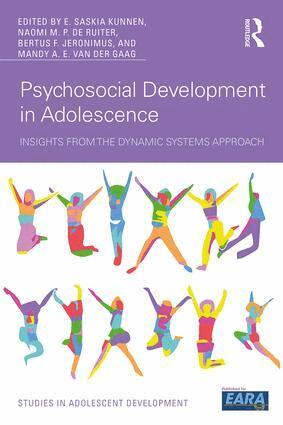
    Psychosocial Development in Adolescence

    Insights from the Dynamic Systems Approach

    AvE. Saskia Kunnen,Naomi M. P. Ruiter

    Häftad, Engelska, 2019

    Del i serien Studies in Adolescent Development

    689 kr

    Beställningsvara. Skickas inom 10-15 vardagar. Fri frakt över 249 kr.

    Beskrivning

    Over recent years, it has become clear that group-based approaches cannot directly be used to understand individual adolescent development. For that reason, interest in dynamic systems theory, or DST, has increased rapidly. Psychosocial Development in Adolescence: Insights from the Dynamic Systems Approach covers state-of-the-art insights into adolescent development that have resulted from adopting a dynamic systems approach.The first chapter of the book provides a basic introduction into dynamic systems principles and explains their consequences for the study of psychosocial development in adolescence. Subsequently, different experts discuss why and how we should apply a dynamic systems approach to the study of the adolescent transition period and psychological interventions. Various examples of the application of a dynamic systems approach are showcased, ranging from basic to more advanced techniques, as well as the insights they have generated. These applications cover a variety of fundamental topics in adolescent development, ranging from the development of identity, morality, sexuality, and peer networks, to more applied topics such as psychological interventions, educational dropout, and talent development.This book will be invaluable to both beginner and expert-level students and researchers interested in a dynamic systems approach and in the insights that it has yielded for adolescent development.

    Produktinformation

    • Utgivningsdatum:2019-05-13
    • Mått:156 x 234 x 20 mm
    • Vikt:478 g
    • Format:Häftad
    • Språk:Engelska
    • Serie:Studies in Adolescent Development
    • Antal sidor:258
    • Förlag:Taylor & Francis Ltd
    • ISBN:9781138055568

    Utforska kategorier

    • Socialpsykologi och gruppsykologi inom Psykologi och pedagogik
    • Sociala grupper och identitet inom Samhälle och politik
    • Barnpsykologi och utvecklingspsykologi inom Psykologi och pedagogik

    Mer om författaren

    E. Saskia Kunnen is an Associate Professor of Developmental Psychology at the University of Groningen. Naomi M.P. de Ruiter is an Assistant Professor of Social Sciences at the University College Groningen within the University of Groningen. Bertus F. Jeronimus is an Assistant Professor of Developmental Psychology at the University of Groningen. Mandy A.E. van der Gaag is a Postdoctoral Researcher of Developmental Psychology at the University of Groningen.

    Recensioner i media

    Researchers studying adolescent development have often identified that one size does not fit all. For a long time we have lacked the proper tools to explore these individual processes in adolescent development. Psychosocial Development in Adolescence: Insights from the Dynamic Systems Approach is a roadmap for encouraging wonder and discovery of these individual processes. Now it is time to make a difference and take seriously the individual processes when studying adolescent development. Dynamic Systems Approach (DSA) is the fundamental approach behind the roadmap. Like any forefront scientific investigation, DSA gives us new tools and methods to examine individual processes. It seems possible that widespread use of these techniques could spur a return to the kind of new approach that is now needed in adolescent research globally. Psychosocial Development in Adolescence: Insights from the Dynamic Systems Approach is a much needed call to join an important new approach. It encourages us all to ask new questions. It inspires us to share the questions we ask every day. It motivates us to keep asking until we find routes to the answers. In a world where understanding diverse and individual pathways is essential, the DSA approach offers a richer way to solve these problems as a worldwide community of curious people who wonder about the fundamental new insights of the adolescent development.Professor Katariina Salmela-Aro, Educational Sciences, University of Helsinki, Finland

    Innehållsförteckning

    • ContentsChapter 1. Introduction to a dynamic systems approach to psychosocial development in adolsenceNaomi M.P. de Ruiter, Mandy A.E. van der Gaag, Bertus F. Jeronimus, and E. Saskia KunnenChapter 2. Systems in transition: the adolescent phase transition Tom Hollenstein and Tiffany TsuiChapter 3. Matching methods to theory: using dynamic systems models to understand nested systems of adolescent development Nancy Darling and Ian BurnsChapter 4. A nonlinear dynamic systems approach to psychological interventions Günter Schiepek, Helmut Schöller, Roswitha Carl, Wolfgang Aichhorn, and Anna Lichtwarck-AschoffChapter 5. Conflict dynamics and the transformation of the parent-adolescent relationship Jessica P. LougheedChapter 6. The nature of adolescents’ real-time self-esteem from a dynamic systems perspective: the socially embedded self-esteem model Naomi M.P. de RuiterChapter 7. Dynamic system perspectives on anxiety and depression Bertus F. JeronimusChapter 8. Trajectories preceding student dropout: an intra-individual process approach Mandy A.E. van der Gaag, E. Saskia Kunnen, and Paul L.C. van GeertChapter 9. Identity development from a dynamic dystems perspective E. Saskia KunnenChapter 10. Youth’s sexual relationships and development: improving our understanding through a dynamic systems approach Daphne van de BongardtChapter 11. Dynamic developmental complexity of moral motivation for adolescents and young adultsUlas KaplanChapter 12. Social development and group processes: a social network application to bullying and network interventionsGijs Huitsing, Jan K. Dijkstra, and René VeenstraChapter 13. Visualizing individual dynamics: the case of a talented adolescent Joske K. van der Sluis, Steffie van der Steen, Gert Stulp, and Ruud J.R. den HartighChapter 14. conclusion and Discussion: what we can gain from a dynamic systems approach to psychosocial development in adolescenceMandy A.E. van der Gaag, Naomi M.P. de Ruiter, Bertus F. Jeronimus, and E. Saskia Kunnen