E.A. Maier – författare
Visar alla böcker från författaren E.A. Maier. Handla med fri frakt och snabb leverans.
6 produkter
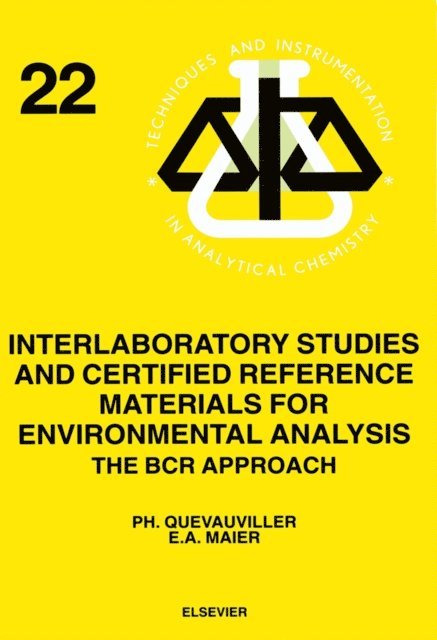
Interlaboratory Studies and Certified Reference Materials for Environmental Analysis
The BCR Approach
Av Ph. Quevauviller, E.A. Maier
E-bok, 1999
2933 kr
Lägg i varukorg
The participation in interlaboratory studies and the use of Certified Reference Materials (CRMs) are widely recognised tools for the verification of the accuracy of analytical measurements and they form an integral part of quality control systems used by many laboratories, e.g. in accreditation …
Microbiological Analysis of Food and Water
Guidelines for Quality Assurance
E-bok, 1998
3667 kr
Lägg i varukorg
With the help of leading Quality Assurance (QA) and Quality Control (QC) microbiology specialists in Europe, a complete set of guidelines on how to start and implement a quality system in a microbiological laboratory has been prepared, supported by the European Commission through the Measurement …
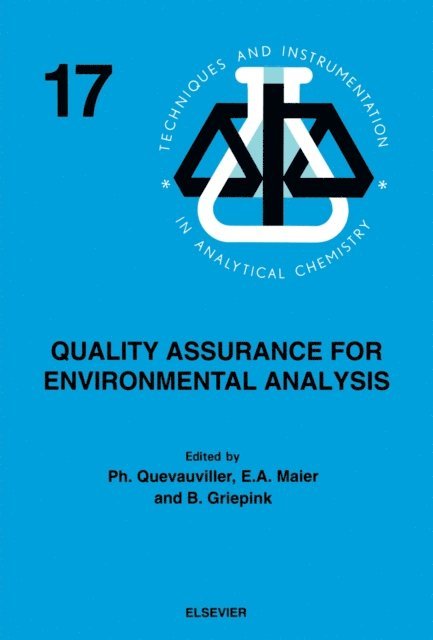
Quality Assurance for Environmental Analysis
Method Evaluation within the Measurements and Testing Programme (BCR)
Av Ph. Quevauviller, B. Griepink m. fl.
E-bok, 1995
5133 kr
Lägg i varukorg
Quality assurance (QA) for environmental analysis is a growing feature of the nineties as is illustrated by the number of QA guidelines and systems which are being implemented nowadays. There is, however, often a huge gap between the implementation and respect of QA guidelines and the technical …
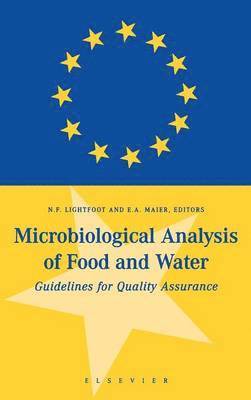
Microbiological Analysis of Food and Water
Guidelines for Quality Assurance
Av N. F. Lightfoot, E. a. Maier m. fl.
Häftad, 1999
1355 kr
Lägg i varukorg
With the help of leading Quality Assurance (QA) and Quality Control (QC) microbiology specialists in Europe, a complete set of guidelines on how to start and implement a quality system in a microbiological laboratory has been prepared, supported by the European Commission through the Measurement …
Interlaboratory Studies and Certified Reference Materials for Environmental Analysis
The BCR Approach
Av E.A. Maier, Ph. Quevauviller
Inbunden, 1999
3131 kr
Lägg i varukorg
The participation in interlaboratory studies and the use of Certified Reference Materials (CRMs) are widely recognised tools for the verification of the accuracy of analytical measurements and they form an integral part of quality control systems used by many laboratories, e.g. in accreditation …
Microbiological Analysis of Food and Water
Guidelines for Quality Assurance
Inbunden, 1998
3980 kr
Lägg i varukorg
With the help of leading Quality Assurance (QA) and Quality Control (QC) microbiology specialists in Europe, a complete set of guidelines on how to start and implement a quality system in a microbiological laboratory has been prepared, supported by the European Commission through the Measurement …