Ebba Hvannberg - Böcker
Visar alla böcker från författaren Ebba Hvannberg. Handla med fri frakt och snabb leverans.
2 produkter
2 produkter
1 638 kr
Skickas inom 10-15 vardagar
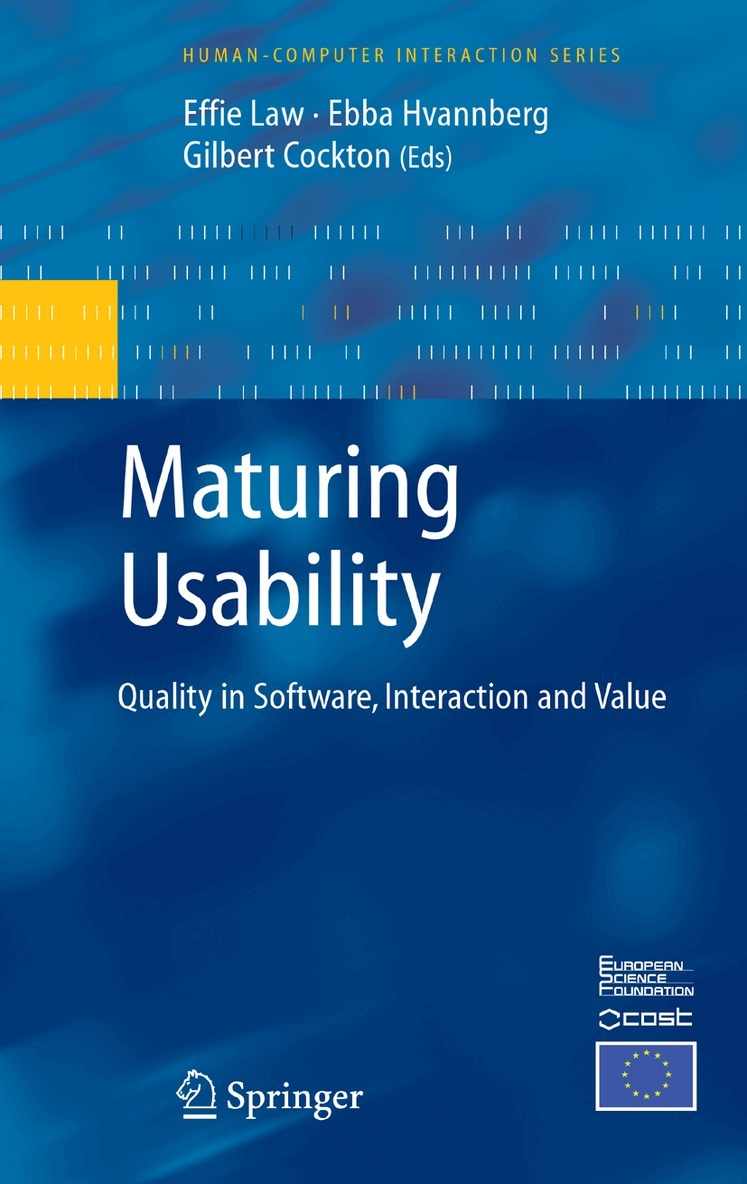
"Maturing Usability" provides an understanding of how current research and practice has contributed towards improving quality issues in software, interaction and value.Divided into three parts, ‘Quality in Software’ looks at how using development tools can enhance the usability of a system, and how methods and models can be integrated into the process to help develop effective user interfaces. ‘Quality in Interaction’ addresses theoretical frameworks on the nature of interactions; techniques and metrics for evaluation interaction quality; and the transfer of concepts and methods from research to practice. Finally, ‘Quality in Value’ assesses the impact that a system has in the real world, focusing on increasing the value of usability practice for software development and on increasing value for users.A balance between theoretical and empirical approaches is maintained throughout, and all those interested in exploring usability issues in human-computer interaction will find this a very useful book.
1 638 kr
Skickas inom 10-15 vardagar
"Maturing Usability" provides an understanding of how current research and practice has contributed towards improving quality issues in software, interaction and value.Divided into three parts, ‘Quality in Software’ looks at how using development tools can enhance the usability of a system, and how methods and models can be integrated into the process to help develop effective user interfaces. ‘Quality in Interaction’ addresses theoretical frameworks on the nature of interactions; techniques and metrics for evaluation interaction quality; and the transfer of concepts and methods from research to practice. Finally, ‘Quality in Value’ assesses the impact that a system has in the real world, focusing on increasing the value of usability practice for software development and on increasing value for users.A balance between theoretical and empirical approaches is maintained throughout, and all those interested in exploring usability issues in human-computer interaction will find this a very useful book.