Gilbert Cockton - Böcker
Visar alla böcker från författaren Gilbert Cockton. Handla med fri frakt och snabb leverans.
10 produkter
10 produkter
1 105 kr
Skickas inom 10-15 vardagar
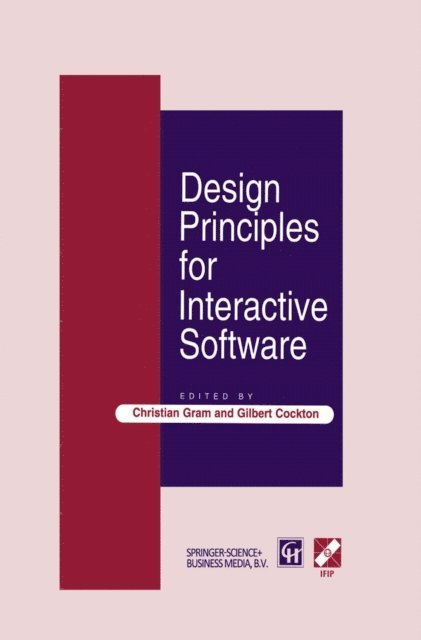
The focus of this text is on the properties and principles behind interactive software systems which are of increasing importance commercially. It proposes a framework of principles for designing user-interface components, and has arisen out of a project undertaken by the International Federation for Information Processing Working Group 2.7/13.4. This book should be of interest to academics and researchers in human-computer interaction; and postgraduate students.
630 kr
Skickas inom 5-8 vardagar
1 105 kr
Skickas inom 10-15 vardagar
IFIP's Working Group 2.7(13.4)* has, since its establishment in 1974, con centrated on the software problems of user interfaces. From its original interest in operating systems interfaces the group has gradually shifted em phasis towards the development of interactive systems. The group has orga nized a number of international working conferences on interactive software technology, the proceedings of which have contributed to the accumulated knowledge in the field. The current title of the Working Group is 'User Interface Engineering', with the aim of investigating the nature, concepts, and construction of user interfaces for software systems. The scope of work involved is: - to increase understanding of the development of interactive systems; - to provide a framework for reasoning about interactive systems; - to provide engineering models for their development. This report addresses all three aspects of the scope, as further described below. In 1986 the working group published a report (Beech, 1986) with an object-oriented reference model for describing the components of operating systems interfaces. The modelwas implementation oriented and built on an object concept and the notion of interaction as consisting of commands and responses. Through working with that model the group addressed a number of issues, such as multi-media and multi-modal interfaces, customizable in terfaces, and history logging. However, a conclusion was reached that many software design considerations and principles are independent of implemen tation models, but do depend on the nature of the interaction process.
1 638 kr
Skickas inom 10-15 vardagar
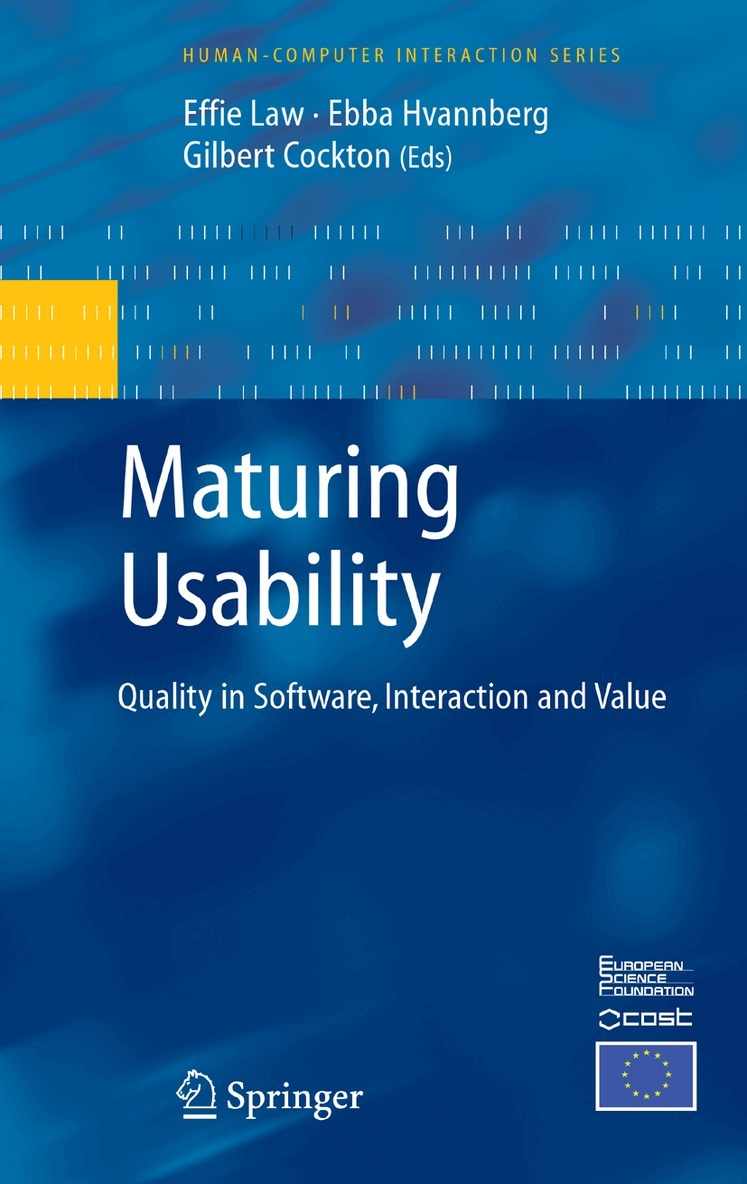
"Maturing Usability" provides an understanding of how current research and practice has contributed towards improving quality issues in software, interaction and value.Divided into three parts, ‘Quality in Software’ looks at how using development tools can enhance the usability of a system, and how methods and models can be integrated into the process to help develop effective user interfaces. ‘Quality in Interaction’ addresses theoretical frameworks on the nature of interactions; techniques and metrics for evaluation interaction quality; and the transfer of concepts and methods from research to practice. Finally, ‘Quality in Value’ assesses the impact that a system has in the real world, focusing on increasing the value of usability practice for software development and on increasing value for users.A balance between theoretical and empirical approaches is maintained throughout, and all those interested in exploring usability issues in human-computer interaction will find this a very useful book.
1 638 kr
Skickas inom 10-15 vardagar
"Maturing Usability" provides an understanding of how current research and practice has contributed towards improving quality issues in software, interaction and value.Divided into three parts, ‘Quality in Software’ looks at how using development tools can enhance the usability of a system, and how methods and models can be integrated into the process to help develop effective user interfaces. ‘Quality in Interaction’ addresses theoretical frameworks on the nature of interactions; techniques and metrics for evaluation interaction quality; and the transfer of concepts and methods from research to practice. Finally, ‘Quality in Value’ assesses the impact that a system has in the real world, focusing on increasing the value of usability practice for software development and on increasing value for users.A balance between theoretical and empirical approaches is maintained throughout, and all those interested in exploring usability issues in human-computer interaction will find this a very useful book.
1 105 kr
Skickas inom 10-15 vardagar
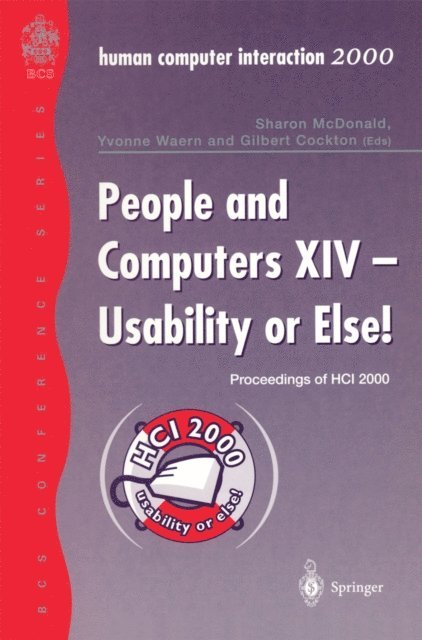
This proceeding contains a selection of state of the art refereed papers on current Human-Computer Interaction topics, presented at the HCI 2000 conference. This conference is the annual conference of the British HCI Group, and was held at Sunderland University in September 2000. HCI 2000 is the premier European Human-Computer Interaction forum. People and Computers XIV represents a comprehensive guide to current research in HCI which will be essential reading for all researchers, designers and manufacturers who need to keep abreast of developments in HCI.
611 kr
Skickas inom 10-15 vardagar
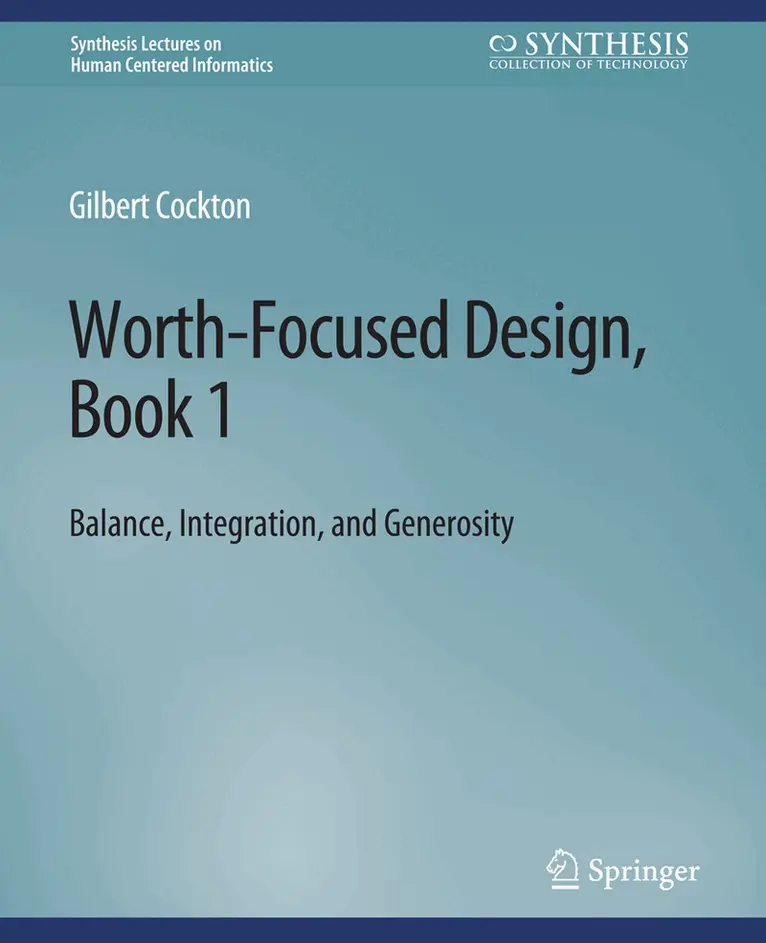
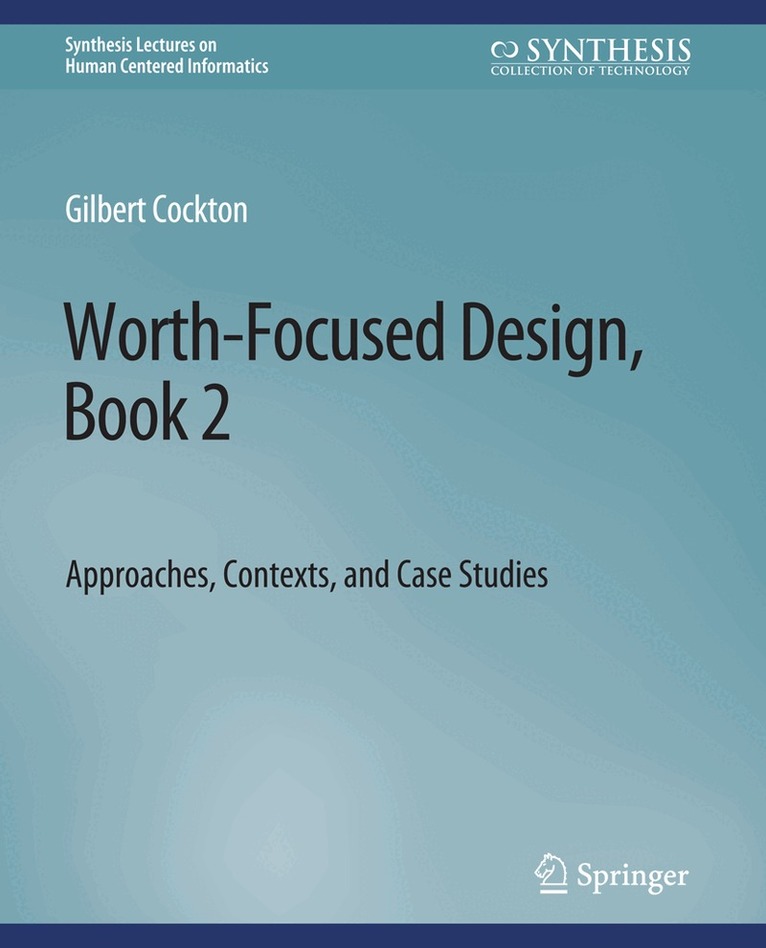
A focus on worth guides design towards worthwhile experiences and outcomes that generously exceed expectations.This book places a worth focus (Wo-Fo) in the context of design progressions that are Balanced, Integrated, and Generous (BIG).
666 kr
Skickas inom 10-15 vardagar
This book introduces the concept of worth for design teams, relates it to experiences and outcomes, and describes how to focus on worth when researching and expressing design opportunities for generous worth. Truly interdisciplinary teams also need an appropriate common language, which was developed in the companion book Worth-Focused Design, Book 1: Balance, Integration, and Generosity (Cockton, 2020a). Its new lexicon for design progressions enables a framework for design and evaluation that works well with a worth focus.Design now has different meanings based upon the approach of different disciplinary practices. For some, it is the creation of value. For others, it is the conception and creation of artefacts. For still others, it is fitting things to people (beneficiaries). While each of these design foci has merits, there are risks in not having an appropriate balance across professions that claim the centre of design for their discipline and marginalise others.Generosity is key to the best creative design—delivering unexpected worth beyond documented needs, wants, or pain points. Truly interdisciplinary design must also balance and integrate approaches across several communities of practice, which is made easier by common ground. Worth provides a productive focus for this common ground and is symbiotic with balanced, integrated, and generous (BIG) practices. Practices associated with balance and integration for worth-focused generosity are illustrated in several case studies that have used approaches in this book, complementing them with additional practices.
1 324 kr
Skickas inom 10-15 vardagar
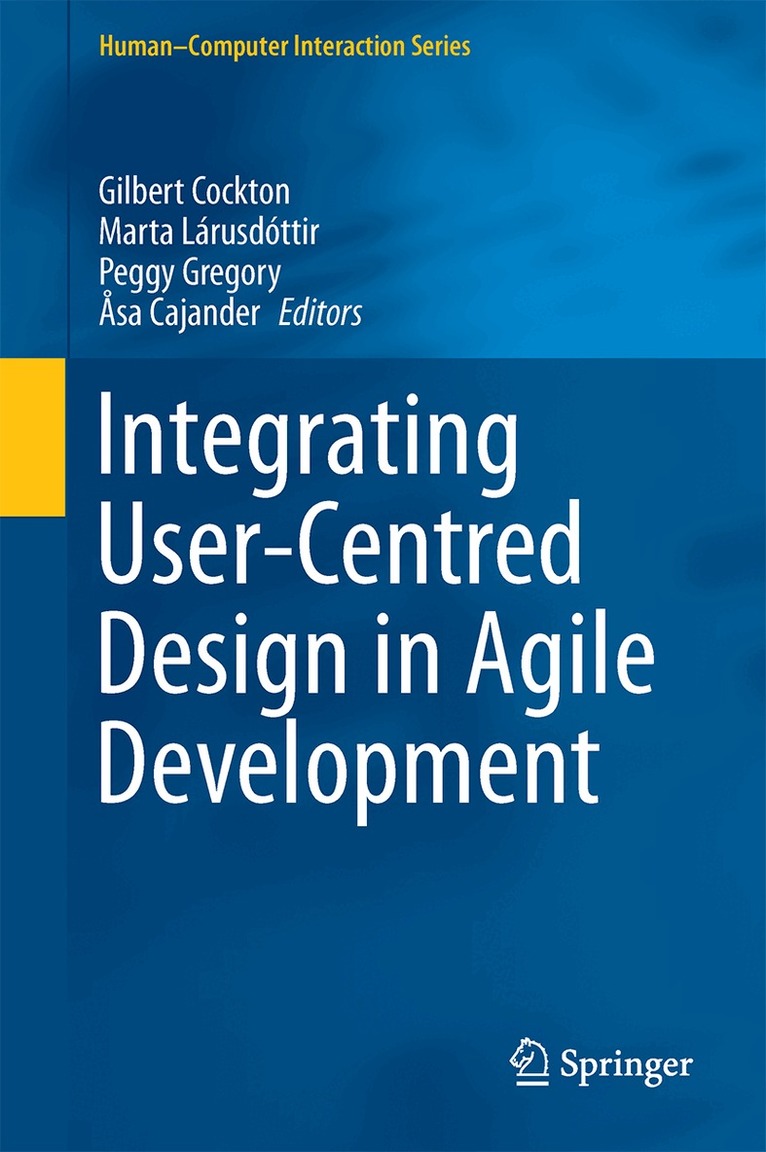
This book examines the possibilities of incorporating elements of user-centred design (UCD) such as user experience (UX) and usability with agile software development. It explores the difficulties and problems inherent in integrating these two practices despite their relative similarities, such as their emphasis on stakeholder collaboration. Developed from a workshop held at NordiCHI in 2014, this edited volume brings together researchers from across the software development, UCD and creative design fields to discuss the current state-of-the-art. Practical case studies of integrating UCD in Agile development across diverse contexts are presented, whilst the different futures for UCD and other design practices in the context of agile software development are identified and explored. Integrating User Centred Design in Agile Development will be ideal for researchers, designers and academics who are interested in software development, user-centred design, agile methodologies and related areas.
1 324 kr
Skickas inom 10-15 vardagar
This book examines the possibilities of incorporating elements of user-centred design (UCD) such as user experience (UX) and usability with agile software development.