Edward J. Nell – författare
Visar alla böcker från författaren Edward J. Nell. Handla med fri frakt och snabb leverans.
15 produkter
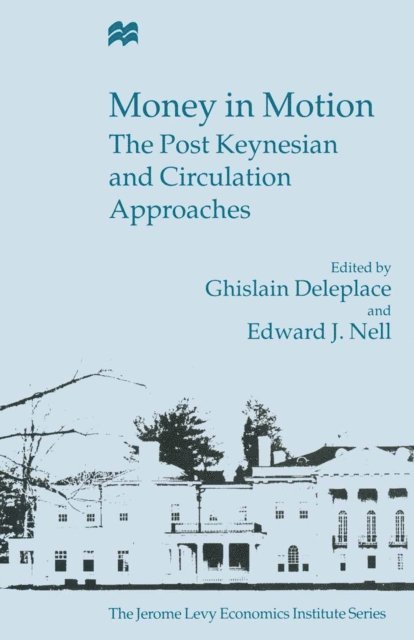
Money in Motion
The Post-Keynesian and Circulation Approaches
Av Deleplace, Ghislain Deleplace m. fl.
Inbunden, 1996
1688 kr
Lägg i varukorg
In analyzing money, contemporary economics has focused its attention on money's function as a store of value, neglecting its role as medium of circulation. When circulation is put center stage, it becomes apparent that the supply of money does indeed adapt to the needs of trade - and does so in …
The General Theory of Transformational Growth
Keynes after Sraffa
Häftad, 2005
854 kr
Lägg i varukorg
For the last century, economic analysis has been wedded to the idea of equilibrium, in spite of the evident fact that most economic relationships are in flux. The theory of transformational growth in this work replaces equilibrium with history. The role of the market is not to allocate resources, …
Growth, Profits and Property
Essays in the Revival of Political Economy
Häftad, 1984
586 kr
Lägg i varukorg
This collection of essays is designed to illustrate the variety, complexity and power of non-neoclassical economic thinking. The essays define the fundamental questions differently, employ different analytical tools and arrive at different conclusions. The two strands of non-neoclassical thinking …
The General Theory of Transformational Growth
Keynes after Sraffa
Inbunden, 1998
2214 kr
Lägg i varukorg
For the last century, economic analysis has been wedded to the idea of equilibrium, in spite of the evident fact that most economic relationships are in flux. The theory of transformational growth in this work replaces equilibrium with history. The role of the market is not to allocate resources, …
Transformational Growth and Effective Demand
Economics after the Capital Critique
Inbunden, 1991
1714 kr
Lägg i varukorg
This collection of essays develops Edward Nell's influential theory of transformational growth. Nell sets established concepts such as the classical notion of prices of production and the wage-profit frontier within a significant new framework that illustrates their role in the dynamic evoution of …
Nicholas Kaldor and Mainstream Economics
Confrontation or Convergence?
Av Willi Semmler, Edward J. Nell
E-bok, 1991
1546 kr
Lägg i varukorg
An examination of the role of Nicholas Kaldor within economics. Topics covered range from Kaldor''s discovery of the Von Neumann input-output model, to cyclical growth in a Kaldorian model, to Nicholas Kaldor as advocate of commodity reserve currency.
Nicholas Kaldor and Mainstream Economics
Confrontation or Convergence?
Av Edward J. Nell, Willi Semmler
Häftad, 1991
1128 kr
Lägg i varukorg
An examination of the role of Nicholas Kaldor within economics. Topics covered range from Kaldor's discovery of the Von Neumann input-output model, to cyclical growth in a Kaldorian model, to Nicholas Kaldor as advocate of commodity reserve currency.
Transformational Growth and Effective Demand
Economics after the Capital Critique
E-bok, 1991
779 kr
Lägg i varukorg
A collection of essays which develop Professor Nell''s economic theory of transformational growth. The author''s previous titles include "Free Market Conservatism: A Critique of Theory and Practice" and "Beyond the Steady State: A Revival of Growth Theory".
Transformational Growth and Effective Demand
Economics after the Capital Critique
Häftad, 1992
551 kr
Lägg i varukorg
A collection of essays which develop Professor Nell's economic theory of transformational growth. The author's previous titles include "Free Market Conservatism: A Critique of Theory and Practice" and "Beyond the Steady State: A Revival of Growth Theory".
Money in Motion
The Post-Keynesian and Circulation Approaches
Av Edward J. Nell, Ghislain Deleplace
E-bok, 2016
2309 kr
Lägg i varukorg
In analyzing money, contemporary economics has focused its attention on money''s function as a store of value, neglecting its role as medium of circulation. When circulation is put center stage, it becomes apparent that the supply of money does indeed adapt to the needs of trade - and does so in …
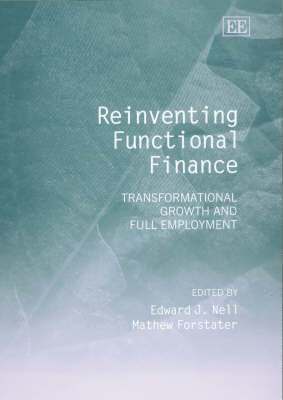
Reinventing Functional Finance
Transformational Growth and Full Employment
Av Edward J. Nell, Mathew Forstater
Inbunden, 2003
2394 kr
Lägg i varukorg
This ambitious book seeks both to revive and revise the idea of 'functional finance'. Followers of this doctrine believe that government budgets should concentrate solely on their macroeconomic impact on the economy, rather than reflecting a concern for sound finance and budgetary …
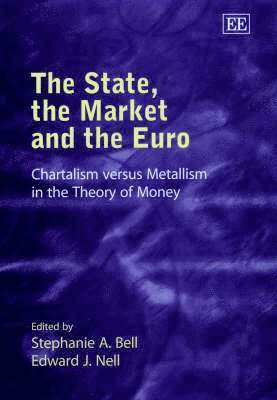
State, the Market and the Euro
Chartalism versus Metallism in the Theory of Money
Av Stephanie A. Bell, Edward J. Nell
Inbunden, 2003
1882 kr
Lägg i varukorg
Is the theory of money that underlies most modern macroeconomics well-grounded? What determines the value of a currency, and how is the state's power over its currency related to its ability to stabilize prices and employment? Charles Goodhart's classic paper 'The Two Concepts of Money: …
Reinventing Functional Finance
Transformational Growth and Full Employment
Av Edward J. Nell, Mathew Forstater
Häftad, 2005
981 kr
Lägg i varukorg
This ambitious book seeks both to revive and revise the idea of 'functional finance'. Followers of this doctrine believe that government budgets should concentrate solely on their macroeconomic impact on the economy, rather than reflecting a concern for sound finance and budgetary …
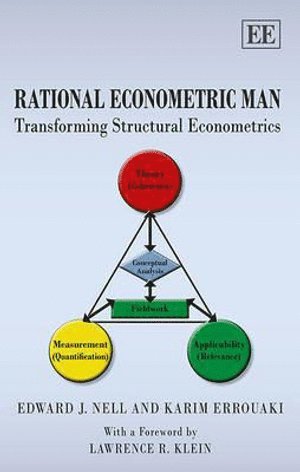
Rational Econometric Man
Transforming Structural Econometrics
Av Edward J. Nell, Karim Errouaki
Inbunden, 2013
3066 kr
Lägg i varukorg
This challenging and original book takes a fresh, innovative look at econometrics, and re-examines the scientific standing of structural econometrics as developed by the founders (Frisch and Tinbergen) and extended by Haavelmo and the Cowles modellers (particularly Klein) during the period …
Rational Econometric Man
Transforming Structural Econometrics
Av Karim Errouaki, Edward J. Nell
E-bok, 2013
472 kr
Lägg i varukorg
This challenging and original book takes a fresh, innovative look at econometrics, and re-examines the scientific standing of structural econometrics as developed by the founders (Frisch and Tinbergen) and extended by Haavelmo and the Cowles modellers (particularly Klein) during the period …