Willi Semmler – författare
Visar alla böcker från författaren Willi Semmler. Handla med fri frakt och snabb leverans.
73 produkter
Oxford Handbook of the Macroeconomics of Global Warming
Av Willi Semmler, Lucas Bernard
E-bok, 2014
1888 kr
Lägg i varukorg
The first World Climate Conference, which was sponsored by the World Meteorological Organization in Genève in 1979, triggered an international dialogue on global warming. From the 1997 United Nations-sponsored conference-during which the Kyoto Protocol was signed-through meetings in Copenhagen, …
Stochastic Dynamic Macroeconomics
Theory and Empirical Evidence
E-bok, 2006
906 kr
Lägg i varukorg
This is a book on stochastic dynamic macroeconomics from a Keynesian perspective. It shows that including Keynesian features in intertemporal models considerably contributes to resolve major puzzles arising in the context of the Dynamic General Equilibrium (DGE) model. It also demonstrates that …
Stochastic Dynamic Macroeconomics
Theory and Empirical Evidence
Inbunden, 2006
1431 kr
Lägg i varukorg
This is a book on stochastic dynamic macroeconomics from a Keynesian perpective. It shows that including Keynesian features in intertemporal models considerably contributes to resolve major puzzles arising in the context of the Dynamic General Equilibrium (DGE) model. It also demonstrates that …
The Global Environment, Natural Resources, and Economic Growth
Av Alfred Greiner, Willi Semmler
Inbunden, 2008
962 kr
Lägg i varukorg
Recently, the public attention has turned toward the intricate interrelation between economic growth and global warming. This book focuses on this nexus but broadens the framework to study the issue. Growth is seen as global growth, which affects the global environment and climate change. Global …
Stochastic Dynamic Macroeconomics
Theory and Empirical Evidence
E-bok, 2006
906 kr
Lägg i varukorg
This is a book on stochastic dynamic macroeconomics from a Keynesian perspective. It shows that including Keynesian features in intertemporal models considerably contributes to resolve major puzzles arising in the context of the Dynamic General Equilibrium (DGE) model. It also demonstrates that …
The Oxford Handbook of the Macroeconomics of Global Warming
Av Willi Semmler, Lucas Bernard
Inbunden, 2015
2948 kr
Lägg i varukorg
The first World Climate Conference, which was sponsored by the World Meteorological Organization in Genève in 1979, triggered an international dialogue on global warming. From the 1997 United Nations-sponsored conference-during which the Kyoto Protocol was signed-through meetings in Copenhagen, …
Oxford Handbook of the Macroeconomics of Global Warming
Av Willi Semmler, Lucas Bernard
E-bok, 2014
1888 kr
Lägg i varukorg
The first World Climate Conference, which was sponsored by the World Meteorological Organization in Genève in 1979, triggered an international dialogue on global warming. From the 1997 United Nations-sponsored conference-during which the Kyoto Protocol was signed-through meetings in Copenhagen, …
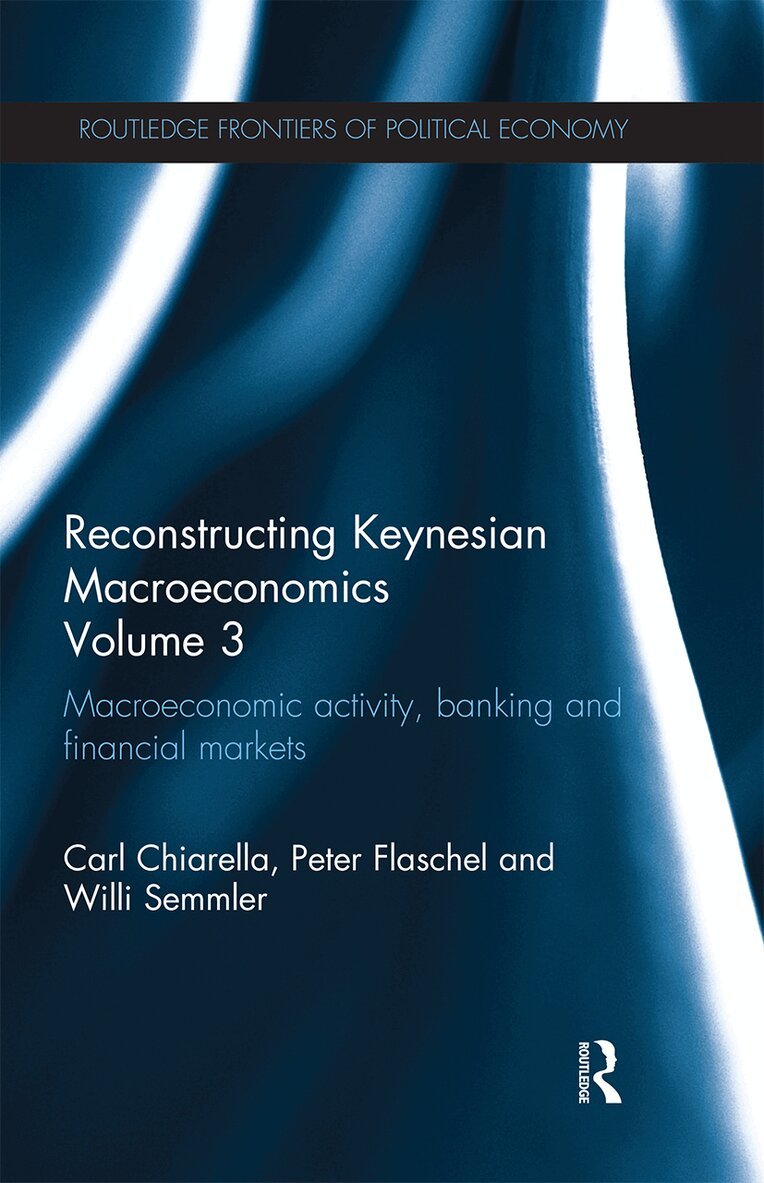
Reconstructing Keynesian Macroeconomics Volume 3
Macroeconomic Activity, Banking and Financial Markets
Av Carl Chiarella, Peter Flaschel m. fl.
Häftad, 2020
742 kr
Lägg i varukorg
This book represents the third of three volumes offering a complete reinterpretation and restructuring of Keynesian macroeconomics and a detailed investigation of the disequilibrium adjustment processes characterizing the financial, the goods and the labour markets and their interaction.This book …
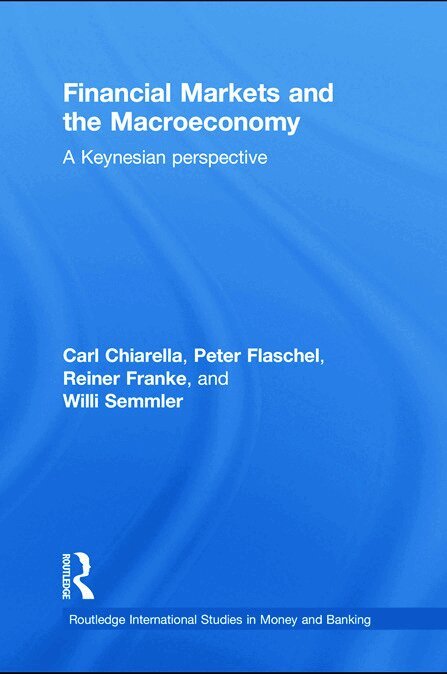
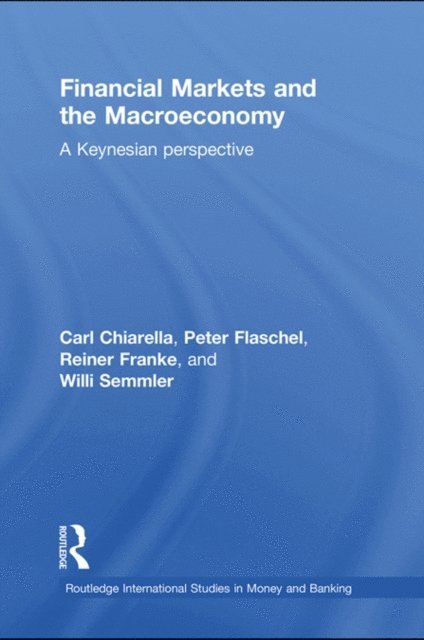
Financial Markets and the Macroeconomy
A Keynesian Perspective
Av Carl Chiarella, Peter Flaschel m. fl.
Häftad, 2012
936 kr
Lägg i varukorg
The financial instability and its spillover to the real sector have become a great challenge to macro-economic theory. The book takes a Keynesian theoretical perspective, representing an attempt to revive what Keynes stressed in his General Theory, namely the role of the financial market in …
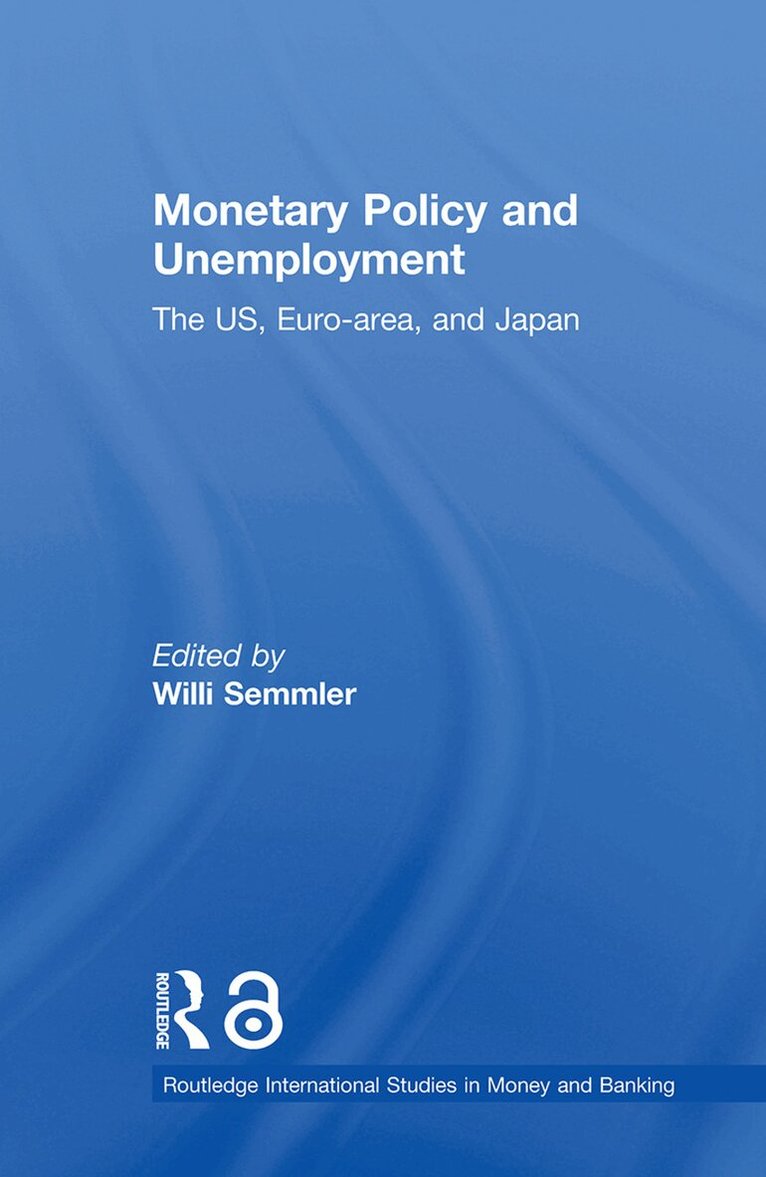
Monetary Policy and Unemployment
The US, Euro-area and Japan
Häftad, 2012
772 kr
Lägg i varukorg
This book pulls together papers presented at a conference in honour of the 1981 Nobel Prize Winner for Economic Science, the late James Tobin. Among the contributors are Olivier Blanchard, Edmund Phelps, Charles Goodhart and Marco Buti.One of the main aims of the conference was to discuss what …
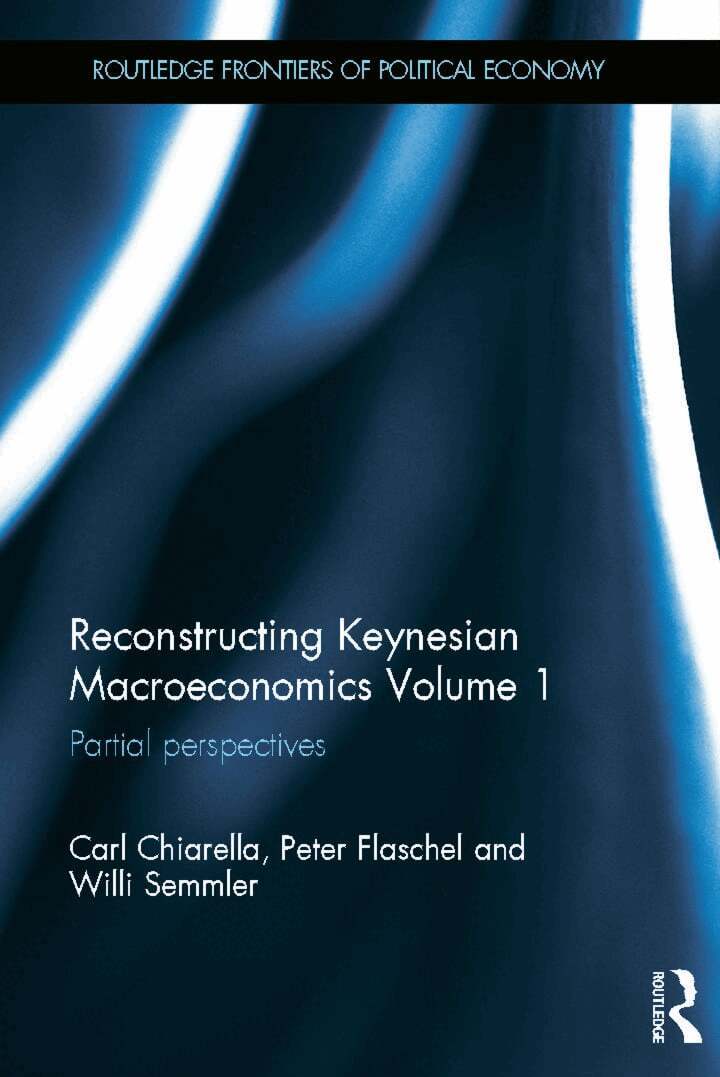
Reconstructing Keynesian Macroeconomics Volume 1
Partial Perspectives
Av Carl Chiarella, Peter Flaschel m. fl.
Inbunden, 2011
2828 kr
Lägg i varukorg
This book represents the first of three volumes offering a complete reinterpretation and restructuring of Keynesian macroeconomics and a detailed investigation of the disequilibrium adjustment processes characterizing the financial, the goods and the labour markets and their interaction. It …
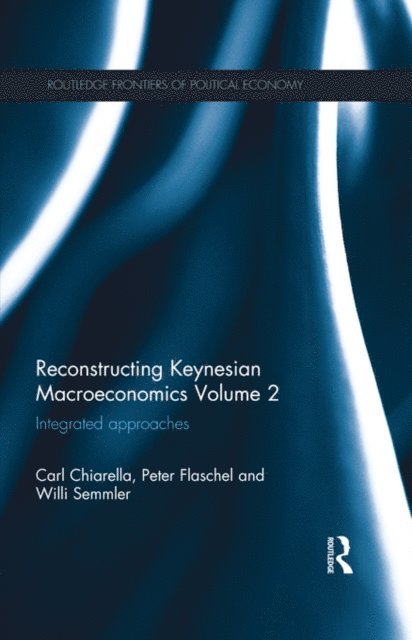
Reconstructing Keynesian Macroeconomics Volume 2
Integrated Approaches
Av Carl Chiarella, Peter Flaschel m. fl.
Inbunden, 2012
2588 kr
Lägg i varukorg
This book represents the second of three volumes offering a complete reinterpretation and restructuring of Keynesian macroeconomics and a detailed investigation of the disequilibrium adjustment processes characterizing the financial, the goods and the labour markets and their interaction.In this …
Reconstructing Keynesian Macroeconomics Volume 3
Macroeconomic Activity, Banking and Financial Markets
Av Carl Chiarella, Peter Flaschel m. fl.
Inbunden, 2014
3158 kr
Lägg i varukorg
This book represents the third of three volumes offering a complete reinterpretation and restructuring of Keynesian macroeconomics and a detailed investigation of the disequilibrium adjustment processes characterizing the financial, the goods and the labour markets and their interaction.This book …
Monetary Policy and Unemployment
The US, Euro-area and Japan
Inbunden, 2005
3564 kr
Lägg i varukorg
This book pulls together papers presented at a conference in honour of the 1981 Nobel Prize Winner for Economic Science, the late James Tobin. Among the contributors are Olivier Blanchard, Edmund Phelps, Charles Goodhart and Marco Buti.One of the main aims of the conference was to discuss what …
Financial Markets and the Macroeconomy
A Keynesian Perspective
Av Carl Chiarella, Peter Flaschel m. fl.
Inbunden, 2009
2828 kr
Lägg i varukorg
The financial instability and its spillover to the real sector have become a great challenge to macro-economic theory. The book takes a Keynesian theoretical perspective, representing an attempt to revive what Keynes stressed in his General Theory, namely the role of the financial market in …
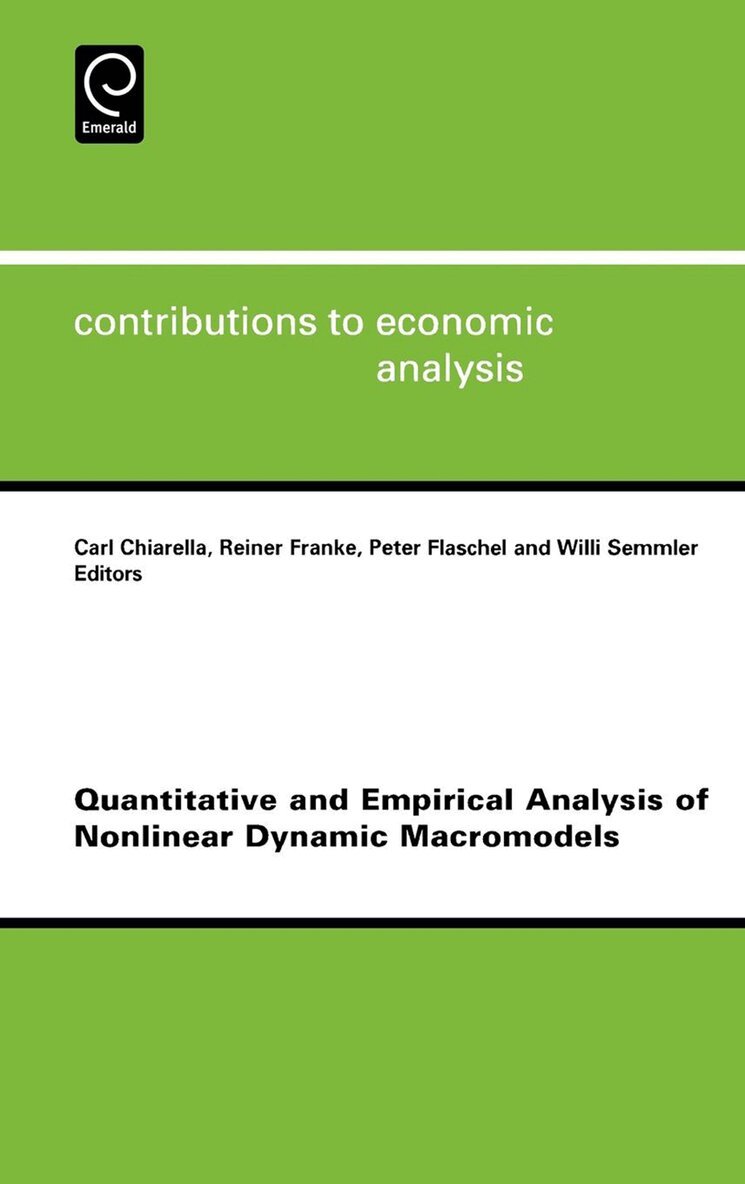
Quantitative and Empirical Analysis of Nonlinear Dynamic Macromodels
Av Carl Chiarella, Reiner Franke m. fl.
Inbunden, 2006
2281 kr
Lägg i varukorg
This book represents an ongoing research agenda the aim of which is to contribute to the Keynesian paradigm in macroeconomics. A currently dominant research strategy in macroeconomics is based on the Dynamic General Equilibrium (DGE) model. Its essential features are the assumption of intertemporal …
Forces of Economic Growth
A Time Series Perspective
Av Alfred Greiner, Willi Semmler m. fl.
Inbunden, 2005
1302 kr
Lägg i varukorg
In economics, the emergence of New Growth Theory in recent decades has directed attention to an old and important problem: what are the forces of economic growth and how can public policy enhance them? This book examines major forces of growth--including spillover effects and externalities, …
Forces of Economic Growth
A Time Series Perspective
Av Alfred Greiner, Willi Semmler m. fl.
Häftad, 2016
578 kr
Lägg i varukorg
In economics, the emergence of New Growth Theory in recent decades has directed attention to an old and important problem: what are the forces of economic growth and how can public policy enhance them? This book examines major forces of growth--including spillover effects and externalities, …
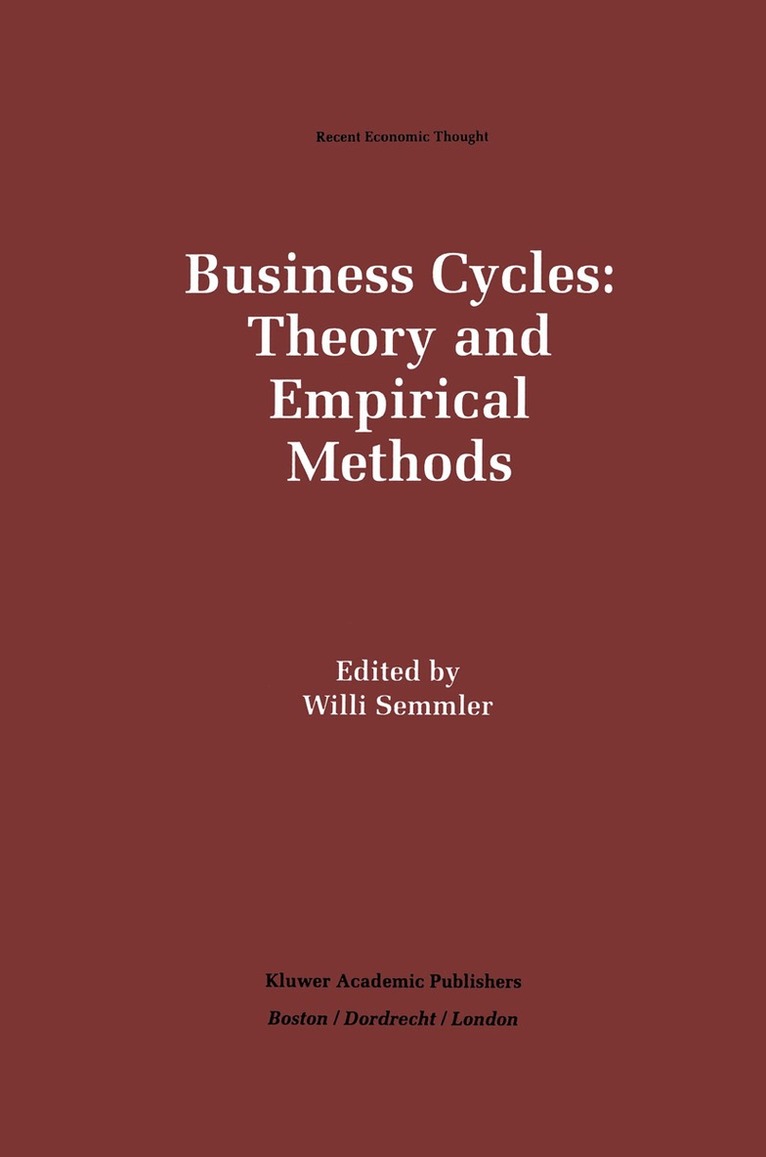
Business Cycles: Theory and Empirical Methods
Inbunden, 1994
2254 kr
Lägg i varukorg
In macrodynamics and business cycle analysis we find nowadays a variety of approaches elaborating frameworks for studying the fluctuations in economic and financial data. These approaches are viewed from Keynesian, monetarist and rational expectations standpoints. There are now also numerous …
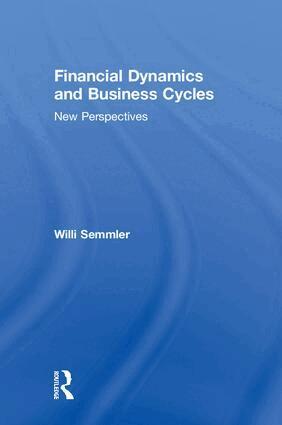
Financial Dynamics and Business Cycles
New Perspectives
Inbunden, 1989
2195 kr
Lägg i varukorg
As the 55th anniversary of the bank holiday of March 1933 approached, financial instability was a main topic in the financial press. Daily reports appeared of international debt crises, of the covert bankruptcy of deposit insurance, and of the near bankruptcy of one great financial institution …
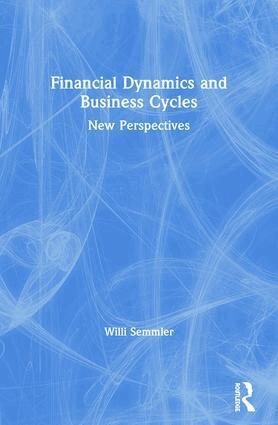
Financial Dynamics and Business Cycles
New Perspectives
Häftad, 1991
592 kr
Lägg i varukorg
As the 55th anniversary of the bank holiday of March 1933 approached, financial instability was a main topic in the financial press. Daily reports appeared of international debt crises, of the covert bankruptcy of deposit insurance, and of the near bankruptcy of one great financial institution …
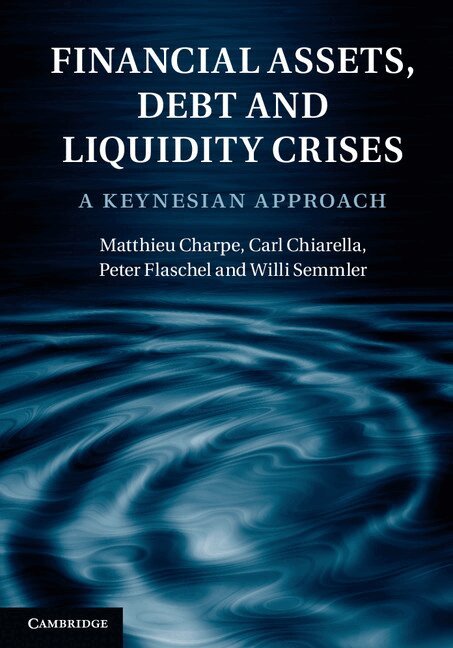
Financial Assets, Debt and Liquidity Crises
A Keynesian Approach
Av Matthieu Charpe, Carl Chiarella m. fl.
Inbunden, 2011
2214 kr
Lägg i varukorg
The macroeconomic development of most major industrial economies is characterised by boom-bust cycles. Normally such boom-bust cycles are driven by specific sectors of the economy. In the financial meltdown of the years 2007-9 it was the credit sector and the real-estate sector that were the main …
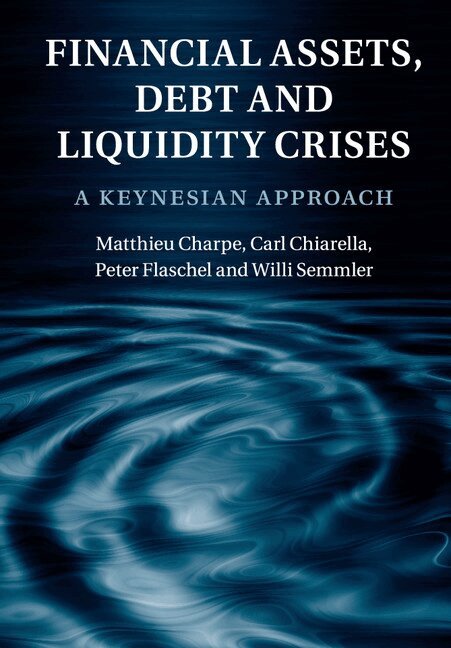
Financial Assets, Debt and Liquidity Crises
A Keynesian Approach
Av Matthieu Charpe, Carl Chiarella m. fl.
Häftad, 2015
787 kr
Lägg i varukorg
The macroeconomic development of most major industrial economies is characterised by boom-bust cycles. Normally such boom-bust cycles are driven by specific sectors of the economy. In the financial meltdown of the years 2007-9 it was the credit sector and the real-estate sector that were the main …
Financial Markets and the Macroeconomy
A Keynesian Perspective
Av Willi Semmler, Reiner Franke m. fl.
E-bok, 2009
1082 kr
Lägg i varukorg
The financial instability and its spillover to the real sector have become a great challenge to macro-economic theory. The book takes a Keynesian theoretical perspective, representing an attempt to revive what Keynes stressed in his General Theory , namely the role of the financial market in …
Financial Markets and the Macroeconomy
A Keynesian Perspective
Av Willi Semmler, Reiner Franke m. fl.
E-bok, 2009
1071 kr
Lägg i varukorg
The financial instability and its spillover to the real sector have become a great challenge to macro-economic theory. The book takes a Keynesian theoretical perspective, representing an attempt to revive what Keynes stressed in his General Theory , namely the role of the financial market in …
Reconstructing Keynesian Macroeconomics Volume 2
Integrated Approaches
Av Willi Semmler, Peter Flaschel m. fl.
E-bok, 2013
910 kr
Lägg i varukorg
This book represents the second of three volumes offering a complete reinterpretation and restructuring of Keynesian macroeconomics and a detailed investigation of the disequilibrium adjustment processes characterizing the financial, the goods and the labour markets and their interaction. In this …
Reconstructing Keynesian Macroeconomics Volume 2
Integrated Approaches
Av Willi Semmler, Peter Flaschel m. fl.
E-bok, 2013
890 kr
Lägg i varukorg
This book represents the second of three volumes offering a complete reinterpretation and restructuring of Keynesian macroeconomics and a detailed investigation of the disequilibrium adjustment processes characterizing the financial, the goods and the labour markets and their interaction. In this …
Reconstructing Keynesian Macroeconomics Volume 1
Partial Perspectives
Av Willi Semmler, Peter Flaschel m. fl.
E-bok, 2012
1034 kr
Lägg i varukorg
This book represents the first of three volumes offering a complete reinterpretation and restructuring of Keynesian macroeconomics and a detailed investigation of the disequilibrium adjustment processes characterizing the financial, the goods and the labour markets and their interaction. It …
Reconstructing Keynesian Macroeconomics Volume 1
Partial Perspectives
Av Willi Semmler, Peter Flaschel m. fl.
E-bok, 2012
1004 kr
Lägg i varukorg
This book represents the first of three volumes offering a complete reinterpretation and restructuring of Keynesian macroeconomics and a detailed investigation of the disequilibrium adjustment processes characterizing the financial, the goods and the labour markets and their interaction. It …
Reconstructing Keynesian Macroeconomics Volume 1
Partial Perspectives
Av Carl Chiarella, Peter Flaschel m. fl.
Häftad, 2014
876 kr
Lägg i varukorg
This book represents the first of three volumes offering a complete reinterpretation and restructuring of Keynesian macroeconomics and a detailed investigation of the disequilibrium adjustment processes characterizing the financial, the goods and the labour markets and their interaction. It …