Peter Flaschel – författare
Visar alla böcker från författaren Peter Flaschel. Handla med fri frakt och snabb leverans.
58 produkter
Flexicurity Capitalism
Foundations, Problems, and Perspectives
Av Peter Flaschel, Alfred Greiner
Inbunden, 2012
1563 kr
Lägg i varukorg
An intense debate has played out in recent years regarding how to implement a so-called "flexicurity system"-a labor market reform that combines flexibility, particularly in the hiring and firing process of firms, with security in the employment and income of the workforce. In Flexicurity …
Flexicurity Capitalism
Foundations, Problems, and Perspectives
Av Alfred Greiner, Peter Flaschel
E-bok, 2012
982 kr
Lägg i varukorg
An intense debate has played out in recent years regarding how to implement a so-called "flexicurity system"-a labor market reform that combines flexibility, particularly in the hiring and firing process of firms, with security in the employment and income of the workforce. In Flexicurity …
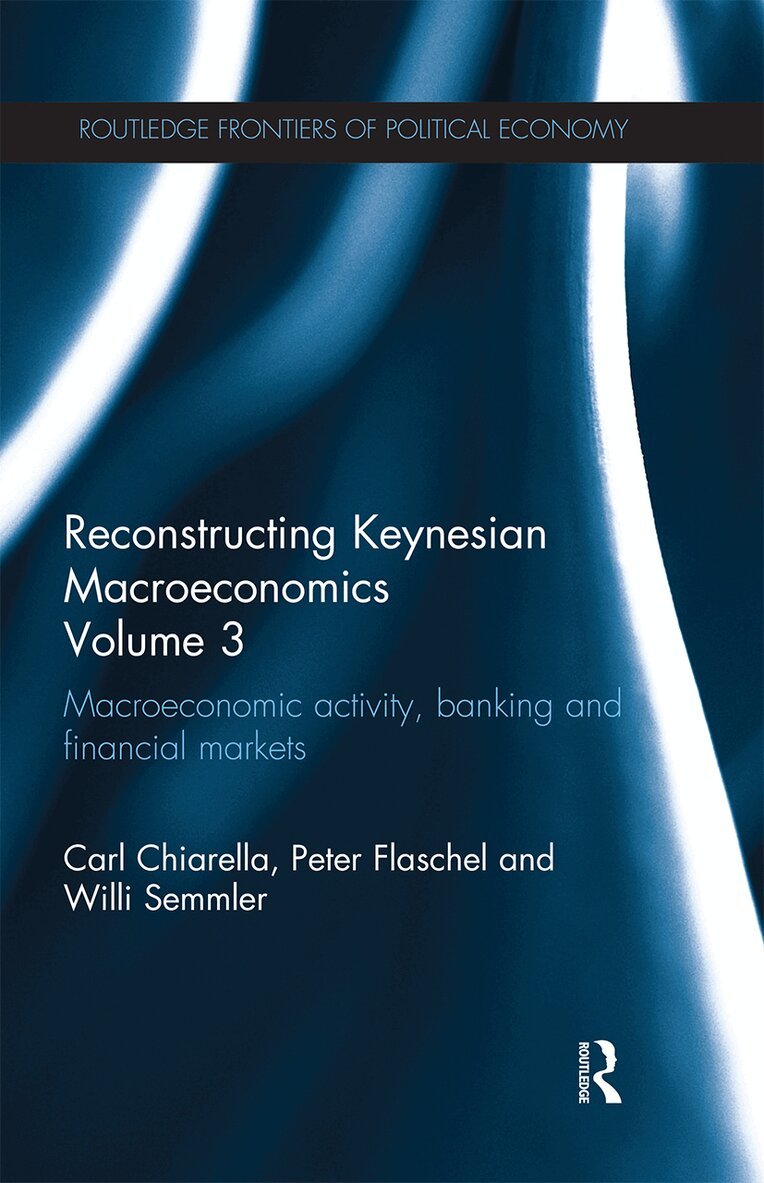
Reconstructing Keynesian Macroeconomics Volume 3
Macroeconomic Activity, Banking and Financial Markets
Av Carl Chiarella, Peter Flaschel m. fl.
Häftad, 2020
743 kr
Lägg i varukorg
This book represents the third of three volumes offering a complete reinterpretation and restructuring of Keynesian macroeconomics and a detailed investigation of the disequilibrium adjustment processes characterizing the financial, the goods and the labour markets and their interaction.This book …
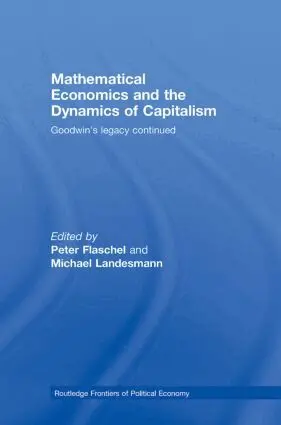
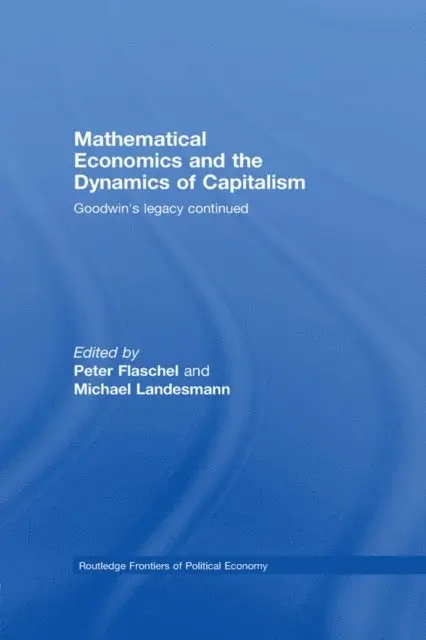
Mathematical Economics and the Dynamics of Capitalism
Goodwin's Legacy Continued
Av Peter Flaschel, Michael Landesmann
Inbunden, 2008
2590 kr
Lägg i varukorg
Richard Goodwin was a pioneer in the use of mathematical tools to understand the dynamics of capitalist economies. This book contains contributions which focus on the rigorous extension of Goodwin’s modelling of macro-dynamics and the micro-structures underlying them, and also research with a wider …
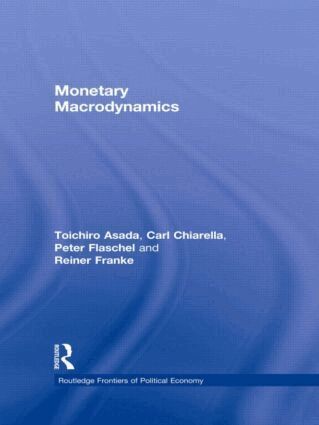
Monetary Macrodynamics
Av Toichiro Asada, Carl Chiarella m. fl.
Inbunden, 2010
1885 kr
Lägg i varukorg
This book investigates the interaction of effective goods demand with the wage-price spiral, and the impact of monetary policy on financial and the real markets from a Keynesian perspective. Endogenous business fluctuations are studied in the context of long-run distributive cycles in an advanced, …
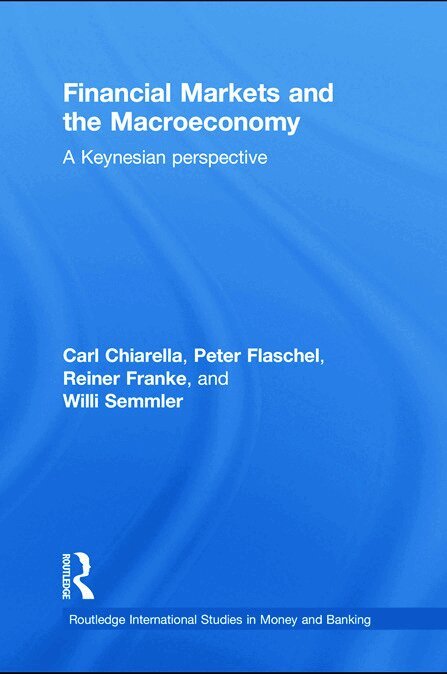
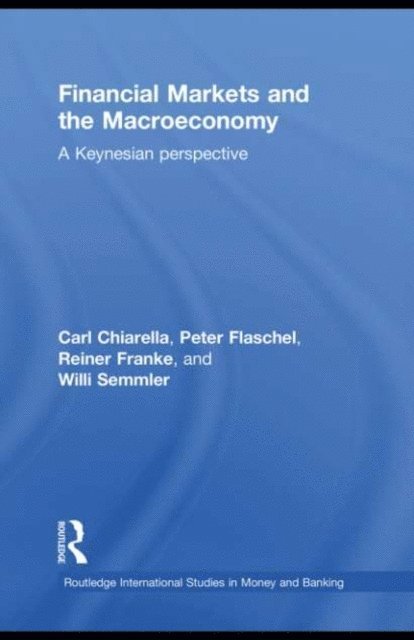
Financial Markets and the Macroeconomy
A Keynesian Perspective
Av Carl Chiarella, Peter Flaschel m. fl.
Häftad, 2012
938 kr
Lägg i varukorg
The financial instability and its spillover to the real sector have become a great challenge to macro-economic theory. The book takes a Keynesian theoretical perspective, representing an attempt to revive what Keynes stressed in his General Theory, namely the role of the financial market in …
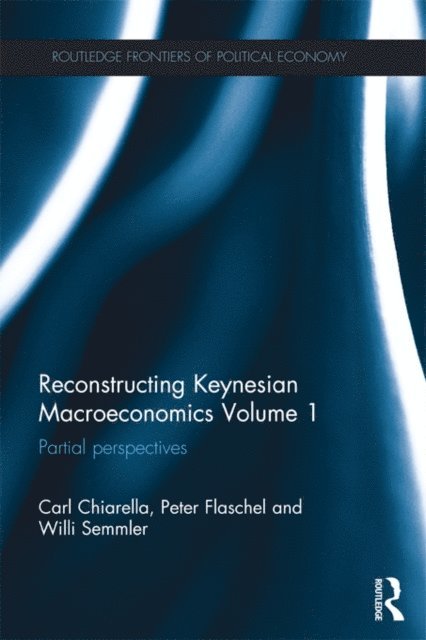
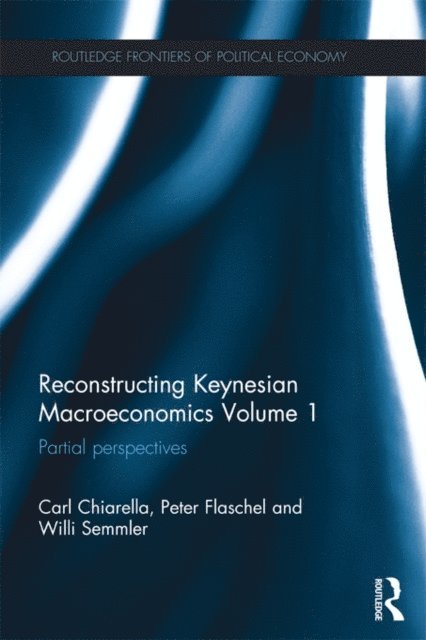
Reconstructing Keynesian Macroeconomics Volume 1
Partial Perspectives
Av Carl Chiarella, Peter Flaschel m. fl.
Inbunden, 2011
2831 kr
Lägg i varukorg
This book represents the first of three volumes offering a complete reinterpretation and restructuring of Keynesian macroeconomics and a detailed investigation of the disequilibrium adjustment processes characterizing the financial, the goods and the labour markets and their interaction. It …
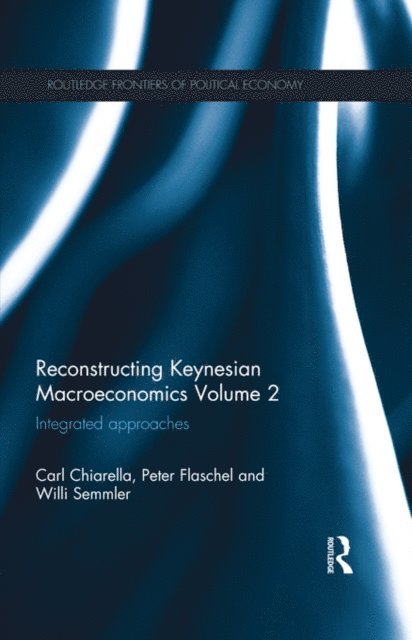
Reconstructing Keynesian Macroeconomics Volume 2
Integrated Approaches
Av Carl Chiarella, Peter Flaschel m. fl.
Inbunden, 2012
2590 kr
Lägg i varukorg
This book represents the second of three volumes offering a complete reinterpretation and restructuring of Keynesian macroeconomics and a detailed investigation of the disequilibrium adjustment processes characterizing the financial, the goods and the labour markets and their interaction.In this …
Reconstructing Keynesian Macroeconomics Volume 3
Macroeconomic Activity, Banking and Financial Markets
Av Carl Chiarella, Peter Flaschel m. fl.
Inbunden, 2014
3161 kr
Lägg i varukorg
This book represents the third of three volumes offering a complete reinterpretation and restructuring of Keynesian macroeconomics and a detailed investigation of the disequilibrium adjustment processes characterizing the financial, the goods and the labour markets and their interaction.This book …
Monetary Macrodynamics
Av Toichiro Asada, Carl Chiarella m. fl.
Häftad, 2013
518 kr
Lägg i varukorg
This book investigates the interaction of effective goods demand with the wage-price spiral, and the impact of monetary policy on financial and the real markets from a Keynesian perspective. Endogenous business fluctuations are studied in the context of long-run distributive cycles in an advanced, …
Mathematical Economics and the Dynamics of Capitalism
Goodwin's Legacy Continued
Av Peter Flaschel, Michael Landesmann
Häftad, 2014
938 kr
Lägg i varukorg
Richard Goodwin was a pioneer in the use of mathematical tools to understand the dynamics of capitalist economies. This book contains contributions which focus on the rigorous extension of Goodwin’s modelling of macro-dynamics and the micro-structures underlying them, and also research with a wider …
Financial Markets and the Macroeconomy
A Keynesian Perspective
Av Carl Chiarella, Peter Flaschel m. fl.
Inbunden, 2009
2831 kr
Lägg i varukorg
The financial instability and its spillover to the real sector have become a great challenge to macro-economic theory. The book takes a Keynesian theoretical perspective, representing an attempt to revive what Keynes stressed in his General Theory, namely the role of the financial market in …
Quantitative and Empirical Analysis of Nonlinear Dynamic Macromodels
Av Carl Chiarella, Reiner Franke m. fl.
Inbunden, 2006
2281 kr
Lägg i varukorg
This book represents an ongoing research agenda the aim of which is to contribute to the Keynesian paradigm in macroeconomics. A currently dominant research strategy in macroeconomics is based on the Dynamic General Equilibrium (DGE) model. Its essential features are the assumption of intertemporal …
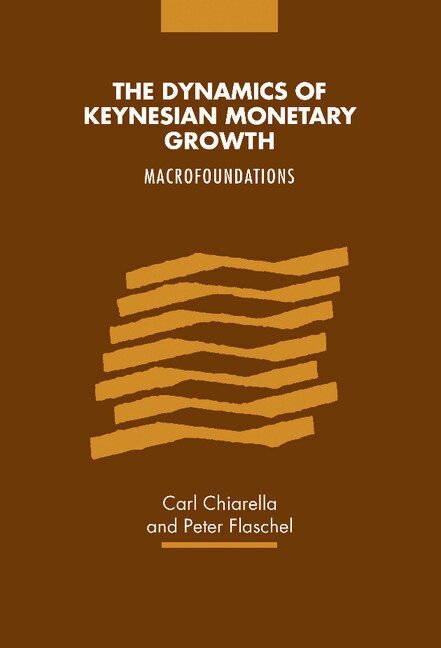
The Dynamics of Keynesian Monetary Growth
Macro Foundations
Av Carl Chiarella, Peter Flaschel
Häftad, 2011
687 kr
Lägg i varukorg
Originally published in 2000, this book is in the tradition of non-market-clearing approaches to macrodynamic approaches. It builds a series of integrated disequilibrium growth models of increasing complexity, which display the economic interaction between households, firms and government across …
Foundations for a Disequilibrium Theory of the Business Cycle
Qualitative Analysis and Quantitative Assessment
Av Carl Chiarella, Peter Flaschel m. fl.
Häftad, 2011
804 kr
Lägg i varukorg
Building on The Dynamics of Keynesian Monetary Growth by Chiarella and Flaschel (2000), this book is a key contribution to business cycle theory, setting out a disequilibrium approach with gradual adjustments of the key macroeconomic variables. Its analytic study of a deterministic model of …
The Dynamics of Keynesian Monetary Growth
Macro Foundations
Av Carl Chiarella, Peter Flaschel
Inbunden, 2000
1801 kr
Lägg i varukorg
Originally published in 2000, this book is in the tradition of non-market-clearing approaches to macrodynamic approaches. It builds a series of integrated disequilibrium growth models of increasing complexity, which display the economic interaction between households, firms and government across …
Foundations for a Disequilibrium Theory of the Business Cycle
Qualitative Analysis and Quantitative Assessment
Av Carl Chiarella, Peter Flaschel m. fl.
Inbunden, 2005
2331 kr
Lägg i varukorg
Building on The Dynamics of Keynesian Monetary Growth by Chiarella and Flaschel (2000), this book is a key contribution to business cycle theory, setting out a disequilibrium approach with gradual adjustments of the key macroeconomic variables. Its analytic study of a deterministic model of …
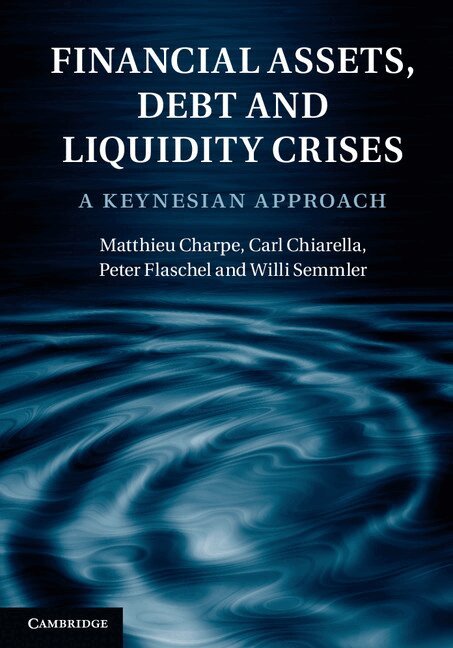
Financial Assets, Debt and Liquidity Crises
A Keynesian Approach
Av Matthieu Charpe, Carl Chiarella m. fl.
Inbunden, 2011
2214 kr
Lägg i varukorg
The macroeconomic development of most major industrial economies is characterised by boom-bust cycles. Normally such boom-bust cycles are driven by specific sectors of the economy. In the financial meltdown of the years 2007-9 it was the credit sector and the real-estate sector that were the main …
Financial Assets, Debt and Liquidity Crises
A Keynesian Approach
Av Matthieu Charpe, Carl Chiarella m. fl.
Häftad, 2015
787 kr
Lägg i varukorg
The macroeconomic development of most major industrial economies is characterised by boom-bust cycles. Normally such boom-bust cycles are driven by specific sectors of the economy. In the financial meltdown of the years 2007-9 it was the credit sector and the real-estate sector that were the main …
Mathematical Economics and the Dynamics of Capitalism
Goodwin's Legacy Continued
Av Peter Flaschel, Michael Landesmann
E-bok, 2016
1106 kr
Lägg i varukorg
Richard Goodwin was a pioneer in the use of mathematical tools to understand the dynamics of capitalist economies. This book contains contributions which focus on the rigorous extension of Goodwin’s modelling of macro-dynamics and the micro-structures underlying them, and also research with a wider …
Mathematical Economics and the Dynamics of Capitalism
Goodwin's Legacy Continued
Av Peter Flaschel, Michael Landesmann
E-bok, 2016
1082 kr
Lägg i varukorg
Richard Goodwin was a pioneer in the use of mathematical tools to understand the dynamics of capitalist economies. This book contains contributions which focus on the rigorous extension of Goodwin’s modelling of macro-dynamics and the micro-structures underlying them, and also research with a wider …
Monetary Macrodynamics
Av Reiner Franke, Peter Flaschel m. fl.
E-bok, 2012
607 kr
Lägg i varukorg
This book investigates the interaction of effective goods demand with the wage-price spiral, and the impact of monetary policy on financial and the real markets from a Keynesian perspective. Endogenous business fluctuations are studied in the context of long-run distributive cycles in an advanced, …
Monetary Macrodynamics
Av Reiner Franke, Peter Flaschel m. fl.
E-bok, 2012
593 kr
Lägg i varukorg
This book investigates the interaction of effective goods demand with the wage-price spiral, and the impact of monetary policy on financial and the real markets from a Keynesian perspective. Endogenous business fluctuations are studied in the context of long-run distributive cycles in an advanced, …
Financial Markets and the Macroeconomy
A Keynesian Perspective
Av Willi Semmler, Reiner Franke m. fl.
E-bok, 2009
1082 kr
Lägg i varukorg
The financial instability and its spillover to the real sector have become a great challenge to macro-economic theory. The book takes a Keynesian theoretical perspective, representing an attempt to revive what Keynes stressed in his General Theory , namely the role of the financial market in …
Financial Markets and the Macroeconomy
A Keynesian Perspective
Av Willi Semmler, Reiner Franke m. fl.
E-bok, 2009
1071 kr
Lägg i varukorg
The financial instability and its spillover to the real sector have become a great challenge to macro-economic theory. The book takes a Keynesian theoretical perspective, representing an attempt to revive what Keynes stressed in his General Theory , namely the role of the financial market in …
Reconstructing Keynesian Macroeconomics Volume 2
Integrated Approaches
Av Willi Semmler, Peter Flaschel m. fl.
E-bok, 2013
910 kr
Lägg i varukorg
This book represents the second of three volumes offering a complete reinterpretation and restructuring of Keynesian macroeconomics and a detailed investigation of the disequilibrium adjustment processes characterizing the financial, the goods and the labour markets and their interaction. In this …
Reconstructing Keynesian Macroeconomics Volume 2
Integrated Approaches
Av Willi Semmler, Peter Flaschel m. fl.
E-bok, 2013
890 kr
Lägg i varukorg
This book represents the second of three volumes offering a complete reinterpretation and restructuring of Keynesian macroeconomics and a detailed investigation of the disequilibrium adjustment processes characterizing the financial, the goods and the labour markets and their interaction. In this …
Reconstructing Keynesian Macroeconomics Volume 1
Partial Perspectives
Av Willi Semmler, Peter Flaschel m. fl.
E-bok, 2012
1034 kr
Lägg i varukorg
This book represents the first of three volumes offering a complete reinterpretation and restructuring of Keynesian macroeconomics and a detailed investigation of the disequilibrium adjustment processes characterizing the financial, the goods and the labour markets and their interaction. It …
Reconstructing Keynesian Macroeconomics Volume 1
Partial Perspectives
Av Willi Semmler, Peter Flaschel m. fl.
E-bok, 2012
1004 kr
Lägg i varukorg
This book represents the first of three volumes offering a complete reinterpretation and restructuring of Keynesian macroeconomics and a detailed investigation of the disequilibrium adjustment processes characterizing the financial, the goods and the labour markets and their interaction. It …
Reconstructing Keynesian Macroeconomics Volume 1
Partial Perspectives
Av Carl Chiarella, Peter Flaschel m. fl.
Häftad, 2014
878 kr
Lägg i varukorg
This book represents the first of three volumes offering a complete reinterpretation and restructuring of Keynesian macroeconomics and a detailed investigation of the disequilibrium adjustment processes characterizing the financial, the goods and the labour markets and their interaction. It …