Edwin G. Burrows – författare
Visar alla böcker från författaren Edwin G. Burrows. Handla med fri frakt och snabb leverans.
6 produkter
6 produkter
Häftad, Engelska, 2001
330 kr
Skickas inom 5-8 vardagar
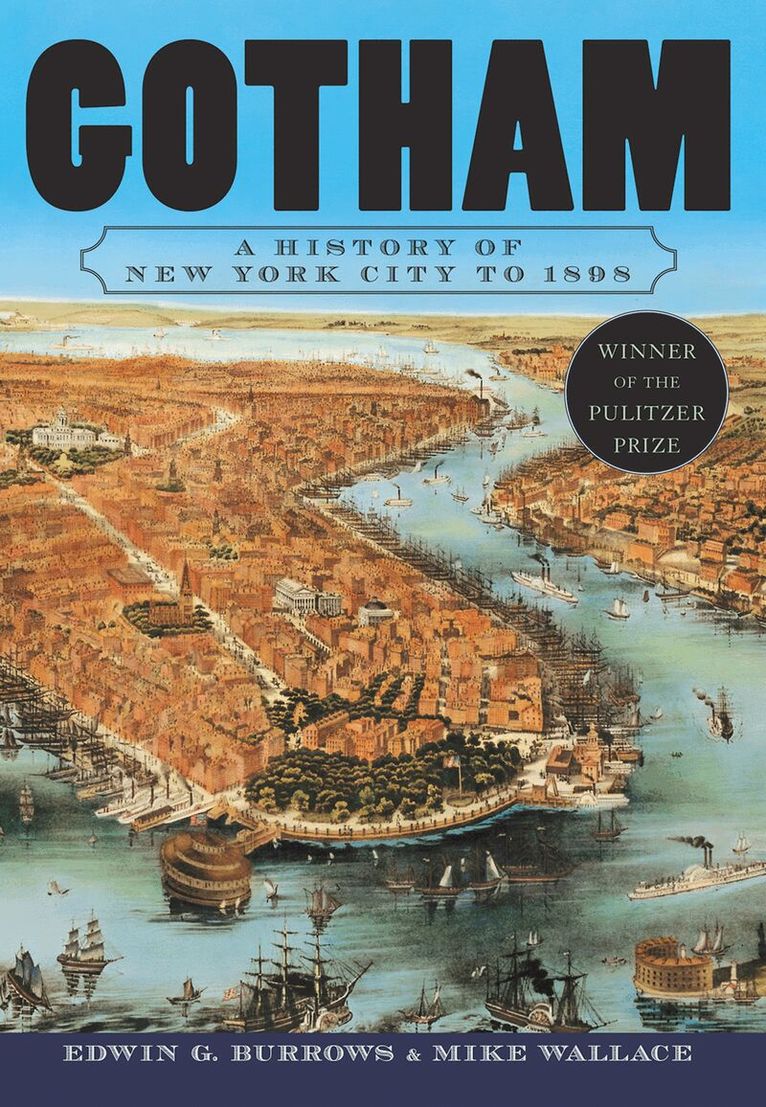
To European explorers, it was Eden, a paradise of waist-high grasses, towering stands of walnut, maple, chestnut, and oak, and forests that teemed with bears, wolves, racoons, beavers, otters, and foxes. Today it is the city of Broadway and Wall Street, the Empire State Building and the Statue of Liberty, and the home of millions of people, who have come from every corner of the nation and the globe.In "Gotham", Edwin G. Burrows and Mike Wallace have produced a monumental work of history,on ethat ranges from the Indian tribes that settled in and around the island of Manna-hata, to the consolidation of the five boroughs into Greater New York in 1898. Readers will relive the tumultuous early years of New Amsterdam under the Dutch West India Company, Peter Stuyvesant's despotic regime, Indian wars, slave resistance and revolt, the Revolutionary War and the defeat of Washington's army on Brooklyn Heoghts, the destructive seven years of British occupation, New York as the nation's first capital, the duel between Aaron Burr and Alexander Hamilton, the Erie Canal and the coming of the railroads, the growth of the city as a port and financial centre, the infamous draft riots of the Civil War, the great flood of immigrants, the rise of mass entertainment such as vaudeville and Coney Island, the building of the Brooklyn Bridge and the birth of the skyscraper. Here too is a cast of thousands - the rebel Jacob Leisler and the reformer Joanna Bethune; Clement Moore, who saved Greenwich village from the city's grid street plan; Herman Melville, who painted disillusioned portraits of city life; and Walt Whitman, who hapily celebrated that same life. We meet Boss Tweed and his nemesis, cartoonist Thomas Nast; Emma Goldman and Nellie Bly; Jacob Riis and Horace Greely; police commissioner Theodore Roosevelt; Colonel Waring and his "white angels"(who revolutionised the sanitation department); millionaires John Jacob Astor, Cornelius Vanderbilt, August Belmont and William Randolph Hearst; and hundreds more who left their mark on this great city.The events and people who crowd these pages guarantee that this is no mere local history. It is in fact a portrait of the heart and soul of America, and a book that will mesmerise everyone interested in the peaks and valleys of American life as found in the greatest city on earth.
Inbunden, Engelska, 2018
255 kr
Skickas inom 7-10 vardagar
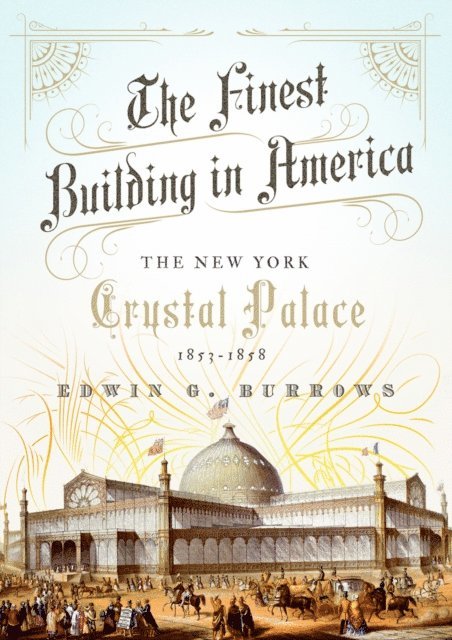
Built in 1853 in New York's Bryant Park and immediately pronounced the most beautiful structure in America, the Crystal Palace was intended not simply to emulate but rival the famous Victorian landmark in London's Hyde Park. As with its English counterpart, however, its beauty was ephemeral. It caught fire, and on October 5, 1858, "great waves of lurid light" overtook spectators and those rushing to save it. Within thirty minutes, the beloved dome was nothing but a heap of smoldering debris.In his latest book, Edwin G. Burrows, winner of the 1999 Pulitzer Prize for History and co-author of Gotham: A History of New York to 1898, offers a memorable and elegiac look at the Crystal Palace. While it didn't match in dimension Robert Paxton's London original -- the scale of which was truly colossal -- the New York version became a beloved landmark almost from the instant of its creation. Centerpiece of the 1853 World's Fair, it was home to numerous exhibitions and became a showplace for displaying the growing industrial might of the nation. Walt Whitman rhapsodized about it as "Earth's modern wonder, History's Seven outstripping." Its sudden loss provoked intense mourning-matched only perhaps by the razing of the old Penn Station a century later-and then gradually it slipped from memory. The Finest Building in America will evoke the Crystal Palace's life and times, replete with beautiful period images. The first book-length account of the building's short but glorious life, Burrows book aims to restore it in the minds and hearts of New Yorkers and New York aficionados and fans everywhere.
E-bok
PDF, Engelska, 2018195 kr
Läs direkt efter köp
When first opened to the public in 1853, New York''s Crystal Palace created a sensation. Those who had seen London''s Crystal Palace, the structure it was openly intended to emulate, argued that America''s copy far surpassed it. Built in what is today Bryant Park, a four-acre site between 40th and 42nd Streets, the colossus of glass and steel indeed seemed poised to displace the British original in worldwide fame. Walt Whitman pronounced it "unsurpassed anywhere for beauty." Young Samuel Clemens--not yet Mark Twain--called it a "perfect fairy palace." Many perceived it as putting America, still in the thrall of European culture, on the map. "To us on this side of the water," wrote newspaperman Horace Greely, who had also visited London''s Crystal Palace, "it was original."Pulitzer Prize-winning historian Edwin G. Burrows offers the tale of what was proclaimed the country''s "finest building." Centerpiece of the 1853 World''s Fair, the New York Crystal Palace, like its London counterpart, was intended to display the country''s latest technological achievements--as well as a few dubious cultural artifacts. But its primary function was simply to be seen and admired by the crowds that thronged to it; its very existence caused patriotic breasts to swell. And then suddenly it was gone. On October 5, 1858, merely five years after its construction, the Crystal Palace caught fire. Despite frantic attempts to save it, the magnificent dome was engulfed and within thirty minutes the entire structure reduced to a heap of smoldering debris, through which for days afterward bereft New Yorkers picked for mementos. With sumptuous images and lively storytelling The Finest Building in America brings back to life an extraordinary monument, one that briefly but wholeheartedly captured the imagination of a country, giving form to its dreams and ambitions, and then vanishing from view.
E-bok
Engelska, 2018195 kr
Läs direkt efter köp
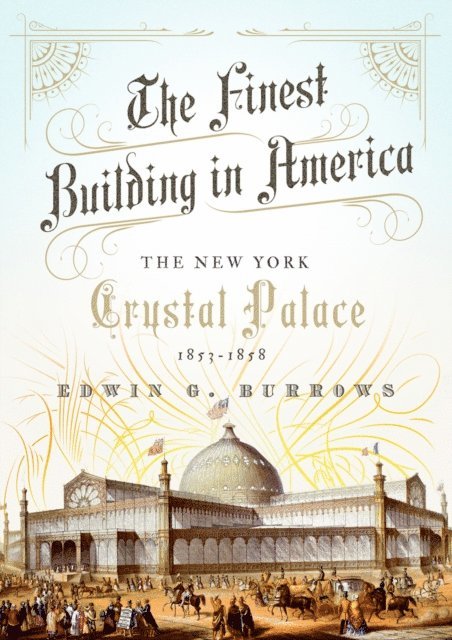
When first opened to the public in 1853, New York''s Crystal Palace created a sensation. Those who had seen London''s Crystal Palace, the structure it was openly intended to emulate, argued that America''s copy far surpassed it. Built in what is today Bryant Park, a four-acre site between 40th and 42nd Streets, the colossus of glass and steel indeed seemed poised to displace the British original in worldwide fame. Walt Whitman pronounced it "unsurpassed anywhere for beauty." Young Samuel Clemens--not yet Mark Twain--called it a "perfect fairy palace." Many perceived it as putting America, still in the thrall of European culture, on the map. "To us on this side of the water," wrote newspaperman Horace Greely, who had also visited London''s Crystal Palace, "it was original."Pulitzer Prize-winning historian Edwin G. Burrows offers the tale of what was proclaimed the country''s "finest building." Centerpiece of the 1853 World''s Fair, the New York Crystal Palace, like its London counterpart, was intended to display the country''s latest technological achievements--as well as a few dubious cultural artifacts. But its primary function was simply to be seen and admired by the crowds that thronged to it; its very existence caused patriotic breasts to swell. And then suddenly it was gone. On October 5, 1858, merely five years after its construction, the Crystal Palace caught fire. Despite frantic attempts to save it, the magnificent dome was engulfed and within thirty minutes the entire structure reduced to a heap of smoldering debris, through which for days afterward bereft New Yorkers picked for mementos. With sumptuous images and lively storytelling The Finest Building in America brings back to life an extraordinary monument, one that briefly but wholeheartedly captured the imagination of a country, giving form to its dreams and ambitions, and then vanishing from view.
E-bok
PDF, Engelska, 1998248 kr
Läs direkt efter köp
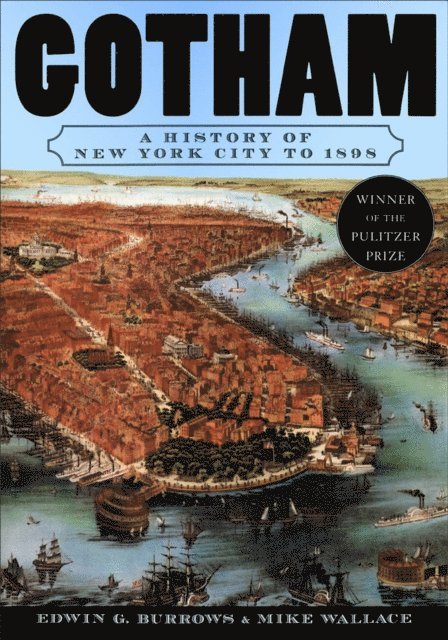
To European explorers, it was Eden, a paradise of waist-high grasses, towering stands of walnut, maple, chestnut, and oak, and forests that teemed with bears, wolves, raccoons, beavers, otters, and foxes. Today, it is the site of Broadway and Wall Street, the Empire State Building and the Statue of Liberty, and the home of millions of people, who have come from every corner of the nation and the globe. In Gotham, Edwin G. Burrows and Mike Wallace have produced a monumental work of history, one that ranges from the Indian tribes that settled in and around the island of Manna-hata, to the consolidation of the five boroughs into Greater New York in 1898. It is an epic narrative, a story as vast and as varied as the city it chronicles, and it underscores that the history of New York is the story of our nation. Readers will relive the tumultuous early years of New Amsterdam under the Dutch West India Company, Peter Stuyvesant''s despotic regime, Indian wars, slave resistance and revolt, the Revolutionary War and the defeat of Washington''s army on Brooklyn Heights, the destructive seven years of British occupation, New York as the nation''s first capital, the duel between Aaron Burr and Alexander Hamilton, the Erie Canal and the coming of the railroads, the growth of the city as a port and financial center, the infamous draft riots of the Civil War, the great flood of immigrants, the rise of mass entertainment such as vaudeville and Coney Island, the building of the Brooklyn Bridge and the birth of the skyscraper. Here too is a cast of thousands--the rebel Jacob Leisler and the reformer Joanna Bethune; Clement Moore, who saved Greenwich Village from the city''s street-grid plan; Herman Melville, who painted disillusioned portraits of city life; and Walt Whitman, who happily celebrated that same life. We meet the rebel Jacob Leisler and the reformer Joanna Bethune; Boss Tweed and his nemesis, cartoonist Thomas Nast; Emma Goldman and Nellie Bly; Jacob Riis and Horace Greeley; police commissioner Theodore Roosevelt; Colonel Waring and his "white angels" (who revolutionized the sanitation department); millionaires John Jacob Astor, Cornelius Vanderbilt, August Belmont, and William Randolph Hearst; and hundreds more who left their mark on this great city. The events and people who crowd these pages guarantee that this is no mere local history. It is in fact a portrait of the heart and soul of America, and a book that will mesmerize everyone interested in the peaks and valleys of American life as found in the greatest city on earth. Gotham is a dazzling read, a fast-paced, brilliant narrative that carries the reader along as it threads hundreds of stories into one great blockbuster of a book.
E-bok
Engelska, 1998257 kr
Läs direkt efter köp
To European explorers, it was Eden, a paradise of waist-high grasses, towering stands of walnut, maple, chestnut, and oak, and forests that teemed with bears, wolves, raccoons, beavers, otters, and foxes. Today, it is the site of Broadway and Wall Street, the Empire State Building and the Statue of Liberty, and the home of millions of people, who have come from every corner of the nation and the globe. In Gotham, Edwin G. Burrows and Mike Wallace have produced a monumental work of history, one that ranges from the Indian tribes that settled in and around the island of Manna-hata, to the consolidation of the five boroughs into Greater New York in 1898. It is an epic narrative, a story as vast and as varied as the city it chronicles, and it underscores that the history of New York is the story of our nation. Readers will relive the tumultuous early years of New Amsterdam under the Dutch West India Company, Peter Stuyvesant''s despotic regime, Indian wars, slave resistance and revolt, the Revolutionary War and the defeat of Washington''s army on Brooklyn Heights, the destructive seven years of British occupation, New York as the nation''s first capital, the duel between Aaron Burr and Alexander Hamilton, the Erie Canal and the coming of the railroads, the growth of the city as a port and financial center, the infamous draft riots of the Civil War, the great flood of immigrants, the rise of mass entertainment such as vaudeville and Coney Island, the building of the Brooklyn Bridge and the birth of the skyscraper. Here too is a cast of thousands--the rebel Jacob Leisler and the reformer Joanna Bethune; Clement Moore, who saved Greenwich Village from the city''s street-grid plan; Herman Melville, who painted disillusioned portraits of city life; and Walt Whitman, who happily celebrated that same life. We meet the rebel Jacob Leisler and the reformer Joanna Bethune; Boss Tweed and his nemesis, cartoonist Thomas Nast; Emma Goldman and Nellie Bly; Jacob Riis and Horace Greeley; police commissioner Theodore Roosevelt; Colonel Waring and his "white angels" (who revolutionized the sanitation department); millionaires John Jacob Astor, Cornelius Vanderbilt, August Belmont, and William Randolph Hearst; and hundreds more who left their mark on this great city. The events and people who crowd these pages guarantee that this is no mere local history. It is in fact a portrait of the heart and soul of America, and a book that will mesmerize everyone interested in the peaks and valleys of American life as found in the greatest city on earth. Gotham is a dazzling read, a fast-paced, brilliant narrative that carries the reader along as it threads hundreds of stories into one great blockbuster of a book.