Eileen Braman – författare
Visar alla böcker från författaren Eileen Braman. Handla med fri frakt och snabb leverans.
5 produkter
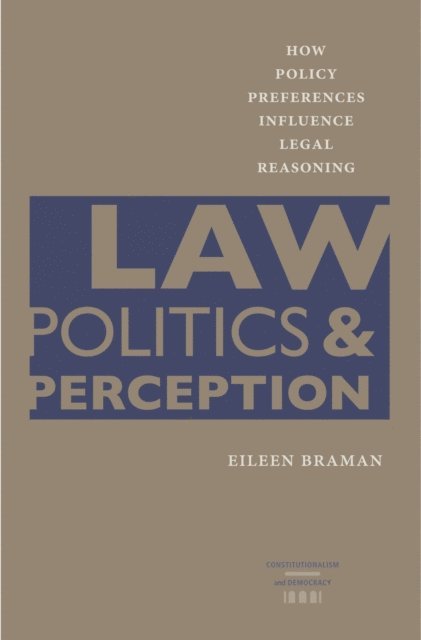
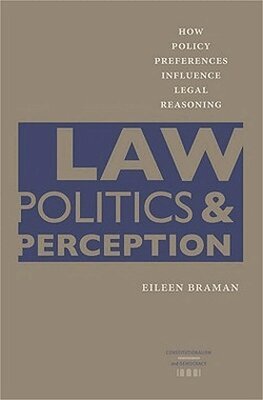
Law, Politics, and Perception
How Policy Preferences Influence Legal Reasoning
E-bok, 2009
748 kr
Lägg i varukorg
Are judges'' decisions more likely to be based on personal inclinations or legal authority? The answer, Eileen Braman argues, is both. Law, Politics, and Perception brings cognitive psychology to bear on the question of the relative importance of norms of legal reasoning versus decision markers'' …
Constitutional Powers and Politics
How Citizens Think About Authority and Institutional Change
Inbunden, 2023
1140 kr
Lägg i varukorg
The relationship between public opinion and the actions of institutions such as the Supreme Court has come under increased scrutiny in recent years. In this timely book, Eileen Braman explores how American citizens think about government across all three branches, applying a rigorous political …
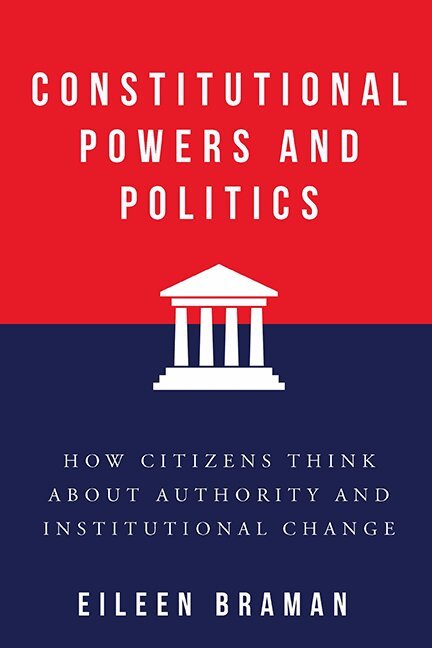
Constitutional Powers and Politics
How Citizens Think About Authority and Institutional Change
Häftad, 2023
361 kr
Lägg i varukorg
The relationship between public opinion and the actions of institutions such as the Supreme Court has come under increased scrutiny in recent years. In this timely book, Eileen Braman explores how American citizens think about government across all three branches, applying a rigorous political …
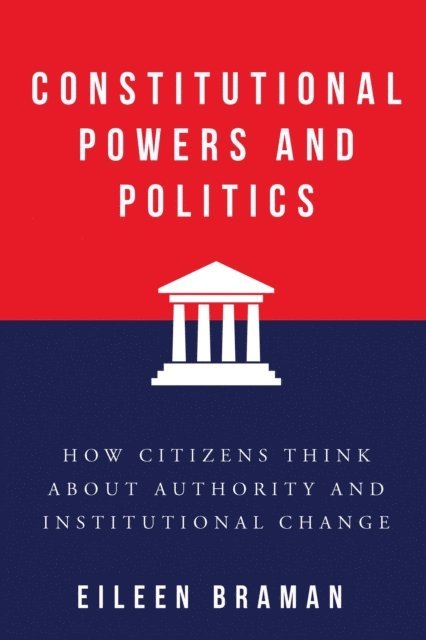
Constitutional Powers and Politics
How Citizens Think about Authority and Institutional Change
E-bok, 2023
464 kr
Lägg i varukorg
The relationship between public opinion and the actions of institutions such as the Supreme Court has come under increased scrutiny in recent years. In this timely book, Eileen Braman explores how American citizens think about government across all three branches, applying a rigorous political …
Law, Politics, and Perception
How Policy Preferences Influence Legal Reasoning
Inbunden, 2009
600 kr
Tillfälligt slut
Are judges' decisions more likely to be based on personal inclinations or legal authority? The answer, Eileen Braman argues, is both, Law, Politics, and Perception brings cognitive psychology to bear on the question of the relative importance of norms of legal reasoning versus decision makers' …