Eitan Muller - Böcker
Visar alla böcker från författaren Eitan Muller. Handla med fri frakt och snabb leverans.
3 produkter
3 produkter
Innovation Equity
Assessing and Managing the Monetary Value of New Products and Services
Inbunden, Engelska, 2016
485 kr
Skickas inom 7-10 vardagar
From drones to wearable technology to Hyperloop pods that can potentially travel more than seven hundred miles per hour, we're fascinated with new products and technologies that seem to come straight out of science fiction. But, innovations are not only fascinating, they're polarizing, as, all too quickly, skepticism regarding their commercial viability starts to creep in. And while fortunes depend on people's ability to properly assess their prospects for success, no one can really agree on how to do it, especially for truly radical new products and services. In Innovation Equity, Elie Ofek, Eitan Muller, and Barak Libai analyze how a vast array of past innovations performed in the marketplace from their launch to the moment they became everyday products to the phase where consumers moved on to the "next big thing." They identify key patterns in how consumers adopt innovations and integrate these with marketing scholarship on how companies manage their customer base by attracting new customers, keeping current customers satisfied, and preventing customers from switching to competitors' products and services.In doing so, the authors produce concrete models that powerfully predict how the marketplace will respond to innovations, providing a much more authoritative way to estimate their potential monetary value, as well as a framework for making it possible to achieve that value.
2 163 kr
Skickas inom 10-15 vardagar
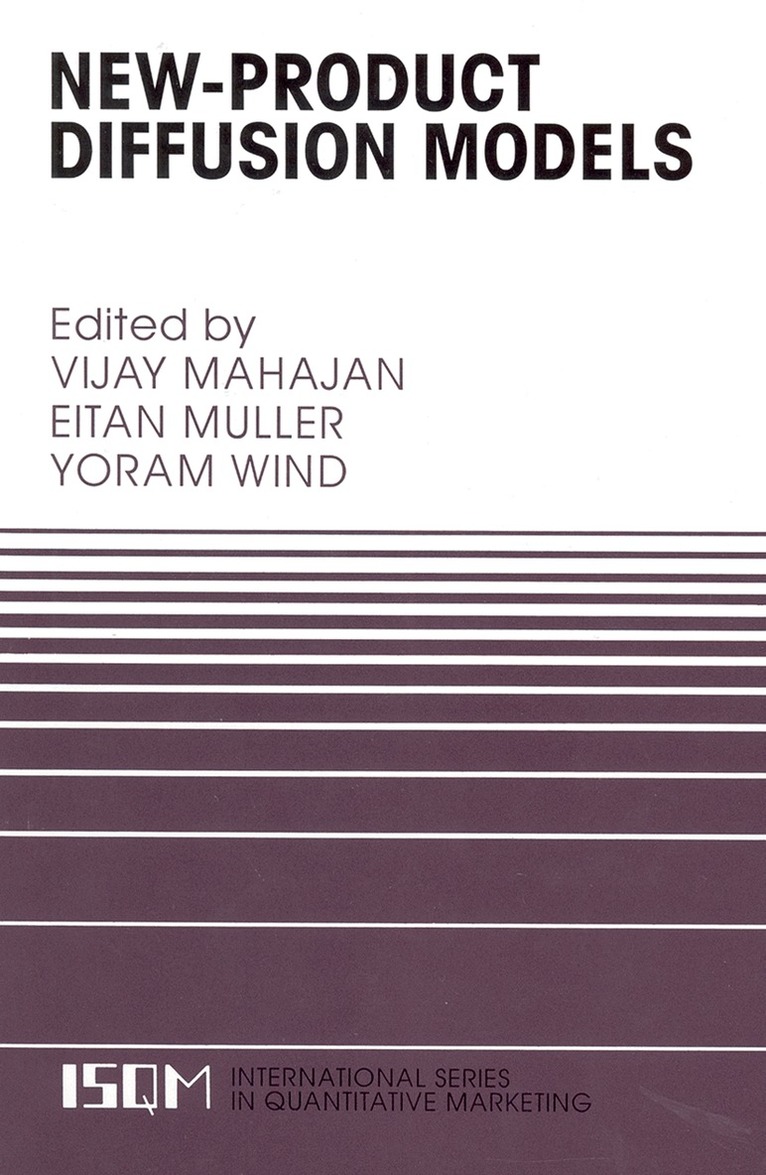
Product sales, especially for new products, are influenced by many factors. These factors are both internal and external to the selling organization, and are both controllable and uncontrollable. Due to the enormous complexity of such factors, it is not surprising that product failure rates are relatively high. Indeed, new product failure rates have variously been reported as between 40 and 90 percent. Despite this multitude of factors, marketing researchers have not been deterred from developing and designing techniques to predict or explain the levels of new product sales over time. The proliferation of the Internet, the necessity or developing a road map to plan the launch and exit times of various generations of a product, and the shortening of product life cycles are challenging firms to investigate market penetration, or innovation diffusion, models. These models not only provide information on new product sales over time but also provide insight on the speed with which a new product is being accepted by various buying groups, such as those identified as innovators, early adopters, early majority, late majority, and laggards.This book aims to distill, synthesize, and integrate current thinking on the theory and practice of new product diffusion models. The assessment includes contributions by individuals who have been at the forefront of developing and applying these models in industry. The book's twelve chapters are written by a combined total of thirty-two experts who together represent twenty-five different universities and other organizations in Australia, Europe, Hong Kong, Israel, and the United States. The book should be useful for researchers and students in marketing and technological forecasting, as well as those in other allied disciplines who study relevant aspects of innovation diffusion. Practitioners in high-tech and consumer durable industries should also gain new insights from "New Product Diffusion Models". The book is divided into five parts and a case on high-definition television is included to illustrate the various features of the software. Among the book's many highlights are chapters addressing the implications posed by the Internet, globalization, and production policies upon diffusion analysis.
2 163 kr
Skickas inom 10-15 vardagar
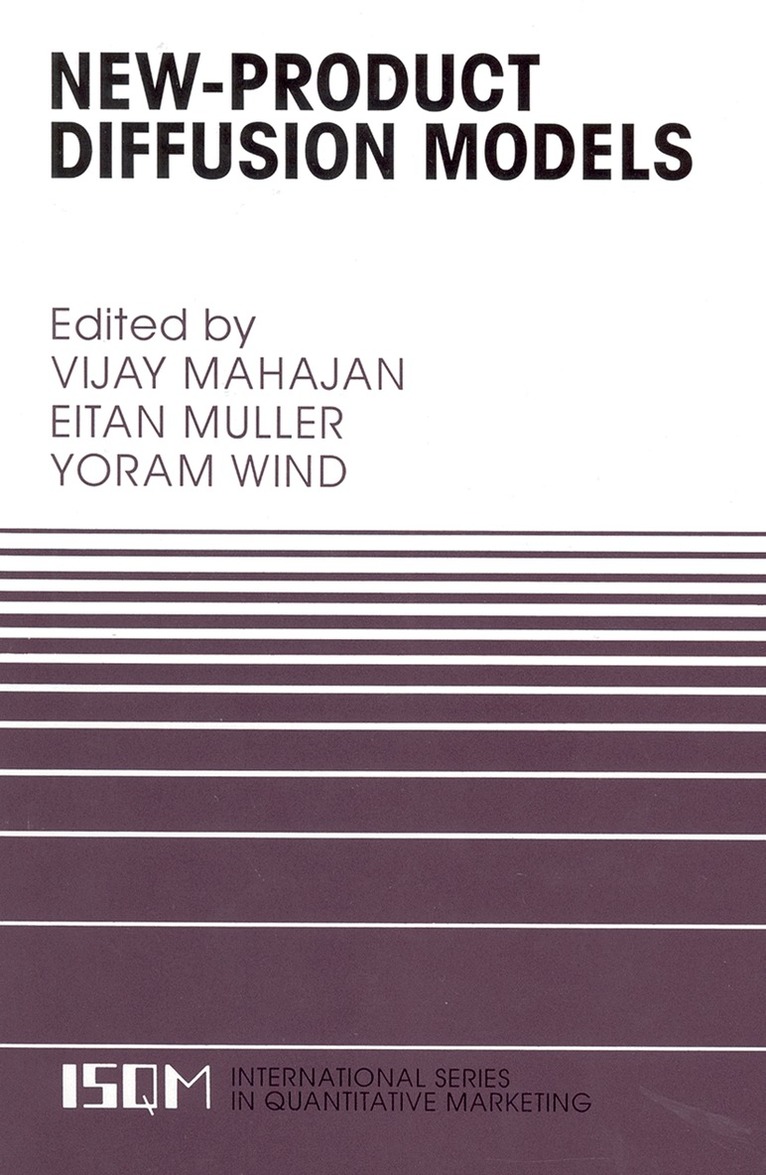
Product sales, especially for new products, are influenced by many factors. These factors are both internal and external to the selling organization, and are both controllable and uncontrollable. Due to the enormous complexity of such factors, it is not surprising that product failure rates are relatively high. Indeed, new product failure rates have variously been reported as between 40 and 90 percent. Despite this multitude of factors, marketing researchers have not been deterred from developing and designing techniques to predict or explain the levels of new product sales over time. The proliferation of the internet, the necessity or developing a road map to plan the launch and exit times of various generations of a product, and the shortening of product life cycles are challenging firms to investigate market penetration, or innovation diffusion, models. These models not only provide information on new product sales over time but also provide insight on the speed with which a new product is being accepted by various buying groups, such as those identified as innovators, early adopters, early majority, late majority, and laggards.New Product Diffusion Models aims to distill, synthesize, and integrate the best thinking that is currently available on the theory and practice of new product diffusion models. This state-of-the-art assessment includes contributions by individuals who have been at the forefront of developing and applying these models in industry. The book's twelve chapters are written by a combined total of thirty-two experts who together represent twenty-five different universities and other organizations in Australia, Europe, Hong Kong, Israel, and the United States. The book will be useful for researchers and students in marketing and technological forecasting, as well as those in other allied disciplines who study relevant aspects of innovation diffusion. Practitioners in high-tech and consumer durable industries should also gain new insights from New Product Diffusion Models. The book is divided into five parts: I. Overview; II. Strategic, Global, and Digital Environments for Diffusion Analysis; III. Diffusion Models; IV. Estimation and V. Applications and Software. The final section includes a PC-based software program developed by Gary L.Lilien and Arvind Rangaswamy (1998) to implement the Bass diffusion model. A case on high-definition television is included to illustrate the various features of the software. A free, 15-day trial access period for the updated software can be downloaded from http://www.mktgeng.com/diffusionbook. Among the book's many highlights are chapters addressing the implications posed by the internet, globalization, and production policies upon diffusion of new products and technologies in the population.