Elana Michelson – författare
570 kr
Läs direkt efter köp
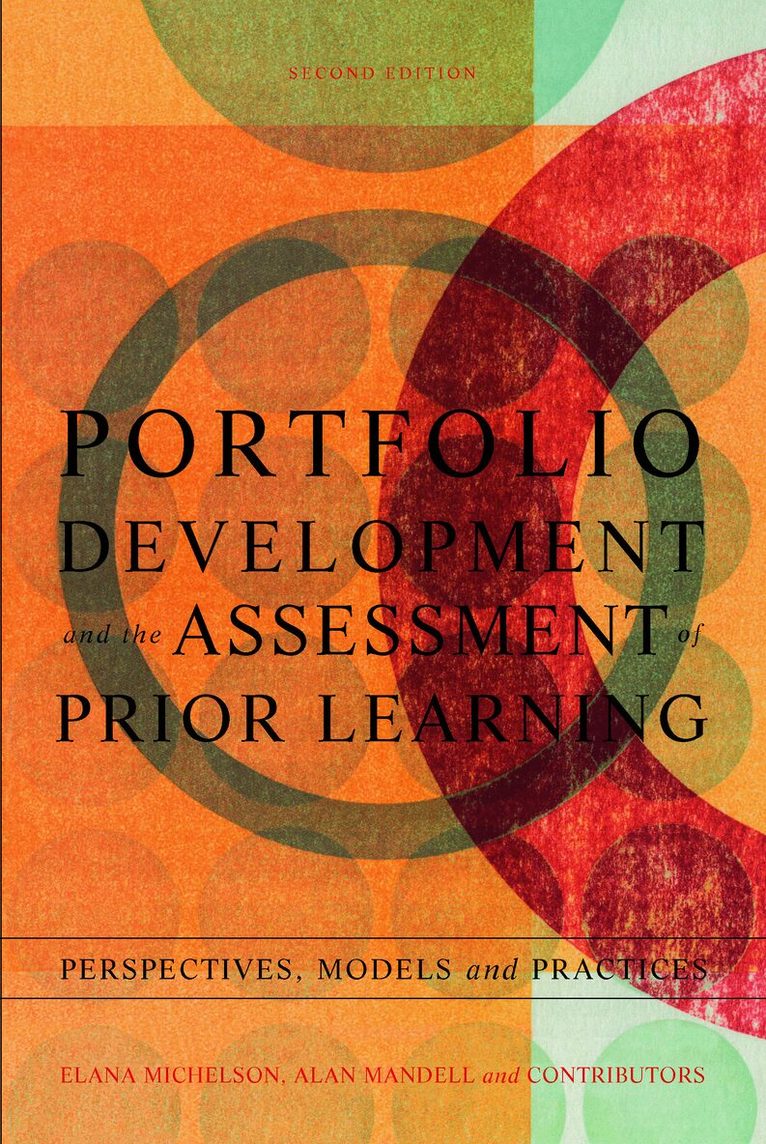
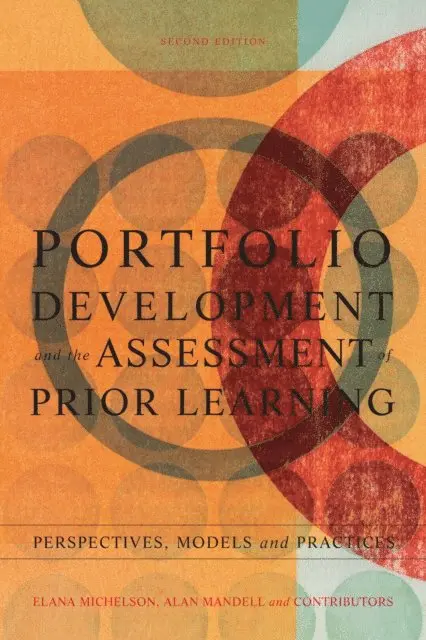
For over thirty years, portfolios have been used to help adult learners gain recognition for their prior learning and take greater control of their educational experiences. The portfolio has become a distinctive means of assessing such learning, serving as a meaningful alternative to conventional papers and standardized testing. Portfolio Development and the Assessment of Prior Learning: Perspectives, Models, and Practices provides a primer of flexible approaches to shaping and conducting portfolio-development courses. It offers practitioners in the field an extensive range of model assignments, readings, and classroom activities, each organized around a specific theme: Academic Orientation, The Meaning of Education, Personal Exploration, Learning from the Outsider Within, The World of Work and Careers, and Dimensions of Expertise. Twelve case studies by practitioners in the field then show how academics in the US and around the English-speaking world have adapted the portfolio to changing circumstances in order to deliver academically rich educational services for adults. These case studies highlight portfolio development in the context of web-based instruction, changing institutional imperatives, service to historically disenfranchised groups, partnerships with industry, and cross-institutional cooperation.In addition to serving as a valuable hands-on resource for practitioners, Portfolio Development and the Assessment of Prior Learning locates portfolios and assessment in a broad social and intellectual context. Thus, the authors also offer an historical overview of the usefulness of portfolios in the assessment of prior learning and then consider their use in the future, given current trends in higher education for adults. The book explores the implications of a changing educational landscape, in which new student populations, budgetary pressures, and understandings of knowledge both enrich and challenge student-centered approaches such as portfolios.The approaches and case studies are not only valuable to adult educators but, equally, to faculty in higher education concerned with the development of competency- and outcomes-based assessment.
570 kr
Läs direkt efter köp
For over thirty years, portfolios have been used to help adult learners gain recognition for their prior learning and take greater control of their educational experiences. The portfolio has become a distinctive means of assessing such learning, serving as a meaningful alternative to conventional papers and standardized testing. Portfolio Development and the Assessment of Prior Learning: Perspectives, Models, and Practices provides a primer of flexible approaches to shaping and conducting portfolio-development courses. It offers practitioners in the field an extensive range of model assignments, readings, and classroom activities, each organized around a specific theme: Academic Orientation, The Meaning of Education, Personal Exploration, Learning from the Outsider Within, The World of Work and Careers, and Dimensions of Expertise. Twelve case studies by practitioners in the field then show how academics in the US and around the English-speaking world have adapted the portfolio to changing circumstances in order to deliver academically rich educational services for adults. These case studies highlight portfolio development in the context of web-based instruction, changing institutional imperatives, service to historically disenfranchised groups, partnerships with industry, and cross-institutional cooperation.In addition to serving as a valuable hands-on resource for practitioners, Portfolio Development and the Assessment of Prior Learning locates portfolios and assessment in a broad social and intellectual context. Thus, the authors also offer an historical overview of the usefulness of portfolios in the assessment of prior learning and then consider their use in the future, given current trends in higher education for adults. The book explores the implications of a changing educational landscape, in which new student populations, budgetary pressures, and understandings of knowledge both enrich and challenge student-centered approaches such as portfolios.The approaches and case studies are not only valuable to adult educators but, equally, to faculty in higher education concerned with the development of competency- and outcomes-based assessment.
1 982 kr
Skickas inom 10-15 vardagar
832 kr
Skickas inom 10-15 vardagar
997 kr
Läs direkt efter köp
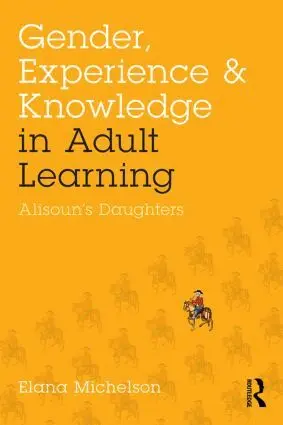
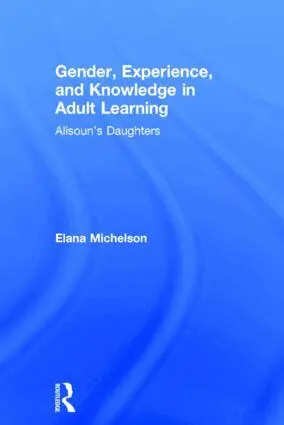
In this wide-ranging book, Elana Michelson invites us to revisit basic understandings of the `experiential learner’. How does experience come to be seen as the basis of knowledge? How do gender, class, and race enter into the ways in which knowledge is valued? What political and cultural belief systems underlie such practices as the assessment of prior learning and the writing of life narratives?
Drawing on a range of disciplines, from feminist theory and the politics of knowledge to literary criticism, Michelson argues that particular understandings of `experiential learning’ have been central to modern Western cultures and the power relationships that underlie them. Presented in four parts, this challenging and lively book asks educators of adults to think in new ways about their assumptions, theories, and practices:
Part I provides readers with a short history of the notion of experiential learning.
Part II brings the insights and concerns of feminist theory to bear on mainstream theories of experiential learning.
Part III examines the assessment of prior experiential learning for academic credit and/or professional credentials.
Part IV addresses a second pedagogical practice that is ubiquitous in adult learning, namely, the assigning of life narratives.
Gender, Experience, and Knowledge in Adult Learning will be of value to scholars and graduate students exploring adult and experiential learning, as well as academics wishing to introduce students to a broad range of feminist, critical-race, materialist and postmodernist thinking in the field.
994 kr
Läs direkt efter köp
In this wide-ranging book, Elana Michelson invites us to revisit basic understandings of the `experiential learner’. How does experience come to be seen as the basis of knowledge? How do gender, class, and race enter into the ways in which knowledge is valued? What political and cultural belief systems underlie such practices as the assessment of prior learning and the writing of life narratives?
Drawing on a range of disciplines, from feminist theory and the politics of knowledge to literary criticism, Michelson argues that particular understandings of `experiential learning’ have been central to modern Western cultures and the power relationships that underlie them. Presented in four parts, this challenging and lively book asks educators of adults to think in new ways about their assumptions, theories, and practices:
Part I provides readers with a short history of the notion of experiential learning.
Part II brings the insights and concerns of feminist theory to bear on mainstream theories of experiential learning.
Part III examines the assessment of prior experiential learning for academic credit and/or professional credentials.
Part IV addresses a second pedagogical practice that is ubiquitous in adult learning, namely, the assigning of life narratives.
Gender, Experience, and Knowledge in Adult Learning will be of value to scholars and graduate students exploring adult and experiential learning, as well as academics wishing to introduce students to a broad range of feminist, critical-race, materialist and postmodernist thinking in the field.
453 kr
Skickas inom 10-15 vardagar
272 kr
Skickas inom 5-8 vardagar
314 kr
Skickas inom 5-8 vardagar