Elana Wilson Rowe – författare
2 151 kr
Skickas inom 10-15 vardagar
2 289 kr
Skickas inom 10-15 vardagar
768 kr
Skickas inom 10-15 vardagar
369 kr
Skickas inom 3-6 vardagar
730 kr
Läs direkt efter köp
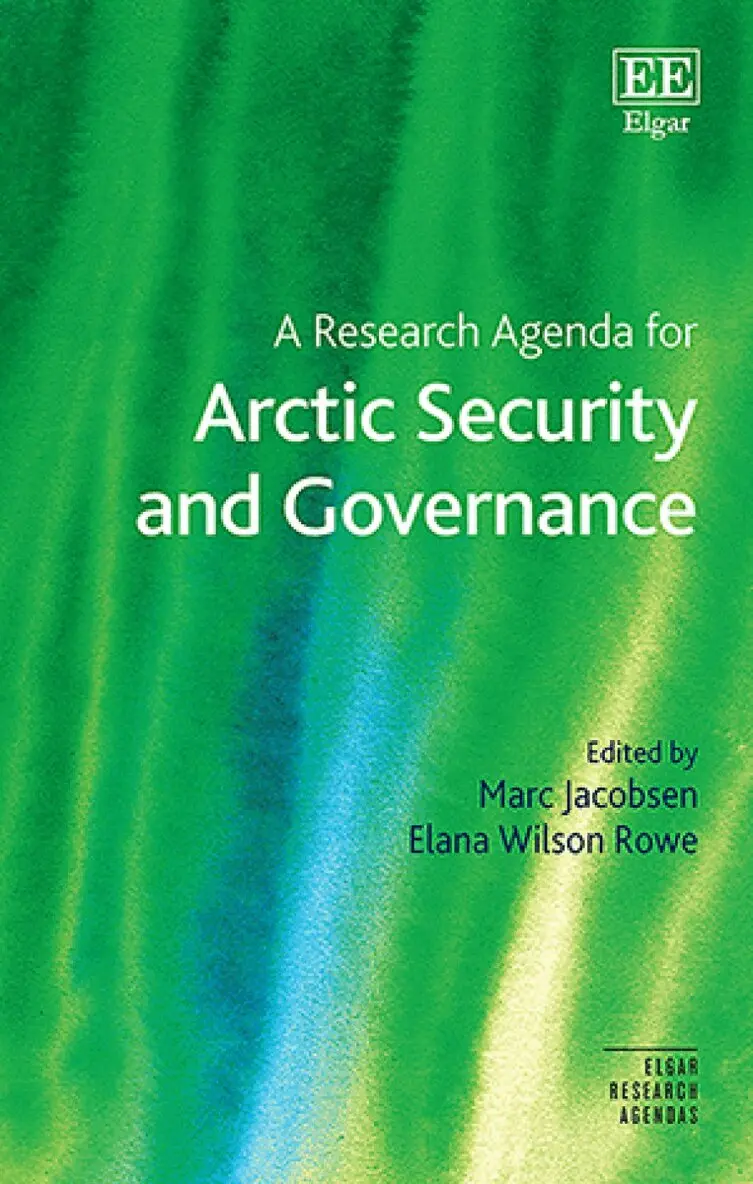
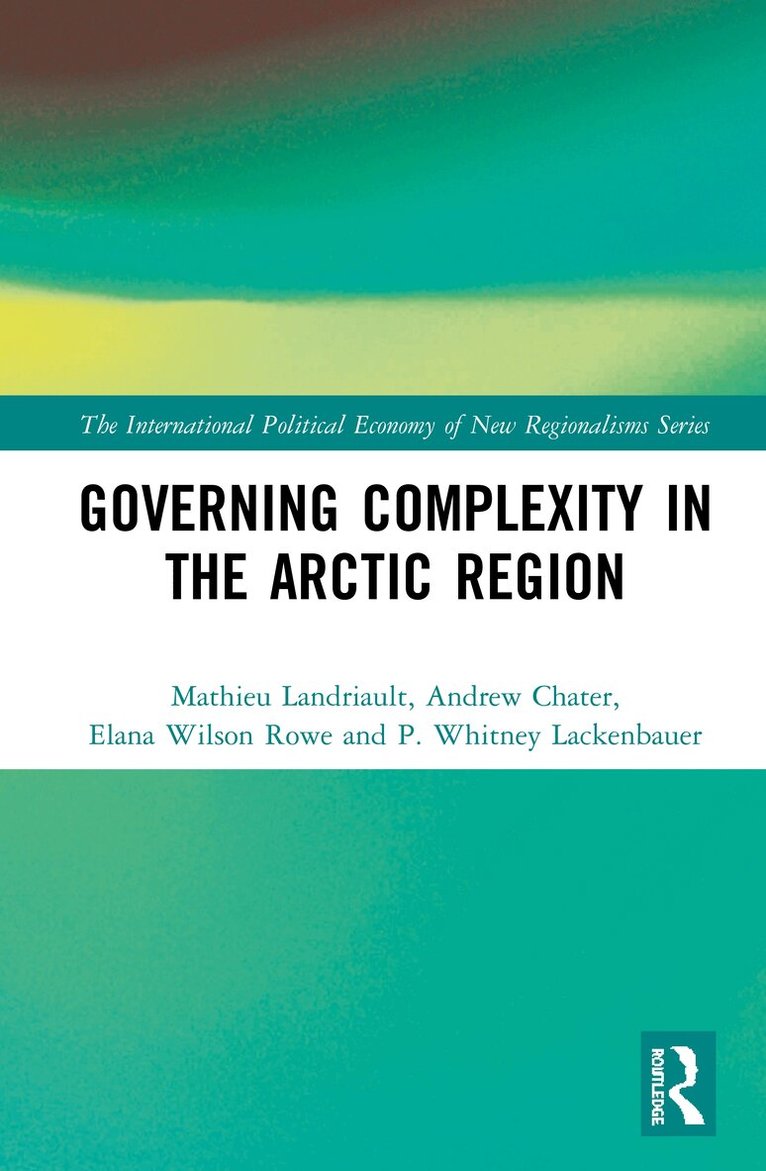
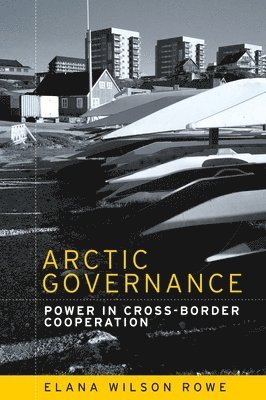
This book examines emerging forms of governance in the Arctic region, exploring how different types of state and non-state actors promote and support rules and standards.
The authors argue that confining our understandings of Arctic governance to Arctic states and a focus on the Arctic Council as the primary site of circumpolar governance provides an incomplete picture. Instead, they embrace the complexity of governance in the Arctic by systematically analyzing and comparing the position, interventions, and influence of different actor groups seeking to shape Arctic political and economic outcomes in multiple sites of Arctic politics, both formal and informal. This book assesses the potential that sub-national governments, corporations, civil society organizations, Indigenous peoples, and non-Arctic states possess to develop norms and standards to ensure a stable, rule-based Arctic region. It will be of interest to all scholars and students working in the fields of Arctic Sovereignty, Security Studies, Global Governance, and International Political Economy.
730 kr
Läs direkt efter köp
This book examines emerging forms of governance in the Arctic region, exploring how different types of state and non-state actors promote and support rules and standards.
The authors argue that confining our understandings of Arctic governance to Arctic states and a focus on the Arctic Council as the primary site of circumpolar governance provides an incomplete picture. Instead, they embrace the complexity of governance in the Arctic by systematically analyzing and comparing the position, interventions, and influence of different actor groups seeking to shape Arctic political and economic outcomes in multiple sites of Arctic politics, both formal and informal. This book assesses the potential that sub-national governments, corporations, civil society organizations, Indigenous peoples, and non-Arctic states possess to develop norms and standards to ensure a stable, rule-based Arctic region. It will be of interest to all scholars and students working in the fields of Arctic Sovereignty, Security Studies, Global Governance, and International Political Economy.
629 kr
Skickas inom 10-15 vardagar
1 659 kr
Skickas inom 5-8 vardagar
430 kr
Läs direkt efter köp
430 kr
Läs direkt efter köp
900 kr
Läs direkt efter köp
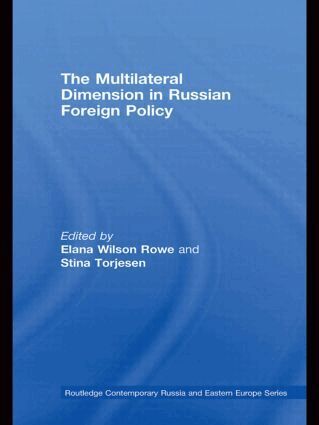
This book examines the place of multilateralism in Russia’s foreign policy and Russia’s engagement with multilateral institutions. Throughout the post-Soviet period, both Yeltsin and Putin consistently professed a deep attachment to the principles of multilateralism. However, multilateralism as a value, concept, strategy or general phenomenon in Russian foreign policy has hitherto been neglected by scholars, seldom assessed in its own right or from a comparative perspective. This book fills that gap, combining wider conceptual perspectives on the place of multilateralism in Russian foreign policy thought and action with detailed empirical case studies of Russian engagement at the global, transatlantic and European levels, and also in Russia’s regional environment. It examines Russia’s role and relationship with the UN, NATO, G8, EU, OSCE, Arctic Council, Eurasian Economic Community, Commonwealth of Independent States, Shanghai Cooperation Organization and Collective Security Treaty Organization, covering a wide range of issue areas including nuclear non-proliferation and trade. Throughout, it considers the political, economic and security interests that shape Russia’ foreign relations, conception of multilateralism and activity in multilateral settings. Overall, this book is an important resource for anyone interested in Russian foreign policy and its role in international relations more generally.
892 kr
Läs direkt efter köp
This book examines the place of multilateralism in Russia’s foreign policy and Russia’s engagement with multilateral institutions. Throughout the post-Soviet period, both Yeltsin and Putin consistently professed a deep attachment to the principles of multilateralism. However, multilateralism as a value, concept, strategy or general phenomenon in Russian foreign policy has hitherto been neglected by scholars, seldom assessed in its own right or from a comparative perspective. This book fills that gap, combining wider conceptual perspectives on the place of multilateralism in Russian foreign policy thought and action with detailed empirical case studies of Russian engagement at the global, transatlantic and European levels, and also in Russia’s regional environment. It examines Russia’s role and relationship with the UN, NATO, G8, EU, OSCE, Arctic Council, Eurasian Economic Community, Commonwealth of Independent States, Shanghai Cooperation Organization and Collective Security Treaty Organization, covering a wide range of issue areas including nuclear non-proliferation and trade. Throughout, it considers the political, economic and security interests that shape Russia’ foreign relations, conception of multilateralism and activity in multilateral settings. Overall, this book is an important resource for anyone interested in Russian foreign policy and its role in international relations more generally.
544 kr
Skickas inom 10-15 vardagar
321 kr
Skickas inom 5-8 vardagar
48 kr
Läs direkt efter köp
48 kr
Läs direkt efter köp
383 kr
Skickas inom 5-8 vardagar
308 kr
Skickas inom 10-15 vardagar