Elin C. Danien - Böcker
Visar alla böcker från författaren Elin C. Danien. Handla med fri frakt och snabb leverans.
5 produkter
5 produkter
991 kr
Tillfälligt slut
Papers from the 1987 Maya Weekend conference at the University of Pennsylvania Museum present current views of Maya culture and language. Also included is an article by George Stuart summarizing the history of the study of Maya hieroglyphs and the fascinating scholars and laypersons who have helped bring about their decipherment.
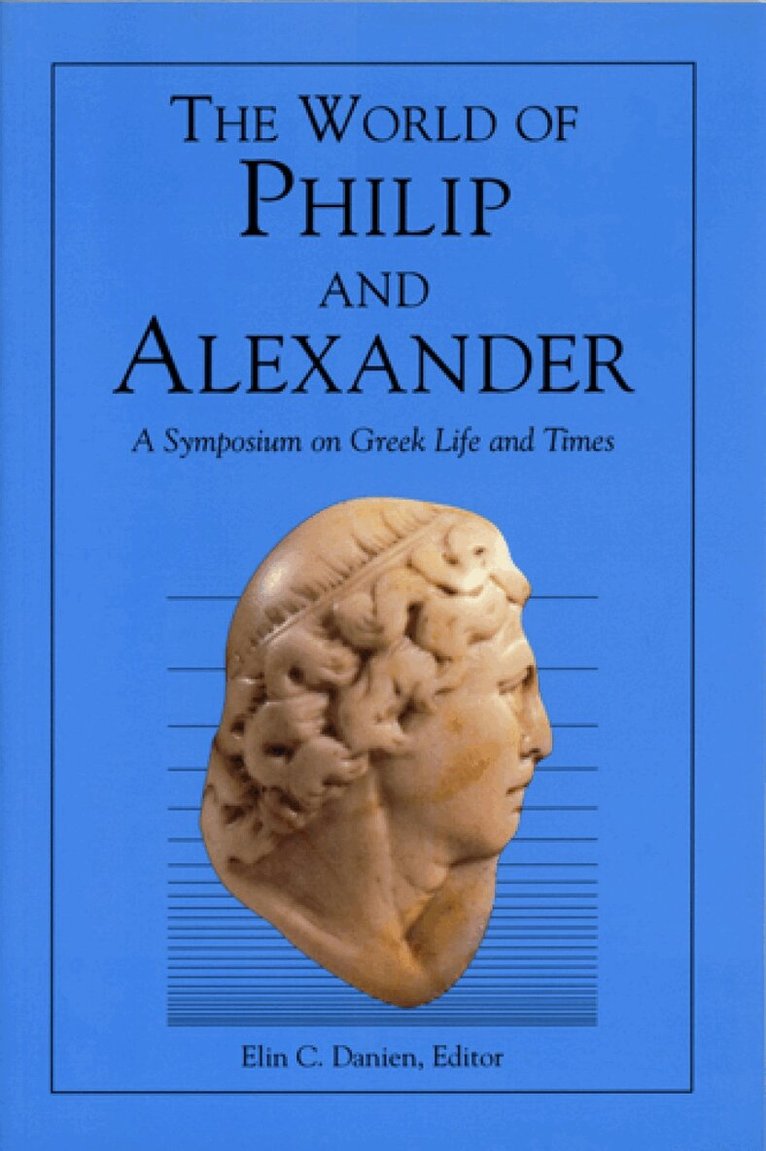
World of Philip and Alexander – A Symposium on Greek Life and Times
A Symposium on Greek Life and Times
Häftad, Engelska, 1990
281 kr
Skickas inom 5-8 vardagar
The magnetism of the man known as Alexander the Great, along with that of his father, Philip of Macedon, is almost tangible, felt by people in all times since that brilliant young conqueror moved through the world more than two thousand years ago. Scholars whose fields touch that power continue to be intrigued by these two men and the ways in which their actions altered or contributed significantly to Western culture. Contributors discuss the fourth century B.C. from the point of view of the historical significance of Philip (A. J. Graham and A. J. N. W. Prag), the foundations of Alexander's empire in Egypt (Murray C. McClellan), the ancient Olympic games (David Gilman Romano), religion (Irene Bald Romano), and Alexander's last great battle in India (Gregory L. Possehl).
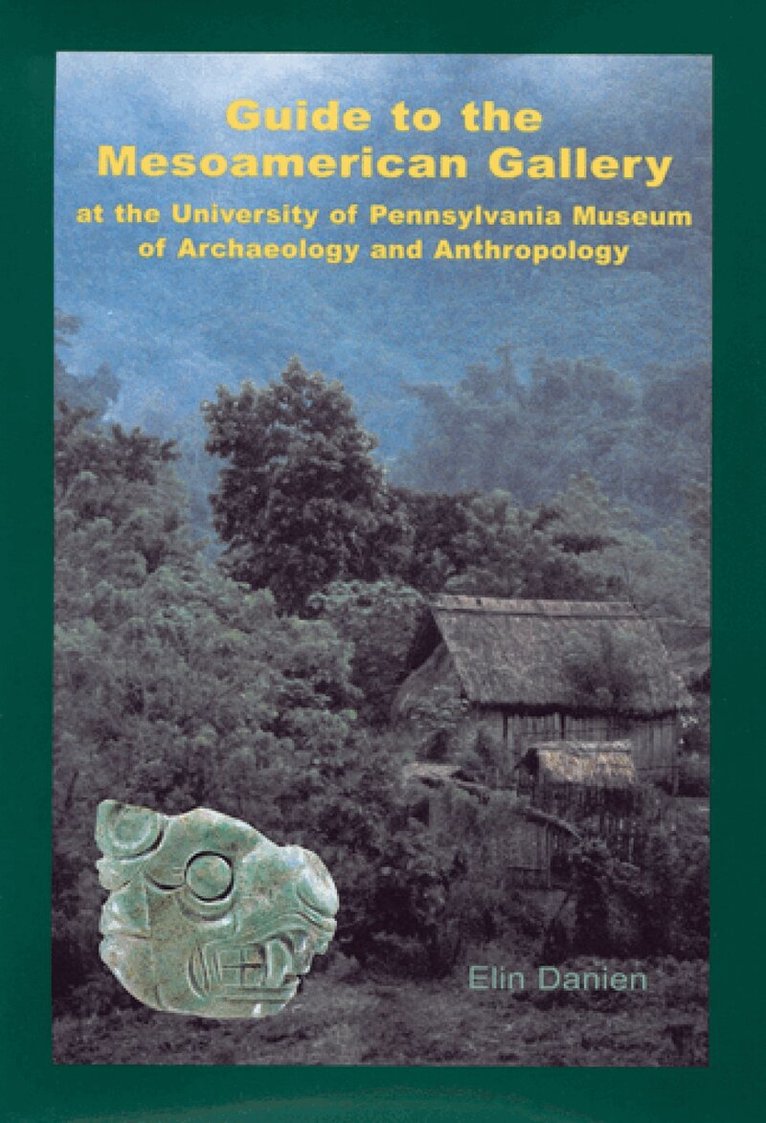
Guide to the Mesoamerican Gallery at the University of Pennsylvania Museum of Archaeology and Anthropology
Inbunden, Engelska, 2002
636 kr
Tillfälligt slut
The University Museum has been involved in Mesoamerican archaeology for more than a century. Its collections include material from northern Mexico to Costa Rica and represent all of the major cultures of the region. This guide allows the visitor to gain on-site understanding and the off-site reader to grasp how the Museum's collections fit into current archaeological theory. The text underscores some of the pan-Mesoamerican aspects of pre-Columbian peoples and the way each group interpreted underlying similarities to create individual customs and beliefs, burials and caches, beauty and adornment. The guide focuses on the unique aspects of the collection, much of it stemming from the Museum's own excavations, including eight large carved limestone monuments from its historic early excavations at Piedras Negras, Guatemala (1931-39) and Caracol, Belize (1951-53), the only group of original Maya monuments on display in an American museum. The inscriptions on these monuments are reproduced in detail, accompanied by translations and explanations drawing on the latest epigraphic research. Also included are important pieces from the Guatemala highlands; figurines and carvings collected in the early nineteenth century by the U.S. ambassador to Mexico; as well as significant material from Central America, including the famous carved alabaster vases from the Uloa Valley in Honduras.
Guide to the Mesoamerican Gallery at the University of Pennsylvania Museum of Archaeology and Anthropology
Häftad, Engelska, 2002
246 kr
Tillfälligt slut
The University Museum has been involved in Mesoamerican archaeology for more than a century. Its collections include material from northern Mexico to Costa Rica and represent all of the major cultures of the region. This guide allows the visitor to gain on-site understanding and the off-site reader to grasp how the Museum's collections fit into current archaeological theory. The text underscores some of the pan-Mesoamerican aspects of pre-Columbian peoples and the way each group interpreted underlying similarities to create individual customs and beliefs, burials and caches, beauty and adornment. The guide focuses on the unique aspects of the collection, much of it stemming from the Museum's own excavations, including eight large carved limestone monuments from its historic early excavations at Piedras Negras, Guatemala (1931-39) and Caracol, Belize (1951-53), the only group of original Maya monuments on display in an American museum. The inscriptions on these monuments are reproduced in detail, accompanied by translations and explanations drawing on the latest epigraphic research. Also included are important pieces from the Guatemala highlands; figurines and carvings collected in the early nineteenth century by the U.S. ambassador to Mexico; as well as significant material from Central America, including the famous carved alabaster vases from the Uloa Valley in Honduras.
486 kr
Tillfälligt slut
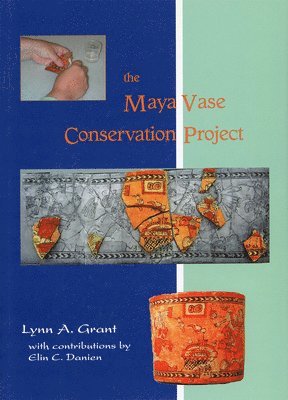
Museum goers are always fascinated by behind-the-schemes glimpses of the way museum professionals prepare artifacts and works of art for exhibit and study. In this richly illustrated, step-by-step presentation, Grant describes the problems of conserving and preserving the only provenienced collection of a group of 19 important Maya vases excavated early in the twentieth century in Chama, Guatemala, by Robert Burkitt, an early investigator for the University Museum. This polychrome pottery was crafted in a unique style that emerged suddenly, flowered briefly in the early eighth century AD, and within 50 years ceased to be made. The gifted ChamA artists, whose control of color, line, and composition has been admired by collectors as well as curators, were also appreciated by other ancient Maya artists, who placed pictures of ChamA-style vessels in the narrative scenes painted on other polychromes. Yet almost nothing is known archaeologically about this Maya site, its people, the reasons for the ceramic florescence, or for its demise. Grant explains the conservation process in lay terms, discussing why conservation is necessary, how it is done, what materials are used, and what the results are. The clearly accessible narrative, with full-color photographs illustrating all steps of the process to complement the text, includes such topics as the importance of the pots to Maya studies, their early excavation history, why they needed conservation, what the conservation process entails, how conservators do what they do and why, and special documentation techniques including multispectral imaging and residue analysis. While the book focuses on conservation rather than the individual vessels, an accompanying CD-ROM, with 280 full-color images, illustrates each of the vessels before, during, and after treatment. Content of the book's CD-ROM may be found online at this location: http://core.tdar.org/project/376581.