Elin M. Oftedal - Böcker
Visar alla böcker från författaren Elin M. Oftedal. Handla med fri frakt och snabb leverans.
4 produkter
4 produkter
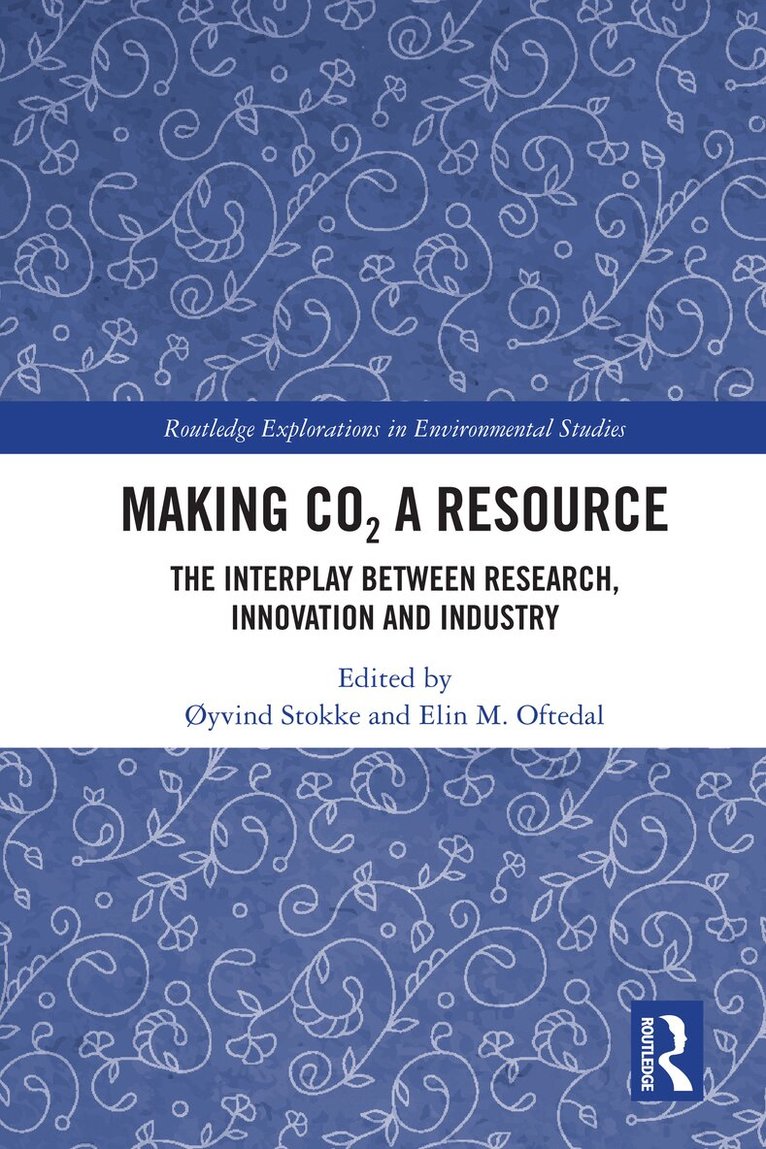
Making CO₂ a Resource
The Interplay Between Research, Innovation and Industry
Inbunden, Engelska, 2024
2 088 kr
Skickas inom 10-15 vardagar
This interdisciplinary book explores how CO2 can become a resource instead of a waste and, as such, be a tool to meet one of the grandest challenges humanity is facing: climate change.Drawing on a Norwegian narrative that has significance for a global audience, Øyvind Stokke and Elin Oftedal introduce in-depth, multi-perspective analyses of a sustainable innovation research experiment in industrial carbon capture and utilisation technologies. Building on extensive literature within marine sciences, sustainability research, and environmental philosophy and ethics, this book documents how a misplaced resource like CO2 can become valuable within a circular economy in its own right, while at the same time meeting the challenge of food security in a world where food production is increasingly under pressure. The book is diverse in scope and includes chapters on how to reduce the environmental footprint of aquaculture by replacing wild fish and soy from the Amazon, how to optimise the monitoring of aquatic environments via smart technologies, and how to replace materials otherwise sourced from natural environments. The authors also analyse the pivotal role of the university in driving innovation and entrepreneurship, the pitfalls of different carbon technologies, and explore how the link between petroleum dependence and CO2 emissions has been addressed in Norway specifically.Making CO2 a Resource will be of great interest to students and scholars of climate change, environmental ethics, environmental philosophy, sustainable business and innovation, and sustainable development more broadly.
630 kr
Skickas inom 10-15 vardagar
This interdisciplinary book explores how CO2 can become a resource instead of a waste and, as such, be a tool to meet one of the grandest challenges humanity is facing: climate change.Drawing on a Norwegian narrative that has significance for a global audience, Øyvind Stokke and Elin Oftedal introduce in-depth, multi-perspective analyses of a sustainable innovation research experiment in industrial carbon capture and utilisation technologies. Building on extensive literature within marine sciences, sustainability research, and environmental philosophy and ethics, this book documents how a misplaced resource like CO2 can become valuable within a circular economy in its own right, while at the same time meeting the challenge of food security in a world where food production is increasingly under pressure. The book is diverse in scope and includes chapters on how to reduce the environmental footprint of aquaculture by replacing wild fish and soy from the Amazon, how to optimise the monitoring of aquatic environments via smart technologies, and how to replace materials otherwise sourced from natural environments. The authors also analyse the pivotal role of the university in driving innovation and entrepreneurship, the pitfalls of different carbon technologies, and explore how the link between petroleum dependence and CO2 emissions has been addressed in Norway specifically.Making CO2 a Resource will be of great interest to students and scholars of climate change, environmental ethics, environmental philosophy, sustainable business and innovation, and sustainable development more broadly.
1 931 kr
Skickas inom 7-10 vardagar
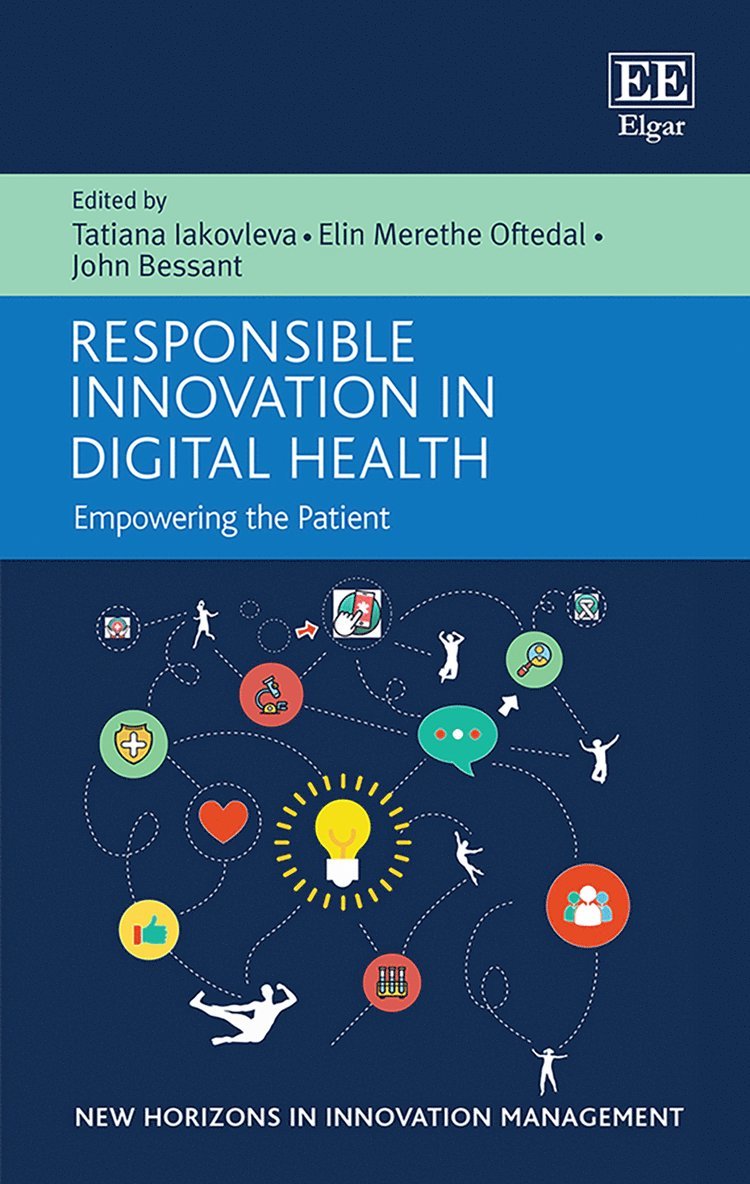
Powerful new approaches and advances in medical systems drive increasingly high expectations for healthcare providers internationally. The form of digital healthcare - a suite of new technologies offering significant benefits in cost and quality - allow institutions to keep pace with society's needs. This book covers the need for responsible innovation in this area, exploring the issues of implementation as well as potential negative consequences to ensure digital healthcare delivers for the benefit of all stakeholders.This book offers a considered view on what a responsible innovation process might involve and how this will enable multiple stakeholders - users, medics, businesses and policymakers - to create a system of delivering better care at lower costs. Illustrated by international case studies, the contributing authors explore the dimensions of responsible innovation with patient engagement and the ways in which this can lead to better design, enhanced diffusion of knowledge and improvement in healthcare.A much-needed exploration of the role of innovation in healthcare with patients in mind, this book will be essential for academics in innovation, ethics, social entrepreneurship and healthcare studies.
1 656 kr
Skickas inom 3-6 vardagar
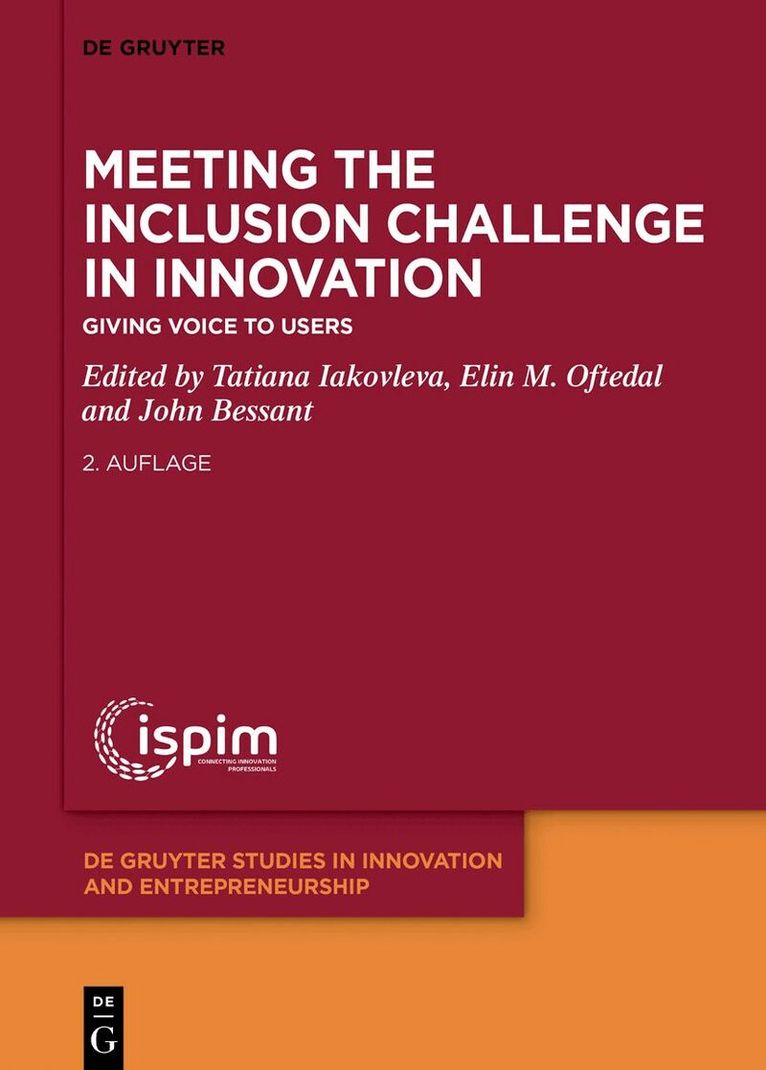
User inclusion in innovation is increasingly the target of policy rhetoric at both organizational and societal levels. And extensive research has demonstrated the potential contribution that users can make, both at the ‘front end’ of innovation with their ideas and insights and downstream, facilitating adoption and diffusion. However, translating this potential into practice remains problematic, not least because we need to understand more about how to hear user voices, amplify their insights, and provide practical channels for inclusion to ensure full co-creation of innovation. Our earlier book from 2019 (‘Responsible Innovation in Digital Health’, Edward Elgar) added to the growing body of knowledge around whether users can be involved, and this book opens up the ‘how?’ theme. Our work suggested a spectrum of user involvement ranging from those who can participate fully to those who are passive players in the innovation process, and we explore in this book different tools, techniques, and mechanisms for enabling such users to become more involved in the innovation process. We look at the concept of ‘boundary innovation spaces’ as environments in which co-creation can be enabled, drawing on experience across a wide international research network. We also explore the broader innovation environment – the specific networks of actors and their interactions which define the innovation ecosystem where user inclusion may be embedded. This book moves the discussion beyond the question of whether users can be more effectively included throughout the innovation process to explore the ways in which this might be enabled.