Elina Erzikova - Böcker
Visar alla böcker från författaren Elina Erzikova. Handla med fri frakt och snabb leverans.
3 produkter
3 produkter
Handbook of Innovations in Strategic Communication
AI, Futurism and Directions
Inbunden, Engelska, 2025
3 500 kr
Skickas inom 7-10 vardagar
This unique Handbook demonstrates how strategic communication is undergoing significant changes due to advances in AI. It examines the consequences of innovation in society and communication, considering the ethical implications of technological developments.Shannon A. Bowen and Elina Erzikova bring together the world’s leading experts on strategic communication to extrapolate, probe, and push the boundaries of their research into the future. Adopting a theoretical lens, the authors explore how strategic communication increases organizational effectiveness by enhancing competitive advantage, driving values, vision, mission and operations in an ethical manner. They challenge complex paradigms around transhumanism, counterintelligence and espionage, addressing timely issues such as terrorism, responsibility, EQ, pandemics, and responses to varied crises. Ultimately, this provocative Handbook provides an understanding of the future of strategic communication and showcases how the field can embrace and proactively shape its evolution.The Handbook of Innovations in Strategic Communication is an essential tool for students and academics in business, public affairs, management, and public relations. Its practical approach to managing organizational effectiveness will also greatly benefit practitioners in content creation, media relations, and communication.
1 163 kr
Skickas inom 5-8 vardagar
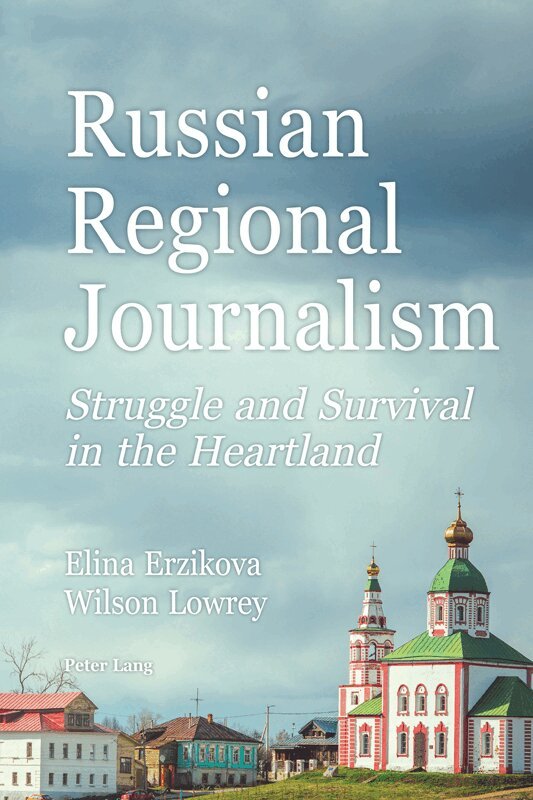
Russian Regional Journalism: Struggle and Survival in the Heartland takes an intimate look at the enormous challenges and small victories experienced by local Russian journalists across the post-perestroika and Putin eras. The book examines 13 years of journalists’ struggles for independence and meaning as they weigh their professional goals and community obligations against their growing dependence on local elite. Russia’s sub-national levels—its provinces and communities—remain understudied but important. Local newspapers are the only means by which news reaches many rural Russians, and Russia’s "heartland" regions are a significant source of support for the current national regime. The book contributes importantly to our understanding of Russian journalism, and to our understanding of local journalism generally, an increasingly vulnerable institution in countries around the world. Russian Regional Journalism seeks answers to a number of questions: How do challenging political-economic environments constrain and guide the ways Russian journalists imagine their roles and do their work? Can journalists represent their regions in meaningful, distinct ways, and are they seeking autonomy or mere survival? How does local Russian journalism fit within the global context of local journalism? Russian Regional Journalism will serve as a valuable companion text for senior-level or graduate courses on Russian media and culture, global media, local journalism, media production, and media sociology. The book will also be of value to anyone interested in journalism’s ongoing challenges in a diverse, changing world.
418 kr
Skickas inom 5-8 vardagar
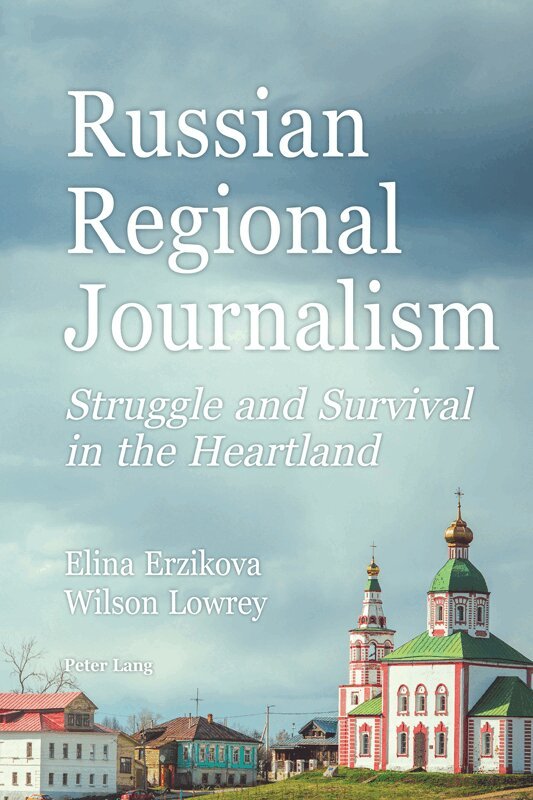
Russian Regional Journalism: Struggle and Survival in the Heartland takes an intimate look at the enormous challenges and small victories experienced by local Russian journalists across the post-perestroika and Putin eras. The book examines 13 years of journalists’ struggles for independence and meaning as they weigh their professional goals and community obligations against their growing dependence on local elite. Russia’s sub-national levels—its provinces and communities—remain understudied but important. Local newspapers are the only means by which news reaches many rural Russians, and Russia’s "heartland" regions are a significant source of support for the current national regime. The book contributes importantly to our understanding of Russian journalism, and to our understanding of local journalism generally, an increasingly vulnerable institution in countries around the world. Russian Regional Journalism seeks answers to a number of questions: How do challenging political-economic environments constrain and guide the ways Russian journalists imagine their roles and do their work? Can journalists represent their regions in meaningful, distinct ways, and are they seeking autonomy or mere survival? How does local Russian journalism fit within the global context of local journalism? Russian Regional Journalism will serve as a valuable companion text for senior-level or graduate courses on Russian media and culture, global media, local journalism, media production, and media sociology. The book will also be of value to anyone interested in journalism’s ongoing challenges in a diverse, changing world.