Elizabeth Brewer - Böcker
Visar alla böcker från författaren Elizabeth Brewer. Handla med fri frakt och snabb leverans.
5 produkter
5 produkter
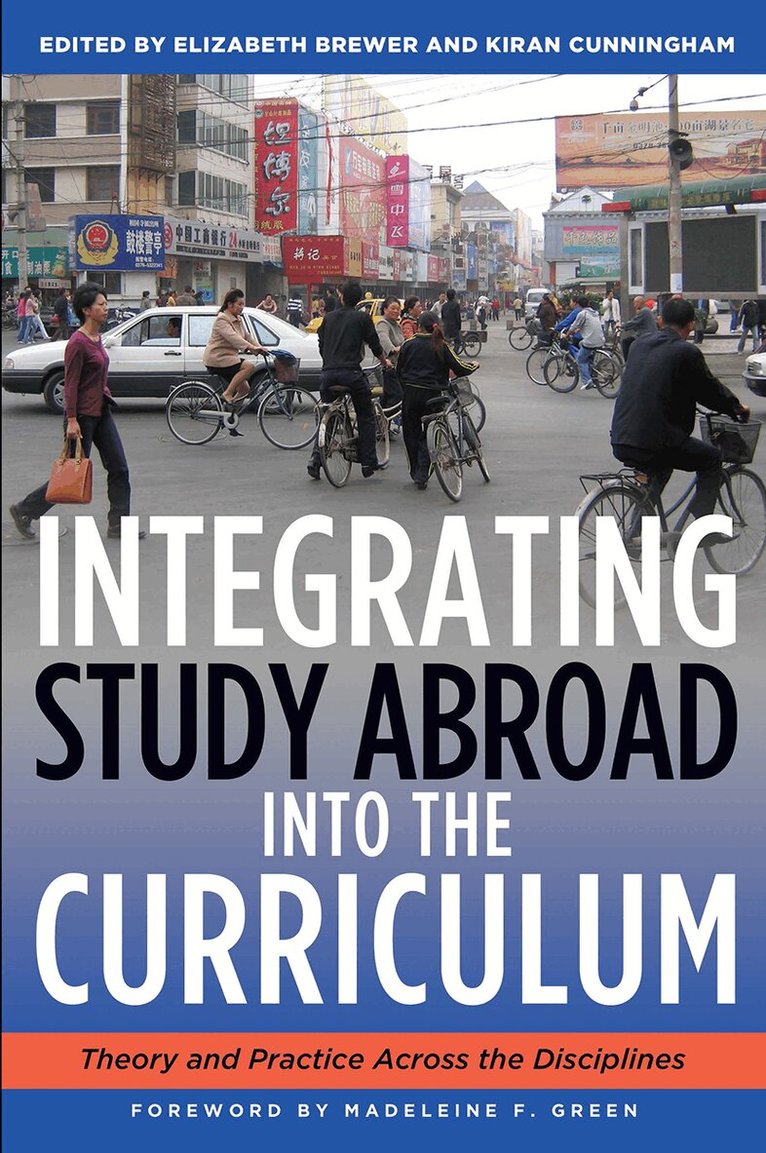
Integrating Study Abroad Into the Curriculum
Theory and Practice Across the Disciplines
Häftad, Engelska, 2010
415 kr
Skickas inom 10-15 vardagar
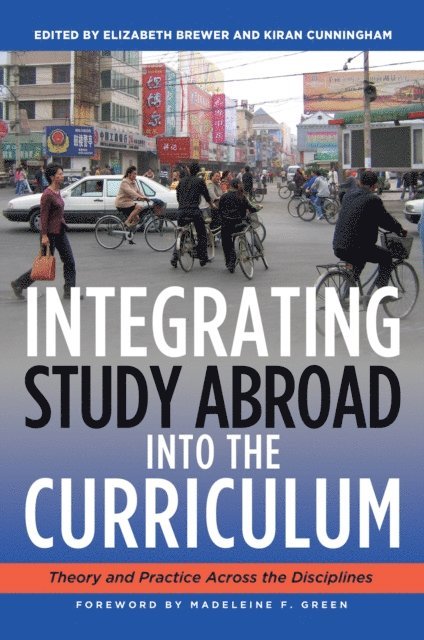
With the increased interest in study abroad from government, educators, employers and students, the question is: is study abroad engendering the desired intercultural competencies and intellectual development?To achieve this goal, this book proposes two strategies: structure study abroad to bridge the separation of academic learning from experiential and intercultural learning; and integrate study abroad with the undergraduate curriculum.In proposing this integration, the editors take into account the need for institutional change, and recognize faculty members’ concerns about maintaining the integrity of the curriculum, teaching in areas outside their expertise, and keeping up with ever-evolving institutional missions.This book opens with two chapters presenting different theoretical perspectives relevant to the integration of study abroad into the curriculum. The following nine chapters provide examples from a variety of disciplines – from anthropology and religious studies, to literature, urban studies, biology and public health – and within such contexts as distance learning, service learning, and the senior thesis. The concluding chapter considers faculty development activities and institutional structures and policies that support curriculum integration. While the examples are drawn from Beloit College and Kalamazoo College – liberal arts colleges with substantial study abroad enrollments, and nationally recognized for their innovative practices – readers will recognize they are easily adaptable to their own institutions. The two colleges achieved their curricular innovations with limited financial resources, and in the context that most of their students are dependent on financial aid. The transformational ideas and practices described here provide material for reflection and campus conversations for anyone concerned with developing global citizens and well-educated students, and offer a blueprint for implementation.
2 029 kr
Skickas inom 10-15 vardagar
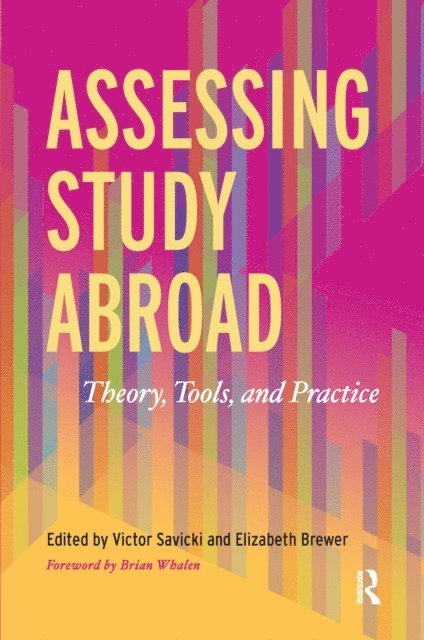
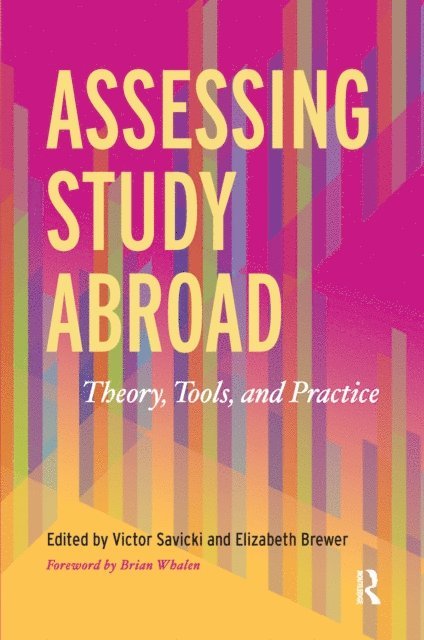
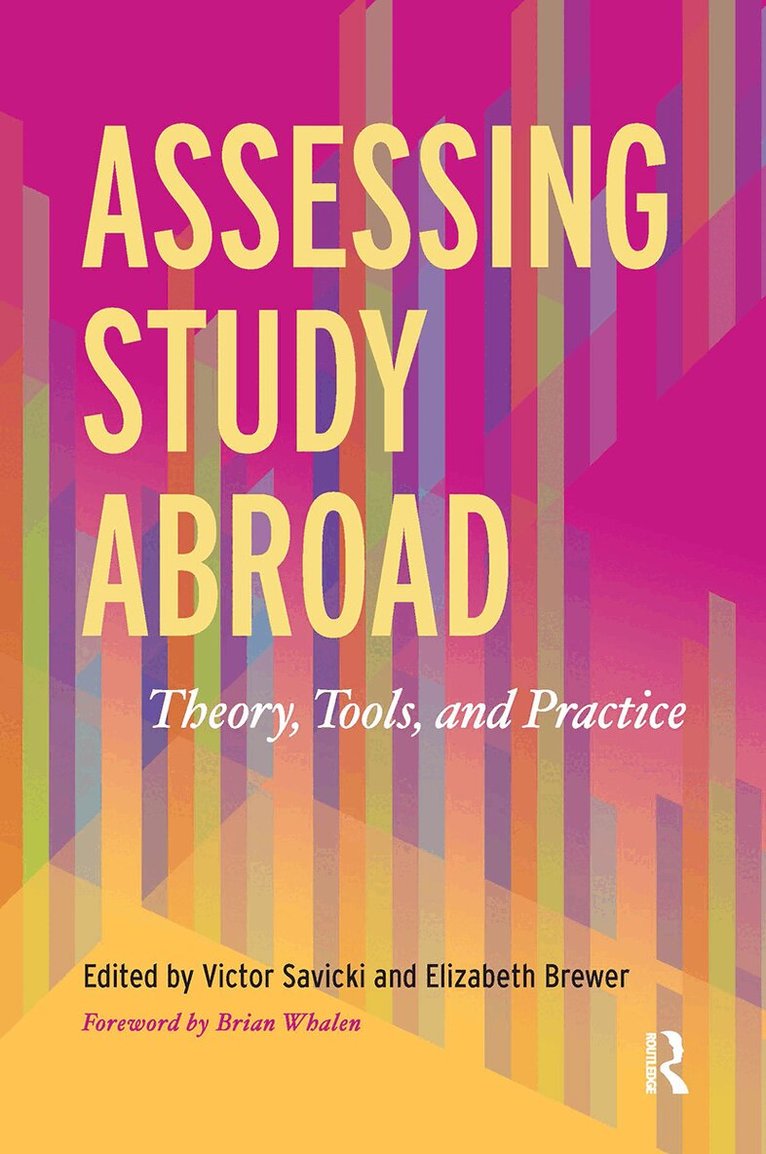
This book is intended to guide advisors, administrators, and faculty members engaged with study abroad who are concerned with answering the question: what does study abroad achieve? It will also inform the work of study abroad organizations as well as institutions receiving study abroad students. Offering a broad-based approach to assessment, the book will appeal to those starting out. However, an array of case studies, illustrating the often untidy process of implementation, will equally appeal to those further along by offering creative – and often simple – approaches to common problems. Following an account of how, and why, assessment in the field has evolved, the first part of the book sets the stage for the reader to consider the role of mission and context in determining purpose, goals and outcomes; to identify and consult with stakeholders; determine what data and expertise may already be available on campus; match methods and tools to questions; and create realistic plans to communicate findings, and to act upon them. The second part of the book offers an overview of appropriate tools and strategies for assessing study abroad, emphasizing the importance of carefully formulating and prioritizing assessment questions and understanding the advantages and drawbacks of different instruments. It describes an array of qualitative, quantitative, and mixed methods, illustrating their application with examples of practice, and concludes by outlining the process of putting a plan into action.The book concludes with ten case studies that illustrate various approaches to planning, experimentation, and implementation, some revealing false starts and lessons learned, and all conveying the message that assessment is an iterative, on-going process that needs constant refinement. The cases represent a wide variety of institutional and organizational types and demonstrate how each selected methods suited to their capacities and cultures.
468 kr
Skickas inom 10-15 vardagar
This book is intended to guide advisors, administrators, and faculty members engaged with study abroad who are concerned with answering the question: what does study abroad achieve? It will also inform the work of study abroad organizations as well as institutions receiving study abroad students. Offering a broad-based approach to assessment, the book will appeal to those starting out. However, an array of case studies, illustrating the often untidy process of implementation, will equally appeal to those further along by offering creative – and often simple – approaches to common problems. Following an account of how, and why, assessment in the field has evolved, the first part of the book sets the stage for the reader to consider the role of mission and context in determining purpose, goals and outcomes; to identify and consult with stakeholders; determine what data and expertise may already be available on campus; match methods and tools to questions; and create realistic plans to communicate findings, and to act upon them. The second part of the book offers an overview of appropriate tools and strategies for assessing study abroad, emphasizing the importance of carefully formulating and prioritizing assessment questions and understanding the advantages and drawbacks of different instruments. It describes an array of qualitative, quantitative, and mixed methods, illustrating their application with examples of practice, and concludes by outlining the process of putting a plan into action.The book concludes with ten case studies that illustrate various approaches to planning, experimentation, and implementation, some revealing false starts and lessons learned, and all conveying the message that assessment is an iterative, on-going process that needs constant refinement. The cases represent a wide variety of institutional and organizational types and demonstrate how each selected methods suited to their capacities and cultures.
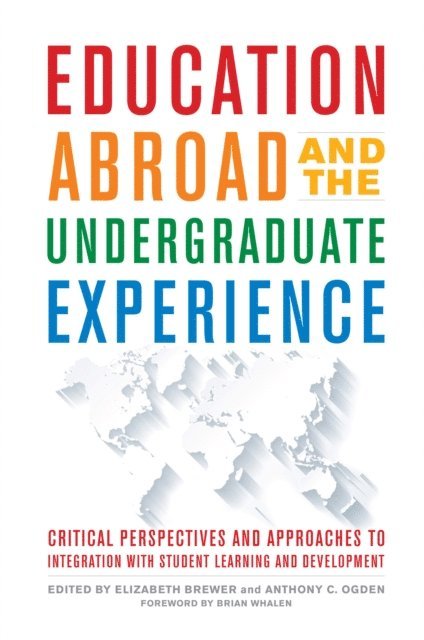
Education Abroad and the Undergraduate Experience
Critical Perspectives and Approaches to Integration with Student Learning and Development
Inbunden, Engelska, 2019
2 029 kr
Skickas inom 10-15 vardagar
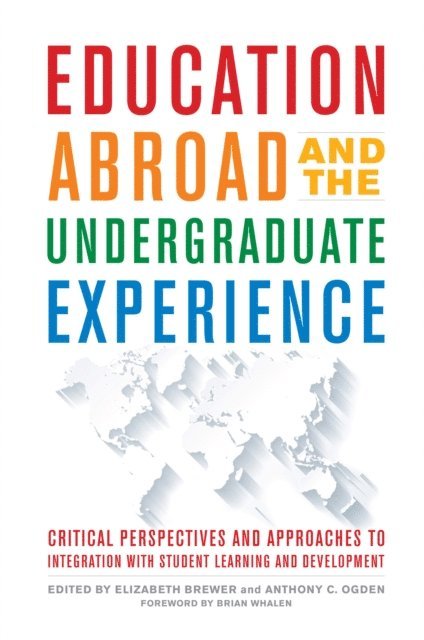
Co-published with This volume focuses on two questions. First, how can education abroad be embedded into undergraduate education so that students experience it as an integral component of their education and something they help shape, rather than as time away from their education and as a commodity to be consumed? Second, how can colleges and universities maximize the educational value of education abroad by forging stronger connections between it and other undergraduate experiences? The volume argues that learning abroad be positioned within the work of the larger institution and students’ overall education.Organized within three sections, this volume makes the case that learning abroad must be positioned within the work of the larger institution and students’ overall education. In doing so, it questions many current assumptions and stimulates thinking about the power of an integrative approach to education abroad to lead to lasting educative value. An integrative approach requires that students be afforded multiple opportunities and ongoing support to draw connections with their learning abroad with other dimensions of their undergraduate education.Chapters cover topics such as the additive value of integrating multiple HIPs with education abroad to span disciplinary boundaries and promote an array of soft or operational skills; the importance of maintaining the disruptive quality of the encounter with the foreign to enrich study at home; issues of commodification and reciprocity; increasing access to study abroad to community college--particularly adult--populations; facilitating students’ social and intellectual development, identity formation, and reflective practice; rethinking orientation programming to emphasize the continuity of learning pre-, during- and post-education abroad; asking fundamental questions about the purpose of education abroad to rethink assessment and its purposes; the faculty role in the internationalization of the curriculum; and developing more intentional relationships with in-field partners and international educational organizations to more effectively connect leaning abroad with other dimensions of undergraduate education.For everyone involved in international education – whether SIOs, faculty, department chairs or deans – the critical questions and new perspectives offered here will inform and shape the growing movement to integrate education abroad with the overall undergraduate experience.
Education Abroad and the Undergraduate Experience
Critical Perspectives and Approaches to Integration with Student Learning and Development
Häftad, Engelska, 2019
481 kr
Skickas inom 10-15 vardagar
Co-published with This volume focuses on two questions. First, how can education abroad be embedded into undergraduate education so that students experience it as an integral component of their education and something they help shape, rather than as time away from their education and as a commodity to be consumed? Second, how can colleges and universities maximize the educational value of education abroad by forging stronger connections between it and other undergraduate experiences? The volume argues that learning abroad be positioned within the work of the larger institution and students’ overall education.Organized within three sections, this volume makes the case that learning abroad must be positioned within the work of the larger institution and students’ overall education. In doing so, it questions many current assumptions and stimulates thinking about the power of an integrative approach to education abroad to lead to lasting educative value. An integrative approach requires that students be afforded multiple opportunities and ongoing support to draw connections with their learning abroad with other dimensions of their undergraduate education.Chapters cover topics such as the additive value of integrating multiple HIPs with education abroad to span disciplinary boundaries and promote an array of soft or operational skills; the importance of maintaining the disruptive quality of the encounter with the foreign to enrich study at home; issues of commodification and reciprocity; increasing access to study abroad to community college--particularly adult--populations; facilitating students’ social and intellectual development, identity formation, and reflective practice; rethinking orientation programming to emphasize the continuity of learning pre-, during- and post-education abroad; asking fundamental questions about the purpose of education abroad to rethink assessment and its purposes; the faculty role in the internationalization of the curriculum; and developing more intentional relationships with in-field partners and international educational organizations to more effectively connect leaning abroad with other dimensions of undergraduate education.For everyone involved in international education – whether SIOs, faculty, department chairs or deans – the critical questions and new perspectives offered here will inform and shape the growing movement to integrate education abroad with the overall undergraduate experience.