Elizabeth Carruthers – författare
343 kr
Skickas inom 3-6 vardagar
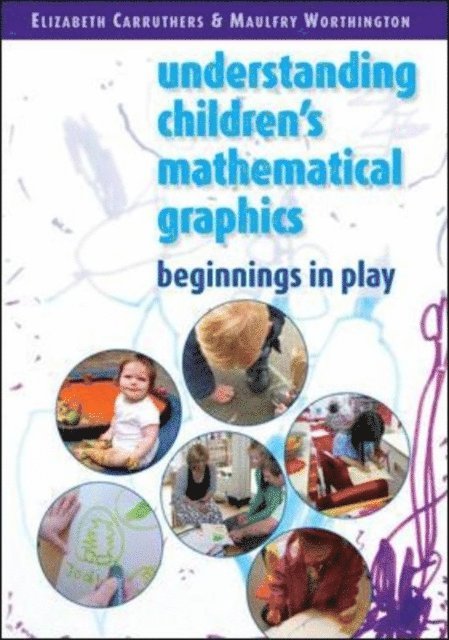
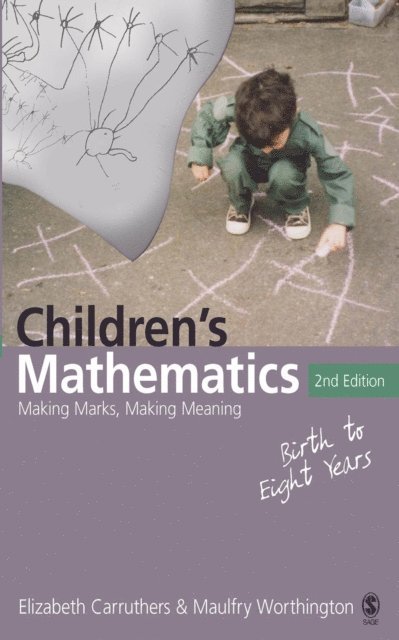
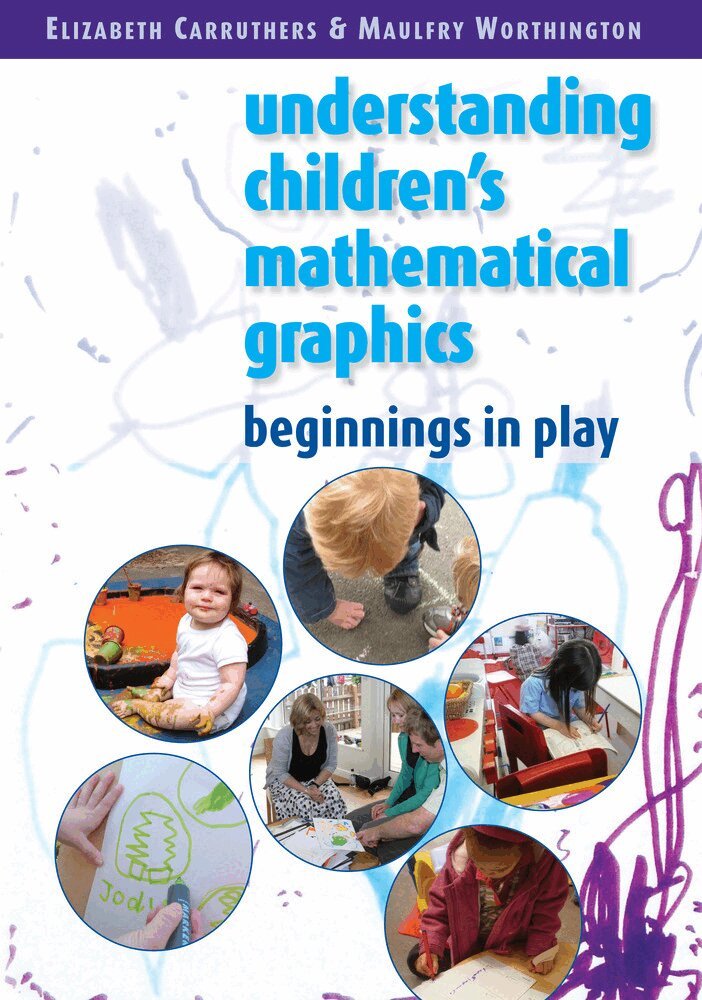
The book looks at the power of children's own marks, symbols and other graphical representations to convey meanings, exploring how they support complex thinking. The authors explore the relationship between children's play and meaning making. Rather than viewing mathematics as a separate subject or as a set of basic 'skills' to be transmitted, they demonstrate that in supportive learning cultures children develop their own mathematical thinking to solve problems.
Key features include:
Numerous new examples and case studies of children from birth to 6 years,highlighting the complexity and richness of children's thinkingExplanation of pedagogical issues - showing how they can support rich play and mathematicsDraws on the authors' latest research This book is valuable reading for students, teachers, primary mathematics coordinators' and all early years' professionals working in the Early Years Foundation Stage and Key Stage One.321 kr
Läs direkt efter köp
The book looks at the power of children''s own marks, symbols and other graphical representations to convey meanings, exploring how they support complex thinking. The authors explore the relationship between children''s play and meaning making. Rather than viewing mathematics as a separate subject or as a set of basic ''skills'' to be transmitted, they demonstrate that in supportive learning cultures children develop their own mathematical thinking to solve problems.
Key features include:
Numerous new examples and case studies of children from birth to 8 years,highlighting the complexity and richness of children''s thinkingExplanation of pedagogical issues - showing how they can support rich play and mathematicsDraws on the authors'' latest research This book is valuable reading for students, teachers, primary mathematics coordinators'' and all early years'' professionals working in the Early Years Foundation Stage and Key Stage One.717 kr
Läs direkt efter köp
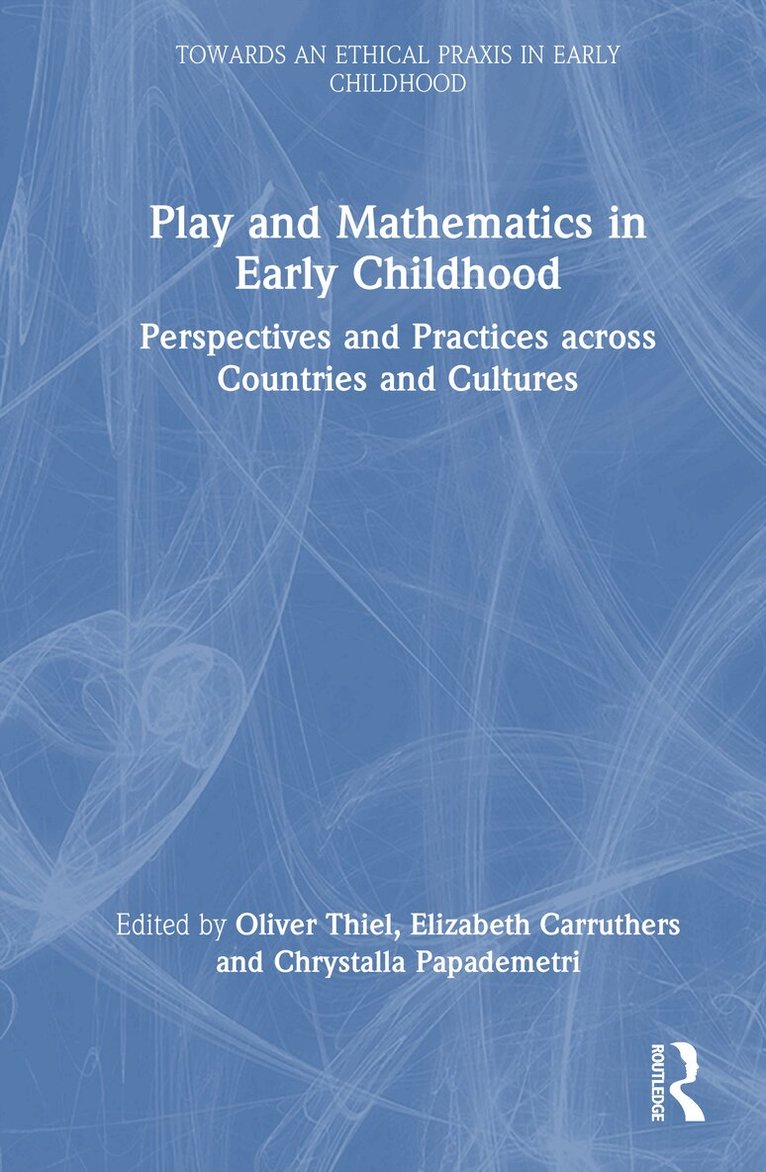
This innovative book examines the dynamic intersection between play and mathematics in early childhood education, challenging traditional educational approaches. Through international perspectives and practices, it demonstrates how mathematical concepts naturally emerge through children''s play and how educators can enhance mathematical learning without disrupting the play experience.
Comprising 11 chapters with diverse cultural and educational perspectives, the book explores how children engage with mathematical concepts through play across different countries and contexts. It addresses critical issues for early childhood education and care practitioners, examining similarities and distinctions between mathematics and play while providing practical approaches for integrating mathematics into play for various age groups. The comparative international approach highlights both the universality of play in learning and unique cultural methods for facilitating mathematical understanding. Original research showcases how children''s mathematical thinking surfaces in various play scenarios and offers pedagogical practices that support both play and mathematical development without compromising the integrity of either.
This essential resource serves early childhood educators, researchers, students, and policymakers committed to enhancing mathematics education quality and effectiveness. It provides practical guidance for promoting more equitable and engaging approaches to mathematical learning in the early years.
717 kr
Läs direkt efter köp
This innovative book examines the dynamic intersection between play and mathematics in early childhood education, challenging traditional educational approaches. Through international perspectives and practices, it demonstrates how mathematical concepts naturally emerge through children''s play and how educators can enhance mathematical learning without disrupting the play experience.
Comprising 11 chapters with diverse cultural and educational perspectives, the book explores how children engage with mathematical concepts through play across different countries and contexts. It addresses critical issues for early childhood education and care practitioners, examining similarities and distinctions between mathematics and play while providing practical approaches for integrating mathematics into play for various age groups. The comparative international approach highlights both the universality of play in learning and unique cultural methods for facilitating mathematical understanding. Original research showcases how children''s mathematical thinking surfaces in various play scenarios and offers pedagogical practices that support both play and mathematical development without compromising the integrity of either.
This essential resource serves early childhood educators, researchers, students, and policymakers committed to enhancing mathematics education quality and effectiveness. It provides practical guidance for promoting more equitable and engaging approaches to mathematical learning in the early years.
602 kr
Skickas inom 10-15 vardagar
2 334 kr
Skickas inom 10-15 vardagar
413 kr
Skickas inom 10-15 vardagar
490 kr
Läs direkt efter köp
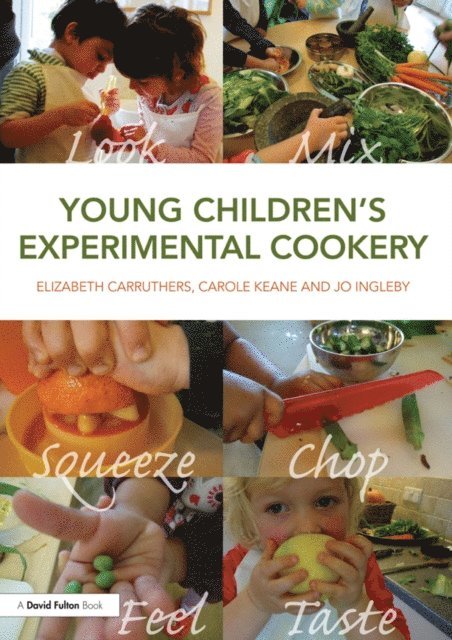
Young Children’s Experimental Cookery encourages Early Years practitioners and teachers to take an innovative and creative approach to introducing young children to food and cooking. The book addresses wider issues such as healthy eating and food preparation skills, but also moves beyond the concept of traditional cookery lessons to celebrate food as a creative medium, offering immense scope for multi-sensory exploration and a variety of high quality learning experiences.
Practitioners are encouraged to abandon recipes, take a step back, and afford children the freedom to chop, mix, stir and concoct their own creations, exploring fresh ingredients and experimenting with new tastes and smells along the way. Bridging the gap between food preparation and the development of confidence, imagination and creative-thinking skills, this open-ended approach to cooking sessions will equip children with skills which go far beyond those needed in the kitchen.
Featuring full-colour photographs throughout, as well as detailed case studies and practical tips for various seasons and food groups, this accessible and exciting resource is ideal for practitioners, teachers, parents and budding chefs! Every school and Early Years setting should have at least one copy in their staff room.
489 kr
Läs direkt efter köp
Young Children’s Experimental Cookery encourages Early Years practitioners and teachers to take an innovative and creative approach to introducing young children to food and cooking. The book addresses wider issues such as healthy eating and food preparation skills, but also moves beyond the concept of traditional cookery lessons to celebrate food as a creative medium, offering immense scope for multi-sensory exploration and a variety of high quality learning experiences.
Practitioners are encouraged to abandon recipes, take a step back, and afford children the freedom to chop, mix, stir and concoct their own creations, exploring fresh ingredients and experimenting with new tastes and smells along the way. Bridging the gap between food preparation and the development of confidence, imagination and creative-thinking skills, this open-ended approach to cooking sessions will equip children with skills which go far beyond those needed in the kitchen.
Featuring full-colour photographs throughout, as well as detailed case studies and practical tips for various seasons and food groups, this accessible and exciting resource is ideal for practitioners, teachers, parents and budding chefs! Every school and Early Years setting should have at least one copy in their staff room.
1 441 kr
Skickas inom 3-6 vardagar
'In Case Study 5 (a grassroots 'Children's Mathematics Network group') the initiative supported the participants in their professional change by giving them a space for the detailed and joint consideration of children's mathematical thinking. Another significant feature of this initiative is its focus on careful consideration and analysis of children's mathematics, and the ways in which professionals can support and encourage the children's mathematical thinking and reasoning… The standard of the mathematical understanding, thinking and reasoning that the displays revealed was far higher than the specified curriculum objectives for children of this age…' - Researching Effective CPD in Mathematics Education (RECME) project: (NCETM, 2009)
'The review also plays great score by play-based learning of a mathematical nature, and makes specific recommendations regarding early mark-making as a precursor to abstract mathematical symbolism'. Section 115 features children's mathematical graphics and emphasises: 'The role of mark-making in children's cognitive development is set out in the taxonomy (Carruthers and Worthington, 2006)'. The report recommends that 'local authorities, leaders, managers and head teachers should provide a culture with a significant focus on mathematical mark-making' and 'a learning environment that encourages children to choose to use their own mathematical graphics to support their mathematical thinking and processes' - The Williams Maths Review: (DCSF, 2008)
`At the very heart of the success of the book is the authors' ability to see mathematics through young children's eyes by listening to and reflecting on the constant efforts made by children to make sense of their world. This is a liberating book which proposes that the teaching of mathematics could and should be a highly creative and enjoyable proceess' - Branwen Llewelyn Jones, Early Years Consultant at PACE Ltd / TACTYC
'Ground breaking... To single out any one chapter would be unfair because there is something thought-provoking and inspirational throughout. If you want to expand your understanding upwards and outwards then get a copy soon' - Times Educational Supplement
'I first read Children's Mathematics, Making Marks, Making Meaning a couple of years ago and it had an immediate impact on my own thinking and teaching, and the work I do with trainee teachers. I'm sure you will find it compelling reading too. I think it has the potential to change, in a fundamental way, how we think about early mathematical development' - Lynne McClure, Editor, Math Co-ordiator's File, Mathematics Association
'In their exceptionally readable and informative book, Children's Mathematics, Making Marks, Making Meaning Carruthers and Worthington (2006) draw attention to one of the main goals of early years teaching, that is, to help children make links between the mathematics they have already encountered (and continue to engage with) at home and the more abstract mathematics of the school. These authors suggest that by encouraging children to represent mathematical ideas in their own ways and, crucially, by talking to the pupils about the marks they have made, we are given a "window" onto their thinking that may otherwise be inaccessible' - Liz Pumphrey, NRICH
This book draws on the authors' many years of teaching children aged three to eight years and also on their extensive research with children in the home, nursery and school. The authors explain the development and range of young children's mathematical marks and visual representations, showing how children make mental connections between their own early marks and subsequent abstract mathematical symbolism, and go on to develop their own written methods.
Combining theory and practice, this acclaimed book demonstrates how children's own mathematical graphics are highly creative and show deep levels of thinking. The authors show how this is the key to success in school mathematics and to higher levels of achievement.
The authors are winners of TACTYC's (2003) Jenefer Joseph Award for the Creative Arts (3 - 8) - awarded for their innovative work with children on mathematical graphics.

150 kr
Skickas inom 5-8 vardagar
614 kr
Läs direkt efter köp
′In Case Study 5 (a grassroots ′Children′s Mathematics Network group′) the initiative supported the participants in their professional change by giving them a space for the detailed and joint consideration of children′s mathematical thinking. Another significant feature of this initiative is its focus on careful consideration and analysis of children′s mathematics, and the ways in which professionals can support and encourage the children′s mathematical thinking and reasoning… The standard of the mathematical understanding, thinking and reasoning that the displays revealed was far higher than the specified curriculum objectives for children of this age…′ - Researching Effective CPD in Mathematics Education (RECME) project: (NCETM, 2009)
′The review also plays great score by play-based learning of a mathematical nature, and makes specific recommendations regarding early mark-making as a precursor to abstract mathematical symbolism′. Section 115 features children′s mathematical graphics and emphasises: ′The role of mark-making in children′s cognitive development is set out in the taxonomy (Carruthers and Worthington, 2006)′. The report recommends that ′local authorities, leaders, managers and head teachers should provide a culture with a significant focus on mathematical mark-making′ and ′a learning environment that encourages children to choose to use their own mathematical graphics to support their mathematical thinking and processes′ - The Williams Maths Review: (DCSF, 2008)
`At the very heart of the success of the book is the authors′ ability to see mathematics through young children′s eyes by listening to and reflecting on the constant efforts made by children to make sense of their world. This is a liberating book which proposes that the teaching of mathematics could and should be a highly creative and enjoyable proceess′ - Branwen Llewelyn Jones, Early Years Consultant at PACE Ltd / TACTYC
′Ground breaking... To single out any one chapter would be unfair because there is something thought-provoking and inspirational throughout. If you want to expand your understanding upwards and outwards then get a copy soon′ - Times Educational Supplement
′I first read Children′s Mathematics, Making Marks, Making Meaning a couple of years ago and it had an immediate impact on my own thinking and teaching, and the work I do with trainee teachers. I′m sure you will find it compelling reading too. I think it has the potential to change, in a fundamental way, how we think about early mathematical development′ - Lynne McClure, Editor, Math Co-ordiator′s File, Mathematics Association
′In their exceptionally readable and informative book, Children′s Mathematics, Making Marks, Making Meaning Carruthers and Worthington (2006) draw attention to one of the main goals of early years teaching, that is, to help children make links between the mathematics they have already encountered (and continue to engage with) at home and the more abstract mathematics of the school. These authors suggest that by encouraging children to represent mathematical ideas in their own ways and, crucially, by talking to the pupils about the marks they have made, we are given a "window" onto their thinking that may otherwise be inaccessible′ - Liz Pumphrey, NRICH
This book draws on the authors′ many years of teaching children aged three to eight years and also on their extensive research with children in the home, nursery and school. The authors explain the development and range of young children′s mathematical marks and visual representations, showing how children make mental connections between their own early marks and subsequent abstract mathematical symbolism, and go on to develop their own written methods.
Combining theory and practice, this acclaimed book demonstrates how children′s own mathematical graphics are highly creative and show deep levels of thinking. The authors show how this is the key to success in school mathematics and to higher levels of achievement.
The authors are winners of TACTYC′s (2003) Jenefer Joseph Award for the Creative Arts (3 - 8) - awarded for their innovative work with children on mathematical graphics.
2 432 kr
Tillfälligt slut
'In Case Study 5 (a grassroots 'Children's Mathematics Network group') the initiative supported the participants in their professional change by giving them a space for the detailed and joint consideration of children's mathematical thinking. Another significant feature of this initiative is its focus on careful consideration and analysis of children's mathematics, and the ways in which professionals can support and encourage the children's mathematical thinking and reasoning… The standard of the mathematical understanding, thinking and reasoning that the displays revealed was far higher than the specified curriculum objectives for children of this age…' - Researching Effective CPD in Mathematics Education (RECME) project: (NCETM, 2009)
'The review also plays great score by play-based learning of a mathematical nature, and makes specific recommendations regarding early mark-making as a precursor to abstract mathematical symbolism'. Section 115 features children's mathematical graphics and emphasises: 'The role of mark-making in children's cognitive development is set out in the taxonomy (Carruthers and Worthington, 2006)'. The report recommends that 'local authorities, leaders, managers and head teachers should provide a culture with a significant focus on mathematical mark-making' and 'a learning environment that encourages children to choose to use their own mathematical graphics to support their mathematical thinking and processes' - The Williams Maths Review: (DCSF, 2008)
`At the very heart of the success of the book is the authors' ability to see mathematics through young children's eyes by listening to and reflecting on the constant efforts made by children to make sense of their world. This is a liberating book which proposes that the teaching of mathematics could and should be a highly creative and enjoyable proceess' - Branwen Llewelyn Jones, Early Years Consultant at PACE Ltd / TACTYC
'Ground breaking... To single out any one chapter would be unfair because there is something thought-provoking and inspirational throughout. If you want to expand your understanding upwards and outwards then get a copy soon' - Times Educational Supplement
'I first read Children's Mathematics, Making Marks, Making Meaning a couple of years ago and it had an immediate impact on my own thinking and teaching, and the work I do with trainee teachers. I'm sure you will find it compelling reading too. I think it has the potential to change, in a fundamental way, how we think about early mathematical development' - Lynne McClure, Editor, Math Co-ordiator's File, Mathematics Association
'In their exceptionally readable and informative book, Children's Mathematics, Making Marks, Making Meaning Carruthers and Worthington (2006) draw attention to one of the main goals of early years teaching, that is, to help children make links between the mathematics they have already encountered (and continue to engage with) at home and the more abstract mathematics of the school. These authors suggest that by encouraging children to represent mathematical ideas in their own ways and, crucially, by talking to the pupils about the marks they have made, we are given a "window" onto their thinking that may otherwise be inaccessible' - Liz Pumphrey, NRICH
This book draws on the authors' many years of teaching children aged three to eight years and also on their extensive research with children in the home, nursery and school. The authors explain the development and range of young children's mathematical marks and visual representations, showing how children make mental connections between their own early marks and subsequent abstract mathematical symbolism, and go on to develop their own written methods.
Combining theory and practice, this acclaimed book demonstrates how children's own mathematical graphics are highly creative and show deep levels of thinking. The authors show how this is the key to success in school mathematics and to higher levels of achievement.
The authors are winners of TACTYC's (2003) Jenefer Joseph Award for the Creative Arts (3 - 8) - awarded for their innovative work with children on mathematical graphics.