Elizabeth Hawkins - Böcker
Visar alla böcker från författaren Elizabeth Hawkins. Handla med fri frakt och snabb leverans.
6 produkter
6 produkter
157 kr
Skickas inom 5-8 vardagar
2 166 kr
Skickas inom 10-15 vardagar
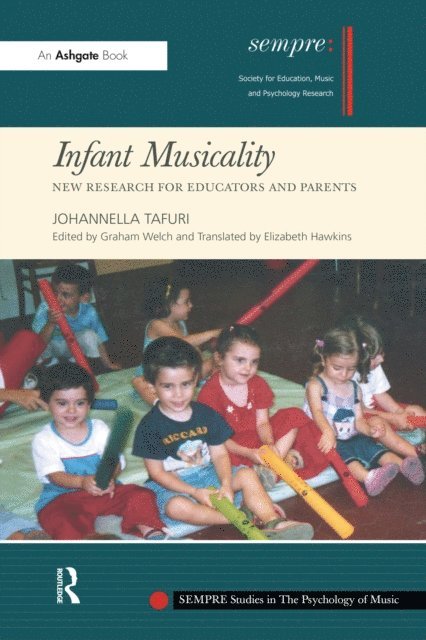
What can infants hear? What are their reactions to music? Is it useful for them to sing and listen to music? Is their auditory sensitivity developed before their birth? At what age do they start singing, and clapping their hands? How can their musical development be improved? These (and other) questions are present in today's debate on music education and the responses are normally given in an intuitive way. It is now necessary and urgent to sketch a developmental profile of infants, starting from their earliest manifestations. In the last 30 years, research in this field has been progressively developed. In most cases research has been devoted to single aspects of more complex problems. Moreover, it has been based on non-homogeneous categories of subjects and by different methods. Motivated by the fact that many open problems need to be solved, Professor Tafuri decided, in 1998, to begin a longitudinal research project devoted to studying the musical development in children from 0 to 6 years, with particular attention on the ability to sing in tune. During these 6 years, the children would have a regular music education experience with their mothers and often other members of the immediate family. This book has two main areas of focus. The first reconstructs the development of human musical abilities. Tafuri systematically reports studies of the development of vocal, rhythmic and motor abilities through the observation of the same participants for three years, beginning with the mothers' experiences in the last three months of pre-natal life. The programme of musical activities and the modalities of the collaboration with the parents are described. The second area of focus puts forward an educational perspective based on the results of the research. The amount and the quality of the collected data can allow parents and educators to plan different activities by considering the starting point for individual participants and the development of their musical abilities. The long-term aim is to reach an overarching understanding of the personal musicality of each subject. The book will be of crucial interest to parents and nursery/kindergarten educators so that they can have scientific, theoretical and methodological foundations for their educational strategies, as well as being of considerable interest to all musical educators, irrespective of the age of their pupils: a good knowledge of the first stages of musical development can permit a better evaluation and a fulfilment of later educational needs in music.
411 kr
Skickas inom 10-15 vardagar
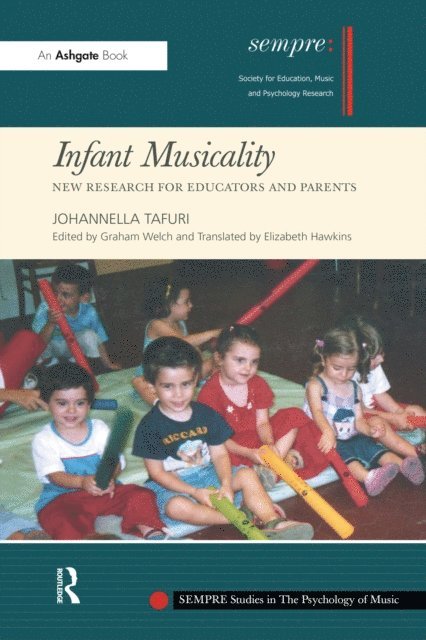
What can infants hear? What are their reactions to music? Is it useful for them to sing and listen to music? Is their auditory sensitivity developed before their birth? At what age do they start singing, and clapping their hands? How can their musical development be improved? These (and other) questions are present in today's debate on music education and the responses are normally given in an intuitive way. It is now necessary and urgent to sketch a developmental profile of infants, starting from their earliest manifestations. In the last 30 years, research in this field has been progressively developed. In most cases research has been devoted to single aspects of more complex problems. Moreover, it has been based on non-homogeneous categories of subjects and by different methods. Motivated by the fact that many open problems need to be solved, Professor Tafuri decided, in 1998, to begin a longitudinal research project devoted to studying the musical development in children from 0 to 6 years, with particular attention on the ability to sing in tune. During these 6 years, the children would have a regular music education experience with their mothers and often other members of the immediate family. This book has two main areas of focus. The first reconstructs the development of human musical abilities. Tafuri systematically reports studies of the development of vocal, rhythmic and motor abilities through the observation of the same participants for three years, beginning with the mothers' experiences in the last three months of pre-natal life. The programme of musical activities and the modalities of the collaboration with the parents are described. The second area of focus puts forward an educational perspective based on the results of the research. The amount and the quality of the collected data can allow parents and educators to plan different activities by considering the starting point for individual participants and the development of their musical abilities. The long-term aim is to reach an overarching understanding of the personal musicality of each subject. The book will be of crucial interest to parents and nursery/kindergarten educators so that they can have scientific, theoretical and methodological foundations for their educational strategies, as well as being of considerable interest to all musical educators, irrespective of the age of their pupils: a good knowledge of the first stages of musical development can permit a better evaluation and a fulfilment of later educational needs in music.
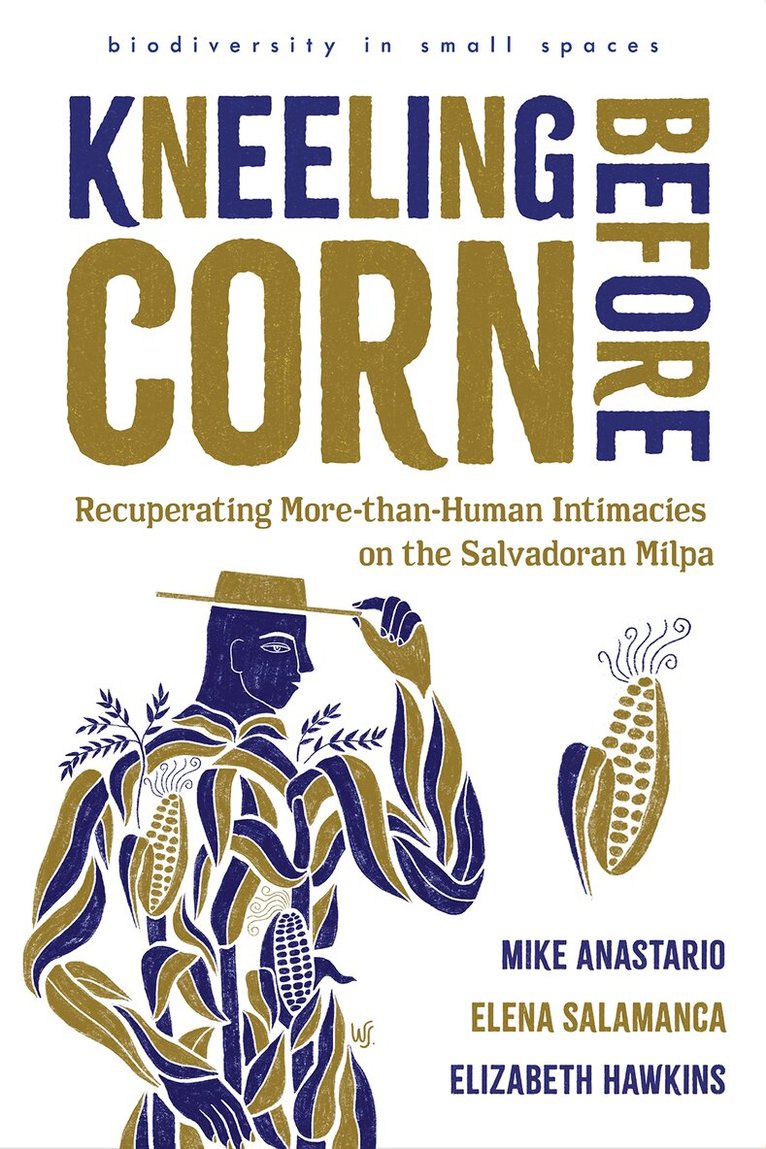
Kneeling Before Corn
Recuperating More-than-Human Intimacies on the Salvadoran Milpa
Häftad, Engelska, 2024
282 kr
Skickas inom 7-10 vardagar
The cultivation of the three sisters (corn, beans, and squash) on subsistence farms in El Salvador is a multispecies, world-making, and ongoing process. Milpa describes a small subsistence corn farm. It is derived from the word milli (‘field’, or a piece of land under active cultivation) in Nahuatl. The milpa is a farming practice that uses perennial, intercropping, and swidden (fire and fallow) techniques that predates the Spanish conquest of the Americas.Kneeling Before Corn focuses on the intimate relations that develop between plants and humans in the milpas of the northern rural region of El Salvador. It explores the ways in which more-than-human intimacies travel away from and return to the milpa through human networks.Collective and multivocal, this work reflects independent lines of investigation and multiple conversations between co-authors—all of whom have lived in El Salvador for extended periods of time. Throughout the six chapters, the co-authors invite readers to consider more-than-human intimacies by rethinking, experimenting with, and developing new ways of documenting, analyzing, and knowing the intimacies that form between humans and the plants that they cultivate, conserve, long for, and eat. This book offers an innovative account of rural El Salvador in the twenty-first century.
212 kr
Skickas inom 5-8 vardagar
212 kr
Skickas inom 5-8 vardagar