Elizabeth R. DeSombre - Böcker
Visar alla böcker från författaren Elizabeth R. DeSombre. Handla med fri frakt och snabb leverans.
15 produkter
15 produkter
384 kr
Skickas inom 5-8 vardagar
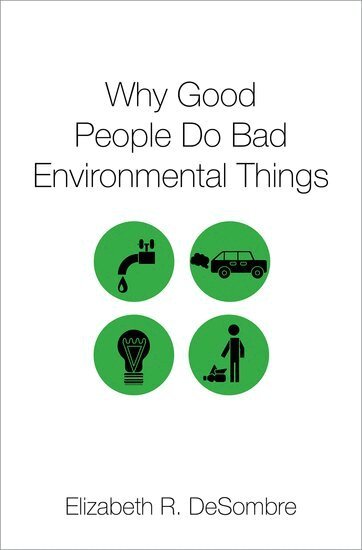
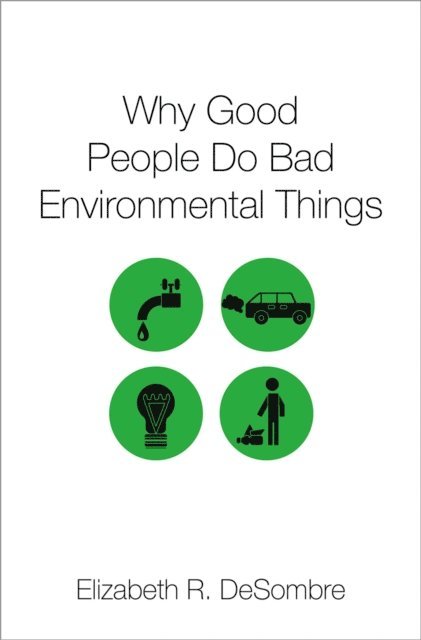
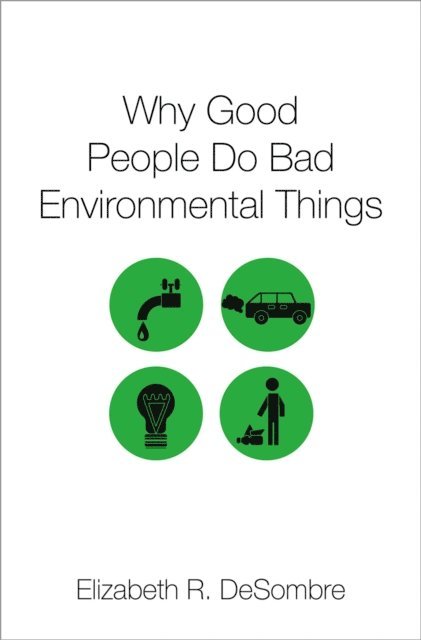
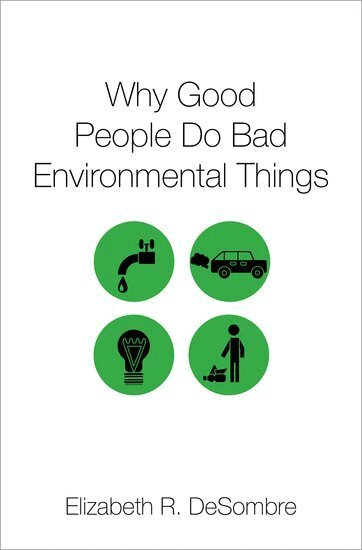
No one sets out to intentionally cause environmental problems. All things being equal, we are happy to protect environmental resources; in fact, we tend to prefer our air cleaner and our species protected. But despite not wanting to create environmental problems, we all do so regularly in the course of living our everyday lives. Why do we behave in ways that cause environmental harm?It is often easy and inexpensive to behave in ways with bad environmental consequences, but more difficult and costly to take environmentally friendly actions. The incentives we face, some created by the nature of environmental resources, some by social and political structures, often do not make environmentally beneficial behavior the most likely choice. Furthermore, our behavior is conditioned by habits and social norms that fail to take environmental protection into consideration.In this book, Elizabeth R. DeSombre integrates research from political science, sociology, psychology, and economics to understand why bad environmental behavior makes perfect sense. As she notes, there is little evidence that having more information about environmental problems or the way an individual's actions contribute to them changes behavior in meaningful ways, and lack of information is rarely the underlying cause that connects behavior to harm. In some cases such knowledge may even backfire, as people come to see themselves as powerless to address huge global problems and respond by pushing these issues out of their minds. The fact that causing environmental problems is never anyone's primary goal means that people are happy to stop causing them if the alternative behavior still accomplishes their underlying goals. If we can figure out why those problems are caused, when no one intends to cause them, we can develop strategies that work to shift behavior in a positive direction. Over the course of this book, DeSombre considers the role of structure, incentives, information, habit, and norms on behavior in order to formulate lessons about how these factors lead to environmentally problematic behavior, and what understanding their effects can tell us about ways to change behavior. To prevent or address environmental problems, we have to understand why even good people do bad environmental things.
360 kr
Skickas inom 7-10 vardagar
No one sets out to intentionally cause environmental problems. All things being equal, we are happy to protect environmental resources; in fact, we tend to prefer our air cleaner and our species protected. But despite not wanting to create environmental problems, we all do so regularly in the course of living our everyday lives. Why do we behave in ways that cause environmental harm?It is often easy and inexpensive to behave in ways with bad environmental consequences, but more difficult and costly to take environmentally friendly actions. The incentives we face, some created by the nature of environmental resources, some by social and political structures, often do not make environmentally beneficial behavior the most likely choice. Furthermore, our behavior is conditioned by habits and social norms that fail to take environmental protection into consideration.In this book, Elizabeth R. DeSombre integrates research from political science, sociology, psychology, and economics to understand why bad environmental behavior makes perfect sense. As she notes, there is little evidence that having more information about environmental problems or the way an individual's actions contribute to them changes behavior in meaningful ways, and lack of information is rarely the underlying cause that connects behavior to harm. In some cases such knowledge may even backfire, as people come to see themselves as powerless to address huge global problems and respond by pushing these issues out of their minds. The fact that causing environmental problems is never anyone's primary goal means that people are happy to stop causing them if the alternative behavior still accomplishes their underlying goals. If we can figure out why those problems are caused, when no one intends to cause them, we can develop strategies that work to shift behavior in a positive direction. Over the course of this book, DeSombre considers the role of structure, incentives, information, habit, and norms on behavior in order to formulate lessons about how these factors lead to environmentally problematic behavior, and what understanding their effects can tell us about ways to change behavior. To prevent or address environmental problems, we have to understand why even good people do bad environmental things.
99 kr
Tillfälligt slut
Domestic Sources of International Environmental Policy
Industry, Environmentalists, and U.S. Power
Häftad, Engelska, 2000
79 kr
Tillfälligt slut
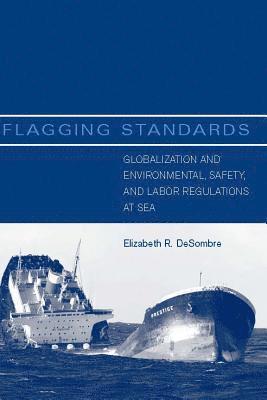
Flagging Standards
Globalization and Environmental, Safety, and Labor Regulations at Sea
Häftad, Engelska, 2006
187 kr
Tillfälligt slut
614 kr
Skickas inom 7-10 vardagar
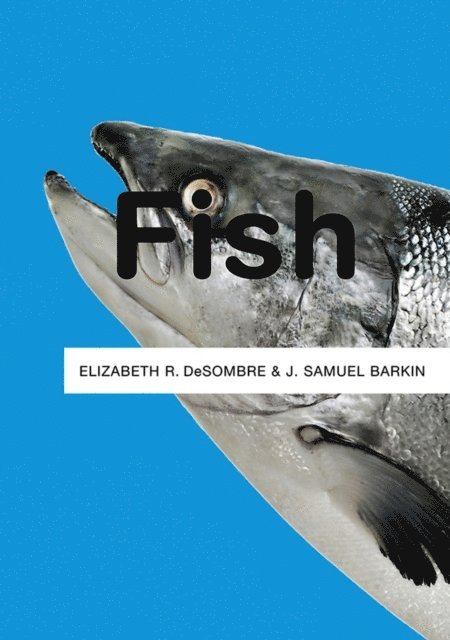
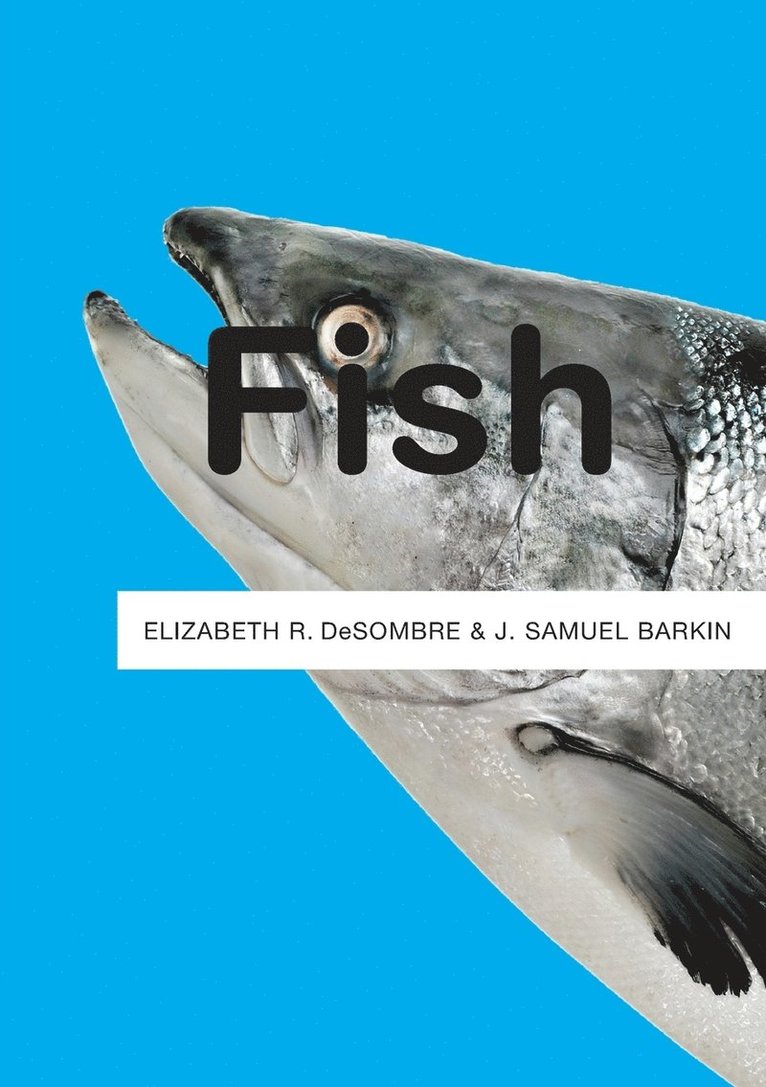
Fishing has played a vital role in human history and culture. But today this key resource faces a serious crisis as most species are being overfished or fished to their very limit. Governments have tried to tackle the problem with limited success. Many of their actions have been counterproductive or ineffective. What will happen to global fisheries, and the populations that depend on them, as we continue to catch more fish than the oceans can reproduce? This book explores the causes of the current crisis in the world's fisheries, and what needs to be done to address the situation. It explains the structure of the fishing industry, the incentives that persuade individuals or companies to catch fish at unsustainable levels, and illuminates the problems created by governmental efforts to use fishing policy as a tool for economic development or to win votes in domestic elections. It also looks at the role of aquaculture in either decreasing or increasing the pressure on wild fish stocks.The dire condition of fish stocks has led governments and consumer organizations to consider new approaches to protect the global supply of fish. DeSombre and Barkin conclude by showing how such methods, along with new forms of international regulation and informed decision-making by consumers, all have an important part to play in rewarding and thus encouraging sustainable fishing behaviour in the future.
252 kr
Skickas inom 5-8 vardagar
Fishing has played a vital role in human history and culture. But today this key resource faces a serious crisis as most species are being overfished or fished to their very limit. Governments have tried to tackle the problem with limited success. Many of their actions have been counterproductive or ineffective. What will happen to global fisheries, and the populations that depend on them, as we continue to catch more fish than the oceans can reproduce? This book explores the causes of the current crisis in the world's fisheries, and what needs to be done to address the situation. It explains the structure of the fishing industry, the incentives that persuade individuals or companies to catch fish at unsustainable levels, and illuminates the problems created by governmental efforts to use fishing policy as a tool for economic development or to win votes in domestic elections. It also looks at the role of aquaculture in either decreasing or increasing the pressure on wild fish stocks.The dire condition of fish stocks has led governments and consumer organizations to consider new approaches to protect the global supply of fish. DeSombre and Barkin conclude by showing how such methods, along with new forms of international regulation and informed decision-making by consumers, all have an important part to play in rewarding and thus encouraging sustainable fishing behaviour in the future.
541 kr
Skickas inom 10-15 vardagar
Politically, the world is composed of states. Environmentally, the world is made up of ecosystems. This disconnection between ecological and political systems makes addressing environmental issues at the global level both more difficult and more necessary. This volume examines how we should set about addressing the problems that face the environment internationally. The field of international environmental politics draws on a variety of academic traditions. It uses international relations theory to look at the concerns and actions of states; but it also uses variety of new perspectives to explain issues that are unique to the study of the environment. Elizabeth DeSombre explores four important approaches to the field: International environmental cooperation; the relationship between the environment and security; the issues of science, uncertainty and risk; and the role of non-state actors. She explores these approaches with the help of case studies on specific problems facing the global environment, focusing in particular on ozone depletion and global climate change; the politics of whaling; the protection of Amazonian biodiversity; and acid rain in Europe and North America.
875 kr
Skickas inom 10-15 vardagar
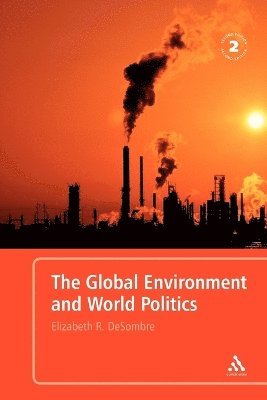
Environmental issues are increasingly important factors in world politics - just think of the intense speculation over the climate change discussions at the forthcoming G8 summit. The study of global environmental politics draws on a variety of academic traditions. It uses international relations theory to look at the concerns and actions of states, but has also had to find a variety of new concepts and perspectives in order to explain issues unique to the study of the environment. Here, DeSombre examines four important aspects of the field: international environmental cooperation; the relationship between the environment and security; the issues of science, uncertainty and risk; and the role of non-state actors. In the second half of the book she examines these issues through the use of case studies on specific problems facing the global environment, including global change, the politics of whaling, the protection of Amazonian biodiversity and acid rain in Europe and North America.
560 kr
Skickas inom 10-15 vardagar
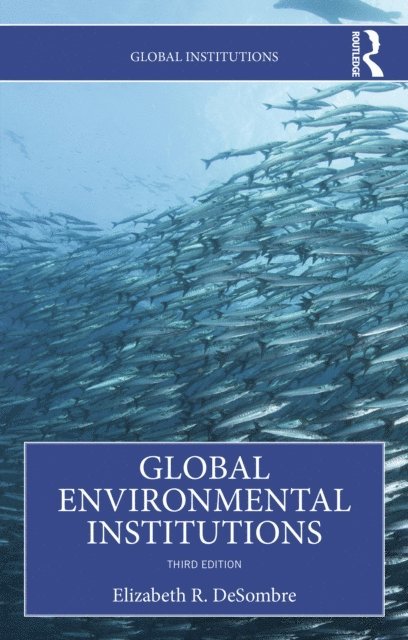
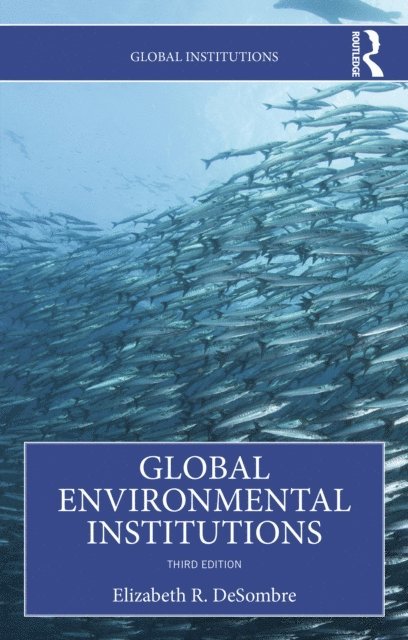
Global Environmental Institutions provides the most accessible and succinct overview of the major global institutions attempting to protect the natural environment, describing their creation and operation, decision-making processes, interactions with other institutions, and impact. Fully updated throughout, this third edition maintains the clear structure of previous editions, examining theunderlying causes of global environmental problemscreation of global environmental institutionseffectiveness of action undertaken by these institutionsProviding an overview of the United Nations Environment Programme alongside other entities that play important roles in global environmental governance, this book examines institutions by issue area and introduces organizations with a specific focus on protecting endangered species and biodiversity, the atmosphere, the ocean environment, and regulating the transboundary movement of hazardous substances. Drawing on the latest scholarship, and written by an acknowledged expert in the field, this study is essential reading for students of environmental politics and international organizations.
2 096 kr
Skickas inom 10-15 vardagar
Global Environmental Institutions provides the most accessible and succinct overview of the major global institutions attempting to protect the natural environment, describing their creation and operation, decision-making processes, interactions with other institutions, and impact. Fully updated throughout, this third edition maintains the clear structure of previous editions, examining theunderlying causes of global environmental problemscreation of global environmental institutionseffectiveness of action undertaken by these institutionsProviding an overview of the United Nations Environment Programme alongside other entities that play important roles in global environmental governance, this book examines institutions by issue area and introduces organizations with a specific focus on protecting endangered species and biodiversity, the atmosphere, the ocean environment, and regulating the transboundary movement of hazardous substances. Drawing on the latest scholarship, and written by an acknowledged expert in the field, this study is essential reading for students of environmental politics and international organizations.
2 052 kr
Skickas inom 10-15 vardagar
Global Environmental Institutions continues to provide the most accessible and succinct overview of the major global institutions attempting to protect the natural environment. Fully updated throughout to reflect the latest environmental issues, the second edition includes substantial new material on developments in international agreements and how institutional mechanisms have evolved in the past 10 years, including the creation of the new Sustainable Development Goals, the Minamata Convention on Mercury, and the Paris Agreement on Climate Change. This second edition maintains the clear structure of the first edition, examining:• the underlying causes of global environmental problems• the creation of global environmental institutions• the effectiveness of action undertaken by these institutions.Providing an overview of the United Nations Environment Programme and the other entities within the UN that play important roles in global environmental governance, it also examines institutions clustered by issue area, introducing institutions that focus on protecting endangered species and biodiversity, govern the ocean environment (focusing on the atmosphere), and regulate the transboundary movement of hazardous substances.Concluding with an updated chapter on emerging issues and future directions drawing on the latest scholarship in the field, and written by an acknowledged expert in the field, Global Environmental Institutions is essential reading for students of environmental politics and international organizations.
671 kr
Skickas inom 7-10 vardagar
Global Environmental Institutions continues to provide the most accessible and succinct overview of the major global institutions attempting to protect the natural environment. Fully updated throughout to reflect the latest environmental issues, the second edition includes substantial new material on developments in international agreements and how institutional mechanisms have evolved in the past 10 years, including the creation of the new Sustainable Development Goals, the Minamata Convention on Mercury, and the Paris Agreement on Climate Change. This second edition maintains the clear structure of the first edition, examining:• the underlying causes of global environmental problems• the creation of global environmental institutions• the effectiveness of action undertaken by these institutions.Providing an overview of the United Nations Environment Programme and the other entities within the UN that play important roles in global environmental governance, it also examines institutions clustered by issue area, introducing institutions that focus on protecting endangered species and biodiversity, govern the ocean environment (focusing on the atmosphere), and regulate the transboundary movement of hazardous substances.Concluding with an updated chapter on emerging issues and future directions drawing on the latest scholarship in the field, and written by an acknowledged expert in the field, Global Environmental Institutions is essential reading for students of environmental politics and international organizations.
639 kr
Skickas inom 7-10 vardagar
Why is it so difficult to control, or fix, pollution? How can we justify harvesting the world’s natural resources at unsustainable rates, even though these activities cause known harm to both people and ecosystems? Scientific knowledge and technological advances alone cannot tackle these environmental challenges; they also involve difficult political choices and trade-offs both locally and globally. What is Environmental Politics? introduces students to the different ways society attempts to deal with the political decisions needed to prevent or recover from environmental damage. Across its six chapters leading environmental scholar Elizabeth DeSombre explains what makes environmental problems, such as climate change, overfishing or deforestation, particularly challenging to address via political processes, what types of political structures are more or less likely to prioritize protecting the environment, and how effective political intervention can improve environmental conditions and the lives of people who depend on them.It will be a vital resource for students new to the field of environmental politics as well as readers interested in protecting the future of our planet.
217 kr
Skickas inom 7-10 vardagar
Why is it so difficult to control, or fix, pollution? How can we justify harvesting the world’s natural resources at unsustainable rates, even though these activities cause known harm to both people and ecosystems? Scientific knowledge and technological advances alone cannot tackle these environmental challenges; they also involve difficult political choices and trade-offs both locally and globally. What is Environmental Politics? introduces students to the different ways society attempts to deal with the political decisions needed to prevent or recover from environmental damage. Across its six chapters leading environmental scholar Elizabeth DeSombre explains what makes environmental problems, such as climate change, overfishing or deforestation, particularly challenging to address via political processes, what types of political structures are more or less likely to prioritize protecting the environment, and how effective political intervention can improve environmental conditions and the lives of people who depend on them.It will be a vital resource for students new to the field of environmental politics as well as readers interested in protecting the future of our planet.