Bad Religion and Philosophy, Politics and Pedagogy contextualizes the influence of Bad Religion and their impact on punk and broader culture across a forty-five-year career. Bringing together a range of interdisciplinary perspectives and methodological approaches, the collection examines the band not simply as a defining force within punk music, but as a uniquely durable intellectual and cultural formation within contemporary popular culture.Across the volume, Bad Religion’s work emerges simultaneously as political critique, philosophical inquiry, pedagogical practice, and global cultural transmission. Chapters explore subjects including the band’s collaboration with Noam Chomsky, lyrical and musical analysis, atheism and science, critiques of late capitalism, emotional expression, global punk circulation, and the relationship between Bad Religion’s music and wider political and cultural debates.Rather than treating punk solely as subculture or musical style, the collection positions Bad Religion as a key site for understanding how punk functions as an intellectual infrastructure — one capable of shaping political thought, ethical reflection, education, identity, and cultural resistance across multiple generations and international contexts.
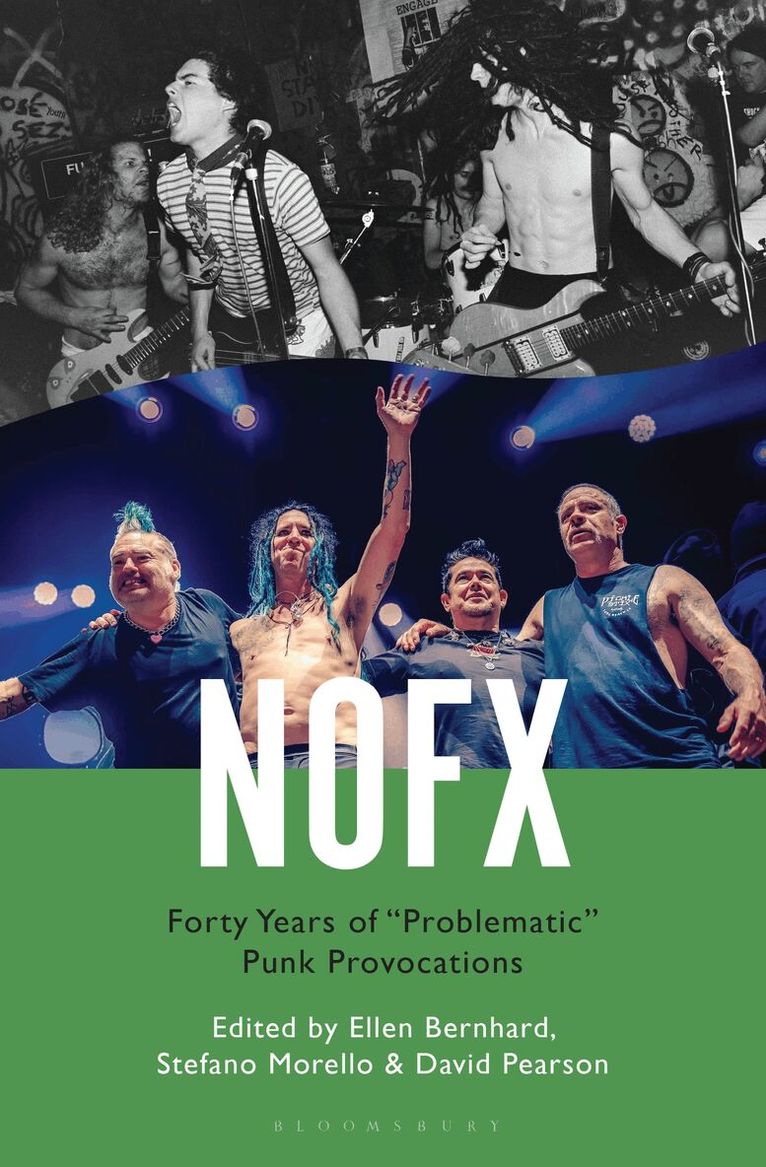
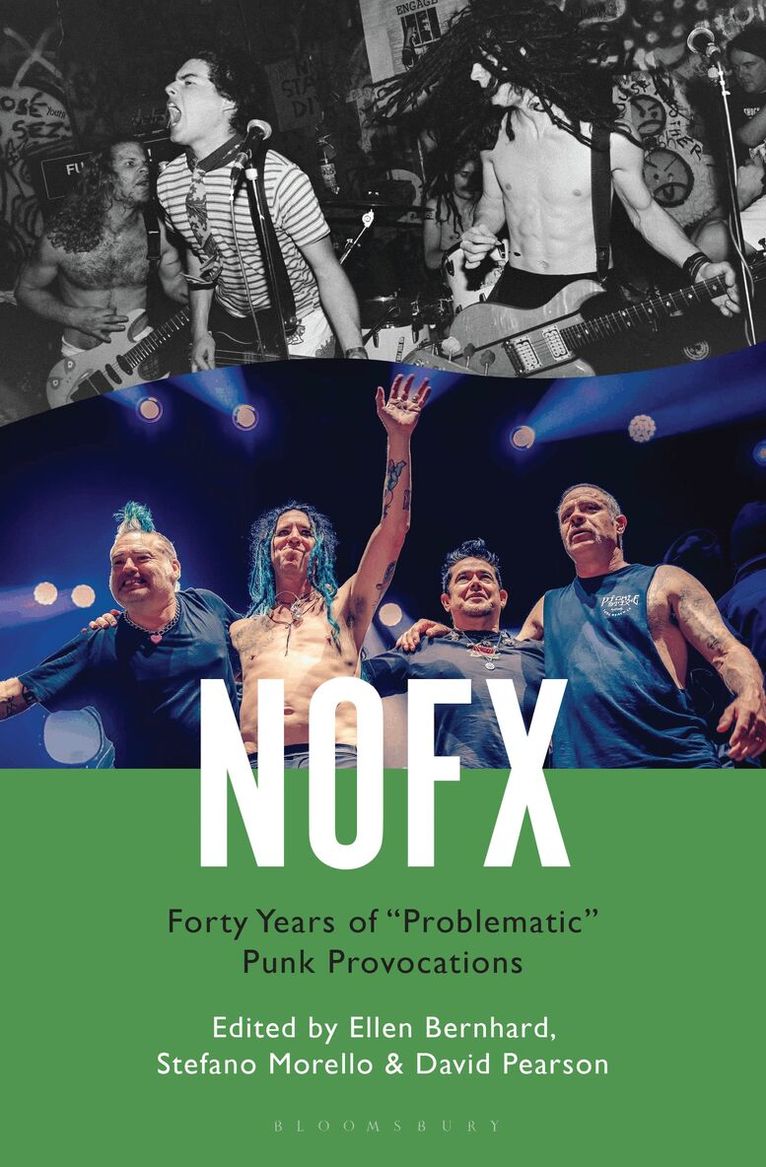
This collection of scholarly essays analyzes how NOFX’s aesthetics of punk provocation and discomfort provokes the band’s listeners to confront contradictions and conflicts in society concerning politics, identity, authenticity, and decorum. This collection of scholarly essays analyzes how NOFX’s aesthetics of punk provocation and discomfort push the band’s listeners to confront contradictions and conflicts in society concerning politics, identity, authenticity, and decorum. For forty years, NOFX’s brand of witty, offensive, humorous, juvenile, intelligent, existential, political, politically incorrect, and/or philosophically probing punk has reared several generations in punk attitude and ethos, for better or worse. The band pioneered melodic yet hardcore So-Cal punk style, rode the wave of mainstream punk popularity in the 1990s, protested the Bush administration in the 2000s, and continued their punk provocations up through their retirement in 2024. This book explores how NOFX pursued punk’s proclivity for provocation to critique both mainstream society and the punk scene itself, how their music challenges notions of punk as simplistic, stripped-down rock requiring little musical skill, and other topics with thirteen essays from scholars in a variety of fields.
This collection of scholarly essays analyzes how NOFX''s aesthetics of punk provocation and discomfort provokes the band''s listeners to confront contradictions and conflicts in society concerning politics, identity, authenticity, and decorum. This collection of scholarly essays analyzes how NOFX''s aesthetics of punk provocation and discomfort push the band''s listeners to confront contradictions and conflicts in society concerning politics, identity, authenticity, and decorum. For forty years, NOFX''s brand of witty, offensive, humorous, juvenile, intelligent, existential, political, politically incorrect, and/or philosophically probing punk has reared several generations in punk attitude and ethos, for better or worse. The band pioneered melodic yet hardcore So-Cal punk style, rode the wave of mainstream punk popularity in the 1990s, protested the Bush administration in the 2000s, and continued their punk provocations up through their retirement in 2024. This book explores how NOFX pursued punk''s proclivity for provocation to critique both mainstream society and the punk scene itself, how their music challenges notions of punk as simplistic, stripped-down rock requiring little musical skill, and other topics with thirteen essays from scholars in a variety of fields.