Ellen C. Carillo - Böcker
Visar alla böcker från författaren Ellen C. Carillo. Handla med fri frakt och snabb leverans.
10 produkter
10 produkter
Securing a Place for Reading in Composition
The Importance of Teaching for Transfer
Häftad, Engelska, 2014
365 kr
Skickas inom 5-8 vardagar
Del 13 - Studies in Composition and Rhetoric
Teaching Critical Reading and Writing in the Era of Fake News0
Inbunden, Engelska, 2020
998 kr
Skickas inom 5-8 vardagar
This collection offers support for instructors who are concerned about students’ critical literacy abilities. Attending to critical reading to help students navigate fake news, as well as other forms of disinformation and misinformation, is the job of instructors across all disciplines, but is especially important for college English instructors because students’ reading problems play out in many and varied ways in students’ writing. The volume includes chapters that analyze the current information landscape by examining assorted approaches to the wide-ranging types of materials available on and offline and offers strategies for teaching critical reading and writing in first-year composition and beyond. The chapters herein bring fresh perspectives on a range of issues, including ways to teach critical digital reading, ecological models that help students understand fake news, and the ethical questions that inform teaching in such a climate. With each chapter offering practical, research-based advice this collection underscores not just the importance of attending to reading, particularly in the era of fake news, but precisely how to do so.
Del 13 - Studies in Composition and Rhetoric
Teaching Critical Reading and Writing in the Era of Fake News0
Häftad, Engelska, 2021
260 kr
Skickas inom 5-8 vardagar
This collection offers support for instructors who are concerned about students’ critical literacy abilities. Attending to critical reading to help students navigate fake news, as well as other forms of disinformation and misinformation, is the job of instructors across all disciplines, but is especially important for college English instructors because students’ reading problems play out in many and varied ways in students’ writing. The volume includes chapters that analyze the current information landscape by examining assorted approaches to the wide-ranging types of materials available on and offline and offers strategies for teaching critical reading and writing in first-year composition and beyond. The chapters herein bring fresh perspectives on a range of issues, including ways to teach critical digital reading, ecological models that help students understand fake news, and the ethical questions that inform teaching in such a climate. With each chapter offering practical, research-based advice this collection underscores not just the importance of attending to reading, particularly in the era of fake news, but precisely how to do so.
275 kr
Skickas inom 7-10 vardagar
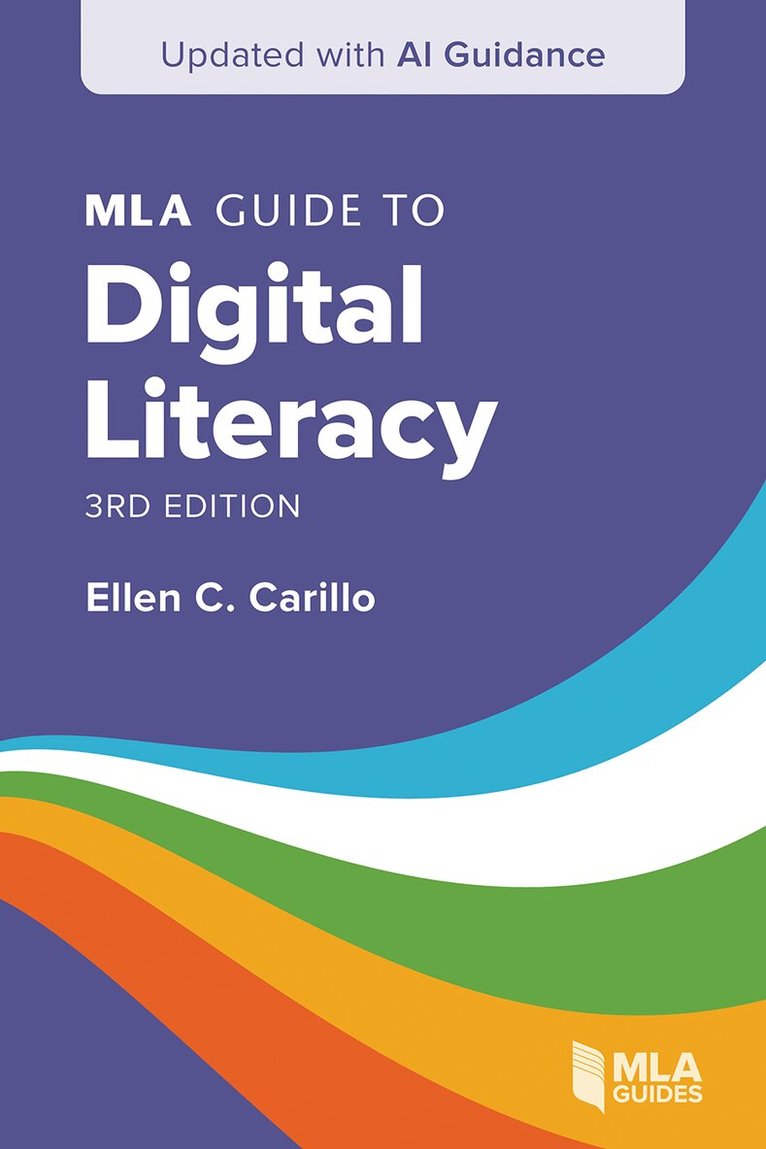
The second edition of this best-selling classroom guide helps students understand why digital literacy is a crucial skill for their education, future careers, and participation in democracy. Offering practical strategies for assessing information online, this guide provides students with the tools to locate reliable sources and websites among the clickbait and viral videos that pervade the web. The guide's hands-on activities, germane readings, and lesson plans give students strategies for reading and analyzing data visualizations; finding and evaluating credible sources; learning how to spot fake news; fact-checking; crafting a research question; effectively conducting searches on Google and on library catalogs and databases; finding peer-reviewed publications; evaluating primary sources; and understanding disinformation and misinformation, filter bubbles, propaganda, and satire in a variety of sources—including websites, social media posts, infographics, videos, and more (on platforms like Facebook, Twitter, Instagram, TikTok, and YouTube). New to the second edition:• attention to the ethical dimensions of digital technology, including privacy issues and bias in search algorithms—with an accompanying lesson plan• an emphasis on how digital literacy can help stem racism, sexism, ableism, and the perpetuation of harmful stereotypes• instruction on inclusive research and citation practices to avoid perpetuating systemic bias • a new chapter, "Composing in Digital Spaces," that offers instruction in multimodal composition and foregrounds accessibility • a new and up-to-date reading, "The Real History of Fake News" • a section on avoiding plagiarism • updated references and examples • resource lists of digital tools, platforms, and software that can support the practices described in the guide
303 kr
Kommande
Updated edition with AI Guidance providing students with hands-on strategies for digital literacy. The third edition of this best-selling classroom guide helps students understand why digital literacy is a crucial skill for their education, future careers, and participation in democracy. Offering practical guidance for assessing information online, this guide provides students with the tools to locate reliable sources among the clickbait and viral videos that pervade the web. The guide's hands-on activities, germane readings, and lesson plans give students strategies for reading and analyzing data visualizations; finding and evaluating credible sources; learning how to spot fake news; fact-checking; crafting a research question; effectively conducting searches on Google and on library catalogs and databases; finding peer-reviewed publications; evaluating primary sources; and understanding disinformation and misinformation, filter bubbles, propaganda, and satire in a variety of sources—including websites, social media posts, infographics, videos, and more, on platforms like Facebook, X (formerly Twitter), Instagram, TikTok, and YouTube. New to the third edition: • a chapter on generative AI (GenAI) including information on how GenAI is trained, uses of GenAI tools, GenAI-powered search engines, prompting GenAI, and evaluating GenAI output • a consideration of ethical issues related to GenAI, including impacts on the environment and on intellectual property, privacy, and bias in searches • a discussion of GenAI and plagiarism • an updated discussion of deepfakes, fake headlines, and other forms of misinformation • student exercises on using GenAI • a lesson plan that invites students to reflect on the benefits and limitations of using GenAI to support their reading practicesUpdated with AI Guidance
400 kr
Skickas inom 5-8 vardagar
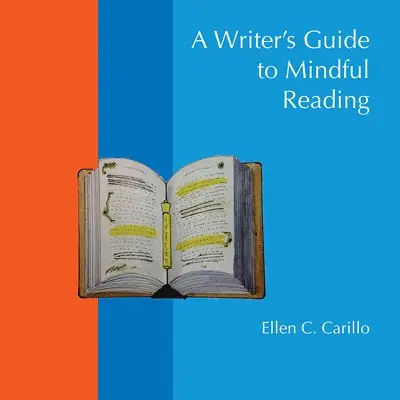
A Writer's Guide to Mindful Reading develops and enacts the mindful reading pedagogy described in Ellen C. Carillo's scholarly monograph Securing a Place for Reading in Composition: The Importance of Teaching for Transfer (Utah State UP). Offering a comprehensive approach to literacy instruction by focusing on reading and writing, A Writer's Guide to Mindful Reading supports students as they become more reflective, deliberate, and mindful readers and writers by working within a metacognitive framework. The reading selections, assignments, and activities in this innovative textbook move students toward this goal by providing opportunities to apply and reflect on multiple ways of reading and writing, positioning students to develop a metacognitive awareness crucial to transferring what they learn about reading and writing to other courses and contexts. Because many of the difficulties that students encounter when writing are related to the difficulties posed by reading complex texts, A Writer's Guide to Mindful Reading gives instructors the tools to help students develop a repertoire of reading strategies that will help them become stronger readers and—by extension—stronger writers.
318 kr
Skickas inom 5-8 vardagar
Reading and Writing Instruction in the Twenty-First Century
Recovering and Transforming the Pedagogy of Robert Scholes
Häftad, Engelska, 2021
550 kr
Skickas inom 5-8 vardagar
Robert Scholes passed away on December 9, 2016, leaving behind an intellectual legacy focused broadly on textuality. Scholes’s work had a significant impact on a range of fields, including literary studies, composition and rhetoric, education, media studies, and the digital humanities, among others. In Reading and Writing Instruction in the Twenty-First Century contemporary scholars explore and extend the continued relevance of Scholes’s work for those in English and writing studies. In this volume, Scholes’s scholarship is included alongside original essays, providing a resource for those considering everything from the place of the English major in the twenty-first century to best practices for helping students navigate misinformation and disinformation. Reading and Writing Instruction in the Twenty-First Century not only keeps Scholes’s legacy alive but carries it on through a commitment, in Scholes’s (1998) own words, to “offer our students . . . the cultural equipment they are going to need when they leave us.” Contributors:Angela Christie, Paul T. Corrigan, Lynée Lewis Gaillet, Doug Hesse, Alice S. Horning, Emily J. Isaacs, Christopher La Casse, Robert Lestón, Kelsey McNiff, Thomas P. Miller, Jessica Rivera-Mueller, Christian Smith, Kenny Smith
144 kr
Tillfälligt slut
Current Arguments in Composition SeriesThe Hidden Inequities in Labor-Based Contract Grading intervenes in the increasingly popular practice of labor-based grading by expanding the scope of this assessment practice to include students who are disabled and multiply marginalized. Through the lens of disability studies, the book critiques the assumption that labor is a neutral measure by which to assess students and explores how labor-based grading contracts put certain groups of students at a disadvantage. Ellen C. Carillo offers engagement-based grading contracts as an alternative that would provide a more equitable assessment model for students of color, those with disabilities, and students who are multiply marginalized. This short book explores the history of labor-based grading contracts, reviews the scholarship on this assessment tool, highlights the ways in which it normalizes labor as an unbiased tool, and demonstrates how to extend the conversation in new and generative ways both in research and in classrooms. Carillo encourages instructors to reflect on their assessment practices by demonstrating how even assessment methods that are designed through a social-justice lens may unintentionally privilege some students over others.
190 kr
Skickas inom 5-8 vardagar