• Fri frakt över 249 kr
  • •
  • Snabba leveranser
  • •
  • Billiga böcker
Kundservice

Du är på sajten för privatpersoner.

Företag, bibliotek eller offentlig verksamhet?

Du handlar på classic.bokus.com, där alla dina funktioner finns intakta.
Till classic.bokus.com
Bokus logotyp. Gå till startsidan.
  • Erbjudanden
  • Nyheter
  • Student
  • Topplistor
  • Barn & ungdom
  • Bokus Play
  • E-böcker
  • Pocketböcker
  • Spel & pussel

10% rabatt på allt med kod NYSTART10 →

Sidfot

Mina sidor

    Hjälp

    • Kundservice
    • Vanliga frågor och svar
    • Frakt och leverans
    • Retur vid ångerrätt
    • Reklamera vara
    • Betalning
    • Köpvillkor
    • Allmänna villkor
    • Information om webbplatsens tillgänglighet

    Om Bokus

    • Om oss
    • Pressrum
    • För studenter
    • För företag
    • För bibliotek och offentlig verksamhet
    • För leverantörer
    • Hållbarhet

    Populärt

    • Aktuella erbjudanden
    • Presentkort
    • Studentlitteratur
    • Nya böcker
    • Topplistor
    • Signerade böcker
    • Engelska böcker

    Inspiration

    • Boktips
    • BookTok
    • Populära bokserier
    • Barnbokskaraktärer
    • Populära författare
    Logotyp för Bokus
    Följ oss på Facebook (extern länk)Följ oss på Instagram (extern länk)Följ oss på YouTube (extern länk)Följ oss på TikTok (extern länk)
    bokus @ CookiesAnpassa cookiesIntegritetspolicyKöpvillkor
    Till Citymail hemsida (extern länk)Till Budbee hemsida (extern länk)Till Postnord hemsida (extern länk)Till Schenker hemsida (extern länk)Till Early Bird hemsida (extern länk)Till Walleys hemsida (extern länk)
    1. Samhälle och politik
    2. Samhälle och kultur
    3. Kultur och medier
    4. Referensverk och tvärvetenskap

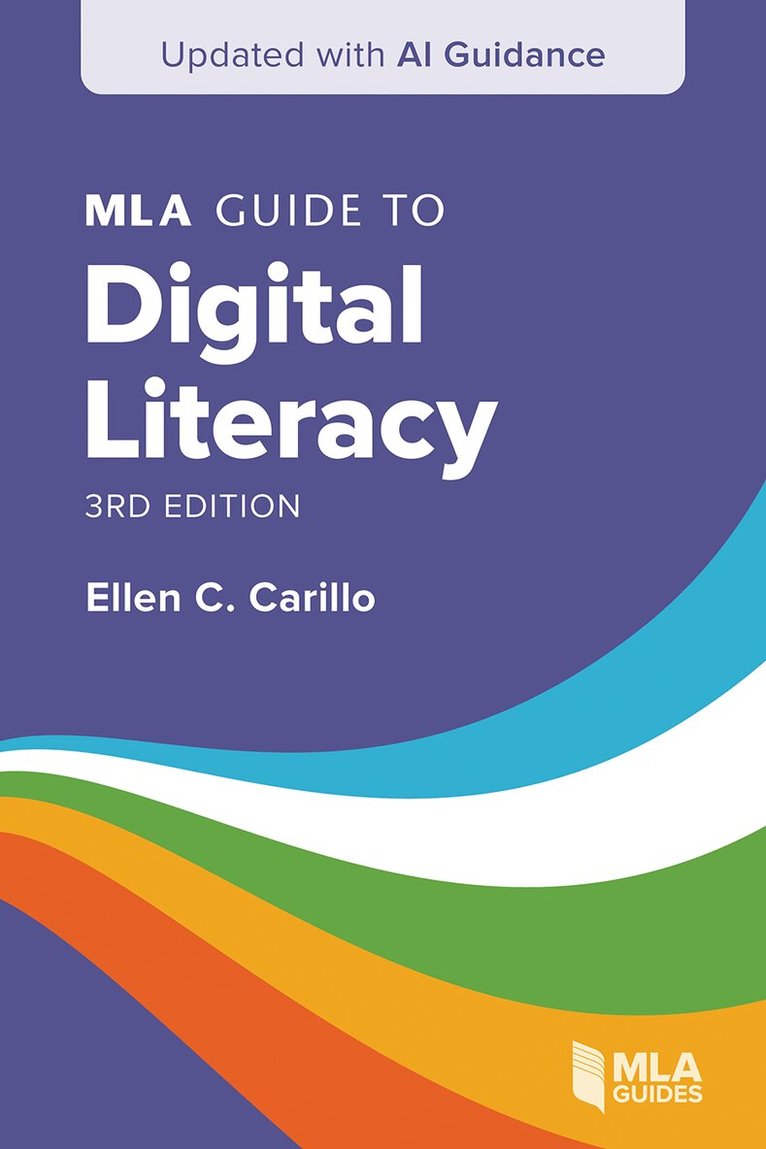
    MLA Guide to Digital Literacy

    Updated with AI Guidance

    AvEllen C. Carillo

    Häftad, Engelska, 2026

    Del i serien MLA Guides

    286 kr

    Beställningsvara. Skickas inom 5-8 vardagar. Fri frakt över 249 kr.

    Fler format och utgåvor

    Häftad

    286 kr

    Beskrivning

    Updated edition with AI Guidance providing students with hands-on strategies for digital literacy. The third edition of this best-selling classroom guide helps students understand why digital literacy is a crucial skill for their education, future careers, and participation in democracy. Offering practical guidance for assessing information online, this guide provides students with the tools to locate reliable sources among the clickbait and viral videos that pervade the web. The guide's hands-on activities, germane readings, and lesson plans give students strategies for reading and analyzing data visualizations; finding and evaluating credible sources; learning how to spot fake news; fact-checking; crafting a research question; effectively conducting searches on Google and on library catalogs and databases; finding peer-reviewed publications; evaluating primary sources; and understanding disinformation and misinformation, filter bubbles, propaganda, and satire in a variety of sources—including websites, social media posts, infographics, videos, and more, on platforms like Facebook, X (formerly Twitter), Instagram, TikTok, and YouTube. New to the third edition: • a chapter on generative AI (GenAI) including information on how GenAI is trained, uses of GenAI tools, GenAI-powered search engines, prompting GenAI, and evaluating GenAI output • a consideration of ethical issues related to GenAI, including impacts on the environment and on intellectual property, privacy, and bias in searches • a discussion of GenAI and plagiarism • an updated discussion of deepfakes, fake headlines, and other forms of misinformation • student exercises on using GenAI • a lesson plan that invites students to reflect on the benefits and limitations of using GenAI to support their reading practicesUpdated with AI Guidance

    Produktinformation

    • Utgivningsdatum:2026-03-06
    • Mått:152 x 229 x 17 mm
    • Vikt:320 g
    • Format:Häftad
    • Språk:Engelska
    • Serie:MLA Guides
    • Antal sidor:218
    • Upplaga:3
    • Förlag:Modern Language Association of America
    • ISBN:9781603297394

    Utforska kategorier

    • Referensverk och tvärvetenskap inom Samhälle och politik
    • Material och digital teknik i undervisningen inom Psykologi och pedagogik

    Mer om författaren

    Ellen C. Carillo is professor of English and writing coordinator at the University of Connecticut. She is the author of The Radical Case for Teaching Skim Reading in First-Year Writing (2025), The Hidden Inequities in Labor-Based Contract Grading (2021), Teaching Readers in Post-truth America (2018), and Securing a Place for Reading in Composition: The Importance of Teaching for Transfer (2015).

    Innehållsförteckning

    • AcknowledgmentsList of IllustrationsPreface for InstructorsWhy Digital Literacy?Features of This GuideNew to the Third EditionThe Crucial Role of Librarians1. What Is Digital Literacy?Principles That Inform This GuideHow This Guide Is Organized2. Understanding Filters and Algorithms, Bots, and Visual ManipulationFilters and AlgorithmsAlgorithmic BiasBotsVisual ManipulationRead about It"The Polarization of Extremes," by Cass R. Sunstein3. Understanding Generative Artificial Intelligence (GenAI) ToolsWhat is GenAI?How Is GenAI Trained?Uses of GenAI ToolsGenAI and ReadingSearch Engines and Additional Research Tools Powered by GenAIPrompting GenAIEvaluating GenAI OutputEthical Considerations Surrounding GenAITRY IT1. Ponder the benefits and limits of GenAI.2. Research and try out a GenAI tool.3. Practice prompting a text-based GenAI tool.4. Create an image using GenAI.5. Use a GenAI tool to locate sources.4. Understanding Online SearchesWhat Is the Difference between the World Wide Web and the Internet?Understanding Domain NamesScholarly Peer ReviewTRY IT1. Represent the relation between the Internet and the World Wide Web.2. Practice keeping track of your daily website visits.3. Test your knowledge of domain names.4. Ponder the role of domain names in judging credibility.5. Review types of online information sources.5. Conducting Online ResearchChoosing Keywords to "Catch the Tenor" of the ConversationConducting Broad SearchesConducting Narrow SearchesNavigating Google ScholarPracticing Inclusive Search and Citation HabitsUsing a Search Engine's Help FeaturesSearching Library Catalogs and DatabasesReviewing Your Search ResultsDetermining a Source's RelevanceTRY IT1. Contemplate your role in source-driven writing.2. Understand relevance.3. Recognize the value of inclusive search and citation practices.4. Practice documenting a broad search.5. Practice narrowing online searches.6. Go to the (Primary) Source!What Are Primary and Secondary Sources?I Found the Primary Source—Now What?TRY IT1. Practice finding primary sources.2. Practice distinguishing primary sources from secondary sources.3. Practice rhetorical reading.4. Compose a rhetorical analysis of a visual source.5. Practice writing a twenty-five-word summary.7. Surveying the Conversation by Reading LaterallyWhat Is Reading Laterally?Lateral and Vertical Reading ComparedPlanning Where to Go NextUnderstanding Your Biases and Emotional Responses As You Read LaterallyRecognizing Psychological Phenomena As You ReadTRY IT1. Understand what it means to read laterally.2. Practice reading laterally.3. Practice recognizing your emotional responses to sources.4. Address the implications of psychological phenomena on your research.8. Exploring the Credibility of SourcesExploring an Author's CredibilityExploring a Source's Credibility through Publication ContextRecognizing Bias: A Closer LookWhat about the Credibility of Wikipedia and Other Wikis?Can GenAI Technologies Like ChatGPT Help Me Find Credible Sources?Recognizing Misinformation and DisinformationTRY IT1. Practice determining an author's credibility.2. Practice determining sources' biases.3. Pay attention to an author's word choice.4. Notice labeling.5. Explore Wikipedia.Read about It"A Real History of Fake News," by John Maxwell Hamilton and Heidi Tworek9. Working with Your SourcesHow to Use SourcesSynthesizing Your SourcesAvoiding PlagiarismTRY IT1. Explore how an author uses sources.2. Explore how an author contributes ideas to a conversation.3. Practice using sources for more than support.4. Annotate to reflect on your use of sources.5. Conduct research about how a discipline uses sources.10. Additional Strategies and ResourcesFact-Checking Websites and ChatbotsConducting Reverse SearchesGenAI ResourcesTRY IT1. Ponder the uses of reverse searches.2. Practice conducting a reverse image search.3. Practice using fact-checking sites.4. Locate other fact-checking sites and determine their biases.5. Determine hoaxes.11. Composing in Digital SpacesDrawing on What You Already Know about Digital CompositionCreating Multimodal Projects in Digital SpacesRhetorical Considerations for Multimodal Composing in Digital SpacesAdditional Considerations for Composing in Digital SpacesTRY IT1. Identify the five modes of communication.2. Practice working with the modes of communication.3. Practice conveying a visual argument.4. Understand accessibility.5. Define Creative Commons licensing.12. Customizing Your Online ExperienceAdjusting Your PreferencesMaking Informed Decisions about Social Media PlatformsUsing Sharing, Liking, and Other Social Signals to Your AdvantageAvoiding ClickbaitTRY IT1. Ponder the value of customizing your online experience.2. Research social media platforms.3. Practice adjusting filters4. Develop clickbait headlines.5. Recognize how clickbait works.Appendix: Sample Lesson PlansLesson Plan 1: Searching for Sources and Analyzing Their CredibilityLesson Plan 2: Reading SourcesLesson Plan 3: Exploring the Concept of Fake NewsLesson Plan 4: Understanding Algorithmic Bias and PersonalizationLesson Plan 5: Reading Rhetorically with GenAIWorks CitedIndex