Ellen Carlin – författare
Visar alla böcker från författaren Ellen Carlin. Handla med fri frakt och snabb leverans.
3 produkter
3 produkter
Inbunden, Engelska, 2023
988 kr
Skickas inom 5-8 vardagar
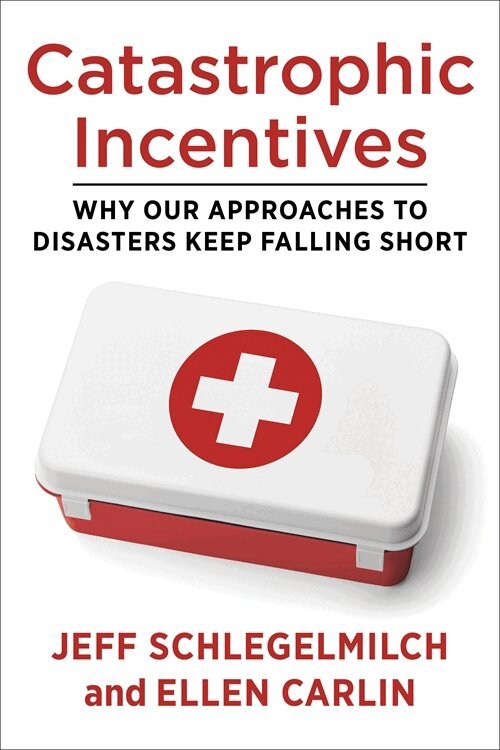
Silver Award Winner, 2024 Nonfiction Book AwardsSocieties are vulnerable to any number of potential disasters: earthquakes, hurricanes, infectious diseases, terrorist attacks, and many others. Even though the dangers are often clear, there is a persistent pattern of inadequate preparation and a failure to learn from experience. Before disasters, institutions pay insufficient attention to risk; in the aftermath, even when the lack of preparation led to a flawed response, the focus shifts to patching holes instead of addressing the underlying problems.Examining twenty years of disasters from 9/11 to COVID-19, Jeff Schlegelmilch and Ellen Carlin show how flawed incentive structures make the world more vulnerable when catastrophe strikes. They explore how governments, the private sector, nonprofits, and academia behave before, during, and after crises, arguing that standard operational and business models have produced dysfunction. Catastrophic Incentives reveals troubling patterns about what does and does not matter to the institutions that are responsible for dealing with disasters. The short-termism of electoral politics and corporate decision making, the funding structure of nonprofits, and the institutional dynamics shaping academic research have all contributed to a failure to build resilience.Offering a comprehensive and incisive look at disaster governance, Catastrophic Incentives provides timely recommendations for reimagining systems and institutions so that they are better equipped to manage twenty-first-century threats.
Häftad, Engelska, 2023
252 kr
Skickas inom 5-8 vardagar
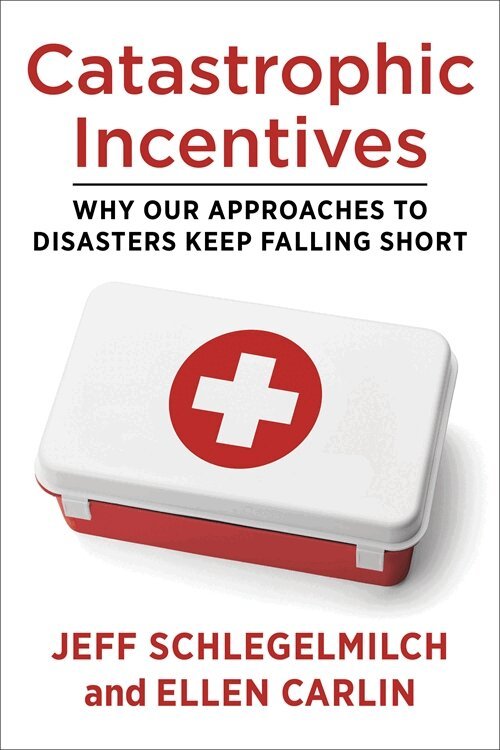
Silver Award Winner, 2024 Nonfiction Book AwardsSocieties are vulnerable to any number of potential disasters: earthquakes, hurricanes, infectious diseases, terrorist attacks, and many others. Even though the dangers are often clear, there is a persistent pattern of inadequate preparation and a failure to learn from experience. Before disasters, institutions pay insufficient attention to risk; in the aftermath, even when the lack of preparation led to a flawed response, the focus shifts to patching holes instead of addressing the underlying problems.Examining twenty years of disasters from 9/11 to COVID-19, Jeff Schlegelmilch and Ellen Carlin show how flawed incentive structures make the world more vulnerable when catastrophe strikes. They explore how governments, the private sector, nonprofits, and academia behave before, during, and after crises, arguing that standard operational and business models have produced dysfunction. Catastrophic Incentives reveals troubling patterns about what does and does not matter to the institutions that are responsible for dealing with disasters. The short-termism of electoral politics and corporate decision making, the funding structure of nonprofits, and the institutional dynamics shaping academic research have all contributed to a failure to build resilience.Offering a comprehensive and incisive look at disaster governance, Catastrophic Incentives provides timely recommendations for reimagining systems and institutions so that they are better equipped to manage twenty-first-century threats.
Häftad, Engelska, 2017
832 kr
Tillfälligt slut
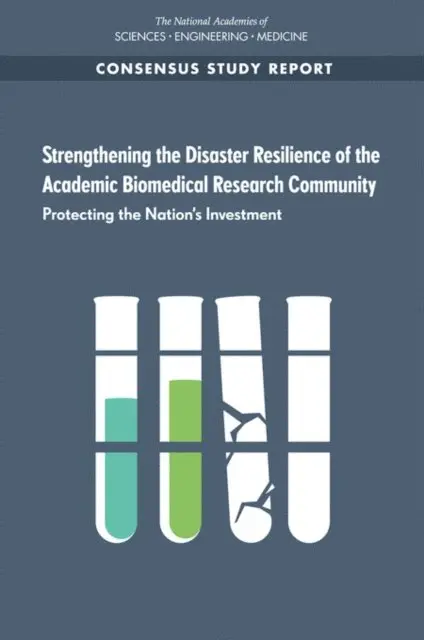
The academic biomedical research community is a hub of employment, economic productivity, and scientific progress. Academic research institutions are drivers of economic development in their local and state economies and, by extension, the national economy. Beyond the economic input that the academic biomedical research community both receives and provides, it generates knowledge that in turn affects society in myriad ways. The United States has experienced and continues to face the threat of disasters, and, like all entities, the academic biomedical research community can be affected. Recent disasters, from hurricanes to cyber-attacks, and their consequences have shown that the investments of the federal government and of the many other entities that sponsor academic research are not uniformly secure. First and foremost, events that damage biomedical laboratories and the institutions that house them can have impacts on the safety and well-being of humans and research animals. Furthermore, disasters can affect career trajectories, scientific progress, and financial stability at the individual and institutional levels. Strengthening the Disaster Resilience of the Academic Biomedical Research Community offers recommendations and guidance to enhance the disaster resilience of the academic biomedical research community, with a special focus on the potential actions researchers, academic research institutions, and research sponsors can take to mitigate the impact of future disasters.