Ellen Cushman - Böcker
Visar alla böcker från författaren Ellen Cushman. Handla med fri frakt och snabb leverans.
7 produkter
7 produkter
382 kr
Tillfälligt slut
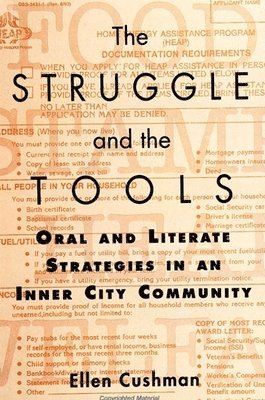
Explores the daily lives of a group of inner city residents, focusing particularly upon their language use and other types of literate strategies used to gain resources, access to social institutions, and respect.The Struggle and the Tools explores the daily lives and language use of African-American men, women, and children living in an inner city neighborhood. Based on three-and-a-half years of fieldwork, this book presents the oral, literate, and analytical strategies (the "tools") inner city residents use to gain resources, access to social institutions, and respect (the "struggle"). It honors both the types of agency present in the struggle, and the kinds of linguistic savvy present in the tools. It examines the deep games of power they play with their language and social consciousness and characterizes their daily experiences without glorification.
394 kr
Skickas inom 10-15 vardagar
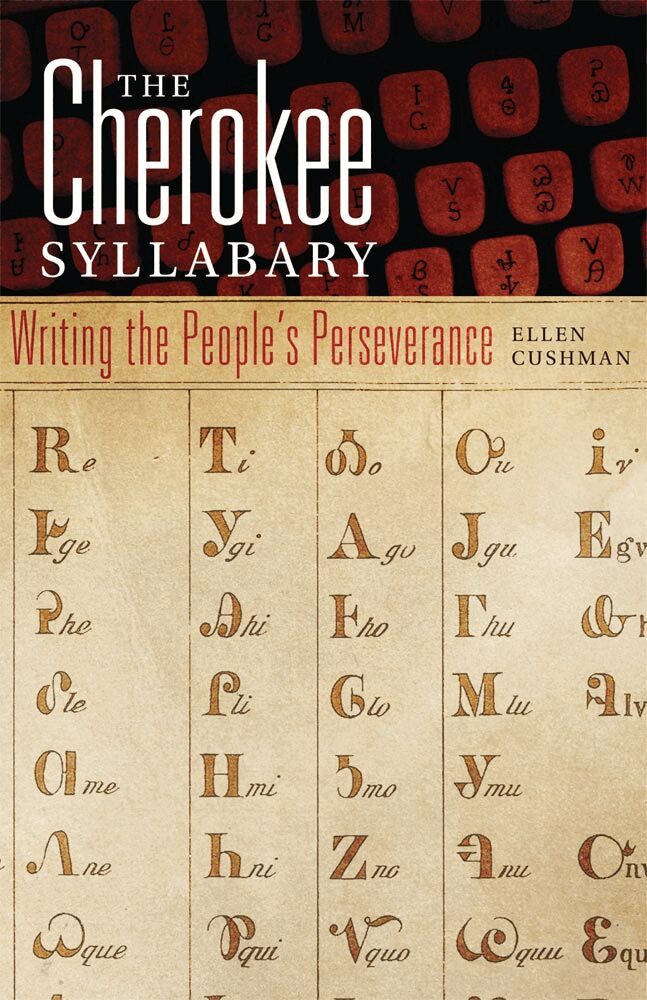
In 1821, Sequoyah, a Cherokee metalworker and inventor, introduced a writing system that he had been developing for more than a decade. His creation - the Cherokee syllabary - helped his people learn to read and write within five years and became a principal part of their identity. This groundbreaking study traces the creation, dissemination, and evolution of Sequoyah's syllabary from script to print to digital forms. Breaking with conventional understanding, author Ellen Cushman shows that the syllabary was not based on alphabetic writing, as is often thought, but rather on Cherokee syllables and, more importantly, on Cherokee meanings.Employing an engaging narrative approach, Cushman relates how Sequoyah created the syllabary apart from Western alphabetic models. But he called it an alphabet because he anticipated the Western assumption that only alphabetic writing is legitimate. Calling the syllabary an alphabet, though, has led to our current misunderstanding of just what it is and of the genius behind it - until now.In her opening chapters, Cushman traces the history of Sequoyah's invention and explains the logic of the syllabary's structure and the graphic relationships among the characters, both of which might have made the system easy for native speakers to use. Later chapters address the syllabary's enduring significance, showing how it allowed Cherokees to protect, enact, and codify their knowledge and to weave non-Cherokee concepts into their language and life. The result was their enhanced ability to adapt to social change on and in Cherokee terms.Cushman adeptly explains complex linguistic concepts in an accessible style, even as she displays impressive understanding of interrelated issues in Native American studies, colonial studies, cultural anthropology, linguistics, rhetoric, and literacy studies. Profound, like the invention it explores, The Cherokee Syllabary will reshape the study of Cherokee history and culture.Published through the Recovering Languages and Literacies of the Americas initiative, supported by the Andrew W. Mellon Foundation.
269 kr
Skickas inom 10-15 vardagar
In 1821, Sequoyah, a Cherokee metalworker and inventor, introduced a writing system that he had been developing for more than a decade. His creation - the Cherokee syllabary - helped his people learn to read and write within five years and became a principal part of their identity. This groundbreaking study traces the creation, dissemination, and evolution of Sequoyah's syllabary from script to print to digital forms. Breaking with conventional understanding, author Ellen Cushman shows that the syllabary was not based on alphabetic writing, as is often thought, but rather on Cherokee syllables and, more importantly, on Cherokee meanings.Employing an engaging narrative approach, Cushman relates how Sequoyah created the syllabary apart from Western alphabetic models. But he called it an alphabet because he anticipated the Western assumption that only alphabetic writing is legitimate. Calling the syllabary an alphabet, though, has led to our current misunderstanding of just what it is and of the genius behind it - until now.In her opening chapters, Cushman traces the history of Sequoyah's invention and explains the logic of the syllabary's structure and the graphic relationships among the characters, both of which might have made the system easy for native speakers to use. Later chapters address the syllabary's enduring significance, showing how it allowed Cherokees to protect, enact, and codify their knowledge and to weave non-Cherokee concepts into their language and life. The result was their enhanced ability to adapt to social change on and in Cherokee terms.Cushman adeptly explains complex linguistic concepts in an accessible style, even as she displays impressive understanding of interrelated issues in Native American studies, colonial studies, cultural anthropology, linguistics, rhetoric, and literacy studies. Profound, like the invention it explores, The Cherokee Syllabary will reshape the study of Cherokee history and culture.Published through the Recovering Languages and Literacies of the Americas initiative, supported by the Andrew W. Mellon Foundation.
483 kr
Skickas inom 7-10 vardagar
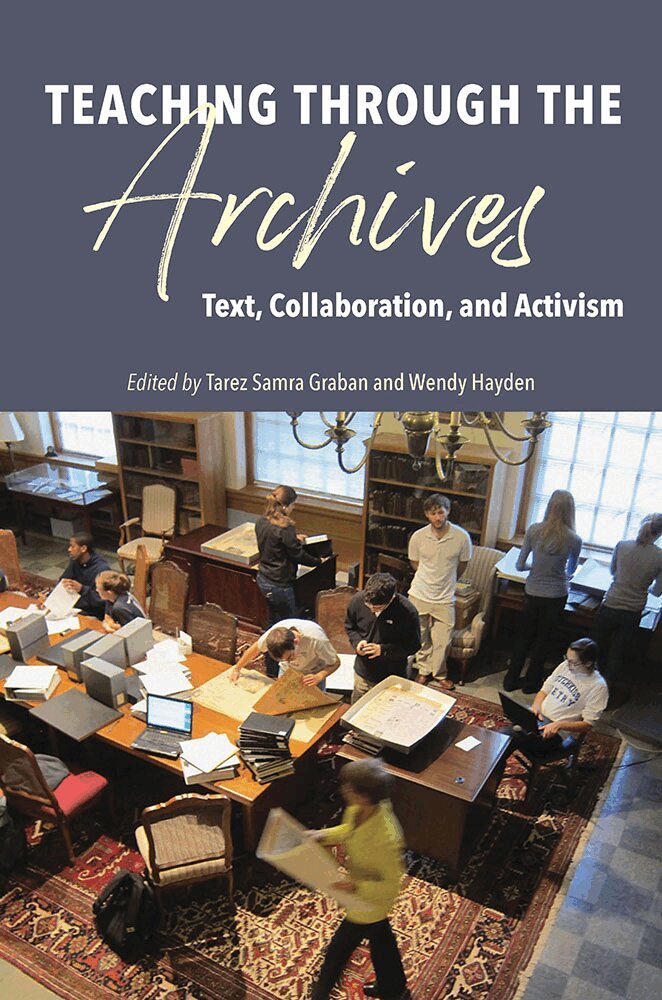
Disruptive pedagogies for archival researchIn a cultural moment when institutional repositories carry valuable secrets to the present and past, this collection argues for the critical, intellectual, and social value of archival instruction. Graban and Hayden and 37 other contributors examine how undergraduate and graduate courses in rhetoric, history, community literacy, and professional writing can successfully engage students in archival research in its many forms, and successfully model mutually beneficial relationships between archivists, instructors, and community organizations.Combining new and established voices from related fields, each of the book’s three sections includes a range of form-disrupting pedagogies. Section I focuses on how approaching the archive primarily as textfosters habits of mind essential for creating and using archives, for critiquing or inventing knowledge-making practices, and for being good stewards of private and public collections. Section II argues for conducting archival projects as collaboration through experiential learning and for developing a preservationist consciousness through disciplined research. Section III details praxis for revealing, critiquing, and intervening in historic racial omissions and gaps in the archives in which we all work.Ultimately, contributors explore archives as sites of activism while also raising important questions that persist in rhetoric and composition scholarship, such as how to decolonize research methodologies, how to conduct teaching and research that promote social justice, and how to shift archival consciousness toward more engaged notions of democracy. This collection highlights innovative classroom and curricular course models for teaching with and through the archives in rhetoric and composition and beyond.
Literacies of/from the Pluriversal
Tools for Perseverance and Livable Futures
Inbunden, Engelska, 2024
760 kr
Skickas inom 7-10 vardagar
Decolonial projects can end up reinforcing dominant modes of thinking by shoehorning understandings of Indigenous and non-Western traditions within Eurocentric frameworks. The pluralization of literacies and the creation of so-called alternative rhetorics accepts that there is a totalizing reality of rhetoric and literacy. This volume seeks to decenter these theories and to engage Indigenous contexts on their own terms, starting with the very tools of representation. Language itself can disrupt normative structures and create pluriversal possibilities. The volume editors and contributors argue for epistemic change at the level of the language and media that people use to represent meaning. The range of topics covered includes American Indian and Indigenous representations, literacies, and rhetorics, critical revisionist historiography and comparative rhetorics, delinking colonial literacies of cartographic power and modernity, “northern” and “southern” hemispheric relations, and theorizations of/from oceanic border spaces.
2 625 kr
Skickas inom 10-15 vardagar
Landmark Essays on Rhetorics of Difference challenges the Eurocentric perspective from which the field of rhetoric is traditionally viewed. Taking a step beyond the creation of alternative rhetorics that maintain the centrality of the European and Greco-Roman tradition, this volume argues on behalf of pluriversal rhetorics that coexist as equally important on their own terms. A timely addition to the respected Landmark Essays series, it will be invaluable to students of history of rhetoric, literacy, composition, and writing studies.
1 227 kr
Skickas inom 10-15 vardagar
Landmark Essays on Rhetorics of Difference challenges the Eurocentric perspective from which the field of rhetoric is traditionally viewed. Taking a step beyond the creation of alternative rhetorics that maintain the centrality of the European and Greco-Roman tradition, this volume argues on behalf of pluriversal rhetorics that coexist as equally important on their own terms. A timely addition to the respected Landmark Essays series, it will be invaluable to students of history of rhetoric, literacy, composition, and writing studies.