Elliott Antokoletz - Böcker
Visar alla böcker från författaren Elliott Antokoletz. Handla med fri frakt och snabb leverans.
11 produkter
11 produkter
Musical Symbolism in the Operas of Debussy and Bartók
Trauma, Gender, and the Unfolding of the Unconscious
Inbunden, Engelska, 2004
1 989 kr
Skickas inom 5-8 vardagar
This book explores the means by which the operas of Debussy and Bartók transform the structures of the traditional harmonic system into a new musical language. Antokoletz formulates new theoretic-analytic principles and describes how these principles link various historical and cultural as well as philosophical and psychological issues of the early twentieth century within the operatic milieu. The new musical language described here is based almost exclusively on interactions between folk modalities and their more abstract symmetrical transformations.
2 483 kr
Skickas inom 5-8 vardagar
This compilation of essays spans a wide range of individual perspectives within the varied disciplines related to Bartók's life and work. The nineteen chapters together constitute a broad yet integrated picture of the Hungarian composer's contributions to twentieth-century music and scholarship. While self-contained, each chapter contributes to a larger scheme of interrelated subjects that provide a coherent view of the Bartók field. The book also contains integrative theoretic-analytical approaches to Bartók's musical language that demonstrate relations between the modalities and rhythms of folk music and his more abstract musical principles. Some chapters examine Bartók's folk-music materials in connection with his fieldwork, transcription techniques, classification methodology, and compositional influences. Other chapters explore Bartók's system of composition from its early stages to maturity by way of his abstract works and his folk-music transcriptions. The book also addresses the relevance of Bartók's work to broader historical, philosophical, and folkloristic, compositional, performance, and reception issues.
903 kr
Skickas inom 5-8 vardagar
Composer, pianist, and critic Claude Debussy's musical aesthetic represents the single most powerful influence on international musical developments during the long fin de siècle period. The development of Debussy's musical language and style was affected by the international political pressures of his time, beginning with the Franco-Prussian War of 1871 and the rise of the new Republic in France, and was also related to the contemporary philosophical conceptualization of what constituted art. The Debussy idiom exemplifies the ways in which various disciplines - musical, literary, artistic, philosophical, and psychological - can be incorporated into a single, highly-integrated artistic conception. Rethinking Debussy draws together separate areas of Debussy research into a lucid perspective that reveals the full significance of the composer's music and thought in relation to the broader cultural, intellectual, and artistic issues of the twentieth century.Ranging from new biographical information to detailed interpretations of Debussy's music, the volume offers significant multidisciplinary insight into Debussy's music and musical life, as well as the composer's influence on the artistic developments that followed. Chapters include: "Russian Imprints in Debussy's Piano Music"; "Music as Encoder of the Unconscious in Pelléas et Mélisande"; "An Artist High and Low, or Debussy and Money"; "Debussy's Ideal Pelléas and the Limits of Authorial Intent"; "Debussy in Daleville: Toward Early Modernist Hearing in the United States"; and more.Rethinking Debussy will appeal to students and scholars of French music, opera, and modernism, and literary and French studies scholars, particularly concerned with Symbolism and theatre. General readers will be drawn to the book as well, particularly to chapters focusing on Debussy's finances, dramatic works, and reception.
677 kr
Skickas inom 5-8 vardagar
Composer, pianist, and critic Claude Debussy's musical aesthetic represents the single most powerful influence on international musical developments during the long fin de siècle period. The development of Debussy's musical language and style was affected by the international political pressures of his time, beginning with the Franco-Prussian War of 1871 and the rise of the new Republic in France, and was also related to the contemporary philosophical conceptualization of what constituted art. The Debussy idiom exemplifies the ways in which various disciplines - musical, literary, artistic, philosophical, and psychological - can be incorporated into a single, highly-integrated artistic conception. Rethinking Debussy draws together separate areas of Debussy research into a lucid perspective that reveals the full significance of the composer's music and thought in relation to the broader cultural, intellectual, and artistic issues of the twentieth century.Ranging from new biographical information to detailed interpretations of Debussy's music, the volume offers significant multidisciplinary insight into Debussy's music and musical life, as well as the composer's influence on the artistic developments that followed. Chapters include: "Russian Imprints in Debussy's Piano Music"; "Music as Encoder of the Unconscious in Pelléas et Mélisande"; "An Artist High and Low, or Debussy and Money"; "Debussy's Ideal Pelléas and the Limits of Authorial Intent"; "Debussy in Daleville: Toward Early Modernist Hearing in the United States"; and more.Rethinking Debussy will appeal to students and scholars of French music, opera, and modernism, and literary and French studies scholars, particularly concerned with Symbolism and theatre. General readers will be drawn to the book as well, particularly to chapters focusing on Debussy's finances, dramatic works, and reception.
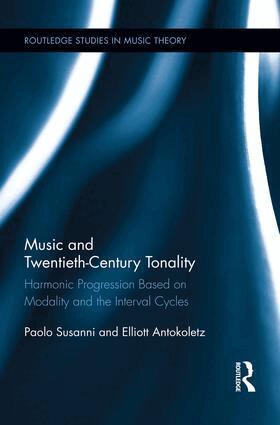
Music and Twentieth-Century Tonality
Harmonic Progression Based on Modality and the Interval Cycles
Inbunden, Engelska, 2012
2 230 kr
Skickas inom 10-15 vardagar
This book explores the web of pitch relations that generates the musical language of non-serialized twelve-tone music and supplies both the analytical materials and methods necessary for analyses of a vast proportion of the 20th century musical repertoire. It does so in a simple, clear, and systematic manner to promote an easily accessible and global understanding of this music. Since the chromatic scale is the primary source for the pitch materials of 20th-century music, common sub-collections of the various modes and interval cycles serve as the basis for their mutual transformation. It is precisely this peculiarity of the non-serialized twelve-tone system that allows for an array of pitch relations and modal techniques hitherto perceived difficult if not impossible to analyze. Susanni and Antokoletz present the principles, concepts, and materials employed for analysis using a unique theoretic-analytical approach to the new musical language. The book contains a large number of original analyses that explore a host of composers including Ives, Stravinsky, Bartók, Messiaen, Cage, Debussy, Copland, and many more, providing insight into the music of the tonal revolution of the twentieth century and contributing an important perspective to how music works in general.
3 272 kr
Skickas inom 10-15 vardagar
A History of Twentieth-Century Music in a Theoretic-Analytical Context is an integrated account of the genres and concepts of twentieth-century art music, organized topically according to aesthetic, stylistic, technical, and geographic categories, and set within the larger political, social, economic, and cultural framework. While the organization is topical, it is historical within that framework.Musical issues interwoven with political, cultural, and social conditions have had a significant impact on the course of twentieth-century musical tendencies and styles. The goal of this book is to provide a theoretic-analytical basis that will appeal to those instructors who want to incorporate into student learning an analysis of the musical works that have reflected cultural influences on the major musical phenomena of the twentieth century. Focusing on the wide variety of theoretical issues spawned by twentieth-century music, A History of Twentieth-Century Music in a Theoretic-Analytical Context reflects the theoretical/analytical essence of musical structure and design.
2 647 kr
Skickas inom 10-15 vardagar
This research guide is an annotated bibliography of primary and secondary sources and catalogue of Bartók’s compositions. Since the publication of the second edition, a wealth of information has been proliferating in the field of Bartók research. The third edition of this research guide provides an update in this field and represents the multidisciplinary research areas in the growing Bartók literature.
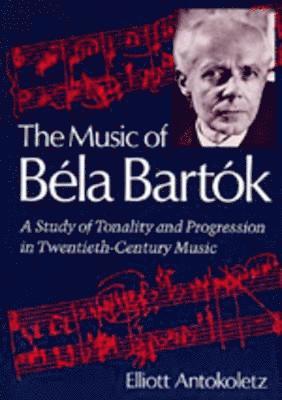
Music of Bela Bartok
A Study of Tonality and Progression in Twentieth-Century Music
Häftad, Engelska, 1990
284 kr
Skickas inom 7-10 vardagar
The basic principles of progression and the means by which tonality is established in Bartok's music remain problematical to many theorists. Elliott Antokoletz here demonstrates that the remarkable continuity of style in Bartok's evolution is founded upon an all-encompassing system of pitch relations in which one can draw together the diverse pitch formations in his music under one unified set of principles.
From Musical Folklore to Twelve Tone Technique
Memoirs of a Musician between East and West
Inbunden, Engelska, 2004
1 108 kr
Skickas inom 10-15 vardagar
The memoirs of the Russian-born German composer Georg von Alberecht (born Kasan 1891, died Heidelberg 1976) are an important document of 20th-century musical history. Dictated to his son Michael von Albrecht and first published in German, von Albrecht's autobiography recounts his dramatic experiences during the 1917 Russian revolution and the Nazi terror. His reports of encounters with such other composers as Taneyev, Glazunov, Scriabin, Stravinsky, Hindemith, Frommel, David, and others, and his thorough discussion of tonal systems and compositional methods, reflect the approach and critical response to many procedures typical of the 20th-century music. His analyses shed light on the works of other composers and the development of modern and postmodern compositional strategies. Translated by Michael von Albrecht and Francis R. Schwartz, and edited by Elliott Antokoletz, these memoirs offer the English-speaking reader a first-hand account of some of the most dynamic political, social, and musical developments in 20th-century Europe.
845 kr
Skickas inom 10-15 vardagar
A History of Twentieth-Century Music in a Theoretic-Analytical Context is an integrated account of the genres and concepts of twentieth-century art music, organized topically according to aesthetic, stylistic, technical, and geographic categories, and set within the larger political, social, economic, and cultural framework. While the organization is topical, it is historical within that framework.Musical issues interwoven with political, cultural, and social conditions have had a significant impact on the course of twentieth-century musical tendencies and styles. The goal of this book is to provide a theoretic-analytical basis that will appeal to those instructors who want to incorporate into student learning an analysis of the musical works that have reflected cultural influences on the major musical phenomena of the twentieth century. Focusing on the wide variety of theoretical issues spawned by twentieth-century music, A History of Twentieth-Century Music in a Theoretic-Analytical Context reflects the theoretical/analytical essence of musical structure and design.
Music and Twentieth-Century Tonality
Harmonic Progression Based on Modality and the Interval Cycles
Häftad, Engelska, 2014
747 kr
Skickas inom 10-15 vardagar
This book explores the web of pitch relations that generates the musical language of non-serialized twelve-tone music and supplies both the analytical materials and methods necessary for analyses of a vast proportion of the 20th century musical repertoire. It does so in a simple, clear, and systematic manner to promote an easily accessible and global understanding of this music. Since the chromatic scale is the primary source for the pitch materials of 20th-century music, common sub-collections of the various modes and interval cycles serve as the basis for their mutual transformation. It is precisely this peculiarity of the non-serialized twelve-tone system that allows for an array of pitch relations and modal techniques hitherto perceived difficult if not impossible to analyze. Susanni and Antokoletz present the principles, concepts, and materials employed for analysis using a unique theoretic-analytical approach to the new musical language. The book contains a large number of original analyses that explore a host of composers including Ives, Stravinsky, Bartók, Messiaen, Cage, Debussy, Copland, and many more, providing insight into the music of the tonal revolution of the twentieth century and contributing an important perspective to how music works in general.