Marianne Wheeldon - Böcker
Visar alla böcker från författaren Marianne Wheeldon. Handla med fri frakt och snabb leverans.
4 produkter
4 produkter
670 kr
Skickas inom 5-8 vardagar
Today, Claude Debussy's position as a central figure in twentieth-century concert music is secure, and scholarship has long taken for granted the enduring musical and aesthetic contributions of his compositions. Yet this was not always the case. Unknown to many concert-goers and music scholars is the fact that for years after his death, Debussy's musical aesthetic was perceived as outmoded, decadent, and even harmful for French music. In Debussy's Legacy and the Construction of Reputation, Marianne Wheeldon examines the vicissitudes of the composer's posthumous reception in the 1920s and 30s, and analyzes the confluence of factors that helped to overturn the initial backlash against his music. Rather than viewing Debussy's artistic greatness as the cause of his enduring legacy, she considers it instead as an effect, tracing the manifold processes that shaped how his music was received and how its aesthetic worth was consolidated. Speaking to readers both within and beyond the domain of French music and culture, Debussy's Legacy and the Construction of Reputation enters into dialogue with research in the sociology of reputation and commemoration, examining the collective nature of the processes of artistic consecration. By analyzing the cultural forces that came to bear on the formation of Debussy's legacy, Wheeldon contributes to a greater understanding of the inter-war period--the cultural politics, debates, and issues that confronted musicians in 1920s and 30s Paris--and offers a musicological perspective on the subject of reputation building, to date underrepresented in recent writings on reputation and commemoration in the humanities. Debussy's Legacy and the Construction of Reputation is an important new study, groundbreaking in its methodology and in its approach to musical influence and cultural consecration.
903 kr
Skickas inom 5-8 vardagar
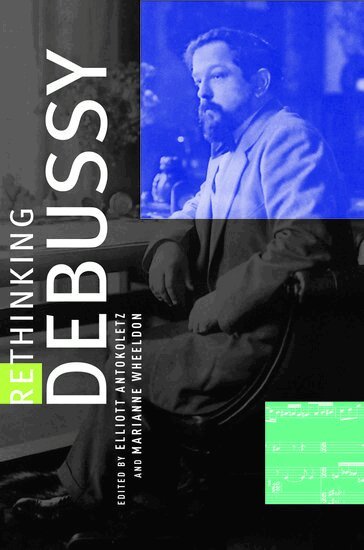
Composer, pianist, and critic Claude Debussy's musical aesthetic represents the single most powerful influence on international musical developments during the long fin de siècle period. The development of Debussy's musical language and style was affected by the international political pressures of his time, beginning with the Franco-Prussian War of 1871 and the rise of the new Republic in France, and was also related to the contemporary philosophical conceptualization of what constituted art. The Debussy idiom exemplifies the ways in which various disciplines - musical, literary, artistic, philosophical, and psychological - can be incorporated into a single, highly-integrated artistic conception. Rethinking Debussy draws together separate areas of Debussy research into a lucid perspective that reveals the full significance of the composer's music and thought in relation to the broader cultural, intellectual, and artistic issues of the twentieth century.Ranging from new biographical information to detailed interpretations of Debussy's music, the volume offers significant multidisciplinary insight into Debussy's music and musical life, as well as the composer's influence on the artistic developments that followed. Chapters include: "Russian Imprints in Debussy's Piano Music"; "Music as Encoder of the Unconscious in Pelléas et Mélisande"; "An Artist High and Low, or Debussy and Money"; "Debussy's Ideal Pelléas and the Limits of Authorial Intent"; "Debussy in Daleville: Toward Early Modernist Hearing in the United States"; and more.Rethinking Debussy will appeal to students and scholars of French music, opera, and modernism, and literary and French studies scholars, particularly concerned with Symbolism and theatre. General readers will be drawn to the book as well, particularly to chapters focusing on Debussy's finances, dramatic works, and reception.
677 kr
Skickas inom 5-8 vardagar
Composer, pianist, and critic Claude Debussy's musical aesthetic represents the single most powerful influence on international musical developments during the long fin de siècle period. The development of Debussy's musical language and style was affected by the international political pressures of his time, beginning with the Franco-Prussian War of 1871 and the rise of the new Republic in France, and was also related to the contemporary philosophical conceptualization of what constituted art. The Debussy idiom exemplifies the ways in which various disciplines - musical, literary, artistic, philosophical, and psychological - can be incorporated into a single, highly-integrated artistic conception. Rethinking Debussy draws together separate areas of Debussy research into a lucid perspective that reveals the full significance of the composer's music and thought in relation to the broader cultural, intellectual, and artistic issues of the twentieth century.Ranging from new biographical information to detailed interpretations of Debussy's music, the volume offers significant multidisciplinary insight into Debussy's music and musical life, as well as the composer's influence on the artistic developments that followed. Chapters include: "Russian Imprints in Debussy's Piano Music"; "Music as Encoder of the Unconscious in Pelléas et Mélisande"; "An Artist High and Low, or Debussy and Money"; "Debussy's Ideal Pelléas and the Limits of Authorial Intent"; "Debussy in Daleville: Toward Early Modernist Hearing in the United States"; and more.Rethinking Debussy will appeal to students and scholars of French music, opera, and modernism, and literary and French studies scholars, particularly concerned with Symbolism and theatre. General readers will be drawn to the book as well, particularly to chapters focusing on Debussy's finances, dramatic works, and reception.
392 kr
Skickas inom 10-15 vardagar
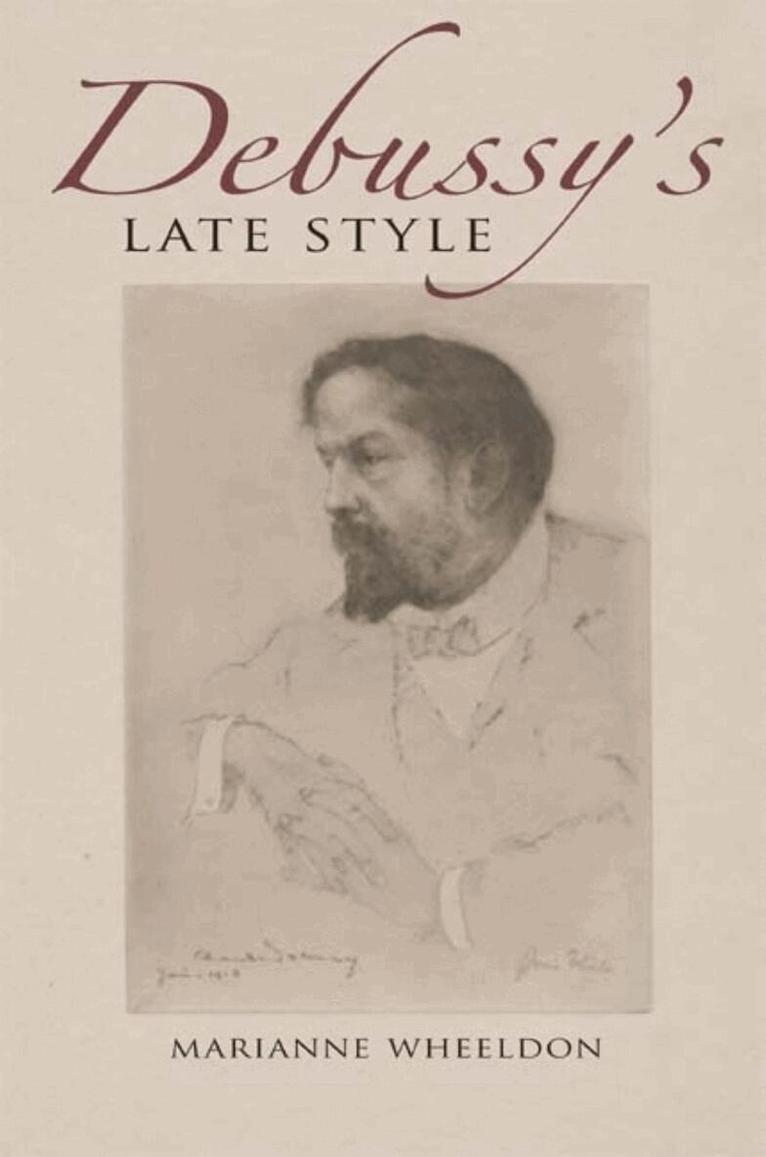
Debussy's Late Style explores Claude Debussy's musical responses to World War I. This period of composition encompasses the duration of the war and the last four years of Debussy's life. The works that emerged during this time reflect both wartime events and the composer's self-conscious desire to define his own musical legacy as he felt his life nearing its end. Debussy's complete wartime compositions comprise a small but significant body of works, some little known and some now acknowledged to be among the masterpieces of his career. These include the Berceuse héroïque, En Blanc et noir, the Douze Études, the "Noël des enfants qui n'ont plus de maisons," and the three instrumental sonatas (the Cello Sonata; the Sonata for Flute, Viola, and Harp; and the Violin Sonata). Through music analysis, musicology, and cultural history, this study offers interpretive readings of Debussy's late works, focusing in particular on how they reflect the unique cultural milieu of wartime Paris.