• Fri frakt över 249 kr
  • •
  • Snabba leveranser
  • •
  • Billiga böcker
Kundservice

Du är på sajten för privatpersoner.

Företag, bibliotek eller offentlig verksamhet?

Du handlar på classic.bokus.com, där alla dina funktioner finns intakta.
Till classic.bokus.com
Bokus logotyp. Gå till startsidan.
  • Erbjudanden
  • Nyheter
  • Student
  • Topplistor
  • Barn & ungdom
  • Bokus Play
  • E-böcker
  • Pocketböcker
  • Spel & pussel

10% rabatt på allt med kod NYSTART10 →

Sidfot

Mina sidor

    Hjälp

    • Kundservice
    • Vanliga frågor och svar
    • Frakt och leverans
    • Retur vid ångerrätt
    • Reklamera vara
    • Betalning
    • Köpvillkor
    • Allmänna villkor
    • Information om webbplatsens tillgänglighet

    Om Bokus

    • Om oss
    • Pressrum
    • För studenter
    • För företag
    • För bibliotek och offentlig verksamhet
    • För leverantörer
    • Hållbarhet

    Populärt

    • Aktuella erbjudanden
    • Presentkort
    • Studentlitteratur
    • Nya böcker
    • Topplistor
    • Signerade böcker
    • Engelska böcker

    Inspiration

    • Boktips
    • BookTok
    • Populära bokserier
    • Barnbokskaraktärer
    • Populära författare
    Logotyp för Bokus
    Följ oss på Facebook (extern länk)Följ oss på Instagram (extern länk)Följ oss på YouTube (extern länk)Följ oss på TikTok (extern länk)
    bokus @ CookiesAnpassa cookiesIntegritetspolicyKöpvillkor
    Till Citymail hemsida (extern länk)Till Budbee hemsida (extern länk)Till Postnord hemsida (extern länk)Till Schenker hemsida (extern länk)Till Early Bird hemsida (extern länk)Till Walleys hemsida (extern länk)
    1. Kultur
    2. Musikböcker
    3. Musik: stilar och genrer
    4. Klassisk musik, konstmusik och orkestermusik

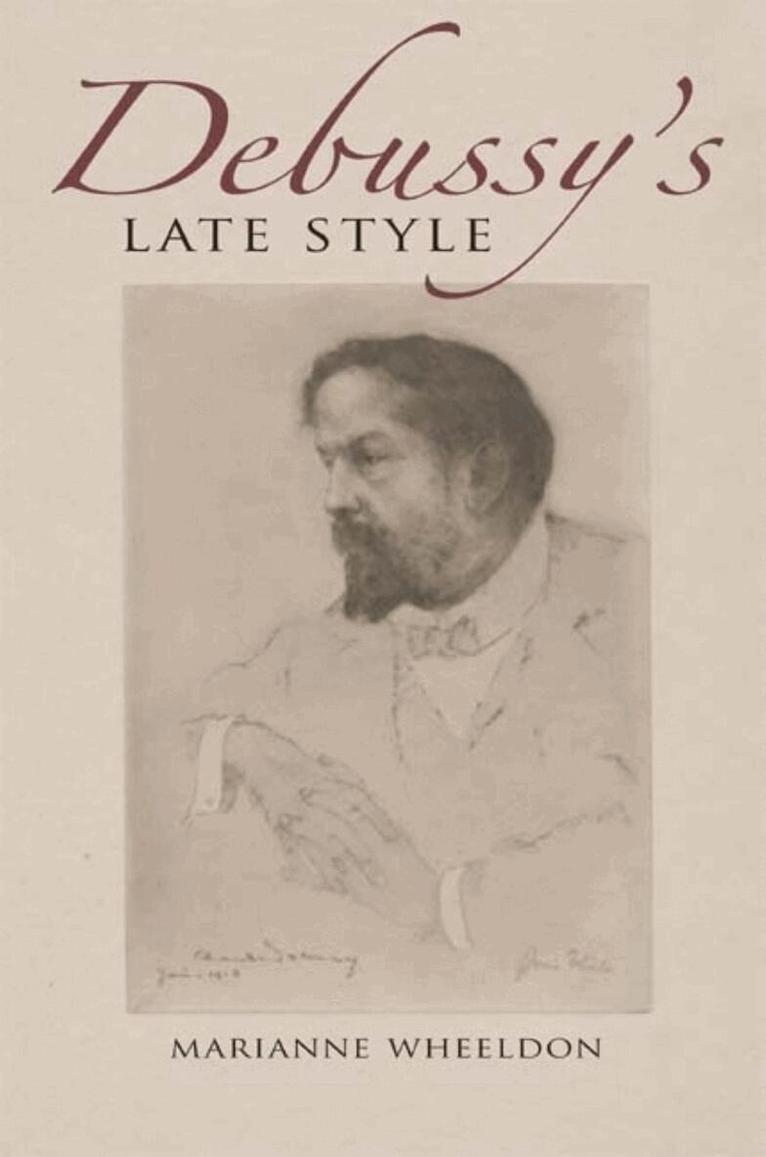
    Debussy's Late Style

    AvMarianne Wheeldon

    Inbunden, Engelska, 2008

    Del i serien Musical Meaning and Interpretation

    408 kr

    Beställningsvara. Skickas inom 10-15 vardagar. Fri frakt över 249 kr.

    Beskrivning

    Debussy's Late Style explores Claude Debussy's musical responses to World War I. This period of composition encompasses the duration of the war and the last four years of Debussy's life. The works that emerged during this time reflect both wartime events and the composer's self-conscious desire to define his own musical legacy as he felt his life nearing its end. Debussy's complete wartime compositions comprise a small but significant body of works, some little known and some now acknowledged to be among the masterpieces of his career. These include the Berceuse héroïque, En Blanc et noir, the Douze Études, the "Noël des enfants qui n'ont plus de maisons," and the three instrumental sonatas (the Cello Sonata; the Sonata for Flute, Viola, and Harp; and the Violin Sonata). Through music analysis, musicology, and cultural history, this study offers interpretive readings of Debussy's late works, focusing in particular on how they reflect the unique cultural milieu of wartime Paris.

    Produktinformation

    • Utgivningsdatum:2008-11-12
    • Mått:156 x 235 x 14 mm
    • Vikt:440 g
    • Format:Inbunden
    • Språk:Engelska
    • Serie:Musical Meaning and Interpretation
    • Antal sidor:184
    • Förlag:Indiana University Press
    • ISBN:9780253352392

    Utforska kategorier

    • Klassisk musik, konstmusik och orkestermusik inom Kultur
    • Tonsättare och låtskrivare inom Kultur

    Mer om författaren

    Marianne Wheeldon is Associate Professor of Music Theory at The University of Texas at Austin. Her research interests include the late works of Claude Debussy, musical culture in fin-de-siècle Paris, and Schenkerian analysis.

    Recensioner i media

    "This is a thorough review of Claude Debussy's later works (1914-18), which today's performers and audiences often overlook. In examining these pieces, Wheeldon (Univ. of Texas, Austin) draws from many resources, including writings by Debussy himself and by various critics and composers (both contemporaneous and later). She reveals how recognition of his own mortality and of the cultural and political crisis in France during this period, i.e., WW I, affected Debussy's musical intentions. The author's background in music theory is evident in her insightful analyses of several compositions, e.g., Debussy's later piano études and chamber music song cycles. She provides music notation and helpful tables and figures explaining the basic elements of the music. Chapter conclusions offer clear summaries of the author's perspective. Readers with a sincere interest in Debussy and his music will most appreciate this study, but even moderate enthusiasts will find Wheeldon's prose easy to read and clearly organized. The book includes a few photographs and extensive endnotes but unfortunately no discography or recording recommendations. Summing Up: Recommended. Upper-division undergraduates through faculty."—A. C. Shahriari, Kent State University, Choice, May 2009"Marianne Wheeldon's recently relased IU Press book Debussy's Late Style explores composer Claude Debussy's musical responses to World War I. This period of compositions encompasses the duration of the war and the last four years of Debussy's life. The pieces from this time reflect wartime events and the composer's self-conscious desire to define his own musical legacy as he felt his life nearing its end. Debussy's complete wartime compositions comprise a small but significant body of works, some little known and some now acknowledged as among the masterpieces of his career. These include the Berceuse héroïque, En Blanc et noir, the Douze Études, the "Noël des enfants qui n'ont plus de maisons," and three instrumental sonatas (the Cello Sonata; the Sonata for Flute, Viola, and Harp; and the Violin Sonata). Through music analysis, musicology and cultural history, Wheeldon offers interpretive readings of Debussy's late works, focusing on how they reflect the unique cultural milieu of wartime Paris. Wheeldon is an associate professor of music theory at the University of Texas at Austin. Her research interests include the late works of Claude Debussy, musical culture in fin-de-siècle Paris and Schenkerian analysis."—Steve Hinnefeld, Media Contact, IU News Room, Book Marks, March 9, 2009"This is a thorough review of Claude Debussy's later works . . . Wheeldon's prose [is] easy to read and clearly organized.May 2009"—Choice"Debussy's Late Style is truly multidimensional as it successfully maps the semiotic goals and cultural terrain of Debussy's final works. . . . Wheeldon's study is compelling in the way that it assesses Debussy's negotiation of his historical and political moment with an acute awareness of historical context, structural strategy, and intertextual correspondences. Her book should open up new avenues of inquiry into the representational goals of Debussy's music and the continuous transformation of his postwar reputation."—Twentieth-Century Music"The overarching lesson of Debussy's Late Style is that today, especially, we should be delighted but certainly not puzzled by the rich variety of Debussy's invention during his last years. 66.2 Dec. 2009"—Notes"Debussy's Late Style reads very easily, with elegant turns of phrase, clearly explained analyses, and generous use of examples. Readers will discover many insights that draw instructive parallels among the late works and lines of influence within them . . . all of which open new windows to comprehending Debussy's late style. Although, when all is said, these works remain atypical of the composer (at least to some degree), Marianne Wheeldon's book not only shows us why but gives us new ways to understand and appreciate them."—Music Reference Services Quarterly"In his later years Debussy surprised contemporaries by eschewing theatrical and picturesque music for the 'pure' traditions of the etude and the sonata. . . . Marianne Wheeldon . . . shows how Debussy put a distinctly French stamp on these works, taking clues from Couperin, Chopin, and Franck. The result is a model of interdisciplinary scholarship."—Jann Pasler, University of California, San Diego"[Wheeldon] writes in a lively style and has an excellent way of linking the various contexts with detailed perusal of the music itself. . . . a fertile and novel line of approach."—Richard Langham Smith, Chevalier de l'ordre des arts et des lettres; Arnold Kettle Distinguished Scholar in Music, Open Uni

    Innehållsförteckning

    • ContentsAcknowledgments1. Defining Debussy's Late Style2. Public and Private: The Wartime Occasional Pieces3. Compositional Personae in the Piano Etudes4. Les Sonates Cycliques5. Tombeau de Claude DebussyNotesBibliographyIndex