Elsie B. Michie - Böcker
Visar alla böcker från författaren Elsie B. Michie. Handla med fri frakt och snabb leverans.
11 produkter
11 produkter
131 kr
Skickas
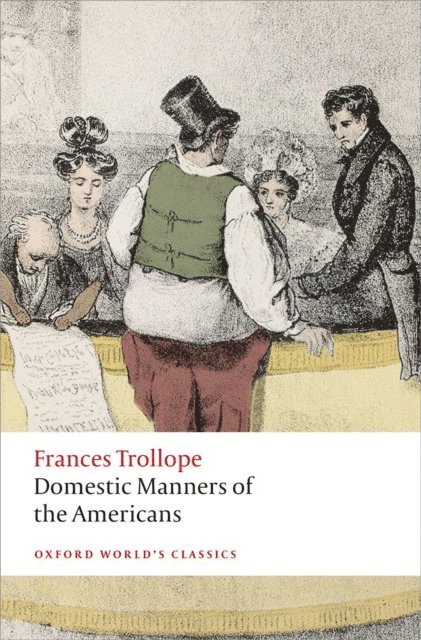
'it appeared to me that the greatest and best feelings of the human heart were paralyzed by the relative positions of slave and owner'In Domestic Manners of the Americans, Frances Trollope recounts her travels through America between 1827 and 1830, describing her voyage up the Mississippi from New Orleans, a two-year stay in Cincinnati, and a subsequent tour of Washington, Baltimore, Philadelphia, and New York. A transatlantic best-seller on publication in 1832, its forthright criticisms of American manners encompassed spitting, religious extremism, ladies' dress, the relentless pursuit of money, and the unequal treatment of women, slaves, and Native Americans. Witty, satiric, and hugely entertaining, Trollope also had a serious purpose in warning her compatriots of the consequences of democratic freedoms at a time of great social change in England. Deploring slavery and the hypocrisy that sanctioned it, she fuelled abolitionist debate on both sides of the Atlantic and so impressed Mark Twain that fifty years later he considered her book to be the most accurate portrait of American life in the nineteenth century.ABOUT THE SERIES: For over 100 years Oxford World's Classics has made available the widest range of literature from around the globe. Each affordable volume reflects Oxford's commitment to scholarship, providing the most accurate text plus a wealth of other valuable features, including expert introductions by leading authorities, helpful notes to clarify the text, up-to-date bibliographies for further study, and much more.
2 478 kr
Skickas inom 10-15 vardagar
Originally describing language use and class position, vulgarity became, over the course of the nineteenth century, a word with wider social implications. Variously associated with behavior, the possession of wealth, different races, sexuality and gender, the objects displayed in homes, and ways of thinking and feeling, vulgarity suggested matters of style, taste, and comportment. This collection examines the diverse ramifications of vulgarity in the four areas where it was most discussed in the nineteenth century: language use, changing social spaces, the emerging middle classes, and visual art. Exploring the dynamics of the term as revealed in dictionaries and grammars; Mayhew's London Labour and the London Poor; fiction by Dickens, Eliot, Gissing, and Trollope; essays, journalism, art, and art reviews, the contributors bring their formidable analytical skills to bear on this enticing and divisive concept. Taken together, these essays urge readers to consider the implications of vulgarity's troubled history for today's writers, critics, and artists.
Outside the Pale
Cultural Exclusion, Gender Difference, and the Victorian Woman Writer
Inbunden, Engelska, 1993
1 745 kr
Skickas inom 10-15 vardagar
Elsie B. Michie here provides insightful readings of novels by Mary Shelley, Emily and Charlotte Brontë, Elizabeth Gaskell, and George Eliot, writers who confronted definitions of femininity which denied them full participation in literary culture. Exploring a series of abhorrent images, Michie traces the links between the Victorian definition of femininity and other forms of cultural exclusion such as race and class distinctions.
Outside the Pale
Cultural Exclusion, Gender Difference, and the Victorian Woman Writer
Häftad, Engelska, 1993
422 kr
Skickas inom 10-15 vardagar
Elsie B. Michie here provides insightful readings of novels by Mary Shelley, Emily and Charlotte Brontë, Elizabeth Gaskell, and George Eliot, writers who confronted definitions of femininity which denied them full participation in literary culture. Exploring a series of abhorrent images, Michie traces the links between the Victorian definition of femininity and other forms of cultural exclusion such as race and class distinctions.
881 kr
Skickas inom 10-15 vardagar
Originally describing language use and class position, vulgarity became, over the course of the nineteenth century, a word with wider social implications. Variously associated with behavior, the possession of wealth, different races, sexuality and gender, the objects displayed in homes, and ways of thinking and feeling, vulgarity suggested matters of style, taste, and comportment. This collection examines the diverse ramifications of vulgarity in the four areas where it was most discussed in the nineteenth century: language use, changing social spaces, the emerging middle classes, and visual art. Exploring the dynamics of the term as revealed in dictionaries and grammars; Mayhew's London Labour and the London Poor; fiction by Dickens, Eliot, Gissing, and Trollope; essays, journalism, art, and art reviews, the contributors bring their formidable analytical skills to bear on this enticing and divisive concept. Taken together, these essays urge readers to consider the implications of vulgarity's troubled history for today's writers, critics, and artists.
2 632 kr
Skickas inom 10-15 vardagar
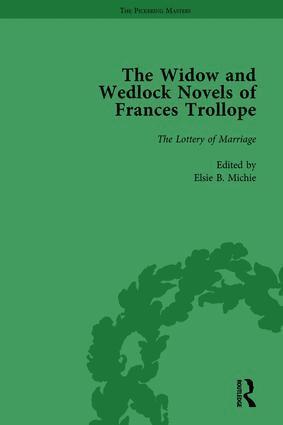
The writings of Frances Trollope have been subject to increasing academic interest in recent years, and are now widely studied. In this four-volume set her comical, yet subversive, treatment of Victorian marriage provides an interesting contrast to some of the more earnest but conventional fiction of the time.
2 632 kr
Skickas inom 10-15 vardagar
The writings of Frances Trollope have been subject to increasing academic interest in recent years, and are now widely studied. In this four-volume set her comical, yet subversive, treatment of Victorian marriage provides an interesting contrast to some of the more earnest but conventional fiction of the time.
709 kr
Skickas inom 10-15 vardagar
The writings of Frances Trollope have been subject to increasing academic interest in recent years, and are now widely studied. In this four-volume set her comical, yet subversive, treatment of Victorian marriage provides an interesting contrast to some of the more earnest but conventional fiction of the time.
2 632 kr
Skickas inom 10-15 vardagar
The writings of Frances Trollope have been subject to increasing academic interest in recent years, and are now widely studied. In this four-volume set her comical, yet subversive, treatment of Victorian marriage provides an interesting contrast to some of the more earnest but conventional fiction of the time.
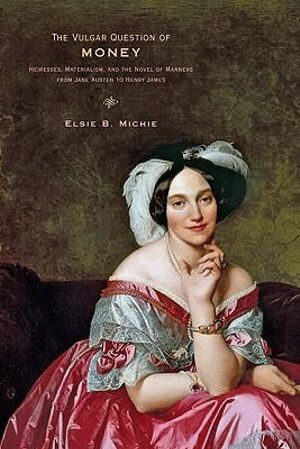
Vulgar Question of Money
Heiresses, Materialism, and the Novel of Manners from Jane Austen to Henry James
Inbunden, Engelska, 2011
924 kr
Skickas inom 7-10 vardagar
It is a familiar story line in nineteenth-century English novels: a hero must choose between money and love, between the wealthy, materialistic, status-conscious woman who could enhance his social position and the poorer, altruistic, independent-minded woman whom he loves. Elsie B. Michie explains what this common marriage plot reveals about changing reactions to money in British culture. It was in the novel that writers found space to articulate the anxieties surrounding money that developed along with the rise of capitalism in nineteenth-century England. Michie focuses in particular on the character of the wealthy heiress and how she, unlike her male counterpart, represents the tensions in British society between the desire for wealth and advancement and the fear that economic development would blur the traditional boundaries of social classes. Michie explores how novelists of the period captured with particular vividness England's ambivalent emotional responses to its own financial successes and engaged questions identical to those raised by political economists and moral philosophers.Each chapter reads a novelist alongside a contemporary thinker, tracing the development of capitalism in Britain: Jane Austen and Adam Smith and the rise of commercial society, Frances Trollope and Thomas Robert Malthus and industrialism, Anthony Trollope and Walter Bagehot and the political influence of money, Margaret Oliphant and John Stuart Mill and professionalism and managerial capitalism, and Henry James and Georg Simmel and the shift of economic dominance from England to America. Even the great romantic novels of the nineteenth century cannot disentangle themselves from the vulgar question of money. Michie's fresh reading of the marriage plot, and the choice between two women at its heart, shows it to be as much about politics and economics as it is about personal choice.
Vulgar Question of Money
Heiresses, Materialism, and the Novel of Manners from Jane Austen to Henry James
Häftad, Engelska, 2013
445 kr
Skickas inom 5-8 vardagar
It is a familiar story line in nineteenth-century English novels: a hero must choose between money and love, between the wealthy, materialistic, status-conscious woman who could enhance his social position and the poorer, altruistic, independent-minded woman whom he loves. Elsie B. Michie explains what this common marriage plot reveals about changing reactions to money in British culture. It was in the novel that writers found space to articulate the anxieties surrounding money that developed along with the rise of capitalism in nineteenth-century England. Michie focuses in particular on the character of the wealthy heiress and how she, unlike her male counterpart, represents the tensions in British society between the desire for wealth and advancement and the fear that economic development would blur the traditional boundaries of social classes. Michie explores how novelists of the period captured with particular vividness England's ambivalent emotional responses to its own financial successes and engaged questions identical to those raised by political economists and moral philosophers.Each chapter reads a novelist alongside a contemporary thinker, tracing the development of capitalism in Britain: Jane Austen and Adam Smith and the rise of commercial society, Frances Trollope and Thomas Robert Malthus and industrialism, Anthony Trollope and Walter Bagehot and the political influence of money, Margaret Oliphant and John Stuart Mill and professionalism and managerial capitalism, and Henry James and Georg Simmel and the shift of economic dominance from England to America. Even the great romantic novels of the nineteenth century cannot disentangle themselves from the vulgar question of money. Michie's fresh reading of the marriage plot, and the choice between two women at its heart, shows it to be as much about politics and economics as it is about personal choice.