Susan David Bernstein - Böcker
Visar alla böcker från författaren Susan David Bernstein. Handla med fri frakt och snabb leverans.
4 produkter
4 produkter
Roomscape
Women Writers in the British Museum from George Eliot to Virginia Woolf
Häftad, Engelska, 2014
341 kr
Skickas inom 7-10 vardagar
Examines the Reading Room of the British Museum using documentary, theoretical, historical, and literary sourcesRoomscape explores a specific site—the Reading Room of the British Museum—as a space of imaginative potential in relation to the emergence of modern women writers in Victorian and early twentieth-century London. Drawing on archival materials, Roomscape is the first study to integrate documentary, historical, and literary sources to examine the significance of this space and its resources for women who wrote translations, poetry, and fiction. This book challenges an assessment of the Reading Room of the British Museum as a bastion of class and gender privilege, an image established by Virginia Woolf’s A Room of One’s Own. Roomscape also questions the value of privacy and autonomy in constructions of female authorship. Rather than viewing reading and writing as solitary, Roomscape investigates the public, social, and spatial dimensions of literary production. The implications of this study reach into the current digital era and its transformations of practices of reading, writing, and archiving. Along with an appendix of notable readers at the British Museum from the last two centuries, the book contributes to scholarship on George Eliot, Amy Levy, Eleanor Marx, Clementina Black, Constance Black Garnett, Christina Rossetti, Mathilde Blind, and Virginia Woolf.Key FeaturesAppendix of Notable Readers at the British Museum from 1857-1930 (15 pp) as important resource for museum and library studies.Fresh material about translation work at the British Museum by Eleanor Marx (on Flaubert and Ibsen) and Constance Black Garnett (on Russian authors).Demonstrates the importance of library research for poets including Christina Rossetti, Mathilde Blind, and Amy Levy.Examines George Eliot’s research at the British Museum for her historical novel Romola in relation to how this novel depicts reading, library collection, and gendered scholarship.Offers a new reading of Virginia Woolf’s researching in and writing about the British Museum and the London Library through her diaries, letters, and creative work.Includes a Coda that brings forward the story of the Round Reading Room from the mid-twentieth century, when A. S. Byatt, Isobel Armstrong, and Gillian Beer relied on this space in the early years of their careers, to the aftermath since the official closing in 1997 when the British Library moved to Euston Road. The fate of the Round Reading Room still hangs in the balance.
2 478 kr
Skickas inom 10-15 vardagar
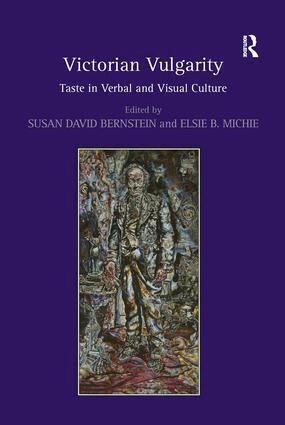
Originally describing language use and class position, vulgarity became, over the course of the nineteenth century, a word with wider social implications. Variously associated with behavior, the possession of wealth, different races, sexuality and gender, the objects displayed in homes, and ways of thinking and feeling, vulgarity suggested matters of style, taste, and comportment. This collection examines the diverse ramifications of vulgarity in the four areas where it was most discussed in the nineteenth century: language use, changing social spaces, the emerging middle classes, and visual art. Exploring the dynamics of the term as revealed in dictionaries and grammars; Mayhew's London Labour and the London Poor; fiction by Dickens, Eliot, Gissing, and Trollope; essays, journalism, art, and art reviews, the contributors bring their formidable analytical skills to bear on this enticing and divisive concept. Taken together, these essays urge readers to consider the implications of vulgarity's troubled history for today's writers, critics, and artists.
Confessional Subjects
Revelations of Gender and Power in Victorian Literature and Culture
Häftad, Engelska, 1997
591 kr
Skickas inom 10-15 vardagar
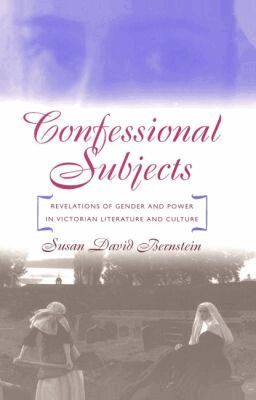
Susan Bernstein examines the gendered power relationships embedded in confessional literature of the Victorian period. Exploring this dynamic in Charlotte Bronta's Villette , Mary Elizabeth Braddon's Lady Audley's Secret , George Eliot's Daniel Deronda , and Thomas Hardy's Tess of the d'Urbervilles , she argues that although women's disclosures to male confessors repeatedly depict wrongdoing committed against them, they themselves are viewed as the transgressors. Bernstein emphasizes the secularization of confession, but she also places these narratives within the context of the anti-Catholic tract literature of the time. Based on cultural criticism, poststructuralism, and feminist theory, Bernstein's analysis constitutes a reassessment of Freud's and Foucault's theories of confession. In addition, her study of the anti-Catholic propaganda of the mid-nineteenth century and its portrayal of confession provides historical background to the meaning of domestic confessions in the literature of the second half of the century. Originally published in 1997. A UNC Press Enduring Edition -- UNC Press Enduring Editions use the latest in digital technology to make available again books from our distinguished backlist that were previously out of print. These editions are published unaltered from the original, and are presented in affordable paperback formats, bringing readers both historical and cultural value.
881 kr
Skickas inom 10-15 vardagar
Originally describing language use and class position, vulgarity became, over the course of the nineteenth century, a word with wider social implications. Variously associated with behavior, the possession of wealth, different races, sexuality and gender, the objects displayed in homes, and ways of thinking and feeling, vulgarity suggested matters of style, taste, and comportment. This collection examines the diverse ramifications of vulgarity in the four areas where it was most discussed in the nineteenth century: language use, changing social spaces, the emerging middle classes, and visual art. Exploring the dynamics of the term as revealed in dictionaries and grammars; Mayhew's London Labour and the London Poor; fiction by Dickens, Eliot, Gissing, and Trollope; essays, journalism, art, and art reviews, the contributors bring their formidable analytical skills to bear on this enticing and divisive concept. Taken together, these essays urge readers to consider the implications of vulgarity's troubled history for today's writers, critics, and artists.