Emanuel Camilleri - Böcker
Visar alla böcker från författaren Emanuel Camilleri. Handla med fri frakt och snabb leverans.
12 produkter
12 produkter
2 150 kr
Skickas inom 10-15 vardagar
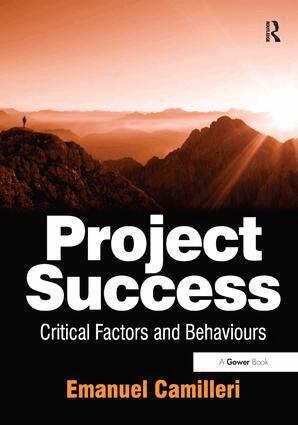
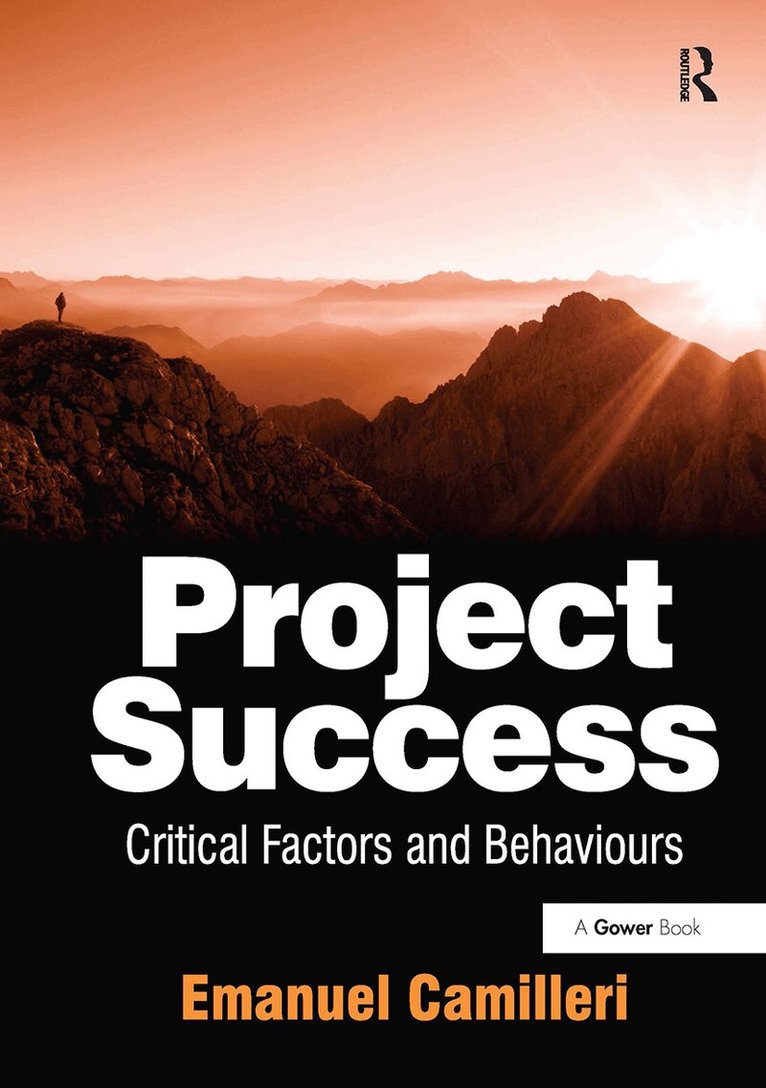
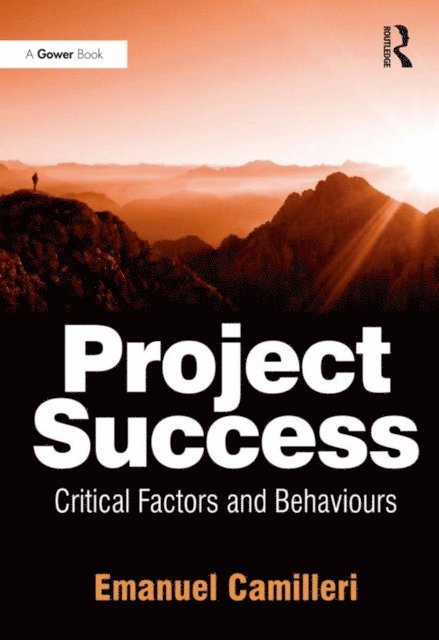
The issue of what defines project success (or failure) is complex and often elusive, and dependent on the perceptions of different stakeholders. In this enlightening book Emanuel Camilleri examines the key factors bearing on perceived success or failure. This book is not just about project management, it goes much deeper into the topic of project success by prescribing a project success framework. In chapters dedicated to factors such as leadership, teams, communication, information management and risk management, the author shines a light on the key behaviours in which project managers and others engage and how those behaviours predict success or failure. Practising project managers, project board members and sponsors, struggling to manage conflicting stakeholder expectations, complexity and ambiguity, will learn which factors are vital to determining successful outcomes. Finally, having highlighted the particular skills, abilities and attributes identified by the research, Dr Camilleri offers a diagnostic model for assessing an organization's preparedness for undertaking and successfully managing major projects. Project Success provides a valuable contribution to the literature on this subject, and its application delivers practical guidance that will be welcomed by project professionals at all levels.
845 kr
Skickas inom 10-15 vardagar
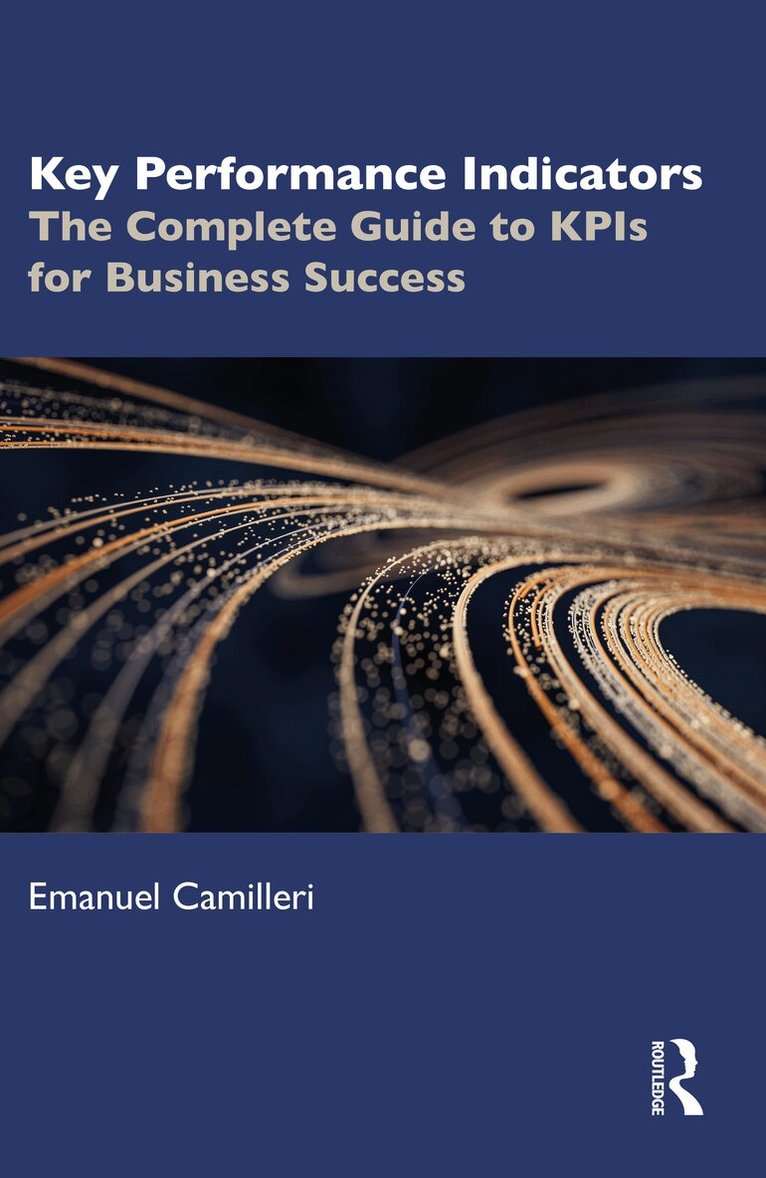
Key performance indicators (KPIs) are widely used across organisations. But are they fully understood in how they can properly shape, improve, or even undermine organisational systems and outcomes? This book presents a framework and tools for measuring and managing performance at various levels within an organisation, and helps managers re-think the ways KPIs can be implemented to meet organisational goals.Innovative performance measurement and management is a vital function within any organisation irrespective of its size and industry. Measuring and managing performance (whether on an individual, team, or departmental basis) assists management in calibrating their established strategic goals by providing an insight into how well their employees and the organisation are doing and identifying areas of concern for rectification and improvement. This book focuses on the practicality of performance management tools (for example, Performance Analytics; Performance Reporting; Critical Success Factors; Balanced Scorecard; Benchmarking; Six Sigma; Business Excellence Models; Enterprise Risk Management) and illustrates their use, and the changing nature of how organisational performance will be evaluated in the future. This includes the application of Artificial Intelligence as an important trend in performance measurement and management.This book provides a universal framework for implementing a performance measurement and management system that is applicable to both the private and public sectors. It is particularly relevant to HR and operational managers, and organisational leaders and public administrators at all levels.
2 012 kr
Skickas inom 10-15 vardagar
Key performance indicators (KPIs) are widely used across organisations. But are they fully understood in how they can properly shape, improve, or even undermine organisational systems and outcomes? This book presents a framework and tools for measuring and managing performance at various levels within an organisation, and helps managers re-think the ways KPIs can be implemented to meet organisational goals.Innovative performance measurement and management is a vital function within any organisation irrespective of its size and industry. Measuring and managing performance (whether on an individual, team, or departmental basis) assists management in calibrating their established strategic goals by providing an insight into how well their employees and the organisation are doing and identifying areas of concern for rectification and improvement. This book focuses on the practicality of performance management tools (for example, Performance Analytics; Performance Reporting; Critical Success Factors; Balanced Scorecard; Benchmarking; Six Sigma; Business Excellence Models; Enterprise Risk Management) and illustrates their use, and the changing nature of how organisational performance will be evaluated in the future. This includes the application of Artificial Intelligence as an important trend in performance measurement and management.This book provides a universal framework for implementing a performance measurement and management system that is applicable to both the private and public sectors. It is particularly relevant to HR and operational managers, and organisational leaders and public administrators at all levels.
579 kr
Skickas inom 10-15 vardagar
The issue of what defines project success (or failure) is complex and often elusive, and dependent on the perceptions of different stakeholders. In this enlightening book Emanuel Camilleri examines the key factors bearing on perceived success or failure. This book is not just about project management, it goes much deeper into the topic of project success by prescribing a project success framework. In chapters dedicated to factors such as leadership, teams, communication, information management and risk management, the author shines a light on the key behaviours in which project managers and others engage and how those behaviours predict success or failure. Practising project managers, project board members and sponsors, struggling to manage conflicting stakeholder expectations, complexity and ambiguity, will learn which factors are vital to determining successful outcomes. Finally, having highlighted the particular skills, abilities and attributes identified by the research, Dr Camilleri offers a diagnostic model for assessing an organization's preparedness for undertaking and successfully managing major projects. Project Success provides a valuable contribution to the literature on this subject, and its application delivers practical guidance that will be welcomed by project professionals at all levels.
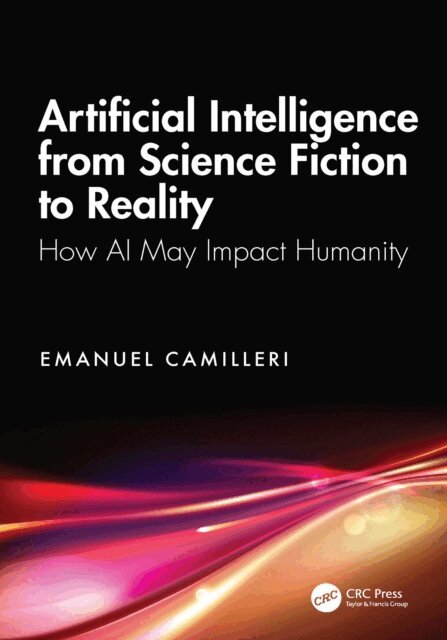
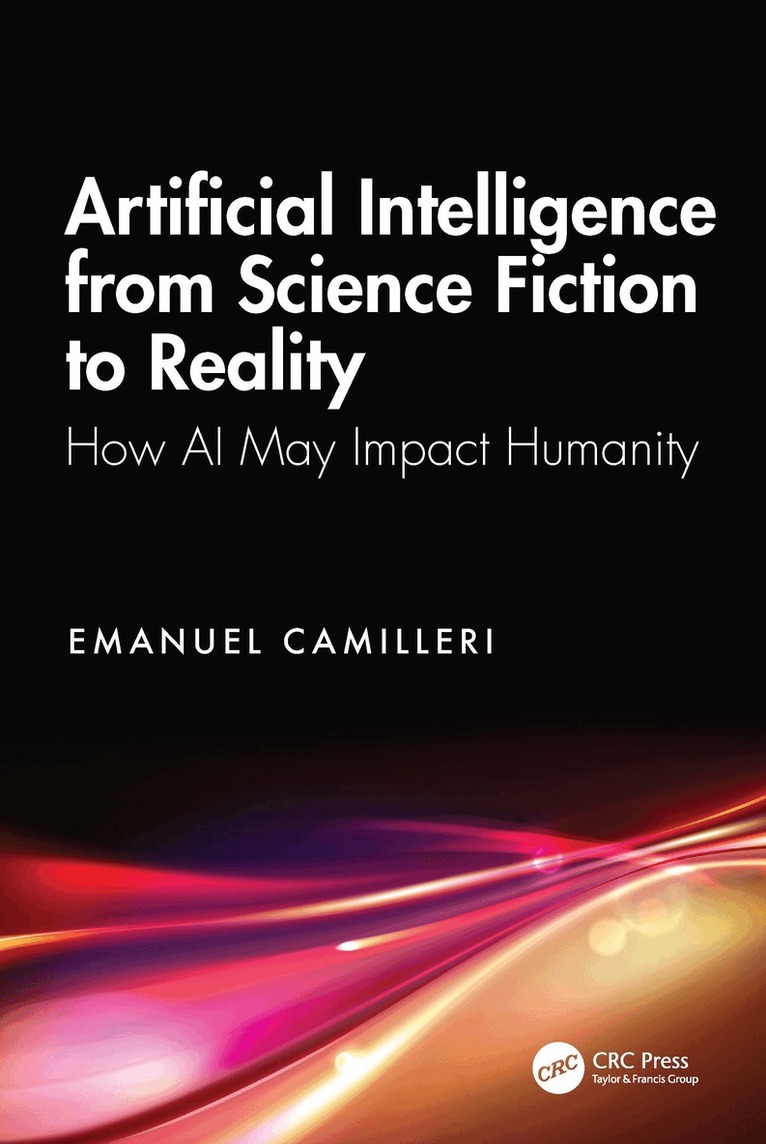
Artificial Intelligence from Science Fiction to Reality
How AI May Impact Humanity
Häftad, Engelska, 2025
725 kr
Skickas inom 10-15 vardagar
Artificial Intelligence from Science Fiction to Reality examines various aspects, starting with the evolution of human and artificial intelligence (AI). It places AI in its proper context and discusses non-technical aspects, such as philosophical and social issues. The major challenge leaders are likely to encounter is deciding what functions are to be entrusted to AI and how humanity can exercise control over them. The book also focuses on the hardware and software technology that support AI, and the essential cyber security systems that are required to address the evolving AI threat landscape. It examines centres for AI safety that are nonprofit research organisations, which focus on the mitigation of AI risks by proposing solutions against threat actors.The book discusses the knowledge-based economy, particularly Enterprise AI, and examines the ethical and legal issues that emerge from the practical implications of AI. While most governments have endorsed voluntary ethical and moral charters, there is a reluctance to introduce binding legislative measures. This reluctance is based on the premise that specific laws might hinder AI innovation. Furthermore, detailed private and public sector case studies are presented that demonstrate how AI applications may be successfully implemented according to a practical framework.A detailed discussion about the implications for human development is presented. The differences between key economic approaches, such as knowledge-based economy, digital economy and automated economy are examined, and how these will be impacted by AI in relation to job displacement, data privacy and security, and algorithmic bias. Finally, the book also examines the era beyond AI where organoid intelligence is emerging. It explores future human development where humans could be turned into cyborgs with hi-tech machine implants, re-growable limbs and nanotechnology that repair damaged tissue, rejuvenating human cells leading to immortality.
Artificial Intelligence from Science Fiction to Reality
How AI May Impact Humanity
Inbunden, Engelska, 2025
2 088 kr
Skickas inom 10-15 vardagar
Artificial Intelligence from Science Fiction to Reality examines various aspects, starting with the evolution of human and artificial intelligence (AI). It places AI in its proper context and discusses non-technical aspects, such as philosophical and social issues. The major challenge leaders are likely to encounter is deciding what functions are to be entrusted to AI and how humanity can exercise control over them. The book also focuses on the hardware and software technology that support AI, and the essential cyber security systems that are required to address the evolving AI threat landscape. It examines centres for AI safety that are nonprofit research organisations, which focus on the mitigation of AI risks by proposing solutions against threat actors.The book discusses the knowledge-based economy, particularly Enterprise AI, and examines the ethical and legal issues that emerge from the practical implications of AI. While most governments have endorsed voluntary ethical and moral charters, there is a reluctance to introduce binding legislative measures. This reluctance is based on the premise that specific laws might hinder AI innovation. Furthermore, detailed private and public sector case studies are presented that demonstrate how AI applications may be successfully implemented according to a practical framework.A detailed discussion about the implications for human development is presented. The differences between key economic approaches, such as knowledge-based economy, digital economy and automated economy are examined, and how these will be impacted by AI in relation to job displacement, data privacy and security, and algorithmic bias. Finally, the book also examines the era beyond AI where organoid intelligence is emerging. It explores future human development where humans could be turned into cyborgs with hi-tech machine implants, re-growable limbs and nanotechnology that repair damaged tissue, rejuvenating human cells leading to immortality.
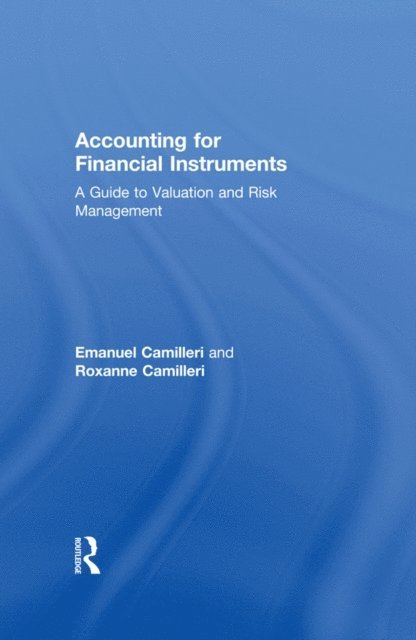
Accounting for Financial Instruments
A Guide to Valuation and Risk Management
Inbunden, Engelska, 2017
2 357 kr
Skickas inom 10-15 vardagar
Accounting for Financial Instruments is about the accounting and regulatory framework associated with the acquisition and disposal of financial instruments; how to determine their value; how to manage the risk connected with them; and ultimately compile a business valuation report.Specifically, the book covers the following topics, amongst others: Accounting for Investments; Bills of exchange; Management of Financial Risks; Financial Analysis (including the Financial Analysis Report); Valuation of a business (including the Business Valuation Report) and Money laundering. Accounting for Financial Instruments fills a gap in the current literature for a comprehensive text that brings together relevant accounting concepts and valid regulatory framework, and related procedures regarding the management of financial instruments (investments), which are applicable in the modern business world. Understanding financial risk management allows the reader to comprehend the importance of analysing a business concern. This is achieved by presenting an analytical framework to illustrate that an entity’s performance is greatly influenced by its external and internal environments. The analysis of the external environment examines factors that impact an entity’s operational activities, strategic choices, and influence its opportunities and risks. The analysis of the internal environment applies accounting ratio analysis to an entity’s financial statements to examine various elements, including liquidity, profitability, asset utilisation, investment, working capital management and capital structure.The objective of the book is to provide a fundamental knowledge base for those who are interested in managing financial instruments (investments) or studying banking and finance or those who wish to make financial services, particularly banking and finance, their chosen career. Accounting for Financial Instruments is highly applicable to both professional accountants and auditors and students alike.
789 kr
Skickas inom 10-15 vardagar
Accounting for Financial Instruments is about the accounting and regulatory framework associated with the acquisition and disposal of financial instruments; how to determine their value; how to manage the risk connected with them; and ultimately compile a business valuation report.Specifically, the book covers the following topics, amongst others: Accounting for Investments; Bills of exchange; Management of Financial Risks; Financial Analysis (including the Financial Analysis Report); Valuation of a business (including the Business Valuation Report) and Money laundering. Accounting for Financial Instruments fills a gap in the current literature for a comprehensive text that brings together relevant accounting concepts and valid regulatory framework, and related procedures regarding the management of financial instruments (investments), which are applicable in the modern business world. Understanding financial risk management allows the reader to comprehend the importance of analysing a business concern. This is achieved by presenting an analytical framework to illustrate that an entity’s performance is greatly influenced by its external and internal environments. The analysis of the external environment examines factors that impact an entity’s operational activities, strategic choices, and influence its opportunities and risks. The analysis of the internal environment applies accounting ratio analysis to an entity’s financial statements to examine various elements, including liquidity, profitability, asset utilisation, investment, working capital management and capital structure.The objective of the book is to provide a fundamental knowledge base for those who are interested in managing financial instruments (investments) or studying banking and finance or those who wish to make financial services, particularly banking and finance, their chosen career. Accounting for Financial Instruments is highly applicable to both professional accountants and auditors and students alike.
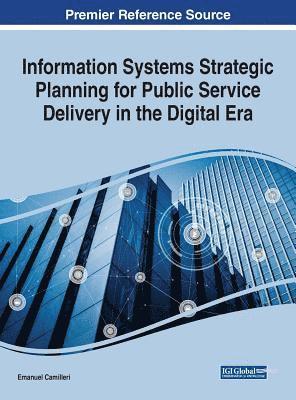
Information Systems Strategic Planning for Public Service Delivery in the Digital Era
Inbunden, Engelska, 2019
2 803 kr
Skickas inom 5-8 vardagar
Information Systems Strategic Planning for Public Service Delivery in the Digital Era
Häftad, Engelska, 2019
2 121 kr
Skickas inom 5-8 vardagar
1 473 kr
Skickas inom 10-15 vardagar
This book provides a detailed examination of public service reforms in Malta. Focusing on both the trajectory and substance of the reforms, the volume provides a holistic treatment of the public sector in the European Union’s smallest member state. The book is divided into four parts.Part I covers the historical background of public service administration and management in Malta from the 1500s to the 2010s. Part II focuses on recent reforms, begun in 2013, after the election of Prime Minister Joseph Muscat. Each chapter in this part addresses a particular reform theme: transparency and accountability; civil service systems and HR management; service delivery and digitalisation; organisation and management of government reforms; policy making, coordination, and implementation. Part III investigates the internal and external impact of the reforms, reporting and analyzing the results of a survey carried out among government employees and the Maltese population. The book concludes with a chapter on global reform trends that are likely to impact public service delivery in the future.Providing an in-depth view of public service in a small island state, this volume will be useful to researchers and students interested in public sector management, administration, and public policy as well as practitioners, consultants, and government employees.
1 473 kr
Skickas inom 10-15 vardagar
This book provides a detailed examination of public service reforms in Malta. Focusing on both the trajectory and substance of the reforms, the volume provides a holistic treatment of the public sector in the European Union’s smallest member state. The book is divided into four parts.Part I covers the historical background of public service administration and management in Malta from the 1500s to the 2010s. Part II focuses on recent reforms, begun in 2013, after the election of Prime Minister Joseph Muscat. Each chapter in this part addresses a particular reform theme: transparency and accountability; civil service systems and HR management; service delivery and digitalisation; organisation and management of government reforms; policy making, coordination, and implementation. Part III investigates the internal and external impact of the reforms, reporting and analyzing the results of a survey carried out among government employees and the Maltese population. The book concludes with a chapter on global reform trends that are likely to impact public service delivery in the future.Providing an in-depth view of public service in a small island state, this volume will be useful to researchers and students interested in public sector management, administration, and public policy as well as practitioners, consultants, and government employees.