Emily So – författare
Visar alla böcker från författaren Emily So. Handla med fri frakt och snabb leverans.
9 produkter
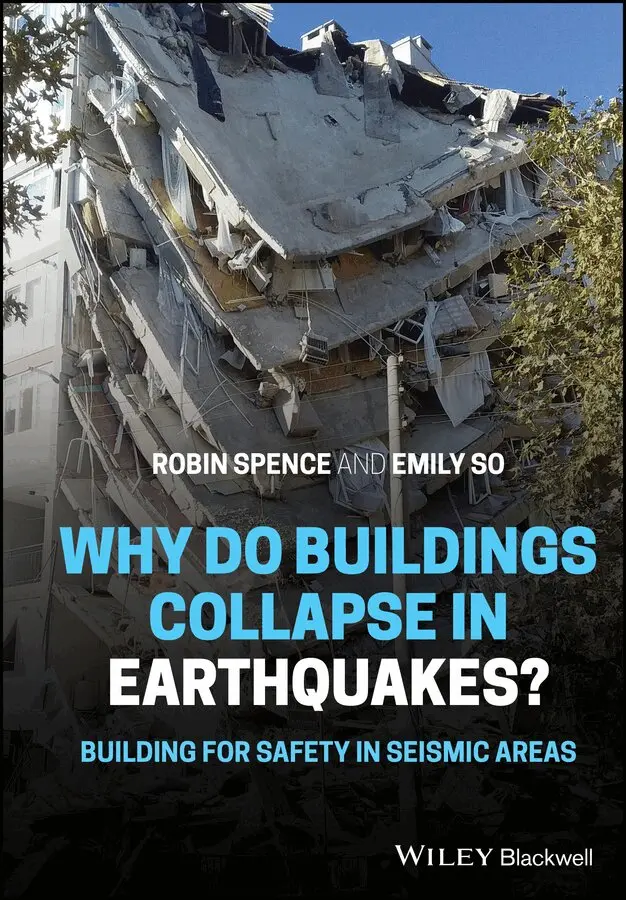
Why Do Buildings Collapse in Earthquakes? Building for Safety in Seismic Areas
Av Robin Spence, Emily So
Inbunden, 2021
1282 kr
Lägg i varukorg
WHY DO BUILDINGS COLLAPSE IN EARTHQUAKES? Learn from the personal experience and insights of leading earthquake engineering specialists as they examine the lessons from disasters of the last 30 years and propose a path to earthquake safety worldwide Why Do Buildings Collapse in Earthquakes?: …
Why Do Buildings Collapse in Earthquakes? Building for Safety in Seismic Areas
Av Emily So, Robin Spence
E-bok, 2021
1450 kr
Lägg i varukorg
WHY DO BUILDINGS COLLAPSE IN EARTHQUAKES? Learn from the personal experience and insights of leading earthquake engineering specialists as they examine the lessons from disasters of the last 30 years and propose a path to earthquake safety worldwide Why Do Buildings Collapse in Earthquakes?: …
Why Do Buildings Collapse in Earthquakes? Building for Safety in Seismic Areas
Av Emily So, Robin Spence
E-bok, 2021
1482 kr
Lägg i varukorg
WHY DO BUILDINGS COLLAPSE IN EARTHQUAKES? Learn from the personal experience and insights of leading earthquake engineering specialists as they examine the lessons from disasters of the last 30 years and propose a path to earthquake safety worldwide Why Do Buildings Collapse in Earthquakes?: …
Estimating Fatality Rates for Earthquake Loss Models
Av Emily So
Häftad, 2016
550 kr
Lägg i varukorg
This manuscript sets out a process for estimating fatalities in collapsed buildings due to ground shaking in an earthquake. The aim of this research is to supplement current earthquake loss estimation with fatality rates (percentage of occupants killed) for use in models which are based on recent …
Estimating Fatality Rates for Earthquake Loss Models
Av Emily So
E-bok, 2015
718 kr
Lägg i varukorg
This manuscript sets out a process for estimating fatalities in collapsed buildings due to ground shaking in an earthquake. The aim of this research is to supplement current earthquake loss estimation with fatality rates (percentage of occupants killed) for use in models which are based on recent …
Human Casualties in Earthquakes
Progress in Modelling and Mitigation
Av Robin Spence, Emily So m. fl.
Inbunden, 2011
1094 kr
Lägg i varukorg
Assessment of human casualties in earthquakes has become a topic of vital importance for national and urban authorities responsible for emergency provision, for the development of mitigation strategies and for the development of adequate insurance schemes. In the last few years important work has …
Human Casualties in Earthquakes
Progress in Modelling and Mitigation
Av Charles Scawthorn, Emily So m. fl.
E-bok, 2011
1459 kr
Lägg i varukorg
Assessment of human casualties in earthquakes has become a topic of vital importance for national and urban authorities responsible for emergency provision, for the development of mitigation strategies and for the development of adequate insurance schemes. In the last few years important work has …
Human Casualties in Earthquakes
Progress in Modelling and Mitigation
Av Robin Spence, Emily So m. fl.
Häftad, 2013
1094 kr
Lägg i varukorg
Assessment of human casualties in earthquakes has become a topic of vital importance for national and urban authorities responsible for emergency provision, for the development of mitigation strategies and for the development of adequate insurance schemes. In the last few years important work has …
Why do buildings collapse in earthquakes? Building for safety in seismic areas
Av Robin Spence, Emily So
2021
1363 kr
Tillfälligt slut