Robin Spence - Böcker
Visar alla böcker från författaren Robin Spence. Handla med fri frakt och snabb leverans.
9 produkter
9 produkter
728 kr
Tillfälligt slut
Since the publication of the successful first edition of Earthquake Protection there have been 110 lethal earthquakes, killing 130 000 people; there have also been significant developments in the field of earthquake risk management, particularly in the modelling and analysis of risk for insurance and financial services. Furthermore, major earthquake disasters, such as the 1994 Northridge earthquake in California, the 1995 Kobe earthquake in Japan and the 1999 Kocaeli earthquake in Turkey have occurred. The experience and knowledge gained through these events have improved our understanding of how to manage, mitigate and work towards the prevention of similar catastrophes. The 1990s were in fact the costliest decade on record in terms of disaster management due to such seismic events, placing unprecedented pressure on the insurance industry in particular, and changing its view of earthquake protection. Significantly revised and updated, this second edition continues to provide a comprehensive overview of how to reduce the impact of earthquakes on people and property, and implement best practice in managing the consequences of such disasters. It also includes significant coverage of the techniques of modelling earthquake catastrophe. Each chapter deals with a separate aspect of protection, and covers a wide range of economic and social conditions, drawing on the authors' considerable personal experience and with reference to real life examples.Key features include: Recent event coverageModern developments in the theory and practice of planning and engineering loss estimation techniques, along with new engineering techniques such as microzonation and hazard-mappingHistoric buildings experienceAn entirely new chapter on 'Earthquakes and Finance'This valuable book provides essential reading for earthquake and structural engineers and geoscientists, as well as insurers and loss prevention specialists, risk managers and assessors involved in managing earthquake risk, urban and regional planners, and emergency management agencies.
138 kr
Tillfälligt slut
Why Do Buildings Collapse in Earthquakes? Building for Safety in Seismic Areas
Inbunden, Engelska, 2021
1 164 kr
Skickas inom 7-10 vardagar
WHY DO BUILDINGS COLLAPSE IN EARTHQUAKES? Learn from the personal experience and insights of leading earthquake engineering specialists as they examine the lessons from disasters of the last 30 years and propose a path to earthquake safety worldwide Why Do Buildings Collapse in Earthquakes?: Building for Safety in Seismic Areas delivers an insightful and comprehensive analysis of the key lessons taught by building failures during earthquakes around the world. The book uses empirical evidence to describe the successes of earthquake engineering and disaster preparedness, as well as the failures that may have had tragic consequences. Readers will learn what makes buildings in earthquake zones vulnerable, what can be done to design, build and maintain those buildings to reduce or eliminate that vulnerability, and what can be done to protect building occupants. Those who are responsible for the lives and safety of building occupants and visitors—architects, designers, engineers, and building owners or managers—will learn how to provide adequate safety in earthquake zones. The text offers useful and accessible answers to anyone interested in natural disasters generally and those who have specific concerns about the impact of earthquakes on the built environment. Readers will benefit from the inclusion of: A thorough introduction to how buildings have behaved in earthquakes, including a description of the world’s most lethal earthquakes and the fatality trend over timeAn exploration of how buildings are constructed around the world, including considerations of the impact of climate and seismicity on home designA discussion of what happens during an earthquake, including the types and levels of ground motion, landslides, tsunamis, and sequential effects, and how different types of buildings tend to behave in response to those phenomena What different stakeholders can do to improve the earthquake safety of their buildingsThe owners and managers of buildings in earthquake zones and those responsible for the safety of people who occupy or visit them will find Why Do Buildings Collapse in Earthquakes? Building for Safety in Seismic Areas essential reading, as will all architects, designers and engineers who design or refurbish buildings in earthquake zones.
150 kr
Skickas inom 5-8 vardagar
190 kr
Skickas inom 5-8 vardagar
Jobs from Housing
Employment, building materials, and enabling strategies for urban development
Häftad, Engelska, 1993
200 kr
Tillfälligt slut
265 kr
Skickas inom 7-10 vardagar
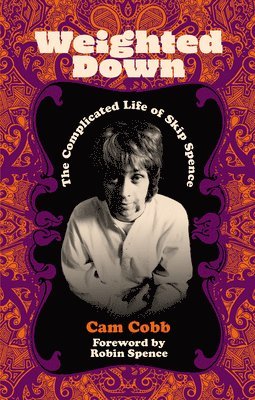
Foreword by Robin SpenceSkip Spence was a soldier, a rock star, a folkie, an innovator, an addict, a cult phenomenon and a ward of the state. The cast of characters in his story include some of the biggest stars in music: Janis Joplin, Jimi Hendrix, Neil Young and many more. His life is the story of the Sixties - it's the story of San Francisco, the biggest bands in America and rock'n'roll mayhem. Although Spence spent much of his life battling addiction and mental illness, during his lucid moments he performed in several bands and is best known for his work with Jefferson Airplane and as the co-founder of Moby Grape. Tracks from his cult solo album Oar has been covered by Tom Waits, Beck and Robert Plant. With family photos, a foreword by Robin Spence, and accounts from his friends, bandmates and family, Weighted Down is the first book to tell his story in full.
1 064 kr
Skickas inom 10-15 vardagar
Assessment of human casualties in earthquakes has become a topic of vital importance for national and urban authorities responsible for emergency provision, for the development of mitigation strategies and for the development of adequate insurance schemes. In the last few years important work has been carried out on a number of recent events (including earthquakes in Kocaeli, Turkey 1999, Niigata Japan, 2004, Sichuan, China 2008 and L'Aquila,Italy 2009). These events have created new and detailed casualty data, which has not until now been properly assembled and evaluated.This book draws the new evidence from recent events together with existing knowledge. It summarises current trends in the understanding of the factors influencing the numbers and types of casualties in earthquakes; it offers methods to incorporate this understanding into the estimation of losses in future events in different parts of the world; it discusses ways in which pre-event mitigation activity and post-event emergency management can reduce the toll of casualties in future events; and it identifies future research needs.
1 064 kr
Skickas inom 10-15 vardagar
Assessment of human casualties in earthquakes has become a topic of vital importance for national and urban authorities responsible for emergency provision, for the development of mitigation strategies and for the development of adequate insurance schemes. In the last few years important work has been carried out on a number of recent events (including earthquakes in Kocaeli, Turkey 1999, Niigata Japan, 2004, Sichuan, China 2008 and L'Aquila,Italy 2009). These events have created new and detailed casualty data, which has not until now been properly assembled and evaluated.This book draws the new evidence from recent events together with existing knowledge. It summarises current trends in the understanding of the factors influencing the numbers and types of casualties in earthquakes; it offers methods to incorporate this understanding into the estimation of losses in future events in different parts of the world; it discusses ways in which pre-event mitigation activity and post-event emergency management can reduce the toll of casualties in future events; and it identifies future research needs.