Emma-Jayne Graham – författare
Visar alla böcker från författaren Emma-Jayne Graham. Handla med fri frakt och snabb leverans.
5 produkter
5 produkter
653 kr
Skickas inom 10-15 vardagar
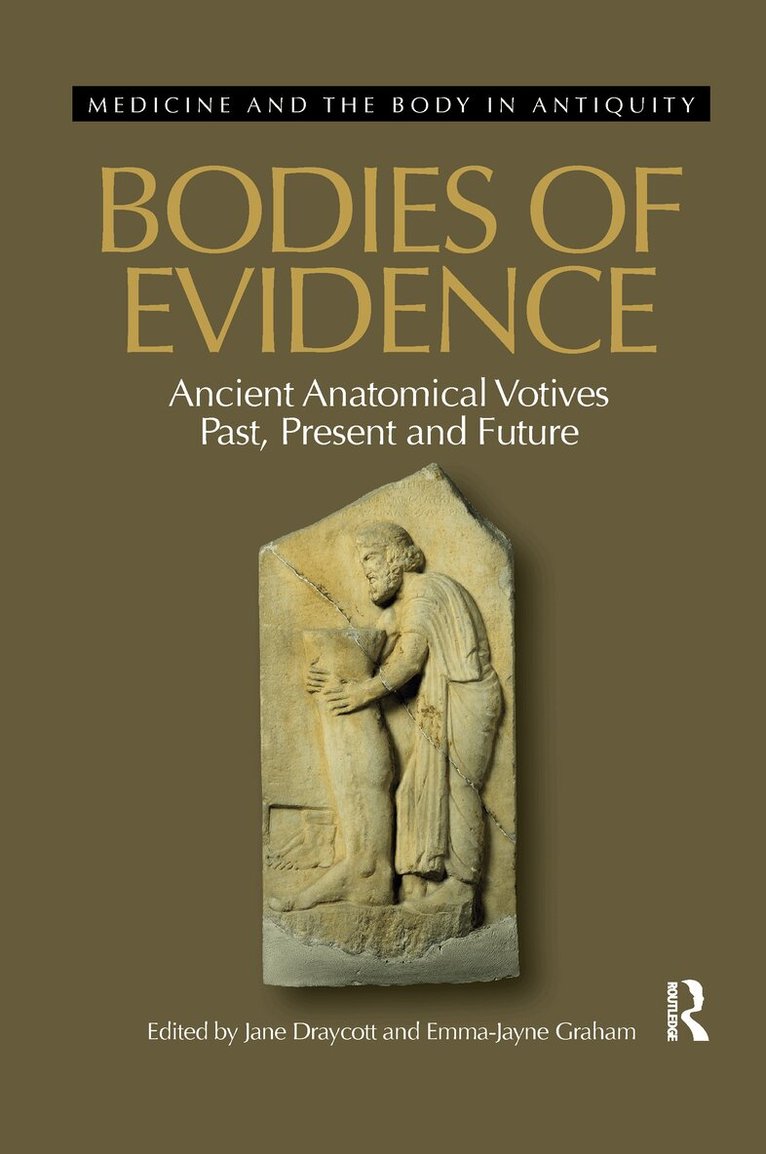
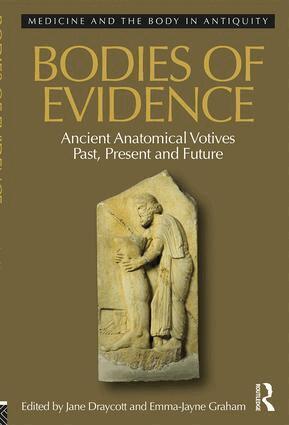
Dedicating objects to the divine was a central component of both Greek and Roman religion. Some of the most conspicuous offerings were shaped like parts of the internal or external human body: so-called ‘anatomical votives’. These archaeological artefacts capture the modern imagination, recalling vividly the physical and fragile bodies of the past whilst posing interpretative challenges in the present. This volume scrutinises this distinctive dedicatory phenomenon, bringing together for the first time a range of methodologically diverse approaches which challenge traditional assumptions and simple categorisations. The chapters presented here ask new questions about what constitutes an anatomical votive, how they were used and manipulated in cultural, cultic and curative contexts and the complex role of anatomical votives in negotiations between humans and gods, the body and its disparate parts, divine and medical healing, ancient assemblages and modern collections and collectors. In seeking to re-contextualise and re-conceptualise anatomical votives this volume uniquely juxtaposes the medical with the religious, the social with the conceptual, the idea of the body in fragments with the body whole and the museum with the sanctuary, crossing the boundaries between studies of ancient religion, medicine, the body and the reception of antiquity.
596 kr
Skickas inom 10-15 vardagar
This book examines the ways in which lived religion in Roman Italy involved personal and communal experiences of the religious agency generated when ritualised activities caused human and more-than-human things to become bundled together into relational assemblages. Drawing upon broadly posthumanist and new materialist theories concerning the thingliness of things, it sets out to re-evaluate the role of the material world within Roman religion and to offer new perspectives on the formation of multi-scalar forms of ancient religious knowledge. It explores what happens when a materially informed approach is systematically applied to the investigation of typical questions about Roman religion such as: What did Romans understand ‘religion’ to mean? What did religious experiences allow people to understand about the material world and their own place within it? How were experiences of ritual connected with shared beliefs or concepts about the relationship between the mortal and divine worlds? How was divinity constructed and perceived? To answer these questions, it gathers and evaluates archaeological evidence associated with a series of case studies. Each of these focuses on a key component of the ritualised assemblages shown to have produced Roman religious agency – place, objects, bodies, and divinity – and centres on an examination of experiences of lived religion as it related to the contexts of monumentalised sanctuaries, cult instruments used in public sacrifice, anatomical votive offerings, cult images and the qualities of divinity, and magic as a situationally specific form of religious knowledge. By breaking down and then reconstructing the ritualised assemblages that generated and sustained Roman religion, this book makes the case for adopting a material approach to the study of ancient lived religion.
2 182 kr
Skickas inom 10-15 vardagar
This book examines the ways in which lived religion in Roman Italy involved personal and communal experiences of the religious agency generated when ritualised activities caused human and more-than-human things to become bundled together into relational assemblages. Drawing upon broadly posthumanist and new materialist theories concerning the thingliness of things, it sets out to re-evaluate the role of the material world within Roman religion and to offer new perspectives on the formation of multi-scalar forms of ancient religious knowledge. It explores what happens when a materially informed approach is systematically applied to the investigation of typical questions about Roman religion such as: What did Romans understand ‘religion’ to mean? What did religious experiences allow people to understand about the material world and their own place within it? How were experiences of ritual connected with shared beliefs or concepts about the relationship between the mortal and divine worlds? How was divinity constructed and perceived? To answer these questions, it gathers and evaluates archaeological evidence associated with a series of case studies. Each of these focuses on a key component of the ritualised assemblages shown to have produced Roman religious agency – place, objects, bodies, and divinity – and centres on an examination of experiences of lived religion as it related to the contexts of monumentalised sanctuaries, cult instruments used in public sacrifice, anatomical votive offerings, cult images and the qualities of divinity, and magic as a situationally specific form of religious knowledge. By breaking down and then reconstructing the ritualised assemblages that generated and sustained Roman religion, this book makes the case for adopting a material approach to the study of ancient lived religion.
2 322 kr
Skickas inom 10-15 vardagar
Dedicating objects to the divine was a central component of both Greek and Roman religion. Some of the most conspicuous offerings were shaped like parts of the internal or external human body: so-called ‘anatomical votives’. These archaeological artefacts capture the modern imagination, recalling vividly the physical and fragile bodies of the past whilst posing interpretative challenges in the present. This volume scrutinises this distinctive dedicatory phenomenon, bringing together for the first time a range of methodologically diverse approaches which challenge traditional assumptions and simple categorisations. The chapters presented here ask new questions about what constitutes an anatomical votive, how they were used and manipulated in cultural, cultic and curative contexts and the complex role of anatomical votives in negotiations between humans and gods, the body and its disparate parts, divine and medical healing, ancient assemblages and modern collections and collectors. In seeking to re-contextualise and re-conceptualise anatomical votives this volume uniquely juxtaposes the medical with the religious, the social with the conceptual, the idea of the body in fragments with the body whole and the museum with the sanctuary, crossing the boundaries between studies of ancient religion, medicine, the body and the reception of antiquity.
542 kr
Skickas inom 5-8 vardagar