Eors Szathmary – författare
Visar alla böcker från författaren Eors Szathmary. Handla med fri frakt och snabb leverans.
6 produkter
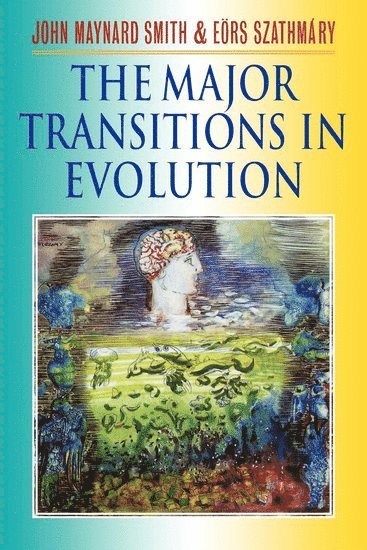
The Major Transitions in Evolution
Av John Maynard Smith, Eors Szathmary
Häftad, 1997
1536 kr
Lägg i varukorg
During evolution, there have been several major changes in the way that genetic information is organized and transmitted from one generation to the next. These transitions include the origin of life itself, the first eukaryotic cells, reproduction by sexual means, the appearance of multicellular …
Major Transitions in Evolution
Av Eors Szathmary, John Maynard Smith
E-bok, 1997
1064 kr
Lägg i varukorg
During evolution, there have been several major changes in the way that genetic information is organized and transmitted from one generation to the next. These transitions include the origin of life itself, the first eukaryotic cells, reproduction by sexual means, the appearance of multicellular …
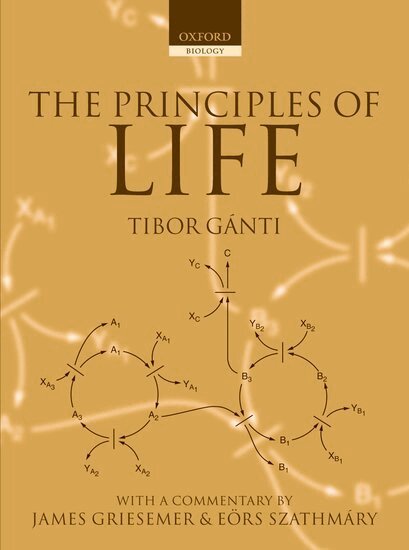
The Principles of Life
Av Tibor Ganti, Eors Szathmary m. fl.
Inbunden, 2003
2994 kr
Lägg i varukorg
The exact scientific answer to these ancient questions are indispensable preconditions for the understanding of the origins of life, for the artificial synthesis of living systems, but also for some important social problems, such as the beginning and the end of the human life etc.Professor Gánti …
Biological Foundations and Origin of Syntax
Av Derek Bickerton, Eors Szathmary
Häftad, 2023
791 kr
Lägg i varukorg
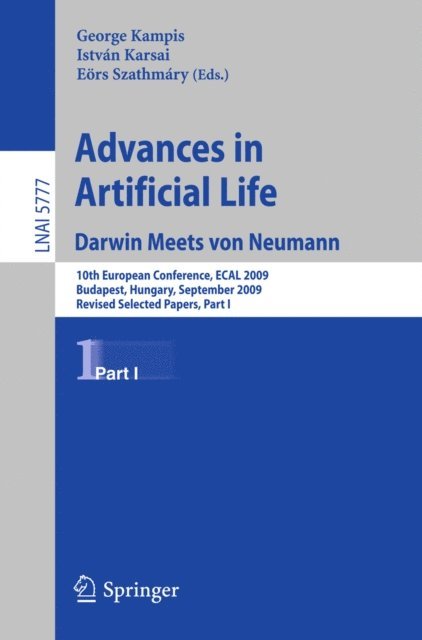
Advances in Artificial Life
10th European Conference, ECAL 2009, Budapest, Hungary, September 13-16, 2009, Revised Selected Papers, Part I
Av Eors Szathmary, Istvan Karsai m. fl.
E-bok, 2011
734 kr
Lägg i varukorg
The two-volume set LNAI 5777 and LNAI 5778 constitutes the thoroughly refereed post-conference proceedings of the 10th European Conference, ECAl 2009, held in Budapest, Hungary, in September 2009. The 141 revised full papers presented were carefully reviewed and selected from161 submissions. The …
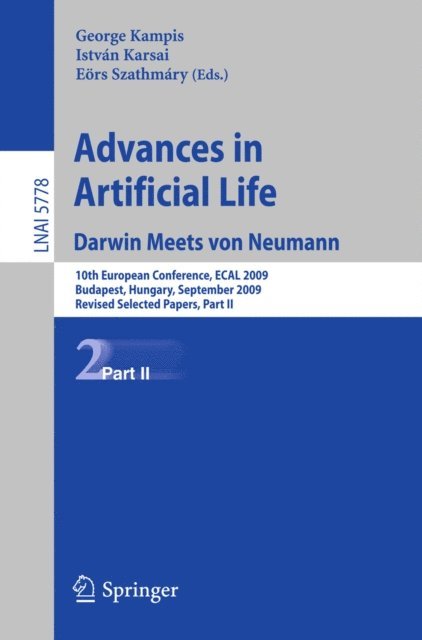
Advances in Artificial Life
10th European Conference, ECAL 2009, Budapest, Hungary, September 13-16, 2009, Revised Selected Papers
Av Eors Szathmary, Istvan Karsai m. fl.
E-bok, 2011
734 kr
Lägg i varukorg
The two-volume set LNAI 5777 and LNAI 5778 constitutes the thoroughly refereed post-conference proceedings of the 10th European Conference, ECAl 2009, held in Budapest, Hungary, in September 2009. The 141 revised full papers presented were carefully reviewed and selected from161 submissions. The …