Ephraim Nissan - Böcker
Visar alla böcker från författaren Ephraim Nissan. Handla med fri frakt och snabb leverans.
7 produkter
7 produkter
1 397 kr
Skickas inom 10-15 vardagar
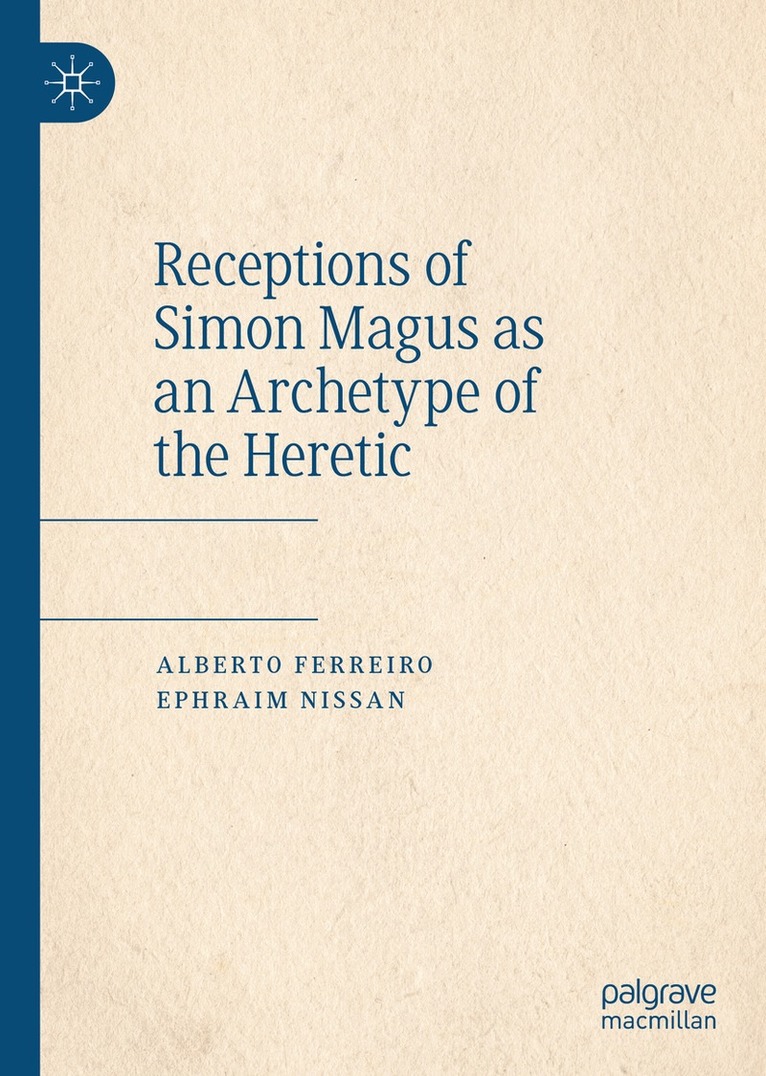
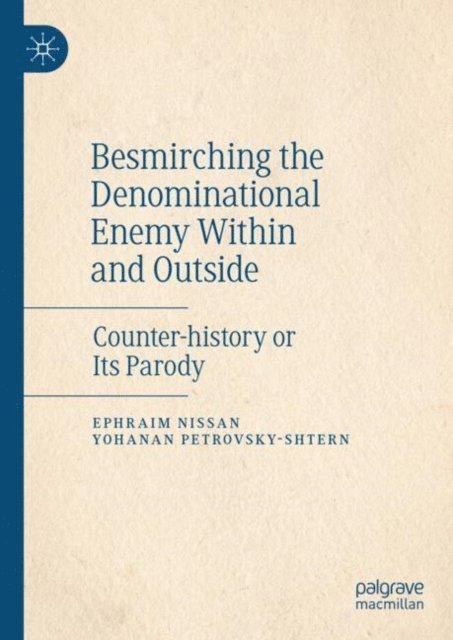
This book about receptions of Simon Magus uncovers further facets of one who was held to be the evil archetype of heretics.
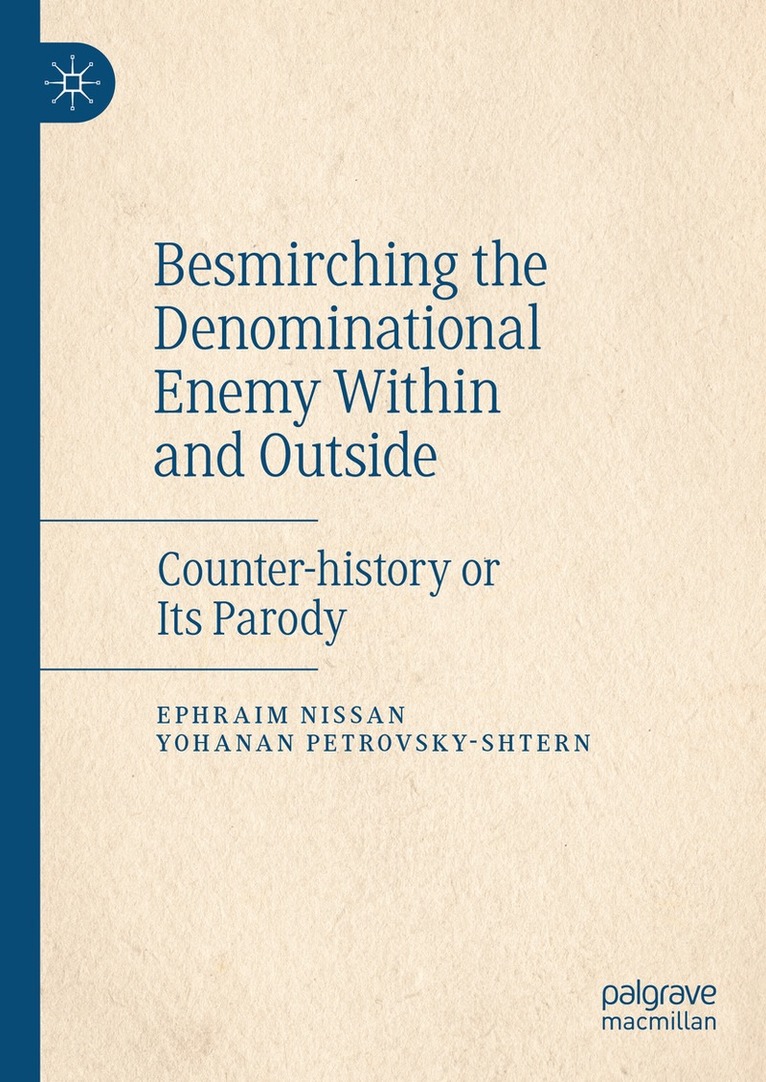
Besmirching the Denominational Enemy Within and Outside
Counter-history or Its Parody
Inbunden, Engelska, 2024
1 170 kr
Skickas inom 10-15 vardagar
Counter-hagiography and counter-biography besmirch foundational figures held dear by different religious, political, or social groups. The reputation of the great Haskalah (Jewish Enlightenment) thinker Moses Mendelssohn was damaged among the Orthodox by how Haskalah extremists portrayed him in their image.
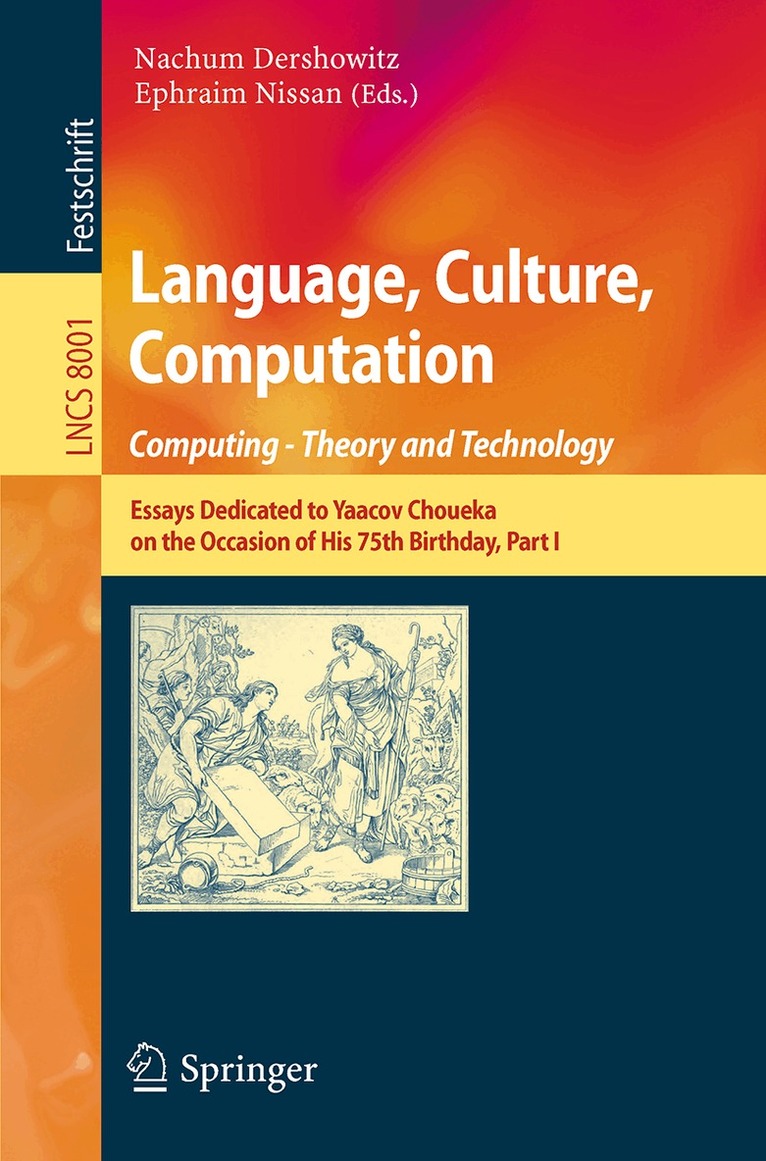
Language, Culture, Computation: Computing - Theory and Technology
Essays Dedicated to Yaacov Choueka on the Occasion of His 75 Birthday, Part I
Häftad, Engelska, 2014
552 kr
Skickas inom 10-15 vardagar
Yaacov's research has had a major impact not only within the walls of academia, but also in the daily life of lay users of such technology that originated from his research. Yaacov Choueka began his research career in the theory of computer science, dealing with basic questions regarding the relation between mathematical logic and automata theory.
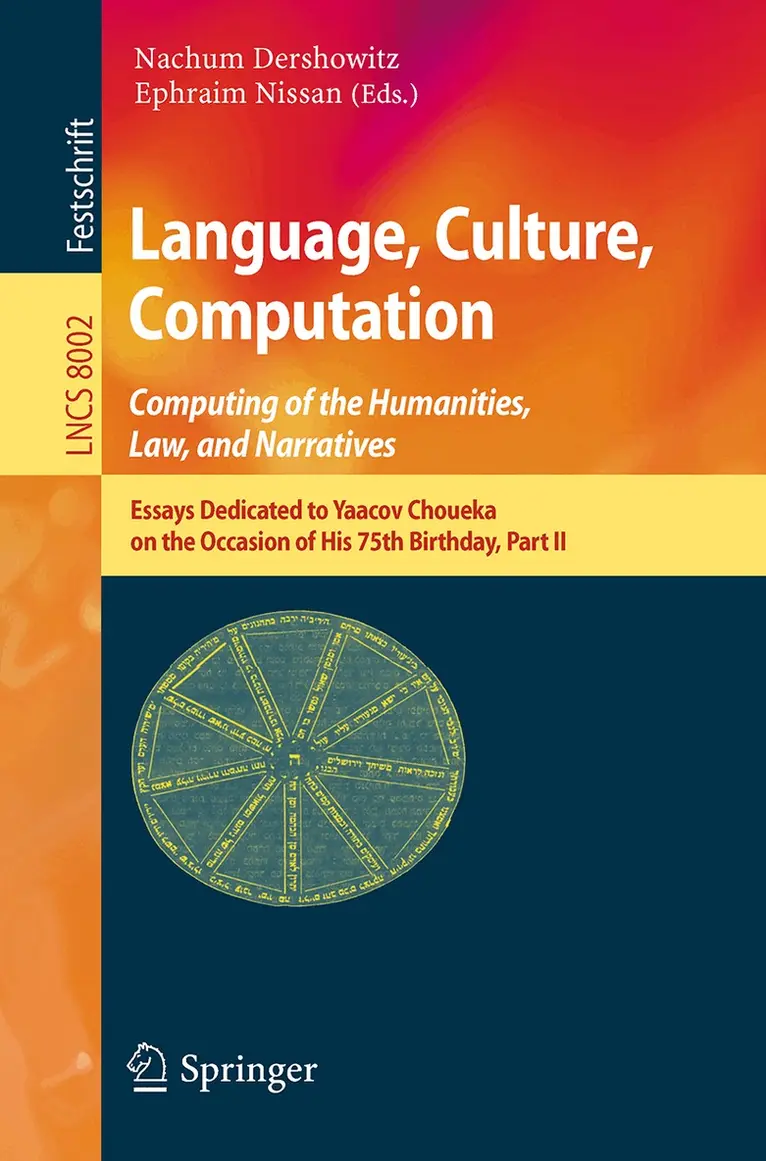
Language, Culture, Computation: Computing for the Humanities, Law, and Narratives
Essays Dedicated to Yaacov Choueka on the Occasion of His 75 Birthday, Part II
Häftad, Engelska, 2014
552 kr
Skickas inom 10-15 vardagar
More recently, he has headed the Friedberg Genizah Project, which is bringing the treasures of the Cairo Genizah into the Digital Age. This second part of the three-volume set covers a range of topics related to the application of information technology in humanities, law, and narratives.
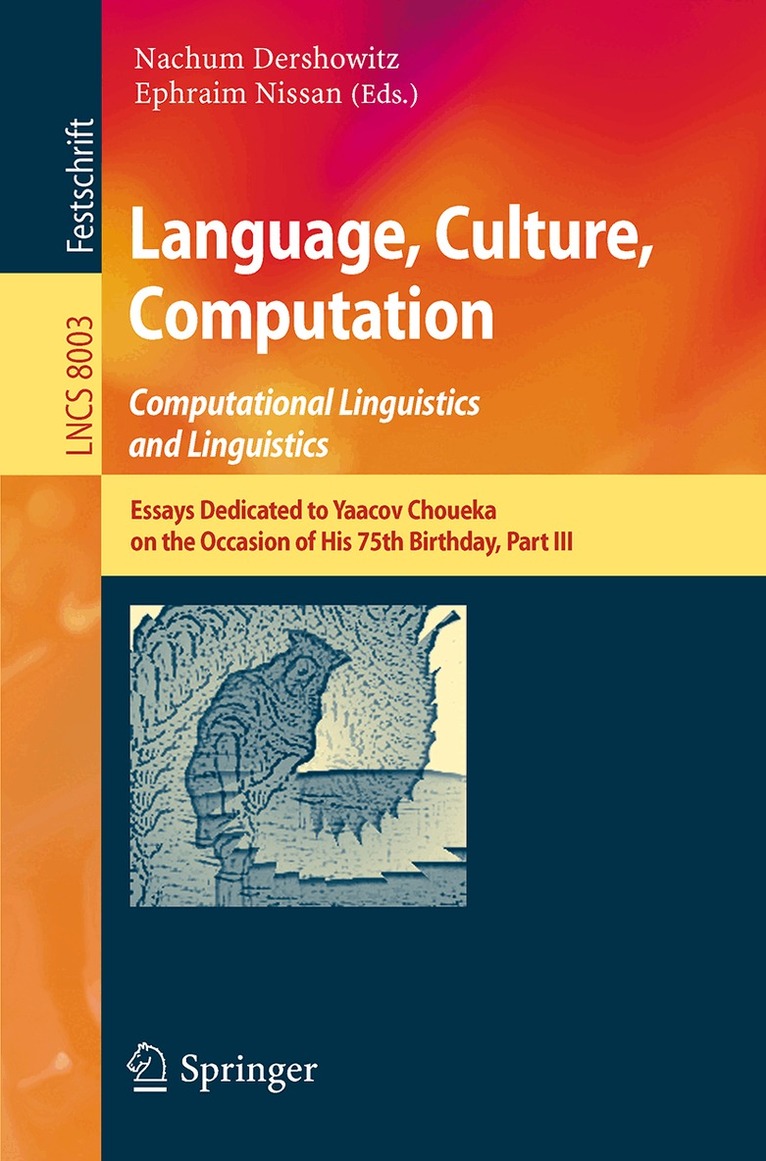
Language, Culture, Computation: Computational Linguistics and Linguistics
Essays Dedicated to Yaacov Choueka on the Occasion of His 75 Birthday, Part III
Häftad, Engelska, 2014
552 kr
Skickas inom 10-15 vardagar
From formal languages, Yaacov moved to natural languages. This third part of the three-volume set covers a range of topics related to language, ranging from linguistics to applications of computation to language, using linguistic tools.
2 478 kr
Skickas inom 10-15 vardagar
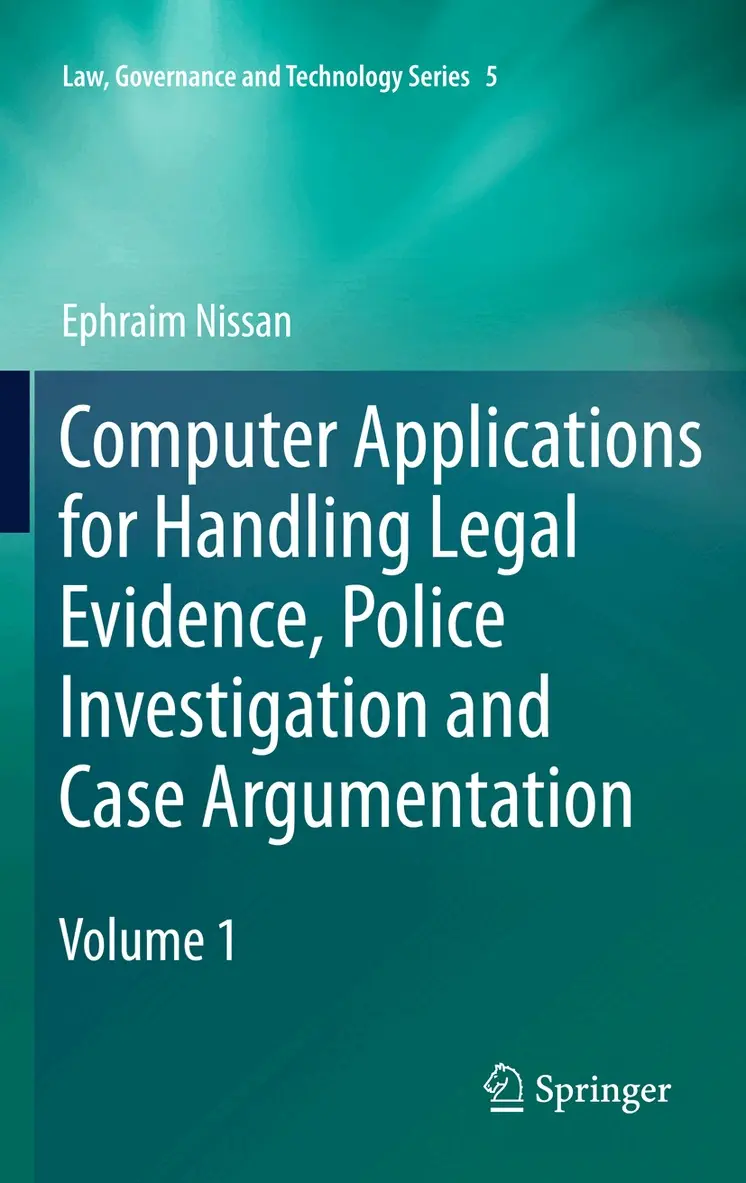
This book provides an overview of computer techniques and tools — especially from artificial intelligence (AI) — for handling legal evidence, police intelligence, crime analysis or detection, and forensic testing, with a sustained discussion of methods for the modelling of reasoning and forming an opinion about the evidence, methods for the modelling of argumentation, and computational approaches to dealing with legal, or any, narratives. By the 2000s, the modelling of reasoning on legal evidence has emerged as a significant area within the well-established field of AI & Law. An overview such as this one has never been attempted before. It offers a panoramic view of topics, techniques and tools. It is more than a survey, as topic after topic, the reader can get a closer view of approaches and techniques. One aim is to introduce practitioners of AI to the modelling legal evidence. Another aim is to introduce legal professionals, as well as the more technically oriented among law enforcement professionals, or researchers in police science, to information technology resources from which their own respective field stands to benefit. Computer scientists must not blunder into design choices resulting in tools objectionable for legal professionals, so it is important to be aware of ongoing controversies. A survey is provided of argumentation tools or methods for reasoning about the evidence. Another class of tools considered here is intended to assist in organisational aspects of managing of the evidence. Moreover, tools appropriate for crime detection, intelligence, and investigation include tools based on link analysis and data mining. Concepts and techniques are introduced, along with case studies. So are areas in the forensic sciences. Special chapters are devoted to VIRTOPSY (a procedure for legal medicine) and FLINTS (a tool for the police). This is both an introductory book (possibly a textbook), and a reference for specialists fromvarious quarters.
2 478 kr
Skickas inom 10-15 vardagar
This book provides an overview of computer techniques and tools — especially from artificial intelligence (AI) — for handling legal evidence, police intelligence, crime analysis or detection, and forensic testing, with a sustained discussion of methods for the modelling of reasoning and forming an opinion about the evidence, methods for the modelling of argumentation, and computational approaches to dealing with legal, or any, narratives. By the 2000s, the modelling of reasoning on legal evidence has emerged as a significant area within the well-established field of AI & Law. An overview such as this one has never been attempted before. It offers a panoramic view of topics, techniques and tools. It is more than a survey, as topic after topic, the reader can get a closer view of approaches and techniques. One aim is to introduce practitioners of AI to the modelling legal evidence. Another aim is to introduce legal professionals, as well as the more technically oriented among law enforcement professionals, or researchers in police science, to information technology resources from which their own respective field stands to benefit. Computer scientists must not blunder into design choices resulting in tools objectionable for legal professionals, so it is important to be aware of ongoing controversies. A survey is provided of argumentation tools or methods for reasoning about the evidence. Another class of tools considered here is intended to assist in organisational aspects of managing of the evidence. Moreover, tools appropriate for crime detection, intelligence, and investigation include tools based on link analysis and data mining. Concepts and techniques are introduced, along with case studies. So are areas in the forensic sciences. Special chapters are devoted to VIRTOPSY (a procedure for legal medicine) and FLINTS (a tool for the police). This is both an introductory book (possibly a textbook), and a reference for specialists fromvarious quarters.