Ephrat Huss – författare
605 kr
Skickas inom 10-15 vardagar
491 kr
Skickas inom 10-15 vardagar
2 002 kr
Skickas inom 10-15 vardagar
2 013 kr
Skickas inom 10-15 vardagar
2 073 kr
Skickas inom 10-15 vardagar
715 kr
Skickas inom 10-15 vardagar
568 kr
Läs direkt efter köp
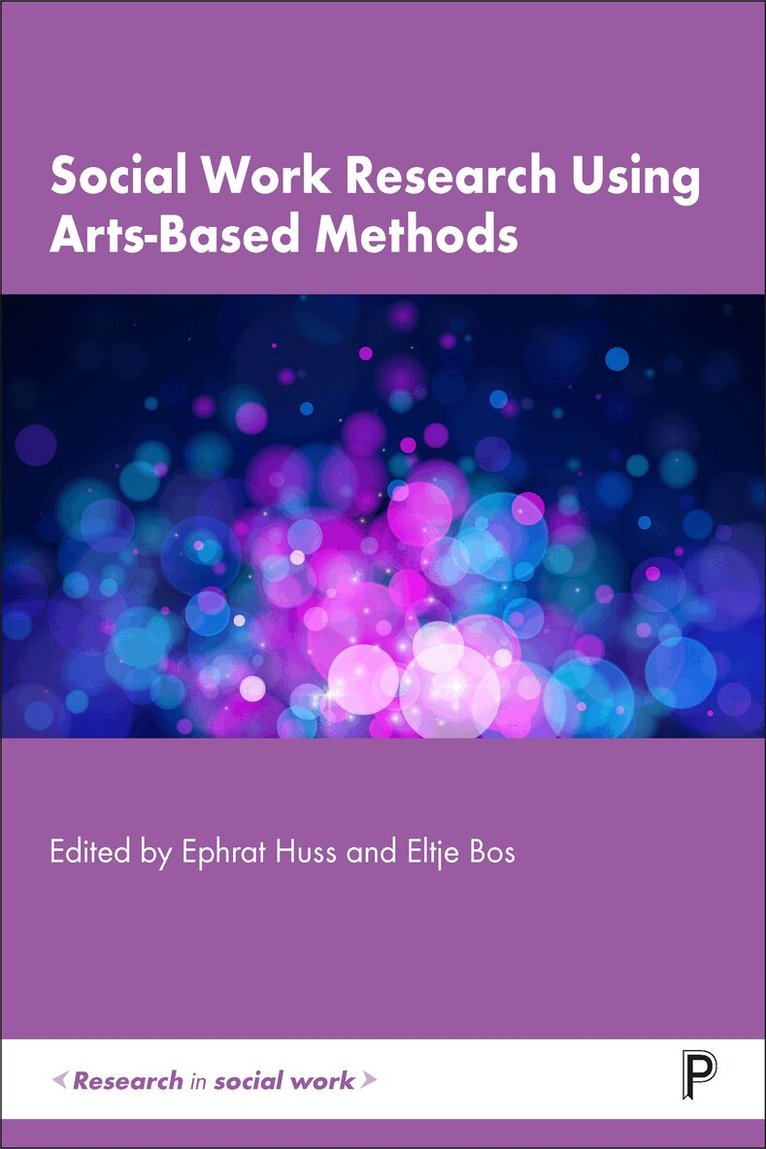
Social arts are manifold and are initiated by multiple actors, spaces, and direction from many directions and intentions, but generally they aim to generate personal, familial, group, community or general social transformation which can maintain and enhance personal and community resilience, communication, negotiation, and transitions, as well as help with community building and rehabilitation, civic engagement, social inclusion, and cohesion. Occurring via community empowerment, institutions, arts in health, inter-ethnic conflict, and frames of lobbying for social change, social art can transform and disrupt power relations and hegemonic narratives, destigmatize marginalized groups, and humanize society through creating empathy for the other.
This book provides a broad range of all of the above, with multiple international examples of projects (photo-voice, community theater, crafts groups for empowerment, creative place-making, arts in institutions, and arts-based participatory research) that is initiated by social practitioners and by artists – and in collaboration between the two. The aim of this book is to help to illustrate, explore, and demystify this interdisciplinary area of practice.
With methods and theoretical orientation as the focus of each chapter, the book can be used both in academic settings and for training social and art practitioners, as well as for social practitioners and artists in the field.
568 kr
Läs direkt efter köp
Social arts are manifold and are initiated by multiple actors, spaces, and direction from many directions and intentions, but generally they aim to generate personal, familial, group, community or general social transformation which can maintain and enhance personal and community resilience, communication, negotiation, and transitions, as well as help with community building and rehabilitation, civic engagement, social inclusion, and cohesion. Occurring via community empowerment, institutions, arts in health, inter-ethnic conflict, and frames of lobbying for social change, social art can transform and disrupt power relations and hegemonic narratives, destigmatize marginalized groups, and humanize society through creating empathy for the other.
This book provides a broad range of all of the above, with multiple international examples of projects (photo-voice, community theater, crafts groups for empowerment, creative place-making, arts in institutions, and arts-based participatory research) that is initiated by social practitioners and by artists – and in collaboration between the two. The aim of this book is to help to illustrate, explore, and demystify this interdisciplinary area of practice.
With methods and theoretical orientation as the focus of each chapter, the book can be used both in academic settings and for training social and art practitioners, as well as for social practitioners and artists in the field.
811 kr
Läs direkt efter köp
Image-based research methods, such as arts-based research, can fill the absence of the voice of impoverished, under-privileged populations. In What We See and What We Say, Ephrat Huss argues that images are deep and universally psycho-neurological constructs through which people process their experiences. The theoretical model demonstrated in this book demonstrates that images can be used to enable three different levels of communication: with self, with others similar to oneself, and with others who differ in terms of culture and power. Dr. Huss centers her argument on a case study of impoverished Bedouin women’s groups in Israel who used art as self-expression, and includes many additional examples such as unemployed women and teenage girls in slums, women who have underwent sexual abuse, and the experiences of illegal immigrants. Ultimately, the author points to how the inherent structural characteristics of images help to intensify the voices of marginalized groups in research, therapy, empowerment, and social action.
811 kr
Läs direkt efter köp
Image-based research methods, such as arts-based research, can fill the absence of the voice of impoverished, under-privileged populations. In What We See and What We Say, Ephrat Huss argues that images are deep and universally psycho-neurological constructs through which people process their experiences. The theoretical model demonstrated in this book demonstrates that images can be used to enable three different levels of communication: with self, with others similar to oneself, and with others who differ in terms of culture and power. Dr. Huss centers her argument on a case study of impoverished Bedouin women’s groups in Israel who used art as self-expression, and includes many additional examples such as unemployed women and teenage girls in slums, women who have underwent sexual abuse, and the experiences of illegal immigrants. Ultimately, the author points to how the inherent structural characteristics of images help to intensify the voices of marginalized groups in research, therapy, empowerment, and social action.
740 kr
Skickas inom 10-15 vardagar
2 215 kr
Skickas inom 10-15 vardagar
785 kr
Läs direkt efter köp
Art therapy literature is often based either on practice in a specific setting, art material or population, or if taking a more theoretical focus, on illustrative case studies. This book provides a theory-based approach to research, teaching, and practicing art therapy, including verbal and arts based techniques, settings, art processes and analyses, and the principles of supervision, evaluation, and research. It also offers an overview and discussion of how the different orientations of psychological and social theories are interpreted and implemented by art therapy.
The book provides an integrative perspective that anchors methodology within a rigorous theoretical background. Focusing on three sub-groups of Dynamic, Humanistic and Systemic-social theories, each chapter outlines the central concepts of varying sub-theories within a general heading, and their interpretation from an art therapy perspective. Ephrat Huss explores the respective and shifting roles of art, client, and therapist through each theory, demonstrating the practical implications for creating a coherent intervention that informs all parts of the setting, therapy, client evaluation, and supervision.
A Theory-based Approach to Art Therapy draws on the latest research in the field and will be a valuable text for art therapy theorists, educators, students and researchers, as well as for other social practitioners interested in understanding how to integrate the arts into their practice.
792 kr
Läs direkt efter köp
Art therapy literature is often based either on practice in a specific setting, art material or population, or if taking a more theoretical focus, on illustrative case studies. This book provides a theory-based approach to research, teaching, and practicing art therapy, including verbal and arts based techniques, settings, art processes and analyses, and the principles of supervision, evaluation, and research. It also offers an overview and discussion of how the different orientations of psychological and social theories are interpreted and implemented by art therapy.
The book provides an integrative perspective that anchors methodology within a rigorous theoretical background. Focusing on three sub-groups of Dynamic, Humanistic and Systemic-social theories, each chapter outlines the central concepts of varying sub-theories within a general heading, and their interpretation from an art therapy perspective. Ephrat Huss explores the respective and shifting roles of art, client, and therapist through each theory, demonstrating the practical implications for creating a coherent intervention that informs all parts of the setting, therapy, client evaluation, and supervision.
A Theory-based Approach to Art Therapy draws on the latest research in the field and will be a valuable text for art therapy theorists, educators, students and researchers, as well as for other social practitioners interested in understanding how to integrate the arts into their practice.
702 kr
Läs direkt efter köp
This is the first book ever to be published on arts use in social work. Bringing together theoretical connections between arts and social work, and with practice examples of arts in micro and macro social work practice from around the world, the book aims to inspire the reader with new ideas. It provides specific skills, defines what is social rather than fine or projective art use, and explains the theoretical connection between art and social work. It has chapters from all over the world, showing how arts are adjusted to different cultural contexts.
Section I explores the theoretical connections between art and social work, including theories of resilience, empowerment, inclusion and creativity as they relate to art use in social work. Section II describes specific interventions with different populations. Each chapter also summarizes the skills and hands-on knowledge needed for social workers to use the practical elements of using arts for social workers not trained in these fields. The third section does the same for arts use in community work and as social change and policy.
Using Art in Social Work Practice provides theoretical but also hands-on knowledge about using arts in social work. It extends the fields of both social work and arts therapy and serves as a key resource for students, academics and practitioners interested in gaining the theoretical understanding and specific skills for using social arts in social work, and for arts therapists interested in using social theories.
702 kr
Läs direkt efter köp
This is the first book ever to be published on arts use in social work. Bringing together theoretical connections between arts and social work, and with practice examples of arts in micro and macro social work practice from around the world, the book aims to inspire the reader with new ideas. It provides specific skills, defines what is social rather than fine or projective art use, and explains the theoretical connection between art and social work. It has chapters from all over the world, showing how arts are adjusted to different cultural contexts.
Section I explores the theoretical connections between art and social work, including theories of resilience, empowerment, inclusion and creativity as they relate to art use in social work. Section II describes specific interventions with different populations. Each chapter also summarizes the skills and hands-on knowledge needed for social workers to use the practical elements of using arts for social workers not trained in these fields. The third section does the same for arts use in community work and as social change and policy.
Using Art in Social Work Practice provides theoretical but also hands-on knowledge about using arts in social work. It extends the fields of both social work and arts therapy and serves as a key resource for students, academics and practitioners interested in gaining the theoretical understanding and specific skills for using social arts in social work, and for arts therapists interested in using social theories.
980 kr
Skickas
379 kr
Skickas