• Fri frakt över 249 kr
  • •
  • Snabba leveranser
  • •
  • Billiga böcker
Kundservice

Du är på sajten för privatpersoner.

Företag, bibliotek eller offentlig verksamhet?

Du handlar på classic.bokus.com, där alla dina funktioner finns intakta.
Till classic.bokus.com
Bokus logotyp. Gå till startsidan.
  • Erbjudanden
  • Nyheter
  • Student
  • Topplistor
  • Barn & ungdom
  • Bokus Play
  • E-böcker
  • Pocketböcker
  • Spel & pussel

10% rabatt på allt med kod: NYSTART10 →

Sidfot

Mina sidor

    Hjälp

    • Kundservice
    • Vanliga frågor och svar
    • Frakt och leverans
    • Retur vid ångerrätt
    • Reklamera vara
    • Betalning
    • Köpvillkor
    • Allmänna villkor
    • Information om webbplatsens tillgänglighet

    Om Bokus

    • Om oss
    • Pressrum
    • För studenter
    • För företag
    • För bibliotek och offentlig verksamhet
    • För leverantörer
    • Hållbarhet

    Populärt

    • Aktuella erbjudanden
    • Presentkort
    • Studentlitteratur
    • Nya böcker
    • Topplistor
    • Signerade böcker
    • Engelska böcker

    Inspiration

    • Boktips
    • BookTok
    • Populära bokserier
    • Barnbokskaraktärer
    • Populära författare
    Logotyp för Bokus
    Följ oss på Facebook (extern länk)Följ oss på Instagram (extern länk)Följ oss på YouTube (extern länk)Följ oss på TikTok (extern länk)
    bokus @ CookiesAnpassa cookiesIntegritetspolicyKöpvillkor
    Till Citymail hemsida (extern länk)Till Budbee hemsida (extern länk)Till Postnord hemsida (extern länk)Till Schenker hemsida (extern länk)Till Early Bird hemsida (extern länk)Till Walleys hemsida (extern länk)
    1. Samhälle och politik
    2. Samhälle och kultur
    3. Kultur och medier
    4. Referensverk och tvärvetenskap

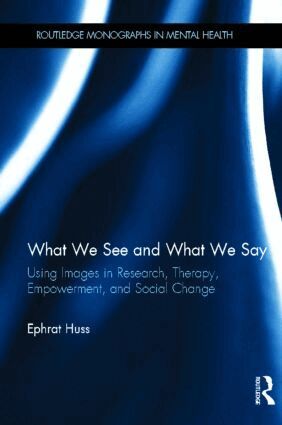
    What We See and What We Say

    Using Images in Research, Therapy, Empowerment, and Social Change

    AvEphrat Huss

    Inbunden, Engelska, 2012

    Del i serien Routledge Monographs in Mental Health

    2 495 kr

    Beställningsvara. Skickas inom 10-15 vardagar. Fri frakt över 249 kr.

    Fler format och utgåvor

    E-bok

    967 kr

    E-bok

    970 kr

    Häftad

    793 kr

    Beskrivning

    Image-based research methods, such as arts-based research, can fill the absence of the voice of impoverished, under-privileged populations. In What We See and What We Say, Ephrat Huss argues that images are deep and universally psycho-neurological constructs through which people process their experiences. The theoretical model demonstrated in this book demonstrates that images can be used to enable three different levels of communication: with self, with others similar to oneself, and with others who differ in terms of culture and power. Dr. Huss centers her argument on a case study of impoverished Bedouin women’s groups in Israel who used art as self-expression, and includes many additional examples such as unemployed women and teenage girls in slums, women who have underwent sexual abuse, and the experiences of illegal immigrants. Ultimately, the author points to how the inherent structural characteristics of images help to intensify the voices of marginalized groups in research, therapy, empowerment, and social action.

    Produktinformation

    • Utgivningsdatum:2012-12-10
    • Mått:152 x 229 x 13 mm
    • Vikt:340 g
    • Format:Inbunden
    • Språk:Engelska
    • Serie:Routledge Monographs in Mental Health
    • Antal sidor:160
    • Förlag:Taylor & Francis Ltd
    • ISBN:9780415510356

    Utforska kategorier

    • Referensverk och tvärvetenskap inom Samhälle och politik
    • Sociologi inom Samhälle och politik
    • Psykoterapi som behandlingsmetod inom Medicin

    Mer om författaren

    Ephrat Huss, PhD,is an art therapist, a social worker, and a senior lecturer and founder of the Arts in Social Work Masters Specialization at the Charlotte B. and Jack J. Spirtzer Department of Social Work at Ben-Gurion University of the Negev in Israel.

    Innehållsförteckning

    • Introduction Part I: Art as a Speech Act from the Margins: A Case Study of Impoverished Bedouin Women's Images 1. Social Context: Background to the Bedouin Women's Case Study 2. Working with Images: Method of the Case Study 3. Bedouin Women's Images on the Level of Content 4. Pain and Resilience as Seen in the Compositional Elements of the Bedouin Women's Images Part II: Using Images from a Socially Contextualized Perspective within Social Research and Practice 5. Using Images in Research from a Social Perspective 6. Methodological Implications of Using Images within Research 7. Art Therapy: The Missing Social Theory of Art Therapy 8. Methodology of a Socially Contextualized Art Therapy 9. Images as Group Empowerment and Action 10. Images in Conflict Negotiation with Power Holders 11. Summary