Erdmut Wizisla – författare
Visar alla böcker från författaren Erdmut Wizisla. Handla med fri frakt och snabb leverans.
7 produkter
7 produkter
Häftad, Engelska, 2016
441 kr
Skickas inom 3-6 vardagar
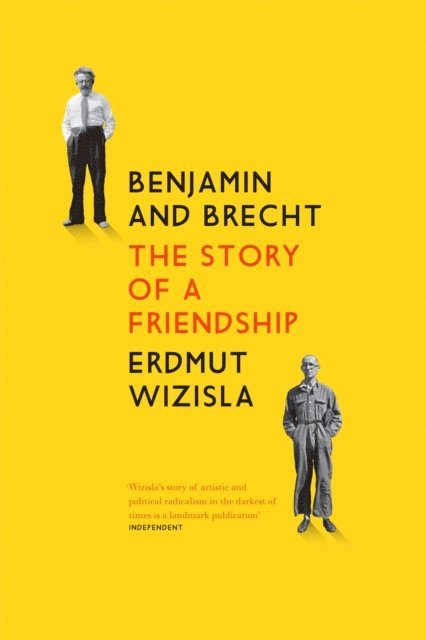
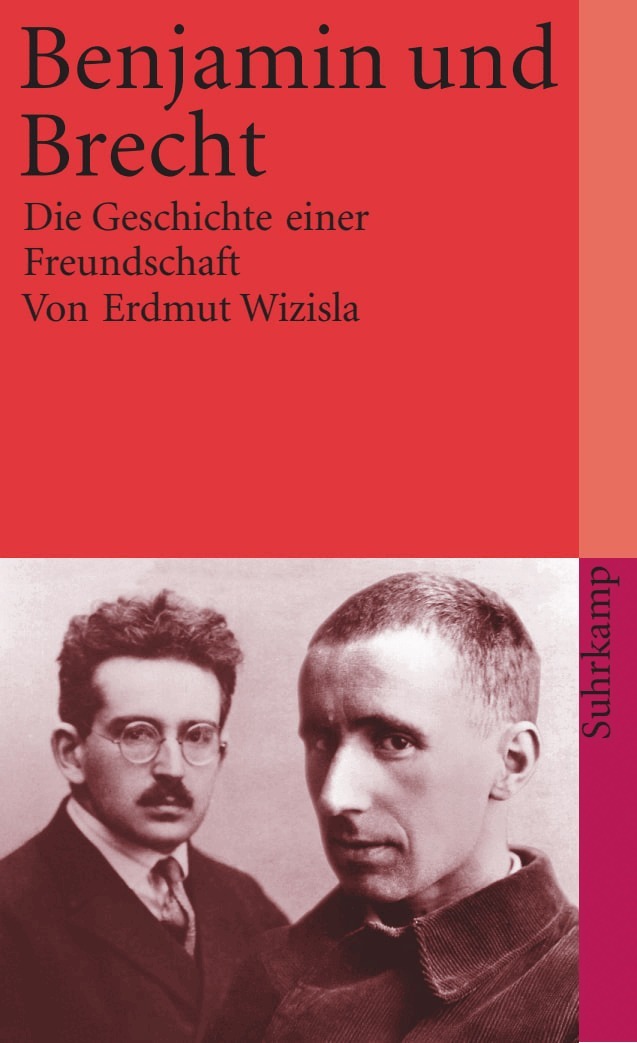
Germany in the mid 1920s, a place and time of looming turmoil, brought together Walter Benjamin-acclaimed critic and extraordinary literary theorist-and Bertolt Brecht, one of the twentieth century's most influential playwrights. It was a friendship that would shape their writing for the rest of their lives.In this groundbreaking work, Erdmut Wizisla explores what this relationship meant for them personally and professionally, as well as the effect it had on those around them. From the first meeting between Benjamin and Brecht to their experiences in exile, these eventful lives are illuminated by personal correspondence, journal entries and private miscellany-including previously unpublished materials-detailing the friends' electric discussions of their collaboration. Wizisla delves into the archives of other luminaries in the distinguished constellation of writers and artists in Weimar Germany, which included Margarete Steffin, Theodor Adorno, Ernst Bloch and Hannah Arendt. Wizisla's account of this friendship opens a window on nearly two decades of European intellectual life.
E-bok
Engelska, 2016179 kr
Läs direkt efter köp
Germany in the mid 1920s, a place and time of looming turmoil, brought together Walter Benjamin-acclaimed critic and extraordinary literary theorist-and Bertolt Brecht, one of the twentieth century''s most influential playwrights. It was a friendship that would shape their writing for the rest of their lives.In this groundbreaking work, Erdmut Wizisla explores what this relationship meant for them personally and professionally, as well as the effect it had on those around them. From the first meeting between Benjamin and Brecht to their experiences in exile, these eventful lives are illuminated by personal correspondence, journal entries and private miscellany-including previously unpublished materials-detailing the friends'' electric discussions of their collaboration. Wizisla delves into the archives of other luminaries in the distinguished constellation of writers and artists in Weimar Germany, which included Margarete Steffin, Theodor Adorno, Ernst Bloch and Hannah Arendt. Wizisla''s account of this friendship opens a window on nearly two decades of European intellectual life.
Häftad, Engelska, 2015
441 kr
Skickas inom 3-6 vardagar
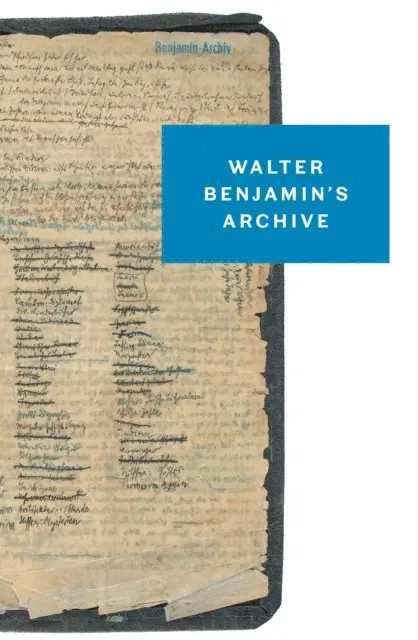
The work of the great literary and cultural critic Walter Benjamin is an audacious plotting of history, art, and thought; a reservoir of texts, commentaries, scraps, and fragments of everyday life, art, and dreams. Throughout his life, Benjamin gathered together all kinds of artifacts, assortments of images, texts, and signs, themselves representing experiences, ideas, and hopes, each of which was enthusiastically logged, systematized, and analyzed by their author. In this way, Benjamin laid the groundwork for the salvaging of his own legacy.Intricate and intimate, Walter Benjamin's Archive leads readers to the heart of his intellectual world, yielding a rich and detailed portrait of its author.
E-bok
Engelska, 2015268 kr
Läs direkt efter köp
The work of the great literary and cultural critic Walter Benjamin is an audacious plotting of history, art, and thought; a reservoir of texts, commentaries, scraps, and fragments of everyday life, art, and dreams. Throughout his life, Benjamin gathered together all kinds of artifacts, assortments of images, texts, and signs, themselves representing experiences, ideas, and hopes, each of which was enthusiastically logged, systematized, and analyzed by their author. In this way, Benjamin laid the groundwork for the salvaging of his own legacy.Intricate and intimate, Walter Benjamin''s Archive leads readers to the heart of his intellectual world, yielding a rich and detailed portrait of its author.
Del 1795 - suhrkamp taschenbücher wissenschaft
Arendt und Benjamin
Häftad, Tyska, 2006
203 kr
Skickas inom 3-6 vardagar
Häftad, Tyska, 2004
193 kr
Skickas inom 3-6 vardagar
E-bok
PDF, Tyska, 2024210 kr
Läs direkt efter köp
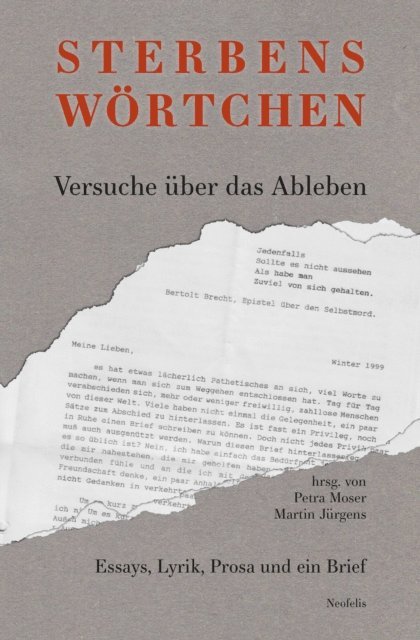
"Kein Sterbenswörtchen werde ich sagen!" Das viersilbige Wort ist also ein Dementi all dessen, was wir – wem auch immer – sagen könnten. Damit hat es etwas Düsteres, es erinnert uns an unser Ende, an den Zeitpunkt, ab dem wir für immer verstummen. Wir werden sterben, todsicher. Wann es sein wird und wie, davon haben wir zumeist keine blasse Ahnung: deshalb die Fülle an Abwehrstrategien – von der routinierten Vermeidung bis zur panischen Angst. Sie alle belegen: Der Tod ist ein Thema wie kein anderes.Wir lassen dennoch, nein deswegen nicht von ihm ab, auch wenn das heißt, sich an der Grenze des Unvorstellbaren zu bewegen, denn jeder Versuch des Erkennens bleibt auf das Leben angewiesen. Der Gegenstand des Erkennens aber ist dessen Ende: Solange wir denken, ist unsere endgültige Abwesenheit für uns undenkbar. Wir glauben bis zum Ende nicht, dass wir uns einmal fehlen werden, und deshalb fehlen uns oft die Worte.Mit unserer Vergangenheit haben wir es da leichter; Kindheit und Jugend sind ein wunderbares Reservoir von literarisch fruchtbaren Erzählanlässen. Die Beiträge in diesem Buch versuchen jedoch, die Blickrichtung umzukehren – zu unserem Ende hin. Damit erinnern sie an die Tradition der Sterbebüchlein, die im späten Mittelalter beginnt und im 18. Jahrhundert endet. Dort wurde die 'Kunst des Sterbens' im Sinne der christlichen Normen gelehrt. Heute gibt es nichts Vergleichbares. Seit langem verfolgt die bürgerliche Gesellschaft das ihr kaum bewusste Ziel, "den Menschen die Möglichkeit zu verschaffen, sich dem Anblick von Sterbenden zu entziehen", so Walter Benjamin in seinem Essay Der Erzähler von 1936; das Sterben sei nach und nach "aus der Merkwelt der Lebenden" herausgedrängt worden.Die Absicht dieses Buches ist es, Sterben und Tod in die Gegenwart der lebenden Leserinnen und Leser zurückzuholen. Dabei gibt es kein Primat eines Textgenres: Der Essay erweist sich mit seinen am Begriff orientierten Mitteln als ebenso produktiv wie die Bildsprache von Prosa und Lyrik und die Unmittelbarkeit eines letzten Briefs an "Meine Lieben" vor dem Suizid.Mit Beiträgen von Lothar Baier, Steffen Brück, Claude Cueni, Hannes Demming, Patrick Eiden-Offe, Martin Jürgens, Hermann Kinder, Christa Ludwig, Petra Moser, Leon Ospald, Guido Rademacher, Maximilian Riethmüller, Jochen Schimmang, Katrin Seglitz, Wolfgang Ullrich, Erdmut Wizisla und Barbara Zoeke.