Erin O'Donnell - Böcker
Visar alla böcker från författaren Erin O'Donnell. Handla med fri frakt och snabb leverans.
6 produkter
6 produkter
592 kr
Skickas inom 10-15 vardagar
In 2017 four rivers in Aotearoa New Zealand, India, and Colombia were given the status of legal persons, and there was a recent attempt to extend these rights to the Colorado River in the USA. Understanding the implications of creating legal rights for rivers is an urgent challenge for both water resource management and environmental law. Giving rivers legal rights means the law can see rivers as legal persons, thus creating new legal rights which can then be enforced. When rivers are legally people, does that encourage collaboration and partnership between humans and rivers, or establish rivers as another competitor for scarce resources?To assess what it means to give rivers legal rights and legal personality, this book examines the form and function of environmental water managers (EWMs). These organisations have legal personality, and have been active in water resource management for over two decades. EWMs operate by acquiring water rights from irrigators in rivers where there is insufficient water to maintain ecological health. EWMs can compete with farmers for access to water, but they can also strengthen collaboration between traditionally divergent users of the aquatic environment, such as environmentalists, recreational fishers, hunters, farmers, and hydropower. This book explores how EWMs use the opportunities created by giving nature legal rights, such as the ability to participate in markets, enter contracts, hold property, and enforce those rights in court. However, examination of the EWMs unearths a crucial and unexpected paradox: giving legal rights to nature may increase its legal power, but in doing so it can weaken community support for protecting the environment in the first place. The book develops a new conceptual framework to identify the multiple constructions of the environment in law, and how these constructions can interact to generate these unexpected outcomes. It explores EWMs in the USA and Australia as examples, and assesses the implications of creating legal rights for rivers for water governance. Lessons from the EWMs, as well as early lessons from the new ‘river persons,’ show how to use the law to improve river protection and how to begin to mitigate the problems of the paradox.
1 921 kr
Skickas inom 10-15 vardagar
In 2017 four rivers in Aotearoa New Zealand, India, and Colombia were given the status of legal persons, and there was a recent attempt to extend these rights to the Colorado River in the USA. Understanding the implications of creating legal rights for rivers is an urgent challenge for both water resource management and environmental law. Giving rivers legal rights means the law can see rivers as legal persons, thus creating new legal rights which can then be enforced. When rivers are legally people, does that encourage collaboration and partnership between humans and rivers, or establish rivers as another competitor for scarce resources?To assess what it means to give rivers legal rights and legal personality, this book examines the form and function of environmental water managers (EWMs). These organisations have legal personality, and have been active in water resource management for over two decades. EWMs operate by acquiring water rights from irrigators in rivers where there is insufficient water to maintain ecological health. EWMs can compete with farmers for access to water, but they can also strengthen collaboration between traditionally divergent users of the aquatic environment, such as environmentalists, recreational fishers, hunters, farmers, and hydropower. This book explores how EWMs use the opportunities created by giving nature legal rights, such as the ability to participate in markets, enter contracts, hold property, and enforce those rights in court. However, examination of the EWMs unearths a crucial and unexpected paradox: giving legal rights to nature may increase its legal power, but in doing so it can weaken community support for protecting the environment in the first place. The book develops a new conceptual framework to identify the multiple constructions of the environment in law, and how these constructions can interact to generate these unexpected outcomes. It explores EWMs in the USA and Australia as examples, and assesses the implications of creating legal rights for rivers for water governance. Lessons from the EWMs, as well as early lessons from the new ‘river persons,’ show how to use the law to improve river protection and how to begin to mitigate the problems of the paradox.
Cannabis Banking
Legal Frameworks and Practical Solutions for Cultivating Compliance
Inbunden, Engelska, 2025
250 kr
Skickas inom 7-10 vardagar
Unlock the financial potential of the cannabis industry Cannabis Banking: Legal Frameworks and Practical Solutions for Cultivating Compliance offers a deep dive into a critical issue facing cannabis businesses worldwide: the challenge of accessing essential financial and banking services. Written by a team of experienced finance professionals and entrepreneurs, this guide is tailored to demystify the complex world of banking regulations and present practical solutions for cannabis enterprises. As the cannabis sector continues to expand at an unprecedented rate, many businesses find themselves hindered by regulatory uncertainties, preventing them from accessing the financial services necessary for growth. Cannabis Banking not only addresses these challenges but also opens the door for finance professionals, entrepreneurs, and investors to explore substantial business opportunities within the industry. You'll also find: Detailed discussions on the pending SAFER legislation that grants safe harbor to banks who do business with cannabis enterprisesStrategies for maintaining compliance and optimizing fiscal opportunities when banking cannabis firmsUp-to-date guidance, practical tips, and real-world case studies of cannabis finance and bankingWhether you are a bank and credit union personnel, compliance officer, risk analyst, or fintech professional involved with the cannabis sector, Cannabis Banking is your go-to resource for navigating the complexities of cannabis finance. Equip yourself with the knowledge to foster efficient, compliant financial operations and propel your cannabis business or financial career forward.
1 580 kr
Kommande
The Bengali filmmaker, Ritwik Kumar Ghatak (1925-1976), wrote, produced, directed and/or acted in plays, feature films and documentaries in Bengal during the socially and politically tumultuous period from the late 1940s through the mid-1970s. Why Ghatak? Within the contexts of Bengali, Indian and world cinema, Ghatak is considered an innovative, revolutionary master of the cinematic medium who possessed a singular cinematic sensibility. He composed numerous essays on film and filmmaking in English and Bengali. Dozens of interviews have been recorded that present an artist who was contemplative, outspoken, at times misunderstood, at turns obstinate and contradictory. From his first film, Nagarik (“The Citizen,” 1953) through his final film, Jukti Takko ar Gappo (“An Argument, a Debate, and a Story,” 1974), Ghatak constructed detailed visual and aural filmic commentaries about modern Bengali culture and society. Twice during his lifetime Bengal was physically rent apart – in 1947 with the Partition of India engendered by the departure of the British and in 1971 by the Bangladeshi War of Independence. In Ghatak’s films, the ambivalence and contradictions of Bengali society in post-1947, post-Partition, post-Independence India are pointedly portrayed. Against this frequently adverse milieu, Bengal’s modern cultural memory, identity, and history are interrogated and continually reassessed in his cinema.
Del 10 - Indigenous-Settler Relations in Australia and the World
People, Place and Nature in Indigenous-Settler Relations
Recentring the More-than-Human World
Inbunden, Engelska, 2026
1 381 kr
Skickas inom 10-15 vardagar
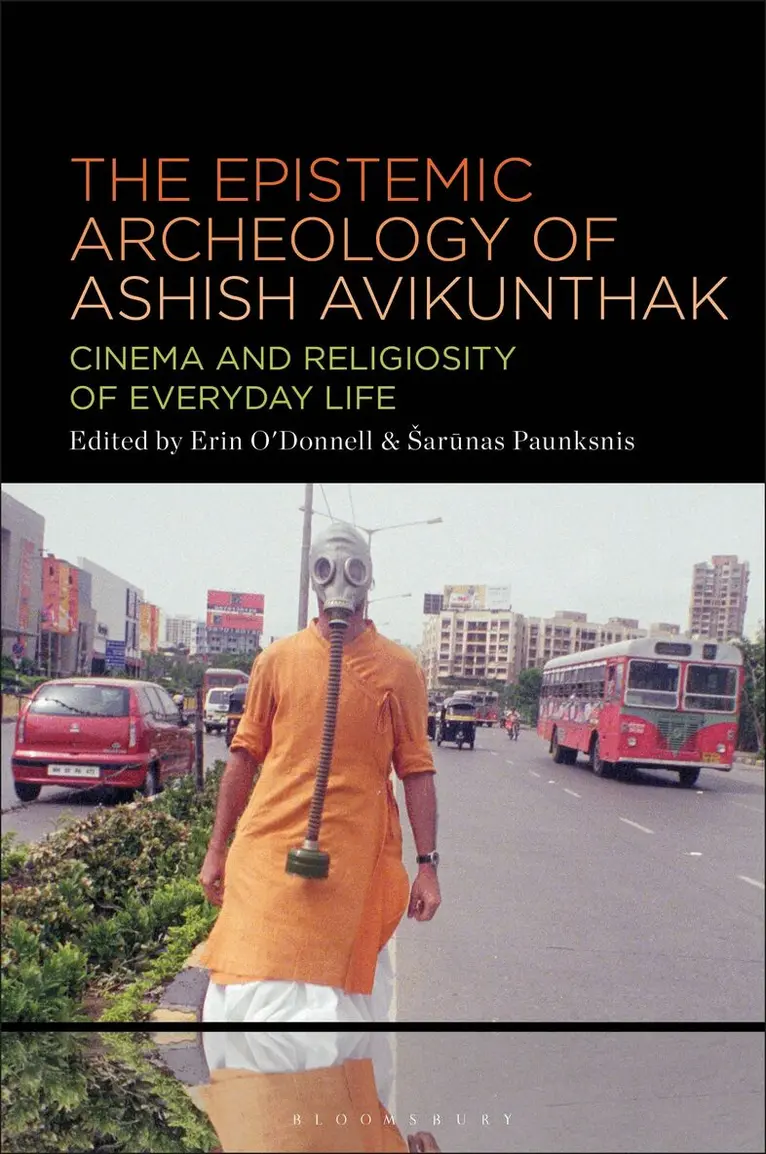
Epistemic Archeology of Ashish Avikunthak
Cinema and Religiosity of Everyday Life
Inbunden, Engelska, 2025
1 284 kr
Skickas inom 10-15 vardagar
This book explores the diverse aspects of Ashish Avikunthak’s cinema, which challenges Western knowledge systems and cinematic practices, as well as ideological hegemonies of present-day India.For thirty years, Indian filmmaker Ashish Avikunthak has been making self-financed films that have robustly resisted capital and market logic. Starting from his early 16mm short films Etcetera (1997) and Kalighat Fetish (1999) to longer feature length works that he has been making since the past decade–Rati Chakravyuh (2013), Aapothkalin Trikalika (2016), Vrindavani Vairagya (2017), to the most recent Vidhvastha (2022) with several more projects in various stages of production. His body of work now amounts to seven short films and nine feature length works. This collection of essays rigorously interrogates, contextualizes, theorizes, and interprets his work in relation to some of the key preoccupations of this filmmaker, which include Tantric practice, alternative ways of filmmaking, as well as posing a cinematic challenge to oppressive epistemes. Furthermore, the current global assertion of authoritarianism and one-dimensional interpretations of cultural history and practice provide a timely and essential historical moment in which to dialogue with Avikunthak’s films. Why? Because Avikunthak’s cinema consciously contests totalizing historical and artistic narratives, and constructs frameworks of existential uncertainty and fragmentation that force us to reflect on the increasing political, economic, social, and climate chaos that is infusing and shaping our early 21st century global ontology.