Ernest W. Adams – författare
Visar alla böcker från författaren Ernest W. Adams. Handla med fri frakt och snabb leverans.
5 produkter
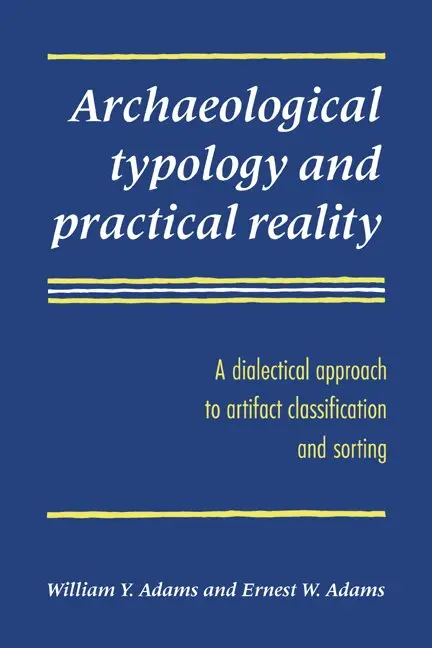
Archaeological Typology and Practical Reality
A Dialectical Approach to Artifact Classification and Sorting
Av William Y. Adams, Ernest W. Adams
Häftad, 2007
938 kr
Lägg i varukorg
Classifications are central to archaeology. Yet the theoretical literature on the subject, both in archaeology and the philosophy of science, bears very little relationship to what actually occurs in practice. This problem has long interested William Adams, a field archaeologist, and Ernest Adams, …
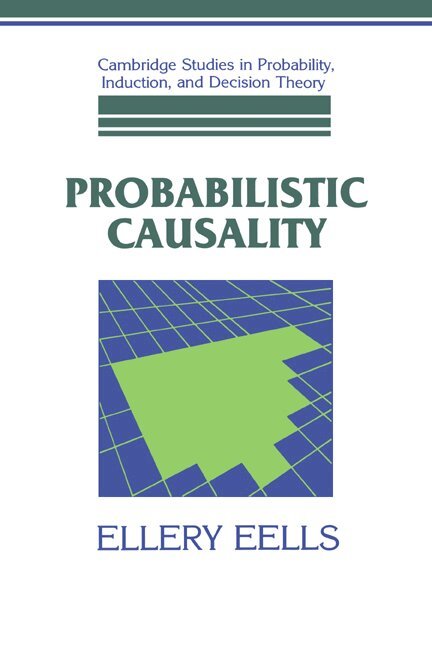
Probabilistic Causality
Av Ellery Eells, Brian Skyrms m. fl.
Inbunden, 1991
2067 kr
Lägg i varukorg
In this important book, Ellery Eells explores and refines philosophical conceptions of probabilistic causality. In a probabilistic theory of causation, causes increase the probability of their effects rather than necessitate their effects in the ways traditional deterministic theories have …
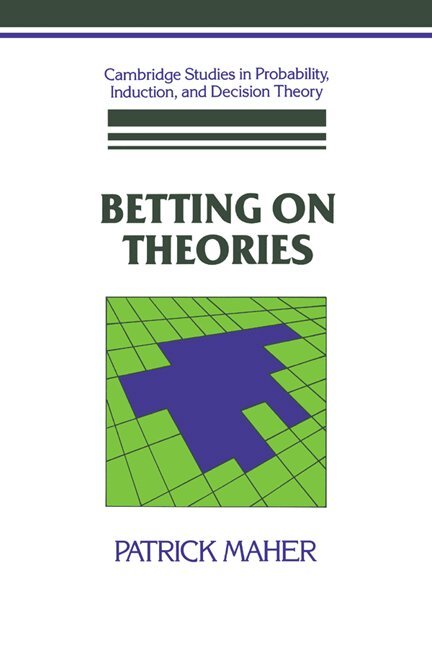
Betting on Theories
Av Patrick Maher, Brian Skyrms m. fl.
Inbunden, 1993
1807 kr
Lägg i varukorg
This book is a major contribution to decision theory, focusing on the question of when it is rational to accept scientific theories. The author examines both Bayesian decision theory and confirmation theory, refining and elaborating the views of Ramsey and Savage. He argues that the most solid …
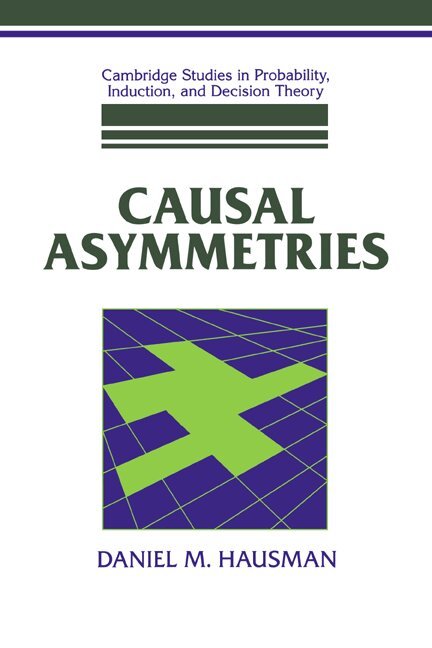
Causal Asymmetries
Av Daniel M. Hausman, Brian Skyrms m. fl.
Inbunden, 1998
1872 kr
Lägg i varukorg
This book, by one of the pre-eminent philosophers of science writing today, offers the most comprehensive account available of causal asymmetries. Causation is asymmetrical in many different ways. Causes precede effects; explanations cite causes not effects. Agents use causes to manipulate their …
Surfaces and Superposition
Field Notes on some Geometrical Excavations
Häftad, 2001
238 kr
Lägg i varukorg
Buildings appear to rest on the Earth's surface, yet the surface has actually been permeated by the building's foundations. If blueprints of the foundation are unavailable, excavation would be needed to discover what actually supports a specific building. Geometry and topology have easily …