Evan Backes – författare
Visar alla böcker från författaren . Handla med fri frakt och snabb leverans.
2 produkter
2 produkter
Inbunden, Engelska, 2018
463 kr
Skickas inom 5-8 vardagar
"This sorry episode has been illuminated in books and documentaries. But I've never felt its emotional texture—the unexpected mix of dereliction and upstanding hopefulness—so vividly as in this set of photographs taken by Ansel Adams and Dorothea Lange and five others, among them an artist incarcerated at Manzanar." –Pico IyerIn the weeks following the bombing of Pearl Harbor on December 7, 1941, American suspicion and distrust of its Japanese American population became widespread. The US government soon ordered all Japanese Americans (two thirds of them American citizens) living on the West Coast to report to assembly centers for eventual transfer to internment camps, openly referred to by the New York Times as "concentration camps." Within a few months of Pearl Harbor, President Franklin D. Roosevelt signed Executive Order 9066; soon after, the War Relocation Authority (WRA) was established and by the end of March, the first of 10,000 Japanese evacuees arrived in Manzanar, an internment camp in the Owens Valley desert at the foot of the Sierras. Families were given one to two weeks' notice and were allowed to pack only what they could carry. Businesses were shuttered and farms and equipment were sold at bargain prices. Upon arrival at Manzanar, each person was assigned to a barrack, given a cot, blankets and a canvas bag to be filled with straw in order to create their own mattresses.Dorothea Lange was hired by the WRA to photograph the mass evacuation; she worked into the first months of the internment until she was fired by WRA staff for her "sympathetic" approach. Many of her photographs were seized by the government and largely unseen by the public for a half century. More than a year later, Manzanar Project Director Ralph Merritt hired Ansel Adams to document life at the camp. Lange and Adams were also joined by WRA photographers Russell Lee, Clem Albers and Francis Stewart. Two Japanese internees, Toyo Miyatake and Jack Iwata, secretly photographed life within the camp with a smuggled camera.Gathered together in this volume, these images express the dignity and determination of the Japanese Americans in the face of injustice and humiliation. Today the tragic circumstances surrounding displaced and detained people around the world only strengthen the impact of these photos taken 75 years ago.
Inbunden, Engelska, 2020
407 kr
Skickas inom 5-8 vardagar
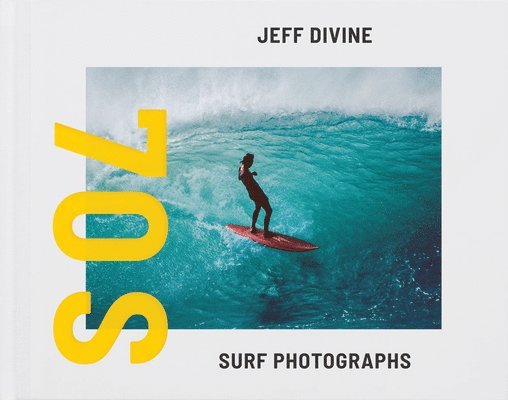
A colorful, insider portrait of ’70s surf culture, with a foreword by Pulitzer Prize–winning author William FinneganIf you were there, even just for some of it—Hawaii, California, surfing, the ’70s—the memories and stories will flow freely from these photographs. Jeff Divine was there for all of it, and these images have been culled from an enormous personal archive. Divine was shooting for Surfer, the monthly magazine that was the bible of the scene. His photos from this archive show the precommercialized era in surfing when the hippie influence still held sway. Surfers had their own slang-infused language and were deep into a world of Mother Ocean, wilderness and a culture that mainstream society spurned. Surfboards were handmade in family garages, often made for a specific kind of wave or speed, for paddling, ease of turning, and featured all kinds of psychedelic designs. Some were even hollowed out to smuggle hash from Morocco.The color and black-and-white photographs collected here, taken throughout California on the coastlines at Baja, Dana Point, Laguna Beach, La Jolla, Malibu, San Clemente and Oahu, give a vivid image of this close-knit culture and the incredible athletic feats of its heroes and heroines.Raised in La Jolla, California, Jeff Divine (born 1950) started photographing the surfing world in 1966. He held jobs as photo editor for 35 years with Surfer magazine and Surfer’s Journal. His works have been displayed worldwide in museums and galleries, as well as in books, magazines and media. In 2019 he was inducted into the Huntington Beach Surfing Walk of Fame for his contribution to surf culture in a career lasting 50 years.