Evanthis Hatzivassiliou – författare
638 kr
Skickas inom 10-15 vardagar
2 388 kr
Skickas inom 10-15 vardagar
858 kr
Skickas inom 10-15 vardagar
2 316 kr
Skickas inom 10-15 vardagar
752 kr
Läs direkt efter köp
This book examines the international dimensions of the Greek military dictatorship of 1967 to 1974 and uses it as a case study to evaluate the major shifts occurring in the international system during a period of rapid change.
The policies of the major nation-states in both East and West were determined by realistic Cold War considerations. At the same time, the Greek junta, a profoundly anti-modernist force, failed to cope with an evolving international agenda and the movement towards international cooperation. Denouncing it became a rallying point both for international organizations and for human rights activists, and it enabled the EEC to underscore the notion that democracy was an integral characteristic of the European identity.
This volume is an original in-depth study of an under-researched subject and the multiple interactions of a complex era. It is divided into three sections: Part I deals with the interaction of the Colonels with state actors; Part II deals with the responses of international organizations and the rising transnational human rights agenda for which the Greek junta became a totemic rallying point; and Part III compares and contrasts the transitions to democracy in Southern Europe, and analyses the different models of transition and region-building, and how they intersected with attempts to foster a European identity. The Greek dictatorship may have been a parochial military regime, but its rise and fall interacted with signifi cant international trends and can therefore serve as a salient case study for promoting a better understanding of international and European trends during the 1960s and 1970s.
This book will be of much interest to students of Cold War studies, international history, foreign policy, transatlantic relations and International Relations, in general.
752 kr
Läs direkt efter köp
This book examines the international dimensions of the Greek military dictatorship of 1967 to 1974 and uses it as a case study to evaluate the major shifts occurring in the international system during a period of rapid change.
The policies of the major nation-states in both East and West were determined by realistic Cold War considerations. At the same time, the Greek junta, a profoundly anti-modernist force, failed to cope with an evolving international agenda and the movement towards international cooperation. Denouncing it became a rallying point both for international organizations and for human rights activists, and it enabled the EEC to underscore the notion that democracy was an integral characteristic of the European identity.
This volume is an original in-depth study of an under-researched subject and the multiple interactions of a complex era. It is divided into three sections: Part I deals with the interaction of the Colonels with state actors; Part II deals with the responses of international organizations and the rising transnational human rights agenda for which the Greek junta became a totemic rallying point; and Part III compares and contrasts the transitions to democracy in Southern Europe, and analyses the different models of transition and region-building, and how they intersected with attempts to foster a European identity. The Greek dictatorship may have been a parochial military regime, but its rise and fall interacted with signifi cant international trends and can therefore serve as a salient case study for promoting a better understanding of international and European trends during the 1960s and 1970s.
This book will be of much interest to students of Cold War studies, international history, foreign policy, transatlantic relations and International Relations, in general.
656 kr
Skickas inom 10-15 vardagar
986 kr
Läs direkt efter köp
This is the first study to present a comprehensive analysis of Greek foreign and internal policy during the Cold War, covering the key period from the country’s accession to NATO in 1952 until the imposition of the colonels’ dictatorship in 1967.
Clearly divided into three parts: 1952-55, 1955-63 and 1963-67, this book deals with Greek foreign policy analysis; threat perception; the NATO connection (including Greek-US relations, the rise of anti-Americanism in 1955-58 and in 1964-67, the economic dimension of security and the issue of US military aid); Greek policy towards the Soviet bloc; and the regional dimension, mainly Greek policy towards Turkey and Yugoslavia, and (for the 1964-67 years) the Cyprus crisis which greatly complicated Greek security obligations.
This book will be of great interest to students of Greek politics, Balkans history, the Cold War and strategic studies.
986 kr
Läs direkt efter köp
This is the first study to present a comprehensive analysis of Greek foreign and internal policy during the Cold War, covering the key period from the country’s accession to NATO in 1952 until the imposition of the colonels’ dictatorship in 1967.
Clearly divided into three parts: 1952-55, 1955-63 and 1963-67, this book deals with Greek foreign policy analysis; threat perception; the NATO connection (including Greek-US relations, the rise of anti-Americanism in 1955-58 and in 1964-67, the economic dimension of security and the issue of US military aid); Greek policy towards the Soviet bloc; and the regional dimension, mainly Greek policy towards Turkey and Yugoslavia, and (for the 1964-67 years) the Cyprus crisis which greatly complicated Greek security obligations.
This book will be of great interest to students of Greek politics, Balkans history, the Cold War and strategic studies.
795 kr
Läs direkt efter köp
This volume discusses the entry of Greece and Turkey to NATO in 1952 from the perspective of history and international relations. The chapters were originally collected in 2012 to mark the occasion of the sixtieth anniversary of the accession of the two states to NATO. The focus is not on the diplomatic/political events that led to the accession (a subject which has already been extensively discussed in the available bibliography), but expands on a reassessment of this event for the two states as well as for the Balkans, covering aspects of the wider post-war period and providing perspectives for the policies of Turkey, Greece and NATO until the present day. This book was originally published as a special issue of Southeast European and Black Sea Studies.
795 kr
Läs direkt efter köp
This volume discusses the entry of Greece and Turkey to NATO in 1952 from the perspective of history and international relations. The chapters were originally collected in 2012 to mark the occasion of the sixtieth anniversary of the accession of the two states to NATO. The focus is not on the diplomatic/political events that led to the accession (a subject which has already been extensively discussed in the available bibliography), but expands on a reassessment of this event for the two states as well as for the Balkans, covering aspects of the wider post-war period and providing perspectives for the policies of Turkey, Greece and NATO until the present day. This book was originally published as a special issue of Southeast European and Black Sea Studies.
1 235 kr
Skickas inom 10-15 vardagar
1 054 kr
Läs direkt efter köp
2 244 kr
Skickas inom 10-15 vardagar
2 244 kr
Skickas inom 10-15 vardagar
725 kr
Läs direkt efter köp
This book examines the NATO reports on the Soviet bloc''s political and economic system, from 1951 to the aftermath of the Soviet invasion of Czechoslovakia and the beginning of detente.
As part of the wider history of Cold War Alliances, the detailed assessments of the NATO experts regarding the non-military aspects of Soviet power are a crucial indicator of Western/allied perceptions of the adversary. Their study allows us to widen the discussion on the Western alliance, the accuracy of its information or perceptions, and the nature of the Cold War.
Hatzivassiliou argues that the Cold War was not only a strategic dilemma (although it certainly was that, as well), but also the latest stage of the crisis of legitimization which had been raging since the dawn of modernity. NATO/Western analysis is examined in this context. At the same time, the book discusses the relative influence of the major NATO members – US and British influence was strong while French, West German and Italian influence was also significant – in the drafting of the reports, and thus in shaping the alliance’s perceptions during the Cold War.
This book will be of much interest to students of NATO, Cold War Studies, international history, foreign policy and IR in general.
725 kr
Läs direkt efter köp
This book examines the NATO reports on the Soviet bloc''s political and economic system, from 1951 to the aftermath of the Soviet invasion of Czechoslovakia and the beginning of detente.
As part of the wider history of Cold War Alliances, the detailed assessments of the NATO experts regarding the non-military aspects of Soviet power are a crucial indicator of Western/allied perceptions of the adversary. Their study allows us to widen the discussion on the Western alliance, the accuracy of its information or perceptions, and the nature of the Cold War.
Hatzivassiliou argues that the Cold War was not only a strategic dilemma (although it certainly was that, as well), but also the latest stage of the crisis of legitimization which had been raging since the dawn of modernity. NATO/Western analysis is examined in this context. At the same time, the book discusses the relative influence of the major NATO members – US and British influence was strong while French, West German and Italian influence was also significant – in the drafting of the reports, and thus in shaping the alliance’s perceptions during the Cold War.
This book will be of much interest to students of NATO, Cold War Studies, international history, foreign policy and IR in general.
1 011 kr
Skickas inom 10-15 vardagar
1 303 kr
Skickas inom 10-15 vardagar
1 687 kr
Läs direkt efter köp
1 123 kr
Skickas inom 10-15 vardagar
1 258 kr
Läs direkt efter köp
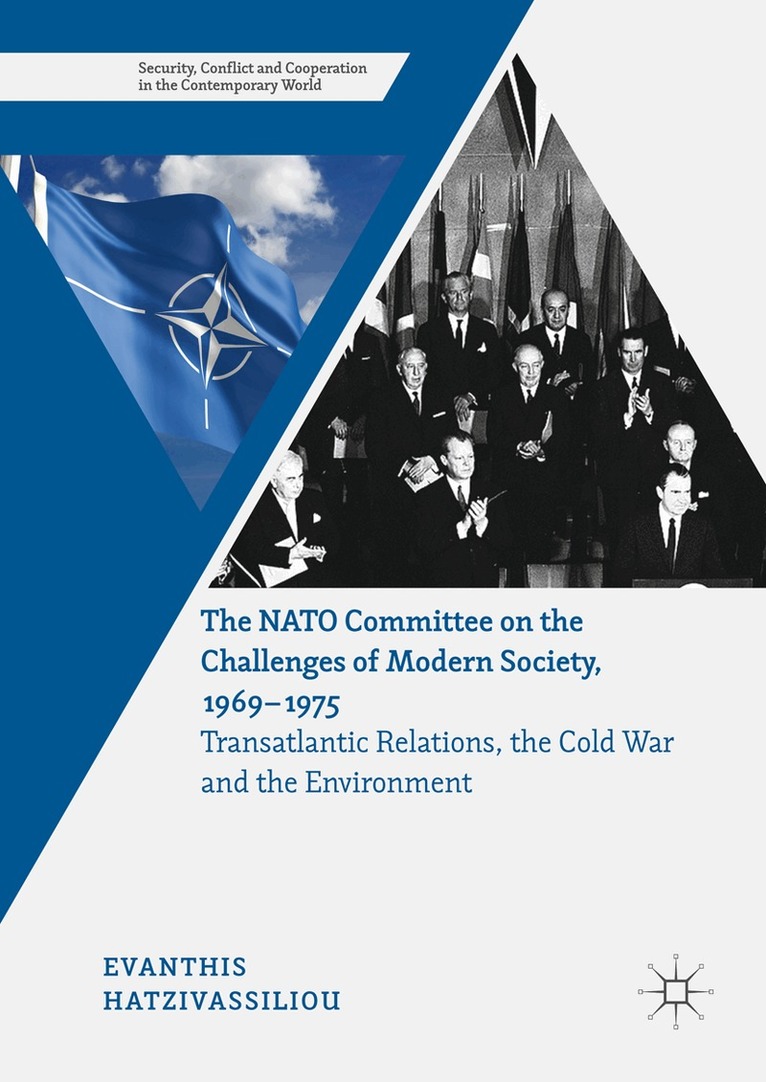
This book is the first comprehensive study of the setting up and early development of the NATO Committee on the Challenges of Modern Society (CCMS), or the alliance’s environmental programme. This expansion of allied cooperation is an interesting indicator of transatlantic relations during an era of transition and under the impact of Richard Nixon and Henry Kissinger’s diplomacy. The book discusses intra-NATO politics, the projects of the early years and the participation in CCMS projects of non-NATO countries – an unusual feature in the activity of a military alliance. Environmental cooperation in NATO was part of the changes which scientific cooperation was effecting in the international system during the entry into the post-industrial era. The making of the CCMS is the story of a crisis of adjustment to the new era, of hiccups in transatlantic relationships, but ultimately also a story of transatlantic unity. The book will be of much interest to students of NATO, the Cold War, international and environmental history, history of science and international relations.
1 038 kr
Skickas