Evgeny Vinokurov - Böcker
Visar alla böcker från författaren Evgeny Vinokurov. Handla med fri frakt och snabb leverans.
7 produkter
7 produkter
1 130 kr
Tillfälligt slut
Following the restoration of Lithuania’s independence and the dismantlement of the Soviet Union, the Kaliningrad region is now an exclave surrounded by EU member states. Departing from the analytical framework of Europeanisation, this book analyses the interaction between Russia and its Kaliningrad region on one side, and their European partners on the other side, thus assessing the region’s potential to serve as Russia’s main opening to the EU. How do EU relations ‘feed back’ into Kaliningrad’s domestic arena, or, put differently, does Kaliningrad become ‘Europeanised’ – at least to some extent? In particular, do EU standards and norms impact on the exclave and in what ways? The book not only offers thorough case studies of a number of policy areas affected by the EU (environmental, economics and higher education), it also refines our way of thinking about Europeanisation ‘beyond’ Europe.
1 572 kr
Skickas inom 10-15 vardagar
Attempting to provide a fully-fledged theory of enclaves and exclaves, A Theory of Enclaves covers a wide scope of regions and territories throughout the world and satisfies the need for a systematic view on enclaves. This book covers 282 enclaves, with a combined population total of approximately three million, but the importance of enclaves is much higher because of their specific status and issues raised for both the mainland states and the surrounding states: Gibraltar was disproportionately large for British-Spanish relations throughout the last three centuries, Kaliningrad managed to cause a major crisis in the EU-Russian relations in 2002-03, Tiny Ceuta and Melilla have caused tensions in Spanish-Moroccan relations for more than three centuries and have recently become visible as conflict points at the EU level, German Buesingen was subject to several complex international treaties between Germany and Switzerland. Rather than viewing each enclave as a unique case, or even as an anomaly, A Theory of Enclaves provides a systematic investigation of enclave-related political and economic issues. Rich on maps and illustrations, A Theory of Enclaves strives to comprise three facets of enclaves' existence: political, economic, and social life.
3 027 kr
Skickas inom 7-10 vardagar
This insightful Companion provides an in-depth, systematic analysis of the Eurasian Economic Union (EAEU), an economic union of several post-Soviet Eurasian states.Bringing together an international collective of established academic experts on the EAEU and Eurasian regionalism, the editors showcase a diverse range of perspectives and backgrounds on the EAEU to reflect its complex reality. The Companion reviews the available evidence on the EAEU, examining its evolution, governance, policies, and outlook as well as delving into key theoretical and policy debates on this particularly contested regional organization. Taking stock of the tectonic changes occurring in the post-Soviet Eurasia, it highlights potential gaps in the collective knowledge and discusses possible scenarios for the future of the EAEU.Exploring the EAEU’s impact on trade, migration, and foreign direct investment in the post-Soviet Eurasia, this astute Companion will prove indispensable to academics and researchers in the fields of political science and economics, particularly those with an interest in Russian and Eurasian studies and comparative regionalism. Its analysis of the challenges the EAEU is currently facing will also benefit think tank analysts with a focus on Russia, China, Central Asia and Eurasia in general.
443 kr
Skickas inom 10-15 vardagar
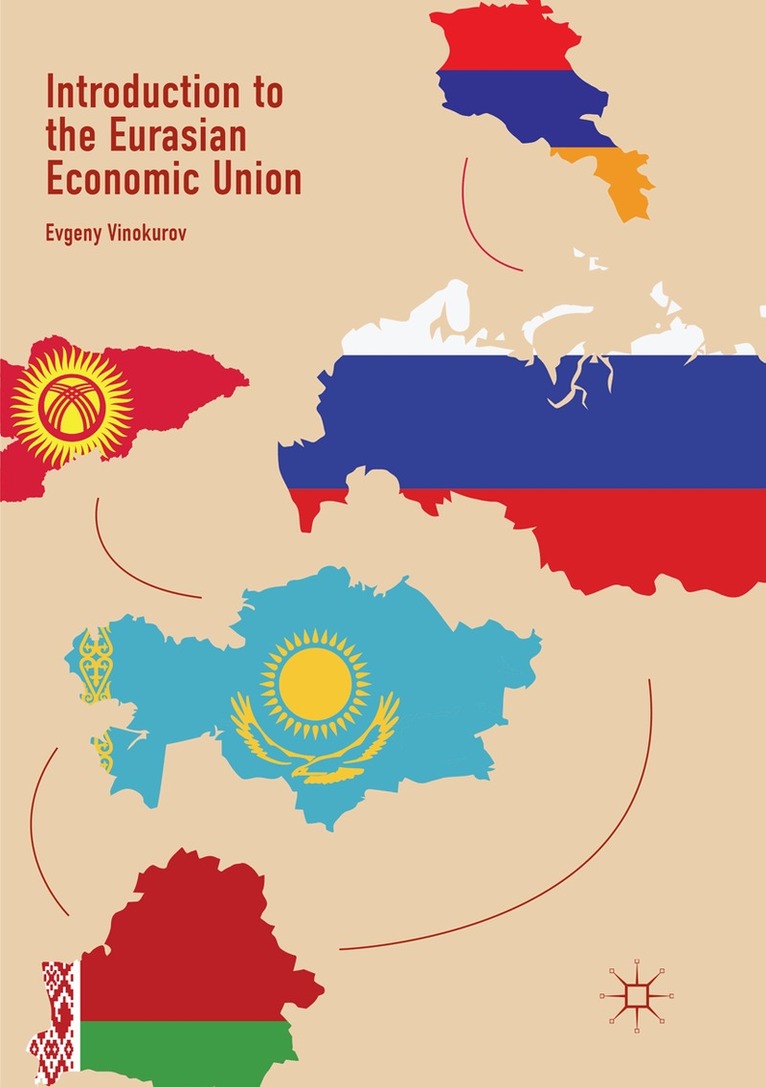
The Eurasian Economic Union (EAEU), which includes Russia, Kazakhstan, Belarus, Kyrgyzstan, and Armenia, is a new but substantial regional organization. Significant achievements include a common external customs tariff, a customs union and a common labour market: a well-developed institutional environment has emerged to support and advance these processes, ranging from the Eurasian Economic Commission and the EAEU Court to the Eurasian Development Bank and the Eurasian Fund for Stabilization and Development. This major integration achievement also has several drawbacks and ‘stumbling stones’—some due to Russia’s dominant position, some due to the authoritarian nature of political regimes, and some due to dependence on oil and gas exports.This book presents a detailed qualitative and quantitative assessment of the Eurasian Economic Union, including the history of Eurasian integration, the macroeconomy of EAEU member states, an assessment of trade and investment links, a descriptive analysis of the EAEU Treaty, an analysis of Eurasian institutions, the sociology of integration, the EAEU’s emerging foreign economic policy, relations with the EU and China, the EAEU’s position on One Belt One Road policies, and its mid-term policy agenda. This primer text will be of interest and value for students, academics and practitioners working in economic policy and business communities and interested in the history and development of the Eurasian Economic Union.
Re-Evaluating Regional Organizations
Behind the Smokescreen of Official Mandates
Inbunden, Engelska, 2017
1 276 kr
Skickas inom 10-15 vardagar
This book re-evaluates the regional organizations landscape and discusses how organizations with similar mandates can exercise strikingly different goals.
Re-Evaluating Regional Organizations
Behind the Smokescreen of Official Mandates
Häftad, Engelska, 2018
1 276 kr
Skickas inom 10-15 vardagar
This book re-evaluates the regional organizations landscape and discusses how organizations with similar mandates can exercise strikingly different goals.
391 kr
Skickas
The Eurasian Economic Union (EAEU), which includes Russia, Kazakhstan, Belarus, Kyrgyzstan, and Armenia, is a new but substantial regional organization. Significant achievements include a common external customs tariff, a customs union and a common labour market: a well-developed institutional environment has emerged to support and advance these processes, ranging from the Eurasian Economic Commission and the EAEU Court to the Eurasian Development Bank and the Eurasian Fund for Stabilization and Development. This major integration achievement also has several drawbacks and ‘stumbling stones’—some due to Russia’s dominant position, some due to the authoritarian nature of political regimes, and some due to dependence on oil and gas exports.This book presents a detailed qualitative and quantitative assessment of the Eurasian Economic Union, including the history of Eurasian integration, the macroeconomy of EAEU member states, an assessment of trade and investment links, a descriptive analysis of the EAEU Treaty, an analysis of Eurasian institutions, the sociology of integration, the EAEU’s emerging foreign economic policy, relations with the EU and China, the EAEU’s position on One Belt One Road policies, and its mid-term policy agenda. This primer text will be of interest and value for students, academics and practitioners working in economic policy and business communities and interested in the history and development of the Eurasian Economic Union.