F. Scheller – författare
Visar alla böcker från författaren F. Scheller. Handla med fri frakt och snabb leverans.
3 produkter
3 produkter
E-bok
PDF, Engelska, 20054 122 kr
Läs direkt efter köp
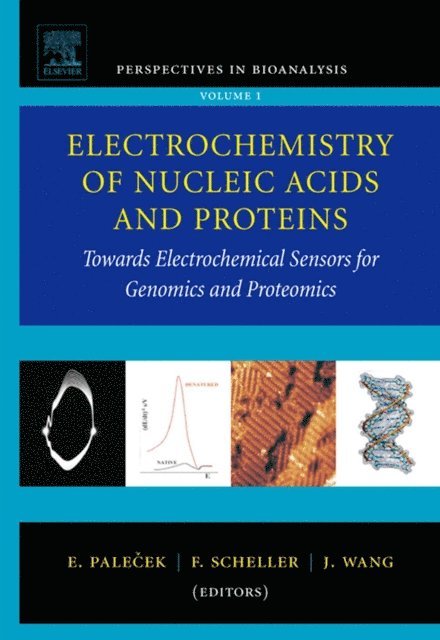
DNA (sometimes referred to as the molecule of life), is the most interesting and most important of all molecules. Electrochemistry of Nucleic Acids and Proteins: Towards Electrochemical Sensors for Genomics and Proteomics is devoted to the electrochemistry of DNA and RNA and to the development of sensors for detecting DNA damage and DNA hybridization. Volume 1, in the brand new series Perspectives in Bioanalysis, looks at the electroanalytical chemistry of nucleic acids and proteins, development of electrochemical sensors and their application in biomedicine and in the new fields of genomics and proteomics. The authors have expertly formatted the information for a wide variety of readers, including new developments that will inspire students and young scientists to create new tools for science and medicine in the 21st century.* Covers highly sophisticated methods of electrochemical analysis of nucleic acids and proteins* Summarises the present state of electrochemical analysis of nucleic acids and proteins* Includes future trends in the electrochemical analysis in genomics and proteomics
E-bok
PDF, Engelska, 1991672 kr
Läs direkt efter köp
Biosensors combine the unique properties of biological systems to selectively recognize and convert molecules with the benefits of physicochemical sensor technology, such as high sensitivity, simplicity of operation and mass production, and modern electronics. Consequently, their development is closely related to progress in two branches of high technology - biotechnology and microelectronics. This book not only presents the state-of-the-art of biosensor research and development to the specialist, but also introduces the layman to the fundamentals of the subject. The relevant features of physicochemical transducer elements as well as biochemical recognition molecules (enzymes, antibodies, receptors) are outlined. Biochemical and biotechnological aspects of biomolecule immobilization and the interplay of biochemical reactions and mass transfer processes are comprehensively treated with regard to their impact on successful sensor design. Examples of immobilization methods are described in detail. The employment of coupled enzyme reactions, higher integrated biocatalytic systems (cell organelles, microbes, tissue sections) and immunocomponents in biosensors is covered extensively. Optical, thermometric, piezoelectric and particularly electrochemical biosensors for more than 100 analytes are presented, including immunosensors. The relative merits and limits of biosensors are discussed using several examples of their application in clinical chemistry, bioprocess control and environmental monitoring. Finally, the application of biosensors in medicine, biotechnology, food industry and environmental control is discussed, including commercialization and problems to be addressed in future research.
Del 1 - Perspectives in Bioanalysis
Electrochemistry of Nucleic Acids and Proteins
Towards Electrochemical Sensors for Genomics and Proteomics
Inbunden, Engelska, 2005
3 433 kr
Skickas inom 10-15 vardagar
DNA (sometimes referred to as the molecule of life), is the most interesting and most important of all molecules. Electrochemistry of Nucleic Acids and Proteins: Towards Electrochemical Sensors for Genomics and Proteomics is devoted to the electrochemistry of DNA and RNA and to the development of sensors for detecting DNA damage and DNA hybridization. Volume 1, in the brand new series Perspectives in Bioanalysis, looks at the electroanalytical chemistry of nucleic acids and proteins, development of electrochemical sensors and their application in biomedicine and in the new fields of genomics and proteomics. The authors have expertly formatted the information for a wide variety of readers, including new developments that will inspire students and young scientists to create new tools for science and medicine in the 21st century.* Covers highly sophisticated methods of electrochemical analysis of nucleic acids and proteins* Summarises the present state of electrochemical analysis of nucleic acids and proteins* Includes future trends in the electrochemical analysis in genomics and proteomics