Farhad Dalal – författare
Visar alla böcker från författaren Farhad Dalal. Handla med fri frakt och snabb leverans.
14 produkter
CBT: The Cognitive Behavioural Tsunami
Managerialism, Politics and the Corruptions of Science
Av Farhad Dalal
Häftad, 2018
575 kr
Lägg i varukorg
Is CBT all it claims to be? The Cognitive Behavioural Tsunami: Managerialism, Politics, and the Corruptions of Science provides a powerful critique of CBT’s understanding of human suffering, as well as the apparent scientific basis underlying it. The book argues that CBT psychology has fetishized …
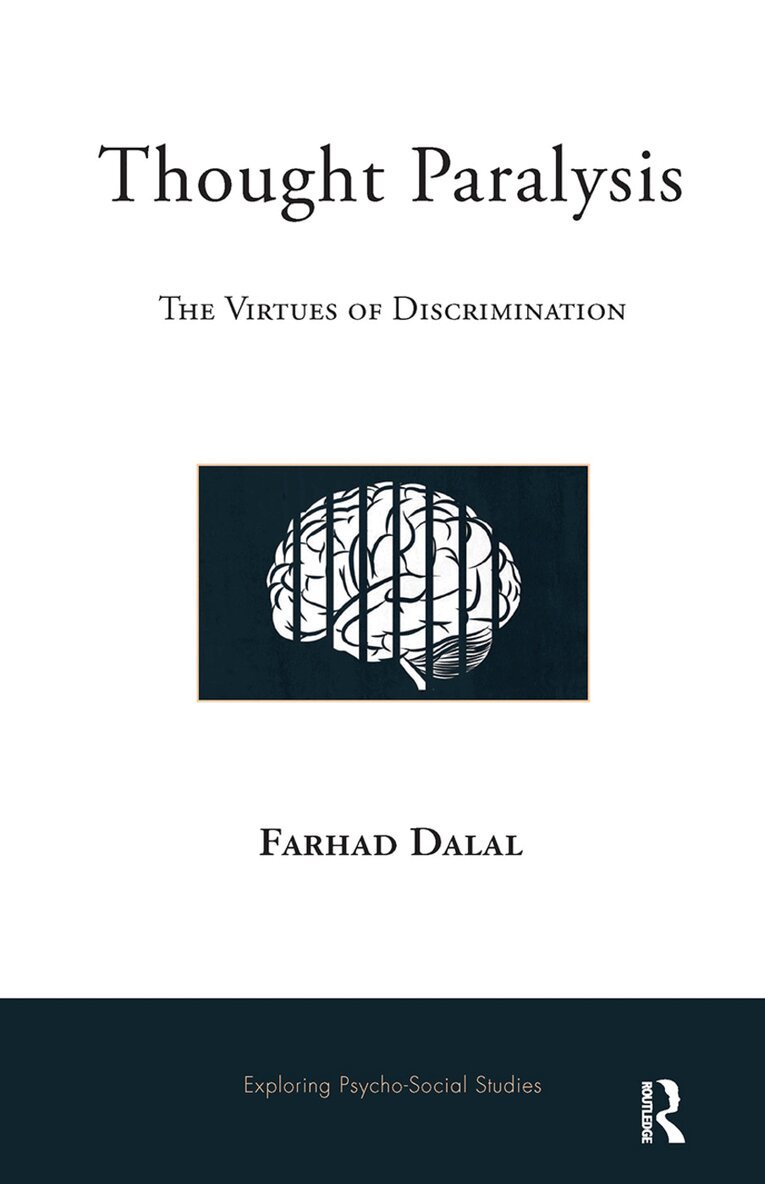
Thought Paralysis
The Virtues of Discrimination
Av Farhad Dalal
Inbunden, 2019
2441 kr
Lägg i varukorg
Given the enormous struggles, efforts and money expended on the equalities enterprise, why has more progress not been made? And further, why have things actually become worse in some circumstances? It is argued this has occurred because:- The values of Equality have been bureaucratized, allowing …
CBT: The Cognitive Behavioural Tsunami
Managerialism, Politics and the Corruptions of Science
Av Farhad Dalal
E-bok, 2018
511 kr
Lägg i varukorg
Is CBT all it claims to be? The Cognitive Behavioural Tsunami: Managerialism, Politics, and the Corruptions of Science provides a powerful critique of CBT’s understanding of human suffering, as well as the apparent scientific basis underlying it. The book argues that CBT psychology has fetishized …
CBT: The Cognitive Behavioural Tsunami
Managerialism, Politics and the Corruptions of Science
Av Farhad Dalal
E-bok, 2018
522 kr
Lägg i varukorg
Is CBT all it claims to be? The Cognitive Behavioural Tsunami: Managerialism, Politics, and the Corruptions of Science provides a powerful critique of CBT’s understanding of human suffering, as well as the apparent scientific basis underlying it. The book argues that CBT psychology has fetishized …
Thought Paralysis
The Virtues of Discrimination
Av Farhad Dalal
E-bok, 2018
690 kr
Lägg i varukorg
Given the enormous struggles, efforts and money expended on the equalities enterprise, why has more progress not been made? And further, why have things actually become worse in some circumstances? It is argued this has occurred because:- The values of Equality have been bureaucratized, allowing …
Thought Paralysis
The Virtues of Discrimination
Av Farhad Dalal
E-bok, 2018
675 kr
Lägg i varukorg
Given the enormous struggles, efforts and money expended on the equalities enterprise, why has more progress not been made? And further, why have things actually become worse in some circumstances? It is argued this has occurred because:- The values of Equality have been bureaucratized, allowing …
Race, Colour and the Processes of Racialization
New Perspectives from Group Analysis, Psychoanalysis and Sociology
Av Farhad Dalal
E-bok, 2013
690 kr
Lägg i varukorg
Is racial conflict determined by biology or society? So many conflicts appear to be caused by racial and ethnic differences; for example, the cities of Britain and America are regularly affected by race riots. It is argued by socio-biologists and some schools of psychoanalysis that our instincts …
Race, Colour and the Processes of Racialization
New Perspectives from Group Analysis, Psychoanalysis and Sociology
Av Farhad Dalal
E-bok, 2013
690 kr
Lägg i varukorg
Is racial conflict determined by biology or society? So many conflicts appear to be caused by racial and ethnic differences; for example, the cities of Britain and America are regularly affected by race riots. It is argued by socio-biologists and some schools of psychoanalysis that our instincts …
CBT: The Cognitive Behavioural Tsunami
Managerialism, Politics and the Corruptions of Science
Av Farhad Dalal
Inbunden, 2018
2578 kr
Lägg i varukorg
Is CBT all it claims to be? The Cognitive Behavioural Tsunami: Managerialism, Politics, and the Corruptions of Science provides a powerful critique of CBT’s understanding of human suffering, as well as the apparent scientific basis underlying it. The book argues that CBT psychology has fetishized …
Race, Colour and the Processes of Racialization
New Perspectives from Group Analysis, Psychoanalysis and Sociology
Av Farhad Dalal
Inbunden, 2002
2504 kr
Lägg i varukorg
Is racial conflict determined by biology or society?So many conflicts appear to be caused by racial and ethnic differences; for example, the cities of Britain and America are regularly affected by race riots. It is argued by socio-biologists and some schools of psychoanalysis that our instincts are …
Race, Colour and the Processes of Racialization
New Perspectives from Group Analysis, Psychoanalysis and Sociology
Av Farhad Dalal
Häftad, 2002
602 kr
Lägg i varukorg
Is racial conflict determined by biology or society?So many conflicts appear to be caused by racial and ethnic differences; for example, the cities of Britain and America are regularly affected by race riots. It is argued by socio-biologists and some schools of psychoanalysis that our instincts are …
Thought Paralysis
The Virtues of Discrimination
Av Farhad Dalal
Häftad, 2012
585 kr
Lägg i varukorg
Given the enormous struggles, efforts and money expended on the equalities enterprise, why has more progress not been made? And further, why have things actually become worse in some circumstances? It is argued this has occurred because:- The values of Equality have been bureaucratized, allowing …
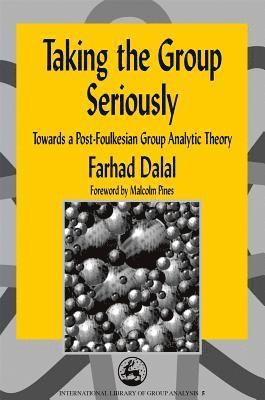
Taking the Group Seriously
Towards a Post-Foulkesian Group Analytic Theory
Av Farhad Dalal
E-bok, 1998
621 kr
Lägg i varukorg
In this critique and extension of the work of S.H.Foulkes, Farhad Dalal presents a thorough contemporary appraisal of the theory of group analysis and its relevance to psychoanalysis as a whole. The author argues that Foulkes failed to develop a specific set of group concepts, relying instead on …
Taking the Group Seriously
Towards a Post-Foulkesian Group Analytic Theory
Av Farhad Dalal
Häftad, 1998
624 kr
Lägg i varukorg
In this critique and extension of the work of S.H.Foulkes, Farhad Dalal presents a thorough contemporary appraisal of the theory of group analysis and its relevance to psychoanalysis as a whole. The author argues that Foulkes failed to develop a specific set of group concepts, relying instead on …