Federico Faggin – författare
Visar alla böcker från författaren Federico Faggin. Handla med fri frakt och snabb leverans.
10 produkter
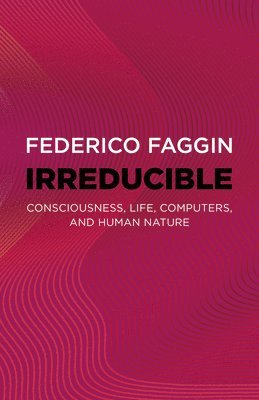
Irreducible
Consciousness, Life, Computers, and Human Nature
Häftad, 2024
163 kr
Lägg i varukorg
Federico Faggin is one of the greatest luminaries of high technology alive today. A physicist by education, he is the inventor of the microprocessor and the MOS silicon gate technology, both of which underlie the modern world's entire information technology. With the knowledge and experience of a …
Artificial Intelligence Versus Natural Intelligence
Av Roger Penrose, Emanuele Severino m. fl.
Inbunden, 2022
986 kr
Lägg i varukorg
This book centers around a dialogue between Roger Penrose and Emanuele Severino about one of most intriguing topics of our times, the comparison of artificial intelligence and natural intelligence, as well as its extension to the notions of human and machine consciousness.Additional insightful …
Artificial Intelligence Versus Natural Intelligence
Av Federico Faggin, Giacomo Mauro D'Ariano m. fl.
E-bok, 2022
1296 kr
Lägg i varukorg
This book centers around a dialogue between Roger Penrose and Emanuele Severino about one of most intriguing topics of our times, the comparison of artificial intelligence and natural intelligence, as well as its extension to the notions of human and machine consciousness. Additional insightful …
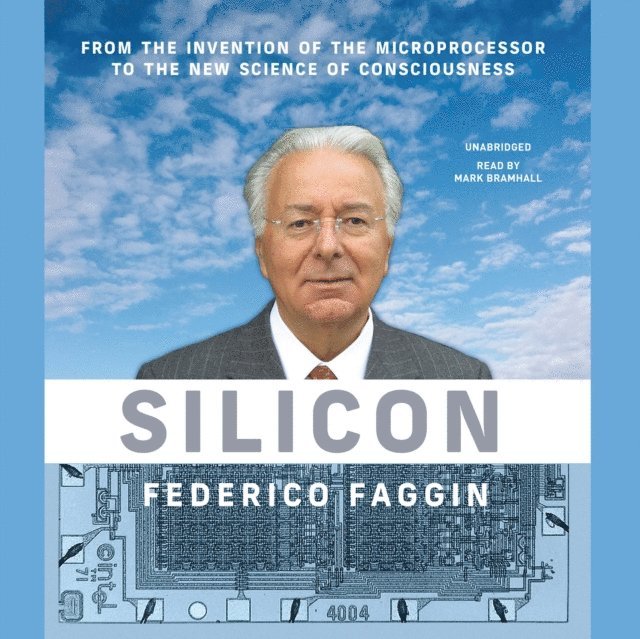
Silicon
From the Invention of the Microprocessor to the New Science of Consciousness
Ljudbok, 2021
298 kr
Lägg i varukorg
“As soon as she heard me enter, Elvia awoke from a light sleep that had overcome her as she anxiously waited: ‘How did it go?’ Excited, I exclaimed: ‘It works!’ We embraced, almost overwhelmed with feelings of euphoria and happiness, aware that something epochal had happened. On that cold January …
Silicon: From the Invention of the Microprocessor to the New Science of Consciousness
Häftad
5,0 utav 5 stjärnor. Totalt antal röster: (1)
292 kr
Lägg i varukorg
Artificial Intelligence Versus Natural Intelligence
Av Roger Penrose, Emanuele Severino m. fl.
Häftad, 2023
986 kr
Lägg i varukorg
This book centers around a dialogue between Roger Penrose and Emanuele Severino about one of most intriguing topics of our times, the comparison of artificial intelligence and natural intelligence, as well as its extension to the notions of human and machine consciousness.Additional insightful …
Jenseits des Unsichtbaren
Wo Wissenschaft und Spiritualität zusammentreffen
E-bok, 2025
222 kr
Lägg i varukorg
Das Universum ist kein Zufall – es ist Ausdruck eines bewussten, schöpferischen Seins. Es gibt kein Außen und kein Innen, kein Getrenntes und kein Zweites, denn Trennung ist eine Illusion der Wahrnehmung – die Wirklichkeit ist ungeteilt. Was wir wirklich sind, ist reines, bewusstes Sein – jenseits …
AutoRicerca - Numero 10, Anno 2015 - Studi sulla Coscienza
Av Wagner Alegretti, Federico Faggin m. fl.
Häftad, 2015
168 kr
Tillfälligt slut